Research Article
Propagation of High-Quality Fingered Citron Seedlings and Application of Standardized Orchard Establishment Techniques 

2 Zhejiang Agronomist College, Hangzhou 310021, Zhejiang, China
 Author Correspondence author
Medicinal Plant Research, 2026, Vol. 16, No. 5 doi: 10.5376/mpr.2026.16.0022
Received: 03 Jul., 2026 Accepted: 16 Aug., 2026 Published: 05 Sep., 2026
Kong X.D., 2026, Propagation of high-quality fingered citron seedlings and application of standardized orchard establishment techniques, Medicinal Plant Research, 16(5): 342-357 (doi: 10.5376/mpr.2026.16.0022)
Abstract Fingered citron possesses medicinal, edible, ornamental, and aromatic value, and the propagation of high-quality seedlings together with standardized orchard establishment constitutes an important foundation for improving cultivation quality and production stability. This paper focuses on seedling propagation and standardized orchard establishment techniques for fingered citron, systematically analyzing key aspects including the selection of superior mother plants and propagation materials, cutting and grafting propagation, and environmental, water, and nutrient management during the seedling stage. Methods for seedling quality evaluation and grading are also summarized based on morphological traits, growth indicators, root system status, and plant health. For orchard establishment, emphasis is placed on site selection, soil improvement, infrastructure construction, planting density, and standardized planting, followed by discussion of water and nutrient management, root recovery, training and pruning, and pest, disease, and abiotic stress control in young orchards. The analysis indicates that fingered citron production should integrate source material management, seedling propagation, quality grading, standardized orchard establishment, and young orchard management into a coordinated whole-process system. Technical parameters should be optimized according to ecological conditions in different production regions, while demonstration, technical training, and quality traceability should be strengthened to improve the standardized application of these techniques. This paper provides a technical reference for high-quality seedling production, standardized orchard establishment, and large-scale cultivation of fingered citron.
1 Introduction
Fingered citron (Citrus medica L. var. sarcodactylis) is a perennial cultivated type of citron (Citrus medica L.) in the genus Citrus (Rutaceae). Citron represents an ancestral lineage important to citrus diversity (Denaro et al., 2020). Fingered citron has medicinal, edible, ornamental, and aromatic uses, and its distinctive finger-shaped fruit contributes to its commercial identity (Sun et al., 2024; Li and Fan, 2026). Morphological variability in fruit size, finger number, shape, and tree growth highlights the need to identify and preserve true-to-type propagation materials. Because traits can also respond to environmental conditions, mother-plant evaluation should combine varietal identity, health status, and field performance rather than relying on fruit appearance alone (Carvalho et al., 2019).
The ecological adaptability of fingered citron determines both its production range and its cultivation risk. Current evidence indicates that fingered citron is mainly cultivated in warm regions of southern China, including Guangdong, Fujian, Zhejiang, Sichuan, and Chongqing, while global cultivation also extends to parts of Europe, the United States, and Southeast Asia. At the same time, the species is clearly constrained by climate: it is not resistant to cold or drought, is vulnerable to freezing injury, and shows declining occurrence probability when annual temperature range increases. Habitat suitability studies in citrus identify annual precipitation, temperature annual range, elevation, precipitation seasonality, soil conditions, and human activity as important determinants of adaptation. These broader citrus findings provide comparative support for evaluating fingered citron production environments, but they should not replace species-specific assessment of topography, soil fertility, and management intensity. More broadly in citrus, environmental suitability is shaped by climate, geography, and soil fertility together, and improved orchard performance is associated with evaluating pH, organic matter, and available nutrients before management optimization (Wu et al., 2022). Human factors are also central, because propagation methods, planting structure adjustment, and regional production decisions directly influence distribution and cultivation success. Under climate change, broader citrus studies also indicate possible shifts in suitable production areas, providing additional support for adapting fingered citron cultivation layout to local conditions and future environmental trends rather than relying on traditional planting experience alone (Yang et al., 2024).
Against this background, high-quality fingered citron seedlings are essential for reliable orchard establishment. Citrus nursery research emphasizes verified varietal identity, vigorous root systems, and freedom from important transmissible pathogens (Budiarto et al., 2024). Studies of the genus Citrus describe cuttings, grafting, and layering as possible vegetative approaches (Gogoi and Basumatary, 2017). Rooting under protected mist, suitable rooting substrates, and auxin treatment have improved cutting propagation in some citrus materials, but quantitative rooting rates are genotype-specific and must not be used as validated benchmarks for fingered citron. Likewise, rootstock choice, graft compatibility, nursery hygiene, and aftercare should be evaluated with locally available fingered citron materials before specific survival or yield benefits are claimed (Vashisth et al., 2020).
This study aims to establish a technical basis for the propagation of high-quality fingered citron seedlings and to provide a reference for the application of standardized orchard establishment techniques suited to its biological and ecological characteristics. This research has strong practical significance for production because, despite the high medicinal, edible, aromatic, and ornamental value of fingered citron, its cultivation still faces problems such as variation in habitat suitability, inconsistent nursery techniques, uneven seedling quality, and insufficient standardization of cultivation management. Even under favorable agro-climatic conditions, stable and healthy tree growth and satisfactory yields are difficult to achieve without standardized nursery practices and true-to-type, reliable-quality planting materials. Integrating climate, soil fertility, topography, propagation quality, and adaptive management into standardized orchard planning can help improve production efficiency and fruit quality while enhancing the adaptability of the production system to environmental and market changes. Therefore, research on the propagation of high-quality fingered citron seedlings and standardized orchard establishment is not only a technical requirement for the development of the fingered citron industry, but also an important approach to conserving germplasm resources, maintaining varietal authenticity, reducing production risks, and promoting the sustainable development of this distinctive citrus crop.
2 Selection of High-Quality Propagation Materials and Mother Plant Management
2.1 Selection of superior mother plants
Superior mother plants should first be identified as true-to-type elite trees that represent the target cultivar stably and can serve as the starting point for healthy propagation material production. Citrus mother tree systems are built around selected source plants that are registered, characterized, and maintained so that the genetic identity of propagated seedlings remains reliable across multiplication cycles. Because rootstock–scion choice strongly affects yield, fruit quality, and stress tolerance, mother plant selection should also consider compatibility and the intended production environment rather than visual vigor alone (Vashisth et al., 2020). Regional disease pressure, soil properties, and climate should be considered during source selection, because the best propagation parent is the one that combines varietal authenticity with adaptation to the pathogen and stress profile of the planting area (Wang et al., 2025).
The second core criterion is sanitary status. Candidate mother plants should be tested for systemic pathogens before they enter propagation programs, because latent infections can reduce productivity and shorten the longevity of all daughter plants (Ventura et al., 2019). Multiple citrus programs screen mother plants for graft-transmissible pathogens and maintain only disease-free source trees, with shoot-tip grafting and indexing used when sanitation is required. Shoot-tip grafting has been standardized to generate true-to-type, virus-free plants and then establish protected foundation blocks that continuously supply clean scion material. This emphasis is justified because certified disease-free planting material improves tree uniformity, early bearing, productive life, and farm returns, while use of uncertified material increases biological and economic risk (Bhattacharyya et al., 2025).
2.2 Selection of propagation shoots and scions
Propagation shoots and scions should be collected from healthy, vigorous, and genetically verified mother plants, because the quality of the harvested budwood directly determines the quality of grafted seedlings (Wang et al., 2025). In citrus nursery systems, varietal purity must be guaranteed for both scion and rootstock materials, and off-type seedlings or shoots should be identified and discarded during propagation. For seed-propagated citrus rootstocks, the proportion of true-to-type seedlings differs among genotypes, so propagation strategy needs to match the biological behavior of the specific rootstock rather than assume that all citrus materials are equally suitable for seed multiplication (Bisi et al., 2020). Modern citrus rootstock breeding programs further highlight the need for authenticated and selected rootstock germplasm (Bowman et al., 2021). When nucellar seed supply is inadequate or uniform seed propagation is impossible, cuttings or tissue culture can provide genetically identical liners for later grafting (Albrecht et al., 2020). For fingered citron production, these findings should be treated as references for selecting and propagating rootstocks used in grafting, rather than as evidence that fingered citron itself must be propagated through seed-derived rootstocks.
For vegetative propagation, shoot maturity and handling are critical selection criteria. Reviews of citrus cutting propagation indicate that virus-free hard, semi-hard, and softwood cuttings can all be used, but rooting and uniformity depend strongly on cutting maturity, auxin treatment, season, growing medium, and microclimate. Semi-hardwood cuttings often perform best for rooting and survival, and mist-house conditions together with IBA treatment improve propagation success. Single-node cutting systems can propagate diverse citrus genotypes efficiently, with some rootstocks reaching 82~91% establishment of rooted, growing plants, although success still differs sharply by genotype (Bowman and Albrecht, 2017).
2.3 Standardized management of mother plant orchards
Standardized management of mother plant orchards depends on protected production systems, routine inspection, and documented certification procedures. Citrus programs in Brazil and elsewhere show that standardization and frequent nursery inspection are central to assuring the genetic and sanitary quality of mother trees and propagation materials. Protected environments are especially important because plants used in sanitation and mother-stock programs are commonly maintained under vector-exclusion conditions, and screen protection is a defining feature of many certified budwood and nursery tree systems (Zamzami et al., 2021). In certified citrus systems, planting disease-free trees, controlling psyllids, and removing infected trees form key elements of HLB management, while pathogen-free nurseries provide an important barrier against graft- and vector-transmitted diseases (Graham et al., 2024). These HLB-oriented measures are citrus examples; for fingered citron mother-stock management, the transferable principle is to maintain verified clean source plants and prevent the introduction or spread of graft- and vector-transmitted pathogens, rather than assuming an identical disease profile or regulatory system.
Standardized mother orchard management also requires regular renewal, clean handling, and optimized cultural care. Bud-stick multiplication blocks are periodically replanted from higher-order clean sources, and their maintenance under screens enables repeated budwood harvest while preserving sanitary quality and conformity to standards. Clean production further depends on disinfected facilities and tools, pathogen-free substrates and water, secure waste disposal, weed elimination, and routine operational records to reduce introduction and spread of inoculum (Ventura et al., 2019). Nursery and mother block performance is also strengthened by correct rootstock seed sowing, nucellar seedling selection, use of authorized budwood sources, appropriate grafting height, and optimum maintenance throughout production. In addition, improved substrates and nutrition can accelerate seedling growth and raise budding success, so standardized management should integrate sanitation with cultural practices that produce vigorous, field-ready plants efficiently.
3 Key Techniques for High-Quality Fingered Citron Seedling Propagation
3.1 Cutting propagation techniques
Cutting propagation is an important vegetative method for producing true-to-type citrus planting material when seed propagation gives non-uniform offspring or when rapid clonal multiplication is needed. In citrus, rooting success depends strongly on the physiological status and maturity of the cutting, the season of collection, the rooting medium, hormonal treatment, and the surrounding microclimate (Guchhait et al., 2024; Saini et al., 2025). Reviews across citrus species indicate that virus-free hard, semi-hard, and softwood cuttings can all be used, but semi-hardwood materials often show the best rooting and survival performance. Auxin treatment is especially important, and indole-3-butyric acid is repeatedly identified as a key regulator that improves root initiation, root number, root quality, and subsequent shoot growth. Rooting media must simultaneously provide water retention, drainage, aeration, and mineral supply, because these physical properties directly influence rooting percentage and early seedling vigor.
For fingered citron seedling production, evidence from citrus cutting systems suggests using healthy semi-lignified shoots from superior mother plants, retaining physiologically active buds, treating the basal end with appropriate auxin, and placing the cuttings in a porous, moist rooting medium under protected high-humidity conditions. Citrus studies show that mist-house or intermittent-mist systems can improve propagation success, and single-node or single-bud cuttings can root efficiently under nursery conditions. In one citrus rootstock study, 82~91% of single-node cuttings of the best-performing genotype established as rooted, growing plants by eight weeks, although rooting efficiency differed sharply among genotypes. This value is a genotype-specific citrus rootstock result and should not be treated as a target for fingered citron. Cuttings can approach seedling size within a short nursery period, but vegetatively propagated plants tend to have a higher shoot-to-root ratio and a root system dominated by adventitious and lateral roots rather than a clear taproot, so nursery hardening and root-quality assessment are important before field planting (Albrecht et al., 2020). For fingered citron, the specific hormone concentration, humidity regime, rooting period, and acceptance thresholds still require validation with local material and nursery conditions.
3.2 Grafting propagation techniques
Grafting is a core technique in citrus propagation because it combines the genetic identity and fruiting characteristics of the scion with the stress tolerance, disease resistance, and growth-regulating effects of the rootstock (Shivran et al., 2022). Citrus nurseries commonly use bud grafting methods such as chip budding, T-budding, and inverted T-budding, as well as branch grafting methods such as cleft, splice, wedge, whip-and-tongue, and side grafting. Successful grafting depends on rootstock–scion compatibility, proper developmental stage, stem thickness, close cambial contact, operator skill, and favorable temperature and humidity during healing (Hussain et al., 2017). Compatible combinations improve plant growth, water and nutrient uptake, fruit quality, and tolerance to drought, temperature stress, salinity, waterlogging, and major diseases, whereas unsuitable combinations lead to weak growth, delayed bearing, and poor nursery performance (Wang et al., 2025).
For high-quality fingered citron seedlings, grafting should use vigorous, disease-free rootstocks of suitable stem diameter and healthy scions with full buds collected from standardized mother orchards. Comparative studies in other citrus taxa provide useful technical references, but their numerical parameters should not be transferred directly to fingered citron. For example, wedge grafting on six-month-old rootstocks achieved 90.0% graft success and 88.87% plant survival in Khasi mandarin (Deshmukh et al., 2017), while wedge and side grafting performed well in Kinnow mandarin (Hussain et al., 2017). Nursery-scale citrus studies have also evaluated inverted T-budding at 25~30°C and protected minigrafting systems using defined grafting heights or short apical segments (Mendes et al., 2019; Suárez Padrón et al., 2022). These cases show that rootstock age, grafting method, cambial contact, healing environment, and post-grafting care are important control factors. For fingered citron, however, suitable rootstock age, grafting type, temperature and humidity, and healing period should be determined by local validation rather than adopted as fixed values from other citrus species.
3.3 Environmental, water, and nutrient management during the seedling stage
During the seedling stage, propagation success depends not only on the method used but also on precise control of the nursery environment, water supply, and nutrient regime. In cutting propagation, temperature, relative humidity, and light intensity are critical determinants of rooting and survival, while irrigation water and nutritional status also influence early establishment (Suárez Padrón et al., 2022). In grafted seedlings, protected greenhouse or shade-house systems are commonly used to stabilize temperature and moisture and to support rapid healing of the graft union. Citrus management studies also show that generalized irrigation and fertilization schedules are often inefficient because plant demand varies with substrate condition, growth stage, and local environment, making real-time monitoring and precision management preferable to uniform input application (Zhang et al., 2017).
Water and nutrient management should aim to maintain steady seedling growth without causing leaching, salt stress, root hypoxia, or excessively soft vegetative growth. Citrus studies show that heavy rainfall or over-irrigation can increase nutrient leaching, while flooding and waterlogging reduce aeration and damage fine roots. Fertigation and soluble fertilizers can improve nutrient-use efficiency when carefully managed, but excessive inputs are harmful; high fertigation rates may acidify the soil solution and increase ammonium accumulation (Quaggio et al., 2019). Likewise, a citrus pot study showed that very high nitrogen reduced total biomass from 14.24 to 6.95 g per plant, largely through direct and indirect inhibition of root growth (Niu et al., 2024). This result demonstrates the risk of excessive nitrogen in citrus seedlings, but it should not be converted into a direct fertilizer threshold for fingered citron. Practical nursery management should therefore emphasize moderate and split fertilizer application, good drainage, and irrigation scheduling based on substrate moisture rather than fixed routines (Srivastava et al., 2026). Evidence across citrus systems further supports coordinated water, nitrogen, and potassium management to improve resource-use efficiency (Zhang et al., 2026; Zha et al., 2026). For fingered citron seedlings, fertilizer rate and irrigation frequency should ultimately be adjusted according to substrate properties, seedling vigor, and local nursery conditions.
4 Seedling Quality Evaluation and Nursery Stock Management
4.1 Morphological and growth indicators of seedlings
Morphological and growth indicators are the most practical basis for routine nursery evaluation because they are rapid, simple, and usually nondestructive, even though they do not capture every aspect of field performance (Wang et al., 2026). Across seedling quality studies, the most commonly used indicators are seedling height, stem or root-collar diameter, height-to-diameter ratio, shoot and root dry mass, total biomass, shoot-to-root ratio, root length, root volume, and lateral root development (De Melo et al., 2018; Robonen et al., 2023). For citrus seedlings specifically, useful shoot indicators include plant height, stem diameter, leaf number, leaf area, branch number, sprout length, and sprout diameter, while root evaluation includes root length, root diameter, root number, fibrous root number, and root dry matter (Cruz et al., 2019; Xu et al., 2020; Kaur et al., 2024). Morphological markers such as leaf form, leaf size, and thorniness can also help distinguish seedling types or identify off-types in citrus breeding and nursery populations, although morphology alone is not always sufficient for definitive identification (Kurt and Koyuncu, 2024).
Among these indicators, stem diameter is consistently one of the strongest single predictors of overall seedling quality because it correlates well with biomass-based indices and later establishment potential (Robonen et al., 2023). Root traits add essential information because aboveground morphology alone does not always predict post-planting performance, whereas large root volume, high root fibrosity, abundant first-order laterals, and greater root system development tend to support better establishment, water uptake, and nutrient absorption (Figure 1) (Cruz et al., 2019; Pecoraro Sanches et al., 2026). Citrus studies also show that stronger shoot growth is positively associated with stronger root growth: seedling height and diameter correlate with root length, root diameter, root number, photosynthetic rate, stomatal conductance, and chlorophyll status, while vigorous rootstocks develop more absorbing roots and greater biomass accumulation (Kaur et al., 2024; Dattola and Gullo, 2026). Accordingly, these indicators can provide a reference framework for fingered citron seedling evaluation, but species-specific grading thresholds should be developed and validated for fingered citron rather than copied directly from other nursery systems (Kamanga et al., 2026).
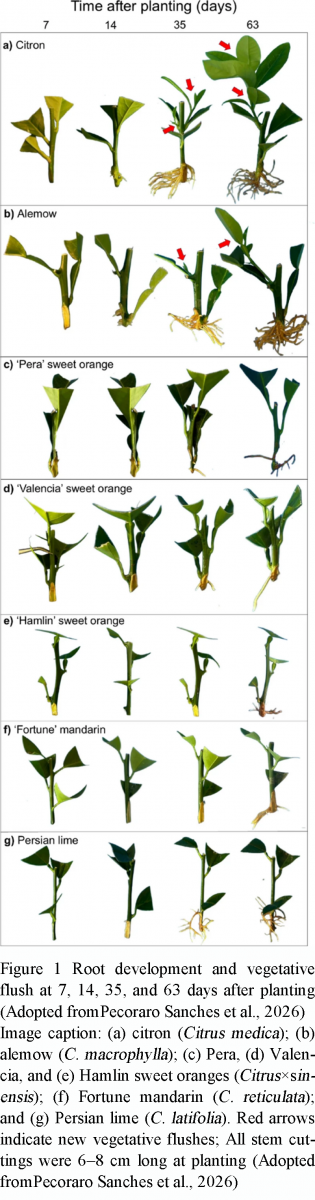 Figure 1 Root development and vegetative flush at 7, 14, 35, and 63 days after planting (Adopted from Pecoraro Sanches et al., 2026) Image caption: (a) citron (Citrus medica); (b) alemow (C. macrophylla); (c) Pera, (d) Valencia, and (e) Hamlin sweet oranges (Citrus×sinensis); (f) Fortune mandarin (C. reticulata); and (g) Persian lime (C. latifolia). Red arrows indicate new vegetative flushes; All stem cuttings were 6–8 cm long at planting (Adopted from Pecoraro Sanches et al., 2026) |
4.2 Seedling quality grading and health assessment
Seedling grading should convert these measurements into operational classes that distinguish plantable from unqualified nursery stock. Citrus grading studies show that classification can be built from a larger measured dataset and then simplified into a few key indicators that are practical in production (Wang et al., 2026). In annual grafted Citrus aurantium seedlings, plant height, scion diameter, and branch number were used to establish three quality grades, and seedlings below the third-grade threshold were considered unqualified (Xu et al., 2020). This provides a useful example of how citrus nursery measurements can be translated into operational grades, but the numerical thresholds of Citrus aurantium should not be used directly as fingered citron standards. More broadly, plant height, stem or ground-line diameter, and root system condition are commonly used grading indicators, while integrated indices such as sturdiness quotient, shoot:root ratio, and Dickson quality index can reduce error from relying on a single trait (Robonen et al., 2023).
Health assessment should accompany grading because a morphologically large seedling is not necessarily a healthy or field-ready one (Grossnickle and MacDonald, 2018b; De Melo et al., 2018). Physiological assessment methods such as root growth potential, cold hardiness, stress resistance, water relations, nutrient status, and root electrolyte leakage provide information on transplant performance that morphology alone can miss, although they are more time-consuming and are used less often operationally. Nursery quality control should therefore screen for root deformities, abnormal shoot-to-root ratios, low photosynthetic competence, cellular stress, and poor hydration status, because these problems can occur even where seedlings appear acceptable externally (Kamanga et al., 2026). A relative water content above about 75% has been associated with better leaf water status and drought tolerance in other seedling-quality studies; this value can serve only as a physiological reference and should not be treated as a fingered citron grading threshold. Nursery assessment is also valuable for preventing disease spread and qualifying plant material in trade, so fingered citron grading should integrate morphology, physiology, and sanitary inspection into one standard evaluation process (Mataruga et al., 2023).
4.3 Hardening, lifting, and transportation of seedlings
Before seedlings leave the nursery, hardening is used to improve tolerance to transplant stress, especially in dry or exposed planting environments. In nursery practice, seedlings are often water stressed and then gradually weaned under shade before transport so they become less vulnerable to drought after planting. Evidence on drought hardening is mixed overall, but field studies show that it tends to improve survival and growth as site aridity increases, while benefits are reduced when a long delay occurs between hardening and transplanting (Puértolas et al., 2024). Hardening therefore needs to be linked closely to the expected field site and planting schedule rather than applied as a fixed routine (Guimarães et al., 2024). In addition, nursery practices such as watering, shading, fertilization, root pruning, suitable growing media, and short-day or storage protocols all influence the final transplant quality of planting stock (Kamanga et al., 2026).
Quality can decline substantially between lifting and planting if seedlings are exposed to desiccation, extreme temperatures, rough handling, root loss, or prolonged storage. These stresses often occur in combination, and the cumulative effects of desiccation and storage appear especially harmful, making careful lifting, packing, and rapid delivery essential. European nursery surveys similarly identify unsuitable transport and handling during shipping and planting as a common cause of declining seedling quality (Mataruga et al., 2023). For fingered citron seedlings, lifting should retain as much of the functional root system as possible, avoid mechanical injury, and keep roots moist and shaded during grading, bundling, loading, and transport, because root morphology and physiological condition are closely tied to successful establishment after transplanting (Grossnickle and MacDonald, 2018b).
5 Standardized Orchard Establishment and Planting Techniques for Fingered Citron
5.1 Site selection and soil improvement
Site selection for fingered citron should begin with climatic and topographic suitability, because this species is sensitive to mismatched environments and its current planting problems have been linked directly to inadequate suitability analysis. For fingered citron, the dominant environmental variables identified across habitat modeling studies are temperature annual range, annual precipitation, elevation, precipitation seasonality, and human activity intensity. The most suitable present habitats are concentrated in eastern Sichuan, western Chongqing, southern Guizhou, western Guangxi, central and southern Yunnan, and parts of southeast Tibet or western Taiwan, which provides a practical regional reference for orchard layout (Figure 2) (Xia et al., 2023). More broadly in citrus, orchard location is a primary planning decision, and land suitability models consistently show that site choice should integrate multiple criteria rather than rely on local experience alone (Tercan and Dereli, 2020).
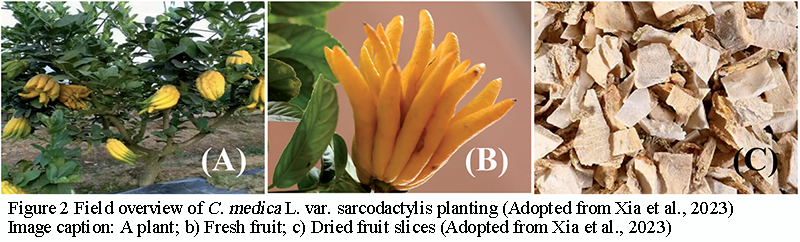 Figure 2 Field overview of C. medica L. var. sarcodactylis planting (Adopted from Xia et al., 2023) Image caption: a plant; b) fresh fruit; c) dried fruit slices (Adopted from Xia et al., 2023) |
Within citrus suitability assessments, winter temperature, elevation, precipitation, sunshine, land capability, and proximity to irrigation water are repeatedly identified as major filters for productive orchard land (Tercan and Dereli, 2020). Fingered citron studies similarly show that future suitable areas may shift under climate change, so orchard establishment should account for both current fit and likely regional change in hydrothermal conditions. After climatic screening, soil evaluation becomes the next core step. Citrus studies show that soil acidification and deficiencies of available nitrogen and phosphorus can reduce orchard suitability, while poor soil and water conservation on slopes can accelerate nutrient loss. Measures such as decomposed organic fertilizer, green manure, integrated water-fertilizer management, and soil amendments have been used to improve citrus orchard soil conditions. For fingered citron, these measures should be selected according to site-specific soil testing and local production conditions rather than adopted as a uniform amendment prescription.
5.2 Orchard planning and infrastructure construction
Once a suitable site has been chosen, orchard planning should match the terrain, water supply, and intended management intensity, because orchard performance depends not only on planting location but also on how the production space is physically organized. Citrus suitability studies identify climate, geography, and soil fertility as joint dimensions of orchard performance, which means infrastructure planning should coordinate slope, drainage, roads, irrigation access, and fertilization logistics rather than address them separately. In commercial citrus systems, orchards established on long raised beds with drainage swales on each side provide a useful model for improving water movement and reducing waterlogging risk (Hamido and Morgan, 2020). This is especially relevant because excessive waterlogging damages fine roots and limits nutrient uptake, whereas better-controlled irrigation improves water availability, plant nutrition, and tree growth (Atta et al., 2025).
Irrigation infrastructure should be built as a core component of standardized orchard establishment rather than added later. Citrus studies show that irrigation scheduled according to evapotranspiration and soil moisture monitoring can stabilize water supply more effectively than fixed manual schedules (Hamido and Morgan, 2021). Drip and microsprinkler fertigation systems, as well as root-zone-targeted irrigation, have been used in citrus to improve water and nutrient distribution and support early tree establishment. These citrus results provide a practical framework rather than fixed operating parameters for fingered citron. Accordingly, fingered citron orchard infrastructure should prioritize dependable water sources, distribution pipelines, filtration and fertigation capacity, drainage channels, access paths, and slope-conserving measures, with system capacity adjusted to local topography, soil, and water availability (Chhetri and Kandel, 2019).
5.3 Planting density and standardized planting
Planting density is a major management lever in citrus orchard establishment. Citrus studies consistently show that moderately higher density can increase early yield per unit area when it is matched with suitable rootstocks, canopy control, irrigation, and nutrition management (Devite et al., 2025). Studies in sweet orange, grapefruit, and mandarin also demonstrate that the direction and magnitude of density effects vary markedly with cultivar, rootstock, orchard age, and production environment (Lakshmi et al., 2025). These results are useful for understanding the principle of density management, but they do not establish a suitable spacing for fingered citron. Fingered citron planting density should therefore be determined from its own tree vigor, canopy expansion, site fertility, drainage, water availability, and intended management system rather than by directly adopting spacing values reported for other citrus crops.
High-density planting is not universally beneficial because its performance depends on tree vigor, scion-rootstock combination, climate, soil fertility, drainage, water availability, and annual canopy management. Citrus reviews and comparative trials show that spacing often needs to be adjusted as canopies develop and that dwarfing and standard rootstocks require different density strategies. These findings again illustrate the need to match density with canopy vigor rather than use a single fixed number. For fingered citron, standardized planting should use healthy and uniform seedlings, determine row direction and spacing according to light interception and field access, and coordinate density with pruning, fertigation, and irrigation. Any specific spacing recommendation should be validated under local fingered citron production conditions so that early use of space does not lead to later canopy crowding or management difficulty (Atta et al., 2025).
6 Standardized Management Techniques for Young Fingered Citron Orchards
6.1 Water and nutrient management and root recovery
Evidence from young citrus orchards provides useful reference for water management in fingered citron, but irrigation parameters need local validation. Young citrus trees require stable root-zone moisture because vigorous vegetative growth, repeated leaf flushing, and canopy establishment depend on an active root system. Poor irrigation scheduling can reduce efficiency and restrict young-tree growth through either excess water or water deficit. On sandy citrus soils, moderate irrigation improved fibrous-root development, root survival, leaf nutrient status, and overall tree growth. These findings support maintaining a stable but well-aerated root-zone water regime in young fingered citron orchards. Irrigation scheduling tools, weather information, and soil-moisture monitoring can therefore be used to guide management, while the actual irrigation amount and frequency should be adjusted to local soil, weather, and tree condition (Kadyampakeni and Guzmán, 2021).
Root recovery depends on both water management and soil improvement. Disease-specific citrus research has shown that root decline may precede visible canopy symptoms under HLB pressure, illustrating the value of early root-zone monitoring, although this should not be interpreted as the normal root response of fingered citron. Citrus orchard studies also show that compost can improve soil water status, organic matter, cation exchange capacity, pH, and nutrient availability, especially when combined with weed control to reduce competition (Pokhrel et al., 2025). Mulching and ground-cover management can also support early orchard establishment; studies in sweet orange and other citrus systems report improved canopy growth or foliar nutrient status under suitable ground-cover and irrigation combinations (Giménez-Valero et al., 2025). In sloping or acidic orchards, organic amendments, mulching, liming where appropriate, and regular weeding can further improve soil conditions and reduce competition (Poudel et al., 2022). For fingered citron, these measures should be selected according to soil testing and local stress conditions rather than applied uniformly.
Targeted water-saving strategies in mature or fruiting citrus provide useful evidence on stage sensitivity, but they should not be converted directly into deficit-irrigation schedules for young fingered citron orchards. Studies in semiarid citrus show that regulated deficit irrigation and partial rootzone drying can reduce irrigation use without necessarily reducing yield when timing and intensity are appropriate. Other citrus research indicates that flowering and fruit growth are particularly sensitive to water stress (Dutta et al., 2023). For young fingered citron orchards, the priority during establishment should therefore remain stable root-zone moisture and avoidance of prolonged drought or waterlogging. Nutrition should be coordinated with irrigation, because citrus studies show that optimized water and potassium management can improve soil inorganic nitrogen availability, nutrient productivity, and irrigation water productivity. Irrigation-water chemistry alone does not predict plant nutrition well, so fertigation decisions should be based on soil properties and plant response rather than water source alone (Imbernón-Mulero et al., 2026).
6.2 Training and pruning for canopy development
Canopy training in young fingered citron orchards should aim to build a strong, balanced framework early and then maintain light penetration, ventilation, and manageable tree size through repeated light interventions rather than delayed severe cuts. Across perennial fruit crops, canopy management improves light interception, photosynthesis, microclimate, fruit quality, and orchard efficiency, while also helping balance vegetative and reproductive growth. In citrus, poorly maintained trees develop oversized, dense peripheral canopies that limit aeration and inner-canopy light, create unproductive shaded interiors, and make spraying and harvest less efficient. Orchard design and canopy management also interact, because spacing, row orientation, and tree shape together determine how well canopies intercept and distribute light.
For newly established trees, drastic pruning in the first year should be avoided, while unwanted shoots should be removed early and the developing framework should be guided before crowding occurs. Higher-density citrus systems have used central-leader, multiple-leader, and pyramidal canopy forms to improve light distribution, but these are examples from other citrus production systems rather than fixed training forms for fingered citron. The transferable principle is to establish a stable branch hierarchy, retain adequate leaf area, and avoid a dense outer canopy with a shaded interior. Maintenance pruning, cleaning pruning, and water-sprout removal are important after establishment because they remove dead or damaged wood, reduce excessive vegetative growth, and preserve productive canopy space. In young citrus under water-limited conditions, reducing early fruit load can favor vegetative development, and ground-cover management can also influence canopy expansion (Giménez-Valero et al., 2025). Fingered citron training should therefore be adjusted to its own branching habit, vigor, planting density, and local management objectives rather than directly adopting a canopy form developed for another citrus crop.
6.3 Pest, disease, and abiotic stress management
Young fingered citron orchards require integrated pest, disease, and stress management, but the risk profile should be defined from local fingered citron production rather than inferred directly from citrus decline in general. Surveys and reviews of citrus identify insects, diseases, climatic extremes, nutrient deficiency, poor planting material, and weak orchard management as major contributors to tree decline (Kalatippi et al., 2024). These citrus findings provide a broad risk framework for fingered citron orchard management. Drought can weaken tree defenses and interact with disease pressure, while salinity, flooding, nutrient imbalance, high temperature, and other abiotic stresses may also act in combination. However, the relative importance of individual diseases, pests, and abiotic stresses in fingered citron should be determined from local occurrence and monitoring rather than assumed to match other citrus crops. Standardized management should therefore integrate water, nutrition, sanitation, and plant-health monitoring.
Practical control should combine orchard sanitation, canopy hygiene, monitoring, and selective intervention. Citrus IPM programs provide useful examples: pruning diseased or infested branches, using monitoring traps, applying pesticides according to thresholds, removing dead twigs and dropped fruit, and conserving natural enemies can reduce pest and disease pressure and improve production efficiency (Meena et al., 2025). These measures illustrate IPM principles rather than define a fixed pest and disease list for fingered citron. Where viroid or other graft-transmissible pathogen risk is confirmed, clean nursery stock, surveillance, prompt removal of infected plants, and tool disinfection can be used as sanitation measures (Bagherian et al., 2026). Abiotic-stress mitigation may include suitable irrigation, mulching, salinity monitoring, soil amendments where justified, and tolerant rootstocks. For fingered citron, the choice of each measure should follow local diagnosis, because hygiene, water-nutrient management, and healthy propagation materials are transferable principles, whereas specific disease targets and treatment thresholds may differ among citrus crops (Kalatippi et al., 2024).
7 Application of Fingered Citron Seedling Propagation and Orchard Establishment Techniques
7.1 Whole-process quality control of seedling propagation
Whole-process quality control in fingered citron seedling propagation should begin with a clear crop plan and standard operating procedures that monitor each production stage from source material and rootstock preparation to substrate management, grafting, grading, and dispatch. Citrus nursery production likewise treats rootstock propagation, attainment of buddable size, and subsequent grafting as linked quality-control steps rather than independent operations (Vashisth et al., 2020). Where seed-propagated citrus rootstocks are used for fingered citron grafting, seed pretreatment and seed maturity can influence emergence, vigor, and uniformity; studies using GA3 or different fruit-harvest stages illustrate these control points (De Carvalho et al., 2021). These findings should be used to guide quality control of the selected rootstock source, not as direct evidence that fingered citron itself requires the same seed treatment or harvest timing.
Substrate, containers, irrigation, and fertigation determine whether nursery plants reach the desired specification. Citrus studies show that substrate physical and chemical properties can influence seedling development through grafting, and inappropriate formulations may restrict growth (Liberato et al., 2021). Compost-containing potting mixes improved germination, biomass accumulation, and budding success in citrus rootstocks (Vashisth et al., 2020), while moderate N and P fertigation improved several nursery growth and physiological traits (Kaur et al., 2024). These results support the principle of balanced substrate and nutrient management, but study-specific formulations or nutrient rates should not be used directly as fingered citron prescriptions. Container type also affects root architecture, because enclosed containers can induce root circling while root-pruning containers can reduce deformation. Final release should therefore use explicit grading criteria. Citrus grading studies show that plant height, scion diameter, branch number, and root condition can be translated into operational quality classes, but fingered citron thresholds should be established from its own nursery and field performance.
7.2 Coordination between seedling quality and orchard establishment techniques
Seedling quality and orchard establishment techniques need to be coordinated because nursery traits influence post-planting survival, recovery, and early orchard performance, while field conditions determine which seedling traits are actually valuable. The target-seedling concept captures this relationship by linking nursery production to the conditions of the eventual planting site rather than defining quality only inside the nursery. In citrus, this coordination begins with choosing compatible propagation materials, since high-quality grafted seedlings form the foundation of stable, high-yield production and inappropriate rootstock-scion combinations can weaken stress resistance and delay fruiting (Wang et al., 2025). Rootstock choice is part of orchard establishment strategy because rootstocks affect scion growth, nutrition, fruit quality, and tolerance to biotic and abiotic stress, so the same seedling is not equally suitable for all planting environments (Vashisth et al., 2020).
Coordination also depends on transplant timing, root-system quality, and field readiness. A Cleopatra mandarin study showed that transplant age can influence survival, stem-diameter growth, and branching during the rootstock stage, demonstrating that transplant timing is an important nursery-to-field control point; however, the reported age should not be transferred directly to fingered citron. Root-system quality is central because successful field establishment depends on healthy roots, while containerized nursery systems can restrict root expansion and alter later growth. Propagation method also influences orchard-stage behavior, and citrus studies show that orchard growth depends on the combination of propagation method and rootstock rather than propagation method alone (Albrecht et al., 2020). Nursery certification further supports orchard establishment. In citrus systems, protected-environment production and certified seedling distribution have been used to reduce the spread of diseases such as HLB and CVPD. These are disease-management examples from citrus; for fingered citron, the transferable principle is to use verified healthy planting material and minimize pathogen introduction. Even after delivery, quality can decline through poor handling, transport, or planting, so standardized orchard establishment should include proper seedling handling and timely water support at the receiving site (Mufidah et al., 2021).
7.3 Demonstration and promotion of standardized techniques
Demonstration and promotion are necessary because scientific production techniques are often not adopted automatically, even when they outperform traditional practice (Shah et al., 2022). Evidence from fruit systems shows that both traditional and digital agro-technology promotion significantly increase farmer adoption of improved production technologies, and the two modes can complement each other rather than function as substitutes in all cases (Zhang et al., 2024). Systematic service models appear especially effective when they combine training with diagnosis and follow-up support: in apple, a six-in-one model including soil testing, pest and disease diagnosis, course training, meteorological monitoring, on-site guidance, and experimental demonstration raised adoption of integrated management technologies to 84.4% and stabilized yields over time (Duan et al., 2023). These results are directly relevant to fingered citron because standardized propagation and orchard establishment also require coordinated action across soils, weather, plant protection, and management skills.
Field demonstration remains one of the strongest extension tools. In fruit production extension, practical demonstrations were the most preferred communication method for adopting technical knowledge, and training raised impact levels markedly while full adoption varied by practice. Frontline demonstrations in banana increased yield by 30.77% and improved gross return, net return, and benefit-cost ratio relative to farmer practice, showing that on-farm demonstration can accelerate both adoption and economic gains (Desai et al., 2025). In citrus-specific training systems, each additional training event increased the probability of adopting multiple green production technologies, and enterprise-led training showed the strongest promotion effect, although a diversified extension system remained the recommended model. Certified seedling distribution programs likewise show the value of pairing material supply with farmer empowerment, because seedling mortality remained relatively low at 12%, but continued constraints in water availability, weather forecasting, and grower support limited outcomes (Mufidah et al., 2021).
8 Summary and Future Prospects
The future high-quality fingered citron seedling system should shift from experience-based nursery work to whole-process quality control built around crop plans, standard operating procedures, verified mother stock, propagation-material sanitation, nursery environment management, and final seedling grading. Citrus rootstock studies show that seed quality, pretreatment, substrate, nutrition, container type, and transplant timing can all influence nursery performance, but these results should be used as comparative references rather than direct production parameters for fingered citron. For fingered citron itself, the priority is to establish a traceable mother-stock system, optimize cutting and grafting protocols with local material, strengthen root-system and health assessment, and reject substandard seedlings before orchard use. Future work should therefore focus on developing fingered citron-specific technical thresholds for propagation success, seedling vigor, root quality, and field readiness, so that nursery standards are based on its own biological characteristics and production performance.
Standardized orchard establishment for fingered citron should be optimized around site-specific suitability and the coordination between seedling quality and field conditions. Citrus research demonstrates that rootstock choice, rootstock-scion compatibility, soil condition, drainage, irrigation, canopy vigor, and planting density can interact strongly with orchard performance. These findings provide a useful framework, but exact rootstock combinations, spacing values, irrigation schedules, and disease-management measures should not be transferred directly from sweet orange, mandarin, grapefruit, or other citrus crops to fingered citron. Fingered citron orchard standards should therefore emphasize verified healthy seedlings, suitable sites, sound drainage and irrigation infrastructure, careful transplant handling, root-system integrity, and density matched to local tree vigor and management capacity. Long-term field validation across major production regions is needed to convert these general citrus principles into fingered citron-specific orchard-establishment parameters.
The future industrialization of fingered citron should emphasize standardized production bases, technical training, and integrated service systems so that nursery quality can be translated into stable orchard performance. Extension studies in fruit and citrus production show that field demonstration, repeated training, digital and traditional communication, diagnostic support, and follow-up services can improve the adoption of standardized technologies. These results are most useful as extension-method references rather than as direct evidence of fingered citron yield responses. Accordingly, industrialized fingered citron production should connect certified or verified propagation material, standardized nursery procedures, orchard establishment adapted to local conditions, young-orchard management, and follow-up technical services. Region-specific demonstration bases and traceable production records should be used to refine technical standards continuously, so that high-quality seedlings, appropriate orchard design, and standardized management form one coordinated production chain.
Conflict of Interest Disclosure
The author affirms that this research was conducted without any commercial or financial relationships that could be construed as a potential conflict of interest.
Albrecht U., Bodaghi S., Meyering B., and Bowman K.D., 2020, Influence of Rootstock Propagation Method on Traits of Grafted Sweet Orange Trees, HortScience, 55(5): 729-737.
https://doi.org/10.21273/hortsci14928-20
Atta A., Morgan K.T., Hamido S.A., and Kadyampakeni D., 2025, Irrigation optimization enhances water management and tree performance in commercial citrus groves on sandy soil, Irrigation Science, 43(3): 329-346.
https://doi.org/10.1007/s00271-024-00938-2
Bagherian S., Hajieghrari B., and Kamalizadeh M., 2026, Synergism of abiotic stresses and Hop Stunt Viroid infections causing citrus decline in Jahrom Orchards, Iran, Phytopathologia Mediterranea, 65(1): 153-164.
https://doi.org/10.36253/phyto-16995
Bhattacharyya S., Bardhan T., and Sikdar S., 2025, Assessing perception of disease-free planting materials of citrus amongst farmers of Vidarbha region of Maharashtra, India, International Journal of Agriculture Extension and Social Development, 8(4): 10-13.
https://doi.org/10.33545/26180723.2025.v8.i4a.1727
Bisi R.B., Albrecht U., and Bowman K.D., 2020, Seed and Seedling Nursery Characteristics for 10 USDA Citrus Rootstocks, HortScience, 55(4): 528-532.
https://doi.org/10.21273/hortsci14598-19
Bowman K.D., and Albrecht U., 2017, Efficient propagation of citrus rootstocks by stem cuttings, Scientia Horticulturae, 225: 681-688.
https://doi.org/10.1016/j.scienta.2017.07.049
Bowman K.D., McCollum G., and Albrecht U., 2021, SuperSour: A New Strategy for Breeding Superior Citrus Rootstocks, Frontiers in Plant Science, 12: 741009.
https://doi.org/10.3389/fpls.2021.741009
Budiarto R., Mubarok S., Kusumiyati K., Farida F., Sutari W., Soleh M.A., Djaya L., and Rasiska S., 2024, Preparation of citrus planting material: Socialization in the ecotourism activist community at Pajagan Village, Cisitu Sub-District, Sumedang Regency, Indonesian Journal of Community Services Cel, 3(1): 1-5.
https://doi.org/10.70110/ijcsc.v3i1.55
Chhetri L.B., and Kandel B., 2019, Intensive Fruit Cultivation Technology of Citrus Fruits: High Density Planting: A Brief Review, Journal of Agricultural Studies, 7(2): 63-74.
https://doi.org/10.5296/jas.v7i1.14865
Cruz M.A.D., Carvalho D.U., Costa D.S.D., Colombo R., Pacheco C.D.A., Tazima Z.H., and Neves C.S.V.J., 2019, Initial shoot development and root architecture of citrus rootstocks, Semina: Ciências Agrárias, 40(4): 1393-1404.
https://doi.org/10.5433/1679-0359.2019v40n4p1393
Dattola A., and Gullo G., 2026, Rootstocks and Root Systems in Citrus clementina (Hort ex Tan.) Plants: Ecophysiological, Morphological, and Histo-Anatomical Factors, Horticulturae, 12(1): 21.
https://doi.org/10.3390/horticulturae12010021
De Melo L.A., De Abreu A.H.M., Leles P., De Oliveira R.R., and Silva D.D.D., 2018, Qualidade e crescimento inicial de mudas de Mimosa caesalpiniifolia Benth. produzidas em diferentes volumes de recipientes, Ciência Florestal, 28(1): 47-55.
https://doi.org/10.5902/1980509831574
de Carvalho D.U., Boakye D.A., Gast T., Leite Junior R.P., and Alférez F., 2021, Determining Seed Viability During Fruit Maturation to Improve Seed Production and Availability of New Citrus Rootstocks, Frontiers in Plant Science, 12: 777078.
https://doi.org/10.3389/fpls.2021.777078
Denaro M., Smeriglio A., Xiao J., Cornara L., Burlando B., and Trombetta D., 2020, New insights into Citrus genus: From ancient fruits to new hybrids, Food Frontiers, 1(3): 305-328.
https://doi.org/10.1002/fft2.38
Desai N., Jyothikiran S., Shankara M., and Mamatha B., 2025, Impact of Frontline demonstration in adoption of production technology and economics of banana production at farmers field of Tumakuru District, India, Asian Research Journal of Agriculture, 18(1): 272-281.
https://doi.org/10.9734/arja/2025/v18i1663
Deshmukh N.A., Patel R.K., Krishnappa R., Verma B.C., Rymbai H., Assumi S.R., Lyngdoh P., Jha A.K., and Malhotra S.K., 2017, Influence of rootstock age and propagation methods on scion physiology and root morphology of Khasi mandarin (Citrus reticulata), The Indian Journal of Agricultural Sciences, 87(2): 203-209.
https://doi.org/10.56093/ijas.v87i2.67569
Devite F.T., Bastianel M., Cristofani-Yaly M., De Souza A.J.B., Gadanhoto B.P., Arantes A.C.C., and De Azevedo F.A., 2025, Performance of Valencia sweet orange grafted onto dwarfing citrandarins, Frontiers in Plant Science, 16: 1530396.
https://doi.org/10.3389/fpls.2025.1530396
Duan Z.-P., Ding J., Jiang Y., and Zhang W., 2023, Integrated soil-fruit-climate management system to improve apple production stability, Science of the Total Environment, 905: 167840.
https://doi.org/10.1016/j.scitotenv.2023.167840
Dutta S.K., Gurung G., Yadav A., Laha R., and Mishra V., 2023, Factors associated with citrus fruit abscission and management strategies developed so far: a review, New Zealand Journal of Crop and Horticultural Science, 51(4): 467-488.
https://doi.org/10.1080/01140671.2022.2040545
Giménez-Valero C., Núñez-Gómez D., Legua P., Martínez-Nicolás J.J., Lidón Noguera V., and Melgarejo P., 2025, Early Vegetative Response and Fruit Quality Modulation by Fruit Thinning and Weed-Control Mesh in Citrus sinensis CV. ‘Navelina’, Horticulturae, 11(11): 1387.
https://doi.org/10.3390/horticulturae11111387
Gogoi M., and Basumatary M., 2017, Citrus varieties of Kokrajhar District, BTAD, Assam: Its propagation and cultivation prospect, Tropical Plant Research, 4(1): 7-12.
https://doi.org/10.22271/tpr.2017.v4.i1.002
Graham J.H., Bassanezi R.B., Dawson W.O., and Dantzler R., 2024, Management of Huanglongbing of Citrus: Lessons from São Paulo and Florida, Annual Review of Phytopathology, 62: 243-262.
https://doi.org/10.1146/annurev-phyto-121423-041921
Grossnickle S.C., and MacDonald J.E., 2018a, Seedling Quality: History, Application, and Plant Attributes, Forests, 9(5): 283.
https://doi.org/10.3390/f9050283
Grossnickle S.C., and MacDonald J.E., 2018b, Why seedlings grow: influence of plant attributes, New Forests, 49(1): 1-34.
https://doi.org/10.1007/s11056-017-9606-4
Guchhait P., Varma S., Banerjee D., Kumar S., Halder R., and Dahiya A., 2024, Plant Growth Regulators and Rooting Media: A Viable Approach for Growth and Performance of Citrus, Journal of Experimental Agriculture International, 46(5): 366-378.
https://doi.org/10.9734/jeai/2024/v46i52387
Guimarães Z., Da Silva D., and Ferreira M., 2024, Seedling quality and short-term field performance of three Amazonian forest species as affected by site conditions, iForest - Biogeosciences and Forestry, 17(2): 80-89.
https://doi.org/10.3832/ifor4317-016
Hamido S.A., and Morgan K., 2020, Effect of Various Irrigation Rates on Growth and Root Development of Young Citrus Trees in High-Density Planting, Plants, 9(11): 1462.
https://doi.org/10.3390/plants9111462
Hamido S.A., and Morgan K., 2021, The Effect of Irrigation Rate on the Water Relations of Young Citrus Trees in High-Density Planting, Sustainability, 13(4): 1759.
https://doi.org/10.3390/su13041759
Hussain Z., Khadija F., Aziz A., Khan M.N., Salik M.R., and Anwar R., 2017, Evaluation of different grafting methods to citrus cultivars, Citrus Research & Technology, 38(2): 198-203.
https://doi.org/10.4322/crt.icc100
Imbernón-Mulero A., Martínez-Álvarez V., Gallego-Elvira B., Acosta J.A., and Maestre-Valero J., 2026, Hierarchical soil–plant buffering stabilizes nutrient dynamics in citrus under sustained irrigation with contrasting water chemistries, Plant and Soil, 525: 469-490.
https://doi.org/10.1007/s11104-026-08772-5
Kadyampakeni D., and Guzmán S.M., 2021, Optimizing Irrigation and Young Tree Management, EDIS, 2021(2): SS701.
https://doi.org/10.32473/edis-ss701-2021
Kalatippi A.S., Patil S.S., Patil K., Dongre R., Kuldeep D.K., and Bhooriya M.S., 2024, Citrus Physiological Disorders and Their Ameliorating Control Measures: A Review, Journal of Scientific Research and Reports, 30(5): 56-69.
https://doi.org/10.9734/jsrr/2024/v30i51921
Kamanga R., Stevens J., Tuwadala K., Kachitsa S.L., Nyasulu G., and Mwale V., 2026, Morpho-physiological seedling quality assessment of selected ornamental plant species produced by nurseries in Lilongwe, Malawi, Discover Agriculture, 4: 145.
https://doi.org/10.1007/s44279-026-00604-5
Kaur N., Thakur A., Sharma V., Sharda R., Dhaliwal H., and Rattanpal H., 2024, Fertigation with Nitrogen and Phosphorus Improve Plant Growth, Root Growth, and Buddability of Containerized Citrus Nursery Plants, Communications in Soil Science and Plant Analysis, 55(22): 3330-3348.
https://doi.org/10.1080/00103624.2024.2392289
Kurt Ş., and Koyuncu F., 2024, Characterization of Citrus × Poncirus Embryo Rescued Hybrids as Rootstock Candidate using Morphological Markers, Horticultural Studies, 41(3): 90-100.
https://doi.org/10.16882/hortis.1528207
Lakshmi L., Raju R., Reddy D.S., and Rajasekharam T., 2025, Response of sweet orange (Citrus sinensis L. Osbeck) cv. Sathgudi to different planting densities and nutrition schedules, International Journal of Innovative Horticulture, 14(1): 94-98.
https://doi.org/10.5958/2582-2527.2025.00011.6
Li B., and Fan R., 2026, Comparison of the Metabolites in Fingered Citron Fruit (Citrus medica L. var. sarcodactylis Swingle) and Chayote (Sechium edule) Based on UPLC‐Q‐Orbitrap MS/MS, Food Science & Nutrition, 14: e72115.
https://doi.org/10.1002/fsn3.72115
Liberato É.M.S., Leonel S., Souza J.M.A., and Napoleão G.M., 2021, SUBSTRATE MIXING FORMULATIONS FOR CITRUS NURSERY MANAGEMENT, Nativa, 9(5): 500-507.
https://doi.org/10.31413/nativa.v9i5.12777
Mataruga M., Cvjetković B., De Cuyper B., Aneva I., Zhelev P., Cudlín P., Metslaid M., Kankaanhuhta V., Collet C., Annighöfer P., Mathes T., Tsakaldimi M., Paitaridou D., Jónsdóttir R., Monteverdi M.C., De Dato G., Mariotti B., Kolevska D.D., Lazarević J., Fløistad I.S., Klisz M., Gil W., Paiva V., Fonseca T., Nicolescu V.-N., Popović V., Devetaković J., Repáč I., Božič G., Kraigher H., Andivia E., Diez J.J., Böhlenius H., Löf M., Bilir N., and Villar-Salvador P., 2023, Monitoring and control of forest seedling quality in Europe, Forest Ecology and Management, 546: 121308.
https://doi.org/10.1016/j.foreco.2023.121308
Meena P.N., Raghavendra D., Singh S., Kumar N., Khokhar M., Chander S., Lal M., Tiwari R., and Kumar R., 2025, Integrated Pest Management techniques in a Kinnow mandarin (Citrus reticulata Blanco) orchard with an emphasis on yield improvement, Heliyon, 11(4): e42574.
https://doi.org/10.1016/j.heliyon.2025.e42574
Mendes M.I.S., Souza A.S., Costa M.A.P.C., Soares Filho W.S., Gesteira A.S., and Silva Neto H.P., 2019, Adjusting the Minigrafting Technique Applied to Citrus by Using Rootstocks Grown in vitro, Journal of Agricultural Science, 11(11): 193.
https://doi.org/10.5539/jas.v11n11p193
Mufidah L., Sugiyatno A., and Zamzami L., 2021, Evaluation of the certified citrus commercial seedlings distribution program for citrus fruit supply stability, IOP Conference Series: Earth and Environmental Science, 828(1): 012053.
https://doi.org/10.1088/1755-1315/828/1/012053
Niu R., Zhuang Y., Lali M.N., Zhao L., Xie J., Xiong H., Wang Y.-H., He X., Shi X., and Zhang Y., 2024, Root Reduction Caused Directly or Indirectly by High Application of Nitrogen Fertilizer Was the Main Cause of the Decline in Biomass and Nitrogen Accumulation in Citrus Seedlings, Plants, 13(7): 938.
https://doi.org/10.3390/plants13070938
Pecoraro Sanches B.C., dos Santos T.A., Gorayeb E.S., Wulff N.A., and Behlau F., 2026, A Citrus medica stem cutting-based platform for rapid screening of therapeutic compounds against Candidatus Liberibacter asiaticus, Scientific Reports, 16(1): 6864.
https://doi.org/10.1038/s41598-026-37186-7
Pokhrel A., Kanissery R.G., Strauss S.L., and Albrecht U., 2025, Integration of Organic Amendments and Weed Management to Improve Young Citrus Tree Growth Under HLB-Endemic Conditions, Agronomy, 15(4): 772.
https://doi.org/10.3390/agronomy15040772
Puértolas J., Villar‐Salvador P., Andivia E., Ahuja I., Cocozza C., Cvjetković B., Devetaković J., Diez J.J., Fløistad I., Ganatsas P., Mariotti B., Tsakaldimi M., Vilagrosa A., Witzell J., and Ivetić V., 2024, Die-hard seedlings. A global meta-analysis on the factors determining the effectiveness of drought hardening on growth and survival of forest plantations, Forest Ecology and Management, 572: 122300.
https://doi.org/10.1016/j.foreco.2024.122300
Quaggio J.A., Souza T.R., Zambrosi F.C., Mattos D., Boaretto R.M., and Silva G.O., 2019, Citrus fruit yield response to nitrogen and potassium fertilization depends on nutrient-water management system, Scientia Horticulturae, 249: 329-333.
https://doi.org/10.1016/j.scienta.2019.02.001
Robonen E.V., Chernobrovkina N.P., Egorova A.V., Zaitseva M.I., and Nelaeva K.G., 2023, Morphometric Criteria for Assessing the Containerized Conifers Seedlings Quality, Lesnoy Zhurnal (Forestry Journal), (5): 42-57.
https://doi.org/10.37482/0536-1036-2023-5-42-57
Saini P., Bishnoi A., Kathwal R., and Sharma R., 2025, Vegetative propagation techniques of fruit crops through cuttings – A review, International Journal of Farm Sciences, 15(4): 29-37.
https://doi.org/10.5958/2250-0499.2025.00054.8
Shah Z., Dar M., Dar E., Obianefo C.A., Bhat A., Ali M.T., Alatawi H., Ghamry H.I., Shukry M., and Sayed S.Z., 2022, A Multinomial Approach to Sustainable and Improved Agricultural Technologies vis-a-vis Socio-personal Determinants in Apple (Malus domestica) Cultivation, Journal of King Saud University - Science, 34(10): 102286.
https://doi.org/10.1016/j.jksus.2022.102286
Shivran M., Sharma N., Dubey A., Singh S., Sharma N., Sharma R., Singh N., and Singh R., 2022, Scion–Rootstock Relationship: Molecular Mechanism and Quality Fruit Production, Agriculture, 12(12): 2036.
https://doi.org/10.3390/agriculture12122036
Srivastava A.K., Barlas N., Wu Q., Raveh E., Brunetto G., Vashisth T., Mousavi S.M., and Acharya U.K., 2026, Climate change and citrus nutrition: mechanisms, nutrient imbalances, and inclusive management, Frontiers in Plant Science, 17: 1798826.
https://doi.org/10.3389/fpls.2026.1798826
Sun Y., Zheng J., Zhang T., Chen M., Li D., Liu R., Li X., Wang H., and Sun T., 2024, Review of polysaccharides from Citrus medica L. var. sarcodactylis (fingered citron): Their extraction, purification, structural characteristics, bioactivity and potential applications, International Journal of Biological Macromolecules, 282(Pt 1): 136640.
https://doi.org/10.1016/j.ijbiomac.2024.136640
Suárez Padrón I.E., Alvarez Correa C., and Lopez Diaz C.M., 2022, Propagation of “Valencia” orange (Citrus x sinensis Osbeck) by minigraft, Revista Facultad Nacional de Agronomía Medellín, 75(3): 10101-10106.
https://doi.org/10.15446/rfnam.v75n3.99339
Tercan E., and Dereli M.A., 2020, Development of a land suitability model for citrus cultivation using GIS and multi-criteria assessment techniques in Antalya province of Turkey, Ecological Indicators, 117: 106549.
https://doi.org/10.1016/j.ecolind.2020.106549
Vashisth T., Chun C.-S., and Ozores Hampton M., 2020, Florida Citrus Nursery Trends and Strategies to Enhance Production of Field-Transplant Ready Citrus Plants, Horticulturae, 6(1): 8.
https://doi.org/10.3390/horticulturae6010008
Ventura J., Lima I.M., Martins M., Culik M., and Costa H., 2019, Impact and management of diseases in the propagation of fruit plants, Revista Brasileira de Fruticultura, 41(5): e-030.
https://doi.org/10.1590/0100-29452019647
Wang P., Liu F., Sun Y., Liu X., and Jin L., 2025, Physiological and Molecular Insights into Citrus Rootstock–Scion Interactions: Compatibility, Signaling, and Impact on Growth, Fruit Quality and Stress Responses, Horticulturae, 11(9): 1110.
https://doi.org/10.3390/horticulturae11091110
Wang P., Lu Z., Xu Y., and Cai N., 2026, Allometric Growth Patterns and Phenotypic Plasticity Indices of Different Grades of Annual Pinus yunnanensis Franch. Seedlings at Different Growth Stages, Biology, 15(13): 1008.
https://doi.org/10.3390/biology15131008
Wu Z., Zou S., Yang Y., Yang X., Han Q., Chen C., Wang M., and Tan W., 2022, Spatiotemporal prediction and optimization of environmental suitability in citrus-producing areas, Frontiers in Environmental Science, 10: 985952.
https://doi.org/10.3389/fenvs.2022.985952
Xia Y., Li T., Liu X., Xu S., Wang Y., Fan X., Yang Y., and Wang R., 2023, How do environmental variables affect the suitable habitat of medicinal plants? A case study of Citrus medica L. var. sarcodactylis Swingle in China, Polish Journal of Environmental Studies, 32(3): 2383-2391.
https://doi.org/10.15244/pjoes/159893
Xu J., Zhang Y., Cui G.-L., Tan J., and Li L.-Y., 2020, [Quality grading standard of Citrus aurantium seedlings], China Journal of Chinese Materia Medica, 45(13): 3091-3097.
https://doi.org/10.19540/j.cnki.cjcmm.20200329.114
Yang X., Wang S., Lu D., Shao Y., Feng Z., and Wang Z., 2024, Ecological Adaptation and Sustainable Cultivation of Citrus reticulata by Applying Mixed Design Principles under Changing Climate in China, Remote Sensing, 16(13): 2338.
https://doi.org/10.3390/rs16132338
Yang Q., Liu S., Qin Y., and Luo L., 2025, Which Kind of Training Organization Can Better Promote the Adoption of Green Production Technologies by Farmers? Evidence from Citrus Growers in China, Sustainability, 17(18): 8421.
https://doi.org/10.3390/su17188421
Zamzami L., Endarto O., Hanif Z., and Ratule T.M., 2021, Increasing the capacity and adoption of certified citrus seedling producers towards recommended technology for disease-free certified citrus seedling production in Sambas Regency, West Kalimantan, IOP Conference Series: Earth and Environmental Science, 803(1): 012019.
https://doi.org/10.1088/1755-1315/803/1/012019
Zhang X., Zhang J., Li L., Zhang Y., and Yang G., 2017, Monitoring Citrus Soil Moisture and Nutrients Using an IoT Based System, Sensors, 17(3): 447.
https://doi.org/10.3390/s17030447
Zhang J., Xie S., Li X., and Xia X., 2024, Adoption of green production technologies by farmers through traditional and digital agro-technology promotion-An example of physical versus biological control technologies, Journal of Environmental Management, 370: 122813.
https://doi.org/10.1016/j.jenvman.2024.122813
Zhang W., Zhu S., Qin W., Sun A., Li H., Hao K., and Zhong Y., 2026, Optimizing irrigation and nitrogen management enhances yield, resource efficiency, and fruit quality in global citrus systems: A meta-analysis, Agricultural Water Management, 331: 110450.
https://doi.org/10.1016/j.agwat.2026.110450



. PDF(603KB)
. FPDF(win)
. FPDF(mac)
. HTML
. Online fPDF
Associated material
. Readers' comments
Other articles by authors
. Xudong Kong

Related articles
. Fingered citron
. High-quality seedlings
. Propagation techniques
. Standardized orchard establishment
. Young orchard management
Tools
. Email to a friend
. Post a comment