Research Insight
Construction of a Quality Traceability System for Green Production Bases of Hangzhou White Chrysanthemum 

2 Zhejiang Agronomist College, Hangzhou 310021, Zhejiang, China
 Author Correspondence author
Medicinal Plant Research, 2026, Vol. 16, No. 5 doi: 10.5376/mpr.2026.16.0023
Received: 13 Jul., 2026 Accepted: 26 Aug., 2026 Published: 20 Sep., 2026
Gao W.Y., 2026, Construction of a quality traceability system for green production bases of hangzhou white chrysanthemum, Medicinal Plant Research, 16(5): 358-371 (doi: 10.5376/mpr.2026.16.0023)
The quality of Hangzhou White Chrysanthemum is jointly affected by multiple factors, including production environment, seedling source, water and fertilizer management, pest and disease control, harvest timing, processing methods, and storage conditions. Therefore, end-product testing alone cannot fully reflect the process of quality formation. Based on the production characteristics and quality management requirements of green production bases, this paper proposes a whole-process quality traceability framework covering cultivation, harvesting, processing, storage, circulation, and supervision. Taking production batches as the main traceability line, the system links information on production-base environment, seedlings and field management, water and fertilizer inputs, pest and disease control, harvest maturity, processing parameters, packaging and storage, and quality testing, while unified coding, QR codes, the Internet of Things, and blockchain technologies are introduced to support information collection, storage, and inquiry. For quality evaluation, appearance traits, basic physicochemical indicators, functional components such as chlorogenic acid, luteolin-7-O-glucoside, and 3,5-O-dicaffeoylquinic acid, as well as safety indicators are incorporated into the key quality control system. The proposed evaluation scheme further integrates geographical-origin authenticity, fingerprint profiles, and batch consistency. The proposed framework could improve information continuity throughout Hangzhou White Chrysanthemum production and enhance the ability to identify the sources of quality problems, while also providing support for product grading, green certification, brand protection, and market supervision. In the future, intelligent sensing, molecular identification, and digital evaluation technologies can be further integrated to improve the authenticity, real-time performance, and practical value of traceability data, thereby promoting the development of Hangzhou White Chrysanthemum production toward standardization, digitalization, and whole-process quality management.
1 Introduction
Hangzhou White Chrysanthemum is a well-known medicinal chrysanthemum and one of the “Zhejiang eight flavors,” with distinct production rhythms and quality traits that make source-oriented quality control especially important. Its cultivation is strongly shaped by seasonal and biological characteristics: branch pressing is commonly carried out from April to May, terminal buds are removed around late August, and the transition from vegetative to reproductive growth accelerates as temperature declines and daylength shortens (Zhang et al., 2023). Because it is usually planted in open-air environments rather than highly controlled ornamental systems, its growth, flowering, and final product quality are especially sensitive to external ecological conditions and field management. Existing studies show that quality formation in chrysanthemum is a combined result of genotype, environment, and cultivation measures. Variety selection matters because different genotypes express different growth, flowering, yield, and post-harvest traits under particular environments. Water and fertilizer regulation also directly affect floral traits and output: optimized irrigation and fertigation improved flower yield and quality in chrysanthemum, while excessive fertilizer concentration inhibited plant growth (Lu et al., 2024). Production system differences further influence quality-related compounds, since hydroponic cultivation increased flower yield, total flavonoids, and chlorogenic acid relative to soil culture in tea chrysanthemum. At the physiological level, flowering and floral organ development are co-regulated by photoperiod, temperature, and endogenous hormones, and gene-expression evidence in Hangzhou White Chrysanthemum confirms differential responses to temperature and hormone stressors (Pan et al., 2023). Agronomic interventions can therefore alter both yield and quality: increasing branch number is crucial because flowers are borne on branch tops, but traditional manual decapitation is labor-intensive and raises disease risk, while growth-regulator treatments have increased yield and maintained medicinal quality above Pharmacopoeia standards. Virus-free rapid propagation and polyploid breeding technologies also reduce production cost and improve the prospects for standardized commercial cultivation.
Against this background, green production bases for Hangzhou White Chrysanthemum face stringent quality management requirements because product quality and safety are determined at the source and can be compromised by inappropriate input use and weak process control. Evidence from Chinese agriculture shows that excessive fertilizer and pesticide use may raise short-term output but creates long-term problems including resource-use decline, environmental pollution, and hidden risks to agricultural product quality and safety. This is why green production transition has become imperative, yet actual implementation remains incomplete, and compliance problems persist in practice, including failure to follow standard production requirements and illegal marketing of substandard products. Quality certification has emerged as an important governance tool because it strengthens quality monitoring, raises market access thresholds, and can create price premiums that encourage greener production behavior. Empirical evidence across multiple sectors shows that certification participation improves green or low-carbon production, increasing low-carbon production levels among rice farmers and raising eco-efficiency among vegetable farms, with stronger effects generally found for green and especially organic certification (Kang et al., 2023). At the same time, certification is not self-executing. Supervision can be imperfect, some producers may misuse the label while increasing chemical inputs, and many smallholders face financial, technical, and market barriers to obtaining and maintaining certification. Cooperative membership and technical training therefore matter because they improve certification adoption, support compliant production, and enhance the performance of certified farmers (Du et al., 2023). More broadly, certification standards establish key sustainability principles, but compliance remains uneven and under-studied in many value chains, reinforcing the need for operational management systems that convert standards into verifiable field records (Oppong and Bannor, 2022).
A quality traceability system is therefore a necessary extension of green base management for Hangzhou White Chrysanthemum, because traceability provides the information infrastructure needed to connect production behavior, quality formation, circulation, and accountability. Research on agri-food traceability consistently shows that reliable systems should record the whole chain, including production, processing, warehousing, transportation, sale, and supervision, so that specific batches can be tracked and problem sources rapidly identified. Traditional centralized systems are limited by data invisibility, tampering risk, fragmented information, and difficulty for downstream users or consumers to access complete origin data. For that reason, blockchain and IoT have become prominent technical routes because IoT devices can reduce manual recording and continuously collect environmental and process data, while blockchain can preserve data integrity, transparency, and cross-actor trust. Studies have proposed layered architectures that combine physical objects, IoT sensing, and blockchain nodes, and have shown that production, processing, distribution, sale, and supervision nodes can form a complete traceability chain. Consortium or alliance chains appear especially suitable for agricultural traceability because they offer faster transactions, stronger privacy control, and coordinated internal supervision among participating organizations. Recent digital traceability work also emphasizes parsimony and practicality: only key data linked to quality requirements, data certification, and product identification should be captured, including farming diaries, input records, environmental conditions, and certification documents for each batch (Lukács et al., 2025).
Accordingly, the objective of this study is to construct a quality traceability system for green production bases of Hangzhou White Chrysanthemum that starts from the characteristics of its field production and quality formation, identifies the key control points affecting product safety and medicinal quality, and establishes a verifiable information chain covering production and related downstream links. The system should integrate core elements of green base management, such as seedling or propagation source, variety information, field environment, water and fertilizer management, pest control, harvest timing, certification status, and batch identity, while using digital tools to reduce human error and improve data credibility. Its significance lies not only in improving internal quality management and rapid responsibility tracing, but also in supporting green certification implementation, enhancing consumer trust, and increasing the market competitiveness of high-quality regional agricultural products. At the industry level, such a system can help transform scattered production records into standardized, shareable, and auditable data assets, support the modernization of chrysanthemum production bases, and provide a reference model for other medicinal and edible agricultural products pursuing green development and digital governance.
2 Overall Framework of the Quality Traceability System for Green Production Bases of Hangzhou White Chrysanthemum
2.1 Principles for constructing the quality traceability system
The overall framework of a quality traceability system for green production bases of Hangzhou White Chrysanthemum should be built around the full-chain objectives of quality assurance, safety control, and provenance reconstruction. Traceability systems are designed to let stakeholders reconstruct the entire flow of activities and transactions related to a product from origin to final sale, while supporting quality control, regulatory compliance, and consumer access to product history (Marchese and Tomarchio, 2022). More generally, traceability is now treated as a core mechanism for food quality and safety management and for improving supply-chain performance, transparency, and recall efficiency (Tagarakis et al., 2021). For Hangzhou White Chrysanthemum, this means that the framework should not stop at simple origin labeling, but should connect pre-harvest management in the base with post-harvest circulation data, because sustainability and quality claims increasingly depend on what happens before harvest as much as after it.
In terms of construction principles, the system should follow four basic requirements: clear identification, accurate recording, effective integration, and accessible sharing (Islam and Cullen, 2021). At the technical level, the stored information should be secure, reliable, transparent, and resistant to tampering, while still remaining scalable and adaptable to changing regulatory requirements Research on agri-food traceability further shows that effective systems depend on common standards for data formats, labeling, exchange protocols, and interoperability, especially where many actors must collaborate across organizational boundaries (Moysiadis et al., 2023; Stankovski and Ostojić, 2023). Accordingly, the Hangzhou White Chrysanthemum traceability framework should adopt standardized batch coding, unified key data elements, and open interfaces that allow data from production bases, processors, distributors, retailers, and regulators to be linked into one consistent chain (Latino et al., 2022).
2.2 Traceability participants and allocation of responsibilities
The allocation of traceability responsibilities should begin with the identification of traceability information providers at each critical traceability event. Studies of agri-food systems emphasize that information providers must be clearly identified before data collection, that each provider is responsible for the accuracy of the information it enters, and that the required information should be defined as key data elements linked to known physical events in the chain. In the case of Hangzhou White Chrysanthemum, the main participants should include agricultural input suppliers, green production bases, processing enterprises, logistics and distribution organizations, sales terminals, and regulatory or certification bodies, which is consistent with the actor structures proposed in broader agri-food traceability research (Ehsan et al., 2022). Because successful implementation depends on multiple stakeholder perspectives, the framework should assign rights and duties in a way that matches each actor’s operational role and data-generation capacity.
At the production-base stage, growers or base managers should record the source of seedlings and inputs, cultivation plots, irrigation and fertilization measures, pest-control actions, environmental conditions, and harvest information, because pre-harvest activities and sustainability practices are crucial to downstream quality claims (Prashar et al., 2020). This is especially important for Hangzhou White Chrysanthemum, whose quality formation is sensitive to flowering regulation, cultivation measures, water and nutrient management, and harvest-stage decisions (Zhang et al., 2023). Processing organizations should record processing conditions, batch transformation relations, storage, packaging, operators, and finished-product labels. Distribution and sales organizations should record logistics information, storage and transfer events, retailer identity, sales time, quantities, and prices, while supervision bodies should record inspection, testing, certification, and enforcement information and validate whether products meet the relevant standards before and during market circulation.
2.3 Design of the whole-process quality traceability procedure
The whole-process quality traceability procedure for Hangzhou White Chrysanthemum should be designed as an end-to-end chain that covers input supply, field production, harvesting, processing, storage, distribution, sales, and supervision. Existing research suggests that an effective procedure should first map the supply-chain process and identify where data are generated, in what format, and by which actor; it should then specify the technologies used for data capture and analysis; and finally ensure that useful traceability information can be communicated to downstream users and consumers (Latino et al., 2022). For green production bases, the front end of the procedure must begin before harvest rather than at harvest, because field operations such as pesticide, fertilizer, and water management are part of the quality and sustainability record that downstream actors and consumers increasingly expect to access (Moysiadis et al., 2023).
Operationally, each production batch of Hangzhou White Chrysanthemum should be assigned a unique identification code that accompanies the product through all subsequent links, so that incoming, transformed, and outgoing batches remain associated across the chain. Data collection should combine manual confirmation with IoT-assisted acquisition, such as sensors, scanners, QR codes, RFID, cameras, or mobile terminals, because these tools support real-time monitoring, reduce recording errors, and improve continuity of information flow (Lin et al., 2020). At the storage and computing level, a permissioned or alliance-chain architecture is well suited to this application because agri-food traceability usually involves a defined set of organizations that need secure sharing, internal supervision, and immutable transaction records without relying on a single centralized database (Prashar et al., 2020). After data from each link are uploaded and associated with the batch code, retailers should disclose the relevant traceability information to consumers, while regulators and certification bodies retain authority to inspect records, verify authenticity, locate problematic batches rapidly, and initiate accountability or recall actions when necessary (Stankovski and Ostojić, 2023).
3 Quality Traceability in the Green Cultivation Process of Hangzhou White Chrysanthemum
3.1 Production base environment and seedling source information
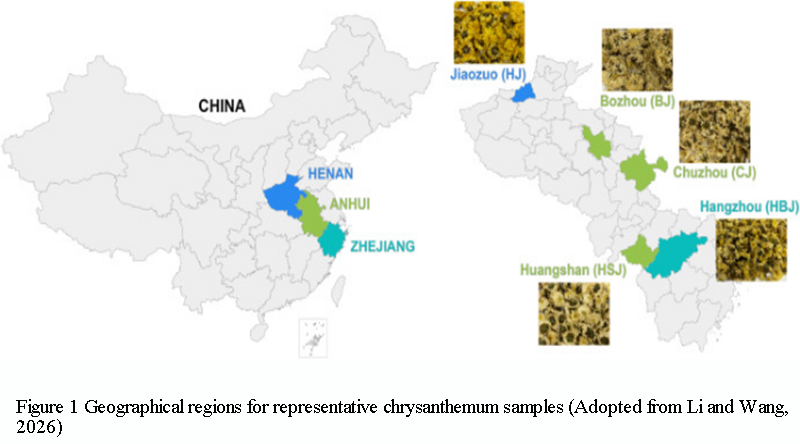
Traceability in Hangzhou White Chrysanthemum cultivation should begin with production-base environmental information, because chrysanthemum quality varies significantly with geographical origin and growing environment (Figure 1) (Li and Wang, 2026). Studies of Hangbaiju show that key pharmacodynamic compounds, including rutin and chlorogenic acid, were most abundant in samples from Tongxiang, and soil mineral elements were positively correlated with several differential metabolites, indicating that origin and soil conditions directly shape medicinal quality (Long et al., 2023). More broadly, chrysanthemum origin can be authenticated with high accuracy using mineral-element, stable-isotope, or fused NIR–ICP-MS signatures, which shows that environmental and edaphic differences leave measurable chemical fingerprints that are suitable for traceability verification (Yao et al., 2023). Accordingly, the traceability record for each production base should include location, plot identity, altitude if relevant, soil type, pH, organic matter, available nitrogen, phosphorus, and potassium, irrigation-water source, and surrounding ecological conditions, because these variables are repeatedly treated as foundational to chrysanthemum yield and quality formation (Zhang et al., 2023).
|
Figure 1 Geographical regions for representative chrysanthemum samples (Adopted from Li and Wang, 2026) |
Environmental traceability should also include the source and health status of seedlings, because seedling origin is the first biological node in the production chain and directly affects the uniformity and reliability of later quality records (He and Shi, 2021). Hangzhou White Chrysanthemum can be propagated through virus-free rapid propagation, in which infected buds are detoxified and cultured to obtain virus-free callus and clustered buds, and this technology reduces production cost while accelerating propagation, making it highly suitable for standardized base management. Related chrysanthemum studies also specify that healthy, disease-free cuttings and equally sized seedlings are used for uniform field establishment, while self-cultivated seedling cuttings and owned stock plants provide clear provenance for planting materials. Therefore, traceability files should record cultivar name, propagation method, nursery or mother-stock source, virus-free certification, seedling age and specification, transplanting date, and receiving plot, so that any later difference in growth, flowering, or quality can be traced back to the original planting material (Pan et al., 2023).
3.2 Water and fertilizer management and green pest and disease control
Water and fertilizer management is the core control link in green cultivation traceability, because chrysanthemum growth, flowering, yield, and quality respond strongly to irrigation level, nutrient supply, and their timing. In field chrysanthemum, irrigation at 0.75 Epan repeatedly produced the best balance of yield and water-use efficiency, while 100% of the recommended fertilizer dose improved flowering, yield, quality parameters, and economic returns. Split NPK application through drip fertigation also improved bud diameter, inflorescence traits, chlorophyll content, and soil nutrient status, showing that fertilization records should capture not only total input but also stage-specific application (Choudhary et al., 2022). At the same time, fertilizer concentration cannot simply be increased without limit, because chrysanthemum growth improved with appropriate increases but declined when concentration was too high, and recent work on nitrogen management shows that fertilization beyond optimal demand induces luxury uptake and lowers nitrogen-use efficiency.
For that reason, the traceability system should record irrigation mode, irrigation frequency, water quantity, fertigation concentration, fertilizer formula, application stage, operator, and any sensor-based monitoring data, so that input behavior can be matched to plant performance and audited against green standards (He and Shi, 2021). Green pest and disease control should be traced with the same rigor, because excessive chemical dependence remains a known risk in medicinal-material production, while sustainable alternatives can support quality and soil health. For complementary soil biological management, PGPR such as Bacillus subtilis produced outcomes comparable to conventional fertilization while enriching beneficial soil microorganisms, and organic manures, bio-fertilizers, and bio-stimulants improved soil microbial activity and nutrient availability (Sarkar et al., 2024). Bio-enhancer systems such as Jeevamrit also increased rhizosphere microbial counts and enzymatic activity, and studies of planting dates and fertilizer modules have highlighted further links between cultivation practices, chrysanthemum yield, and soil health, so pesticide and disease-control records should include both chemical and ecological measures, their dosages, dates, targets, and residue-risk controls (Pathania et al., 2024).
3.3 Agricultural operations and production process records
Traceability in the cultivation process finally depends on complete agricultural operation records, because standardized production of Chinese herbal medicines requires quality control across planting, processing, purchasing, and selling, and separate planting by many operators makes quality harder to supervise without detailed records (He and Shi, 2021). For medicinal materials in China, policy has explicitly called for complete quality traceability across the whole supply chain and for technical standards covering collection, origin processing, ecological cultivation, and standardized cultivation. In Hangzhou White Chrysanthemum, these records should begin with branch pressing from April to May, transplanting, spacing arrangement, gap filling, topping or terminal-bud removal, and other key field operations, because these operations determine reproductive transition, branch number, and subsequent flower yield (Pan et al., 2023). This is especially important because manual decapitation has traditionally been used to increase branching but is labor-intensive and can increase disease occurrence, which makes operation timing and method critical traceability points (Zhang et al., 2023).
Process records should also cover flowering regulation, foliar treatments, weed control, harvesting decisions, and batch coding, so that each product lot can be linked to its exact cultivation history. This need is strengthened by evidence that exogenous hormones alter flowering-related gene expression in Hangzhou White Chrysanthemum, and that 6-BA combined with Pro-Ca can increase branch number, yield, and nutritional quality while slightly shifting medicinal-component profiles, all of which means that growth-regulator use must be fully documented in traceability archives (Zhang et al., 2023). Harvest records are equally important because the bud stage has the highest commercial value and the optimal harvest window is short, so traceability should record harvest period, bud maturity, picker or machine identity, batch number, and transfer destination (Wu et al., 2026). With IoT sensors and digital numbering of planting, processing, purchasing, and selling links, whole-process records can improve supervision efficiency, reduce circulation cost, and strengthen confidence in medicinal chrysanthemum quality, which is exactly the operational goal of a green production-base traceability system for Hangzhou White Chrysanthemum (He and Shi, 2021).
4 Quality Traceability in the Harvesting and Processing of Hangzhou White Chrysanthemum
4.1 Harvest timing and production batch management
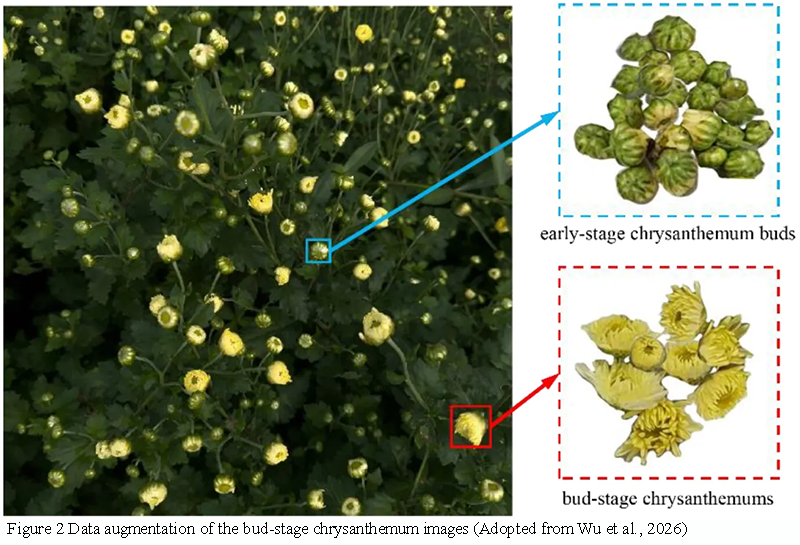
Harvest timing is the first key control point after field cultivation, because the commercial and medicinal value of chrysanthemum changes with flower developmental stage. Hangzhou White Chrysanthemum has its highest commercial value at the bud stage, but the optimal harvesting window is short, so delayed or non-uniform harvesting can quickly reduce product consistency (Figure 2) (Wu et al., 2026). More broadly, medicinal chrysanthemum studies show that chemical profiles vary significantly across bud, initial flowering, full bloom, and eventual stages, and most active constituents are highest or relatively high at the initial or full-bloom stages rather than at late stages. In cultivated Hangbaiju, fresh flowers harvested at 70% tubiform-flower flowering were used as the defined sampling stage for yield and quality analysis, which indicates that harvest maturity should be operationally standardized in traceability rules rather than left to subjective judgment (Zhang et al., 2023). These two maturity criteria are not interchangeable and should be specified according to product type and quality targets.
|
Figure 2 Data augmentation of the bud-stage chrysanthemum images (Adopted from Wu et al., 2026) |
Because flowering and harvest timing are influenced by cultivation schedule and plant regulation, batch management should preserve the production history that explains why one lot matures earlier or differs in quality from another. Hangzhou White Chrysanthemum enters rapid reproductive growth after terminal-bud removal around 20 August as temperature declines and daylength shortens, and flowering regulation is also responsive to exogenous hormones, temperature, and photoperiod (Pan et al., 2023). Chrysanthemum studies further show that planting time and pinching schedule affect days to first bud initiation, 50% flowering, and first harvest, while robotic or AI-based recognition can support standardized selective harvest under labor constraints (Khandre et al., 2025). Therefore, each harvested lot should be assigned a unique batch code linked to plot number, cultivar, seedling source, planting date, pinching or topping record, harvest date, harvest maturity, picker or device identity, and inspection result, so that later quality differences can be traced back to the biological and operational causes of the batch.
4.2 Processing procedures and recording of key parameters
Processing is the second major quality-control node, because post-harvest treatment directly affects storability, color, aroma, active compounds, and safety. Drying is consistently identified as a crucial post-harvest step for medicinal chrysanthemum, and different drying methods produce different outcomes in phenolics, flavonoids, amino acids, volatiles, shrinkage, and microstructure (Sun et al., 2022). Evidence across drying studies shows that process choice matters: infrared-assisted hot-air drying improved volatile retention and increased chlorogenic acid, luteolin, total phenolics, and flavonoids; tempering combined with infrared-assisted hot-air drying reduced drying time and energy use while increasing chlorogenic acid, luteolin, total phenolics, total flavonoids, antioxidant capacity, and volatile number; and pulsed vacuum drying preserved phenolics and flavonoids while yielding high chlorogenic acid and 3,5-dicaffeoylquinic acid under specific settings. These findings show that traceability records must capture not only whether drying occurred, but also the exact method, equipment, temperature, duration, tempering time, pulsed ratio where relevant, and endpoint moisture.
The kill-green step should be treated as a separate traceability item, because it is a critical determinant of downstream drying behavior and product quality. Kill-green increased water mobility and shortened subsequent drying time by up to 46.15%, and high-humidity air impingement kill-green for 60 s gave better PPO and POD inactivation, color, phenolic retention, amino acids, volatiles, and sensory acceptance than steam kill-green for the same duration (Xu et al., 2025). Earlier work similarly found method-specific optima, including microwave power of about 680–850 W for 8–13 min, steam kill-enzyme time of 2–4 min, kill-enzyme time of 0.5–1 min, and oven temperature of about 55–65 °C, while another Hangbaiju study dried flowers at 50 °C to constant weight for later analysis. Processing traceability should therefore record the name and order of each process, start and end time, operator, equipment, environmental conditions, moisture measurements, and key quality indicators such as color, relative density, pH, extraction ratio, transfer rate, or fingerprint where applicable, since standardized process parameters are the basis for consistent evaluation of chrysanthemum products.
4.3 Packaging, storage, and batch information linkage
After processing, packaging and storage determine whether earlier quality control is maintained through circulation. In Chinese herbal medicine supply chains, storage errors and poor standardization in storage, transportation, and retail management remain recognized sources of quality risk, alongside problems from harvesting, processing, and packaging (Ngai and Shaw, 2025). Storage enterprises are expected to upload warehousing time, storage methods, and pest- and mold-prevention records, while warehouse humidity should be monitored in real time so that environmental conditions can be adjusted when materials fall outside the standard moisture range. Recent TCM traceability designs also treat warehousing as an independent sub-chain that records temperature, humidity, storage duration, and inventory level, and logistics records should include transport time, mode, and environmental monitoring during transit (Chen et al., 2026). For dried chrysanthemum specifically, final moisture content is a practical control target, and one community-scale processing model required moisture below 8% and vacuum-sealed packaging before distribution (Leelapattana and Assawarachan, 2025).
Batch linkage across packaging, storage, transport, and sales should preserve one continuous identity code from harvested raw material to final commercial unit. Existing herbal-medicine traceability systems number the planting, processing, purchasing, and selling links, upload package QR codes or barcodes with product name, specification, and manufacturer, and use blockchain or multi-chain architectures to connect stage-specific records while preventing tampering (He and Shi, 2021). Circulation systems based on blockchain, cloud platforms, and NB-IoT also support real-time collection, review, and third-party validation of source information, forming an information loop that enables whole-process supervision and consumer participation in traceability (Shi et al., 2020).
5 Quality Evaluation and Key Control Indicators of Hangzhou White Chrysanthemum
5.1 Appearance traits and basic quality indicators
The quality evaluation of Hangzhou White Chrysanthemum should begin with appearance traits and basic physicochemical indicators, because market grading and authenticity judgment still rely first on visible morphology and then on measurable quality parameters. In chrysanthemum, inflorescence diameter is an important classification factor, and smaller flower heads can contain higher chlorogenic acid and 3,5-O-dicaffeoylquinic acid, which means appearance is not only a commercial trait but also linked to medicinal quality. The same study showed that first-grade material had smaller diameters and higher polyphenol content, confirming that flower-head size can serve as a practical grading index when combined with chemistry rather than used alone (Yang et al., 2025). Chrysanthemum evaluation studies more broadly show that objective phenotyping can extract traits such as color coverage, saturation, visual uniformity, flowering efficiency, and plant morphology, and that these visible traits explain much of varietal differentiation (Sun et al., 2025). For production-base traceability, this means the recorded appearance indices of Hangzhou White Chrysanthemum should include flower-head diameter, uniformity, color, integrity, cleanliness, and batch consistency at harvest and after drying.
Basic quality indicators should then verify whether the external appearance corresponds to acceptable internal quality. For Hangzhou white chrysanthemum standard decoction, useful evaluation indices include traits, relative density, pH, extraction ratio, transfer rate, and fingerprint similarity, and these parameters showed good precision, stability, and repeatability in standardized testing. In that study, the standard decoction was a clear yellow-brown solution with relative density of 1.007–1.011, pH of 5.37–5.56, and an average extraction ratio of 23.6%, which illustrates how decoction-specific physicochemical values may inform operational acceptance ranges; these values should not be used directly as quality limits for dried flower heads. Tea-oriented chrysanthemum quality work also uses moisture, water extract, total ash, water-soluble ash, acid-insoluble ash, crude fiber, and microbial counts as routine indicators, and one snow-white chrysanthemum product met packaged dry-tea standards on these measures (Keliat et al., 2026). Because harvest time, origin, and nutrition affect inflorescence diameter and other visible traits, appearance records should always be linked with batch-based analytical results instead of being treated as independent evidence of quality (Yuan et al., 2022).
5.2 Functional components and safety quality indicators
The core functional quality of Hangzhou White Chrysanthemum is determined by its flavonoids, phenolic acids, and related secondary metabolites, which are repeatedly identified as the main active constituents of Chrysanthemum morifolium (Miao et al., 2026). The Chinese Pharmacopoeia specifies chlorogenic acid, luteolin-7-O-glucoside, and 3,5-O-dicaffeoylquinic acid as key components for Chrysanthemi Flos, and these compounds are also the main ingredients used in recent grading and Q-marker studies. Chromatogram-effect and spectrum-effect approaches further show that quality evaluation should not depend only on origin or processing reputation, because bioactive ingredients and their antioxidant associations provide a more direct basis for quality control (Yuan et al., 2022). Across chrysanthemum materials, chlorogenic acid, 3,5-dicaffeoylquinic acid, and luteolin-7-O-glucoside are strongly associated with antioxidant or protective activity, supporting their use as key functional indicators in Hangzhou White Chrysanthemum traceability files.
Functional quality also varies with origin, cultivation conditions, and process choices, so the traceability system should capture these sources of variation together with the analytical results. Hangbaiju from Tongxiang contained higher levels of rutin, chlorogenic acid, and apigenin-7-O-glucoside, and soil mineral elements were positively correlated with some of these differential metabolites, showing that geographical environment directly shapes medicinal quality (Long et al., 2023). Stable isotope, mineral-element, and fused NIR-ICP-MS models classified chrysanthemum origin with very high accuracy, making origin authentication itself a safety and authenticity indicator for premium regional material (Yao et al., 2023; Li and Wang, 2026). Cultivation and processing further alter bioactive profiles: hydroponic culture increased total flavonoids and chlorogenic acid, while drying conditions can degrade heat-sensitive antioxidants or, when optimized, improve retention of chlorogenic acid, luteolin, total phenolics, total flavonoids, and volatiles. Safety quality indicators should therefore include heavy metals, microbial contamination, and other routine safety tests in addition to active components, because chrysanthemum tea evaluation commonly measures cadmium, lead, tin, mercury, arsenic, total plate count, coliforms, and molds (Keliat et al., 2026).
5.3 Identification of critical quality control points
Critical quality control points for Hangzhou White Chrysanthemum should be identified by following the chain from origin and seedlings to harvest, drying, storage, and final authentication, because chrysanthemum quality is formed cumulatively rather than at a single stage (Yao et al., 2023). The first control point is origin and seedling consistency, since growth environment affects quality and sale price, soil mineral signatures influence active compounds, and reasonable seedling classification standards improve subsequent plant quality (Long et al., 2023; Jing et al., 2024). The second control point is cultivation-input regulation, since agronomic measures can change both nutritional and medicinal indices, sometimes increasing yield while slightly reducing some medicinal constituents, though remaining above Pharmacopoeia standards (Zhang et al., 2023). The third control point is harvest stage, because harvest time affects inflorescence diameter and active-ingredient accumulation, and chlorogenic acid can peak in late-bud or early bloom before declining during fuller flowering and senescence (Neatpatiparn et al., 2025).
The fourth and fifth control points are processing and post-processing management, because drying, kill-green treatment, packaging, and storage all alter quality and safety. Drying is a crucial post-harvest step, and optimized drying or pretreatment can improve retention of phenolics, flavonoids, volatiles, and antioxidant capacity, whereas prolonged or poorly controlled heating can degrade heat-sensitive compounds (Yang et al., 2025; Keliat et al., 2026). Fingerprint similarity, batch similarity analysis, and Q-marker quantification are suitable tools for judging whether processed batches remain within an acceptable quality range, since commercial chrysanthemum batches can vary substantially even within the same accession. The final control point is traceability-enabled authenticity verification, because origin misidentification and fragmented supply chains weaken quality assurance, while IoT-based numbering and whole-process traceability improve supervision from planting through processing and sale (He and Shi, 2021). Accordingly, the key control indicator set for Hangzhou White Chrysanthemum should integrate appearance grading, basic physicochemical indices, marker compounds, safety tests, fingerprint consistency, and full-batch provenance, so that quality evaluation can support both green production management and reliable traceability in the market.
6 Information Management and Application of the Quality Traceability System for Hangzhou White Chrysanthemum
6.1 Traceability coding and QR code-based information management
The traceability coding system for Hangzhou White Chrysanthemum should use a unique batch identity that follows the product from cultivation through packaging and sale. Existing agricultural systems commonly encode product ID, batch number, harvest date, processing date, supplier identity, storage conditions, and a blockchain record link, which provides the core data structure for reliable lifecycle tracking. A hierarchical coding structure is also practical, because upstream material, planting, harvest, storage, and packaging nodes can be split into subcodes that preserve process detail without breaking batch continuity.
QR codes are suitable as the consumer-facing carrier of this coding system, because they allow direct inquiry of traceability information from raw material to finished product (Jing and Li, 2024; Sonawane, 2025). In herbal systems, QR codes can carry not only identity data but also quality data, including chemical-fingerprint information that can be read by smartphone applications and compared across batches. Dynamic QR codes further improve communication because the displayed information can be updated, shared, and integrated into social platforms, making the code part of both supervision and brand sales.
6.2 Traceability data recording and abnormality early warning
Traceability data recording should cover the whole cultivation and circulation chain, because agricultural and herbal quality control depends on linked records from production, processing, warehousing, logistics, sales, and inspection (Jing and Li, 2024). In practice, growers should enter cultivation records, inspectors should enter testing and warehousing records, and processing or packaging operators should enter processing and package-identity records. For medicinal plants, species identity and lab quality indicators should also be anchored to the same batch, because DNA barcoding and laboratory results strengthen authenticity and whole-process supervision.
Abnormality early warning should be built on real-time sensor data and rule-based or predictive analytics rather than end-point inspection alone (Alfian et al., 2020). IoT systems already monitor temperature, humidity, location, and other environmental factors during storage and transport, send these data to databases or dashboards, and compare them against preset safety limits (Gupta and Jain, 2026). When abnormalities are detected or forecast, systems can issue early warnings, record the event immutably, and support decisions such as holding, reinspection, or blocking circulation of compromised products (Reddy and Tejaswini, 2025).
6.3 Application of quality traceability in product grading and brand development
Quality traceability can be used directly in product grading, because quantified detection indices and batch-linked quality data allow agricultural products to be classified by measurable standards rather than appearance alone (Jing and Li, 2024). For Hangzhou White Chrysanthemum, this means linking each batch code to appearance grade, functional components, safety-test results, and origin or process records, so that higher-grade lots have verifiable evidence behind the label. Q-marker frameworks are especially useful here because they connect process control with final herbal quality from raw material to finished product.
The same traceability system can support brand development and premium pricing by turning verified production data into differentiated quality claims (Tang et al., 2023). Studies of agricultural branding report that traceability data can be mined into quantitative labels, cultural narratives, and provenance stories that improve repurchase, trust, and price premium (Chen and Lu, 2025). This function is especially relevant for regional products, because geographical indication and origin-authentication tools can protect brand value, distinguish authentic high-quality goods, and reinforce the market identity of traditional production areas.
7 Summary and Prospects
The quality traceability system for green production bases of Hangzhou White Chrysanthemum should consist of a whole-process information chain covering cultivation, processing, storage, transportation, sales, and supervision, because medicinal-material traceability is effective only when information is continuous from planting to circulation. At the data level, the system should integrate environmental information, seedling and cultivation records, processing parameters, logistics records, transaction data, and quality inspection results, with IoT devices used to capture temperature, humidity, location, and other key variables in real time. At the architecture level, a practical framework combines business activities, IoT sensing, blockchain storage, and application services, so that traceability information can be uploaded, stored, queried, and displayed to regulators, enterprises, and consumers. For product quality evaluation, the traceability system should be linked with measurable indicators such as appearance traits, polyphenol content, standard-decoction parameters, and fingerprint similarity, because these indices provide an operational basis for batch assessment and grading. Since Chrysanthemum morifolium is both medicinal and edible, its traceability system should also preserve evidence on flavonoids, phenolic acids, and other bioactive constituents that underlie its therapeutic and functional-food value.
Current application problems mainly arise from fragmented production, uneven standards, and limited data credibility. Chinese herbal medicines are often planted separately by many operators, which makes production quality and standardization difficult to control, and existing traceability systems remain incomplete enough that off-site cultivation, counterfeit origin claims, and fake or inferior products can still enter the traceability chain. Traditional traceability platforms also rely heavily on centralized databases, which create information islands and make records more vulnerable to opacity, tampering, and weak cross-link sharing. Even when blockchain is introduced, the authenticity of the original uploaded data is still a major constraint, because immutability protects stored records but does not itself guarantee that the source data were correct at entry. Research on agricultural blockchain systems further notes that many proposals remain too general or are still at an early application stage, so real-world deployment, interoperability, and integration across technologies are not yet mature. On the product side, quality variation between batches remains substantial, as shown by unqualified chrysanthemum batches in marker-compound testing and by significant variation in common-peak contents even within the same accession, which means that traceability without synchronized quality standards cannot fully solve market inconsistency.
Future development should move toward smarter, more accurate, and more biologically grounded traceability. IoT, embedded sensing, and machine learning can improve automatic data capture, reduce manual entry errors, and screen abnormal source data, with reported blockchain-IoT-ML systems reaching high verification accuracy for on-chain information. For Hangzhou White Chrysanthemum, this creates a path toward early warning of abnormal cultivation, storage, or circulation conditions, while supporting auditable correction procedures, tamper resistance, and efficient queries. At the source-authentication level, future systems are likely to combine blockchain with DNA barcoding, molecular identification, high-precision localization, and even individual-plant tracking to address counterfeit origin, misreported planting years, and authenticity disputes. Product evaluation should also advance from simple origin or appearance judgment toward Q-marker-based and bioactivity-linked quality control, because current chrysanthemum research shows that chromatogram-effect and spectrum-effect approaches can identify more informative markers for authentication and quality assessment. In addition, objective phenotyping, remote sensing, and digital grading tools can modernize visual evaluation, while alternative cultivation systems such as hydroponics may support greener production with higher yield and higher flavonoid and chlorogenic acid contents. Looking ahead, the most promising direction is a traceability system that not only records the full history of Hangzhou White Chrysanthemum, but also supports brand protection, counterfeit control, quality grading, and the development of higher-value medicinal and functional products.
Conflict of Interest Disclosure
The authors affirm that this research was conducted without any commercial or financial relationships that could be construed as a potential conflict of interest.
Alfian G., Syafrudin M., Fitriyani N. L., Rhee J., Ma'arif M. R., and Riadi I., 2020, Traceability system using IoT and forecasting model for food supply chain, Proceedings of the 2020 International Conference on Decision Aid Sciences and Application (DASA), 903-907.
https://doi.org/10.1109/dasa51403.2020.9317011
Chen R., Sun Y., Xue F., Ma Y., Wu X., Zeng X., Li J., and Ren J., 2026, Blockchain-Based Multi-Chain Data Supervision Mechanism for Traditional Chinese Medicine Traceability System, International Journal of Advanced Computer Science and Applications, 17(2): 1010-1018.
https://doi.org/10.14569/ijacsa.2026.01702100
Choudhary A., Kumar A., Kumar U., Choudhary R., Kumar R., Jat R., Nidhibahen P., Hatamleh A. A., Al–Dosary M. A., Alwasel Y. A., Rajagopal R., and Ravindran B., 2022, Various Fertilization Managements Influence the Flowering Attributes, Yield Response, Biochemical Activity and Soil Nutrient Status of Chrysanthemum (Chrysanthemum morifolium Ramat.), Sustainability, 14(8): 4561.
https://doi.org/10.3390/su14084561
Du S., Luo X.-F., Tang L., and Yan A., 2023, The effects of quality certification on agricultural low-carbon production behavior: evidence from Chinese rice farmers, International Journal of Agricultural Sustainability, 21(1): 2227797.
https://doi.org/10.1080/14735903.2023.2227797
Ehsan I., Khalid M. I., Ricci L., Iqbal J., Alabrah A. A., Ullah S. S., and Alfakih T. M., 2022, A Conceptual Model for Blockchain-Based Agriculture Food Supply Chain System, Scientific Programming, 2022: 7358354.
https://doi.org/10.1155/2022/7358354
Gupta A., and Jain V., 2026, Blockchain‐Assisted IoT Framework for Reliable Monitoring and Predictive Analytics in Perishable Food Supply Chains, Journal of Food Process Engineering, 49(1): e70333.
https://doi.org/10.1111/jfpe.70333
He M., and Shi J., 2021, Circulation traceability system of Chinese herbal medicine supply chain based on internet of things agricultural sensor, Sustainable Computing: Informatics and Systems, 30: 100518.
https://doi.org/10.1016/j.suscom.2021.100518
Islam S., and Cullen J. M., 2021, Food traceability: A generic theoretical framework, Food Control, 123: 107848.
https://doi.org/10.1016/j.foodcont.2020.107848
Jing R., and Li P., 2024, Knowledge graph for integration and quality traceability of agricultural product information, Frontiers in Sustainable Food Systems, 8: 1389945.
https://doi.org/10.3389/fsufs.2024.1389945
Jing Y.-F., Zhao H.-G., and Yu S., 2024, Establish seedling quality classification standard for Chrysanthemum efficiently with help of deep clustering algorithm, arXiv preprint, arXiv:2409.08867.
https://doi.org/10.48550/arxiv.2409.08867
Kang S., Frick F., Sidhoum A. A., Sauer J., and Zheng S., 2023, Does food quality certification improve eco-efficiency? Empirical evidence from Chinese vegetable production, Food Policy, 121: 102564.
Keliat J. M., Chintya H., and Margolang P. R., 2026, Quality evaluation and antioxidant activity of snow-white chrysanthemum (Chrysanthemum morifolium (Ramat.) Hemsl.) flower infusion, IOP Conference Series: Earth and Environmental Science, 1583(1): 012074.
https://doi.org/10.1088/1755-1315/1583/1/012074
Khandre P. S., Badge S. A., and Khobragade H., 2025, Effect of staggered planting and pinching time on flowering and quality of annual chrysanthemum, International Journal of Horticulture and Food Science, 7(9): 40-43.
https://doi.org/10.33545/26631067.2025.v7.i9a.391
Latino M., Menegoli M., Lazoi M., and Corallo A., 2022, Voluntary traceability in food supply chain: a framework leading its implementation in Agriculture 4.0, Technological Forecasting and Social Change, 178: 121564.
https://doi.org/10.1016/j.techfore.2022.121564
Leelapattana W., and Assawarachan R., 2025, Enhancing Technology Transfer and Innovation for Processing of Dried Yellow Chrysanthemum (Chrysanthemum indicum) Flowers: A Case Study of the Mae Wang Lao Community Enterprise Group, Chiang Rai Province, Journal of Food Processing and Preservation, 2025(1): 3541701.
https://doi.org/10.1155/jfpp/3541701
Lin K., Chavalarias D., Panahi M., Yeh T. R., Takimoto K., and Mizoguchi M., 2020, Mobile-based traceability system for sustainable food supply networks, Nature Food, 1(11): 673-679.
https://doi.org/10.1038/s43016-020-00163-y
Long W.-J., Bai X.-F., Wang S., Chen H., Yin X., Gu H.-W., Yang J., and Fu H., 2023, UHPLC-QTOF-MS-based untargeted metabolomics and mineral element analysis insight into the geographical differences of Chrysanthemum morifolium Ramat cv. "Hangbaiju" from different origins, Food Research International, 163: 112186.
https://doi.org/10.1016/j.foodres.2022.112186
Lu Y., Zhou T., Guo J., Zhong J., Li D., Shi H., Liu C., Xiang R., and Sun M., 2024, Effects of Substitute Substrate, Water, and Fertilizer Management on the Growth of Potted Chrysanthemums, Horticulturae, 10(2): 138.
https://doi.org/10.3390/horticulturae10020138
Lukács M., Tóth F., Horvath R., Solymos G., Alpár B., Varga P., Kertész I., Gillay Z., Baranyai L., Felfoldi J., Nguyen Q. D., Kovács Z., and Friedrich L., 2025, Advanced Digital Solutions for Food Traceability: Enhancing Origin, Quality, and Safety Through NIRS, RFID, Blockchain, and IoT, Journal of Sensor and Actuator Networks, 14(1): 21.
https://doi.org/10.3390/jsan14010021
Miao W., Wang Q., Wang K., Li Y., and Wei H., 2026, Quality characterization of flavonoids from flowers, stems and leaves of Chrysanthemum morifolium Ramat. ‘Chuju’, Emirates Journal of Food and Agriculture, 38: 1-10.
https://doi.org/10.3897/ejfa.2026.168254
Moysiadis T., Spanaki K., Kassahun A., Kläser S., Becker N., Alexiou G., Zotos N., and Karali I., 2023, AgriFood supply chain traceability: data sharing in a farm-to-fork case, Benchmarking: An International Journal, 30(9): 3090-3123.
https://doi.org/10.1108/bij-01-2022-0006
Neatpatiparn A., Junyaprasert V., Thirapanmethee K., and Teeranachaideekul V., 2025, Phytoconstituent analysis, bioactivity, and safety evaluation of various colors of Chrysanthemum morifolium flower extracts for cosmetic application, Scientific Reports, 15: 4073.
https://doi.org/10.1038/s41598-025-88590-4
Ngai H.-L., and Shaw P.-C., 2025, Advancing global herbal medicine: Enhancing herb quality through innovative strategies explored in Hong Kong - An international hub, Phytomedicine Plus, 5(1): 100727.
https://doi.org/10.1016/j.phyplu.2024.100727
Oppong D., and Bannor R. K., 2022, Bibliometric analysis and systematic review of compliance with agricultural certification standards: evidence from Africa and Asia, All Life, 15(1): 970-999.
https://doi.org/10.1080/26895293.2022.2124317
Pan C., He X., Song S., Zou L., Wang M., and Han B., 2023, Identification and Analysis of Phosphatidylethanolamine-Binding Protein Family Genes in the Hangzhou White Chrysanthemum (Chrysanthemum morifolium Ramat), Agriculture, 13(2): 374.
https://doi.org/10.3390/agriculture13020374
Pathania S., Dhiman S., Kashyap B., Kumar A., Kaushal R., Gupta R. K., Saleh I. A., Okla M., and Elshikh M., 2024, Influence of planting dates and fertilizer modules on yield of chrysanthemum and soil health, BMC Plant Biology, 24: 510.
https://doi.org/10.1186/s12870-024-05241-y
Prashar D., Jha N., Jha S., Lee Y., and Joshi G. P., 2020, Blockchain-based traceability and visibility for agricultural products: a decentralized way of ensuring food safety in india, Sustainability, 12(8): 3497.
https://doi.org/10.3390/su12083497
Reddy G., and Tejaswini N., 2025, Forecasting and Traceability System for the Food Supply Chain Utilizing IoT, Proceedings of the 2025 6th International Conference on Electronics and Sustainable Communication Systems (ICESC), 1465-1470.
https://doi.org/10.1109/icesc65114.2025.11212405
Sarkar S., Sarkar I., Sarkar D., Maitra S., and Chatterjee R., 2024, Effect of Organic Sources of Nutrients on Growth and Flowering of Spray Chrysanthemum, International Journal of Plant & Soil Science, 36(1): 131-139.
https://doi.org/10.9734/ijpss/2024/v36i14338
Shi M.-Y., Liu C.-Y., Wen C.-B., Xu X., and Liu S.-N., 2020, Design and development of quality traceability system for circulation of Chinese herbal medicine based on blockchain and NB-IOT, China Journal of Chinese Materia Medica, 45(17): 4267-4272.
https://doi.org/10.19540/j.cnki.cjcmm.20200603.311
Sonawane Y., 2025, Medicine Traceability Using QR Code, International Journal of Scientific Research in Engineering and Management, 9(2): 1-9.
https://doi.org/10.55041/ijsrem41872
Stankovski S., and Ostojić G., 2023, Traceability in agri-food production and supply chains, Proceedings of the 19th International Scientific Conference on Industrial Systems, 72-77.
https://doi.org/10.24867/is-2023-t2.1-2_10541
Sun D.-Y., Wu M., Xu H., Shang N., Gao F., Wang Y., and Zheng Z., 2022, The bioactive properties and quality attributes of Chrysanthemum morifolium Ramat as affected by pulsed vacuum drying, Drying Technology, 40(14): 3021-3035.
https://doi.org/10.1080/07373937.2021.1998105
Sun M., Zhang J., Lu J., Hao M., Chen F., Su J., Zhang F., Chen S., Fang W., and Guan Z., 2025, Intelligent evaluation of ornamental characteristics of garden chrysanthemums using unmanned aerial vehicle (UAV)-based RGB imagery, Scientia Horticulturae, 350: 114374.
https://doi.org/10.1016/j.scienta.2025.114374
Tagarakis A., Benos L., Kateris D., Tsotsolas N., and Bochtis D., 2021, Bridging the Gaps in Traceability Systems for Fresh Produce Supply Chains: Overview and Development of an Integrated IoT-Based System, Applied Sciences, 11(16): 7596.
https://doi.org/10.3390/app11167596
Tang S., Wang Z., Tan G., and Ma Y., 2023, Research on Efficient and Trustworthy Traceability Methods for Agricultural Product Quality and Safety, Proceedings of the 2023 International Conference on Computer Science and Automation Technology (CSAT), 493-498.
https://doi.org/10.1109/csat61646.2023.00133
Wu Y., Yu C., Chen J., Liu X., and Wang X., 2026, CBD-YOLO: a lightweight small-object detection algorithm for bud-stage Hangzhou white chrysanthemum in complex field environments, Frontiers in Plant Science, 17: 1928425.
https://doi.org/10.3389/fpls.2026.1928425
Xu H., Wu M., Wei W., Ren W., and Zheng Z., 2025, Chrysanthemum morifolium Ramat. as a traditional tea material: Unraveling the influence of kill-green process on drying characteristics, phytochemical compounds, and volatile profile, Food Research International, 200: 115478.
https://doi.org/10.1016/j.foodres.2024.115478
Yang P., Tian D., Han X.-Y., Zou Q.-J., Ma L.-J., Wei M., Yu M., and Zou Z.-M., 2024, Optimal Harvest Period and Quality Control Markers of Cultivated Flos Chrysanthemi Indici using Untargeted/Targeted Metabolomics, chemometric analysis and in vivo study, Journal of Ethnopharmacology, 334: 118533.
https://doi.org/10.1016/j.jep.2024.118533
Yang X., Zhao J., Liu J., Yuan R., Huang J., Yang Y., Wu W., Yang Q., Wang J., and Zhan X., 2025, Quality Grading of “Fubaiju” Based on Inflorescence Diameter and Content of Polyphenolic Substances, ACS Omega, 10(29): 32282-32290.
https://doi.org/10.1021/acsomega.5c04315
Yang Y., Wei T., and Li M., 2021, Research and Practice of Agricultural Product Quality Traceability Social Intercourse Application, E3S Web of Conferences, 235: 03007.
https://doi.org/10.1051/e3sconf/202123503007
Yao M., Bai X.-F., Wen F., Liu K.-P., Yang J., Chen H., and Yang X.-L., 2023, Accurate origin identification of Chinese white Chrysanthemi Flos by analysis of C, N, O, H stable isotope ratios and mineral elements combined with chemometrics, Journal of Food Composition and Analysis, 124: 105703.
https://doi.org/10.1016/j.jfca.2023.105703
Yuan H., Luo J.-Y., Lyu M., Jiang S., Qiu Y., Tian X., Liu L., Liu S., Ouyang Y., and Wang W., 2022, An integrated approach to Q-marker discovery and quality assessment of edible Chrysanthemum flowers based on chromatogram–effect relationship and bioinformatics analyses, Industrial Crops and Products, 188: 115745.
https://doi.org/10.1016/j.indcrop.2022.115745
Zhang Y., Guo C., Hu J., Liu F., Fu S., Guo X., Chen Q., Zhang L., Zhu L., and Hou X., 2023, Effects of 6-Benzylaminopurine Combined with Prohexadione-Ca on Yield and Quality of Chrysanthemum morifolium Ramat cv. Hangbaiju, Agriculture, 13(2): 444.
https://doi.org/10.3390/agriculture13020444


. PDF(511KB)
. FPDF(win)
. FPDF(mac)
. HTML
. Online fPDF
Associated material
. Readers' comments
Other articles by authors
. Weiying Gao

Related articles
. Hangzhou White Chrysanthemum
. Green cultivation
. Quality traceability
. Quality control
. Digital management
Tools
. Email to a friend
. Post a comment