Research Insight
Analysis of the Mechanisms by Which Controlled-Environment Regulation Affects Polysaccharide Accumulation in Dendrobium officinale 

 Author Correspondence author
Medicinal Plant Research, 2026, Vol. 16, No. 5
Received: 03 Jul., 2026 Accepted: 16 Aug., 2026 Published: 05 Sep., 2026
Dendrobium officinale is an important medicinal and edible plant, and polysaccharides are its major bioactive constituents and key indicators for evaluating medicinal quality. Their formation and accumulation are jointly influenced by multiple factors, including genetic background, developmental stage, and cultivation environment. This study systematically analyzes the effects of controlled-environment regulation on polysaccharide accumulation in D. officinale and the underlying mechanisms, with particular emphasis on the regulatory roles of light, temperature, water, air humidity, mineral nutrition, cultivation substrates, and the rhizosphere microenvironment. The analysis indicates that appropriate light intensity and light quality, suitable day-night temperature differences, and coordinated water and fertilizer supply can improve photosynthetic carbon assimilation, increase the supply of sugar precursors, and promote polysaccharide accumulation by regulating sucrose metabolism, sugar transport, and the expression of polysaccharide biosynthesis-related enzymes and genes. Moderate environmental stresses, such as drought, low temperature, and nutrient limitation, can also enhance soluble sugar and polysaccharide accumulation through stress responses and carbon reallocation, whereas excessive stress suppresses plant growth and photosynthesis. Meanwhile, substrate physicochemical properties, rhizosphere water–air conditions, and beneficial microorganisms can indirectly regulate polysaccharide formation by affecting root vigor, nutrient uptake, and source–sink relationships. Polysaccharide accumulation in D. officinale is therefore the integrated outcome of photosynthetic carbon supply, sugar metabolic conversion, source-sink transport, environmental stress responses, and aboveground–belowground environmental interactions. Future studies should further clarify the optimal thresholds and interaction patterns of multiple environmental factors, establish precise controlled-environment regulation systems that balance biomass production and polysaccharide quality, and integrate environmental monitoring, quality prediction, and intelligent control technologies to achieve high-quality, efficient, and standardized production of D. officinale.
1 Introduction
Dendrobium officinale is an important medicinal and edible orchid that has been used in China for centuries and is now valued as both a traditional medicine and a functional food. Modern studies consistently identify polysaccharides as its principal bioactive constituents and as the core material basis for many of its health-promoting effects (Chen et al., 2024). These polysaccharides exhibit broad biological activities, including immunomodulatory, anti-inflammatory, hypoglycemic, hepatoprotective, gastrointestinal protective, antioxidant, antitumor, and vasoregulatory effects, which explains why D. officinale has attracted sustained attention in medicine, food, and health-related industries (He et al., 2022; Xu et al., 2022). Recent work has further expanded the application prospects of D. officinale polysaccharides to anti-aging, neuroprotection, skin barrier repair, and biomaterial development, indicating that their medicinal value depends not only on content but also on structural features and downstream mechanisms of action (Okoro et al., 2023; Guo et al., 2025).
Polysaccharides are also central to the quality evaluation of D. officinale. Existing studies state directly that polysaccharide content is used as a criterion for quality assessment, and some reports describe polysaccharides as the only selected quality marker in current quality control practice. However, the quality characteristics of D. officinale polysaccharides are not captured by content alone. D. officinale polysaccharides are mainly composed of mannose and glucose, but their monosaccharide ratios, molecular weights, glycosidic linkages, and higher-order conformations vary substantially among fractions and preparations, and these structural differences are closely associated with biological activity (He et al., 2022; Guo et al., 2025). This complexity creates a key quality-control challenge: bioactivity differs with source, cultivation condition, extraction process, processing method, and storage condition, because each of these factors can alter polysaccharide yield, composition, and physicochemical properties (Xu et al., 2022). Consistent with this, substantial variation in polysaccharide content has been reported across regions, tissues, developmental stages, and cultivation years, with stems generally richer than leaves and flowers, and with content changing across flowering and seasonal cycles.
Because wild D. officinale is scarce, slow-growing, and no longer economically reliable as the main source, artificial cultivation has become the dominant production mode, making environmental regulation a practical route for improving both yield and medicinal quality (Okoro et al., 2023; Chen et al., 2024). Multiple studies show that ecological factors are tightly linked to the accumulation of medicinal components in D. officinale, and that light, temperature, humidity, radiation, and nutrient-related variables jointly shape polysaccharide formation (Okoro et al., 2023). In field and semi-artificial systems, maximum and minimum relative humidity, maximum temperature, sunshine duration, soil pH, and soil nitrogen and phosphorus status have been identified as key ecological drivers of medicinal quality, while soil factors overall show significant positive relationships with polysaccharide content. Controlled-environment studies provide more direct mechanistic clues. Light quality regulates growth and polysaccharide synthesis, with red light significantly promoting UGPase expression, and a red:blue ratio of 1:3 enhancing biomass and polysaccharide accumulation through Ca2+-CaM signaling, improved photosynthetic performance, increased sucrose phosphatase and sucrose synthase activities, and greater glucose and fructose precursor supply (Wang et al., 2024). High light also increases polysaccharide accumulation, especially mannose, and activates a DoHY5-dependent regulatory pathway in which DoHY5 directly induces polysaccharide biosynthetic genes such as DoGMPP2 and DoPMT28. Temperature regulation is similarly important: diurnal temperature difference favors polysaccharide accumulation in protocorm-like bodies and changes the expression of sugar-metabolism genes including SUS, SUT, HKL1, HGL, AMY1, and SS3, while seasonal low temperature and drought are associated with sugar accumulation and stress-responsive hub genes in stems and leaves (Chen et al., 2024). Related evidence from Dendrobium nobile further supports the carbohydrate-promoting role of temperature regulation, as short-term 0℃ treatment increased polysaccharide accumulation by 56.18% and upregulated genes in starch and sucrose metabolism (Fan et al., 2024).
This study investigates the mechanisms by which controlled-environment regulation affects polysaccharide accumulation in Dendrobium officinale, with particular emphasis on the effects of light, temperature, water availability, humidity, nutrient supply, and the rhizosphere environment on polysaccharide formation and accumulation. The underlying relationships are analyzed from the perspectives of photosynthesis, carbon allocation, sugar precursor formation, regulation of sugar metabolism, stress adaptation, and signal transduction. Existing studies indicate that polysaccharide accumulation in D. officinale results from the combined effects of aboveground environmental conditions and the belowground rhizosphere environment, with pronounced synergistic and interactive effects among different environmental factors. However, current findings remain relatively fragmented, and a systematic understanding of how multiple environmental factors jointly regulate polysaccharide formation through physiological and metabolic processes is still lacking. Therefore, this study aims to clarify the regulatory pathways linking environmental signals, physiological metabolism, and polysaccharide accumulation, and identify the key processes through which controlled environments influence quality formation in D. officinale. The findings are expected to provide a theoretical basis for optimizing controlled cultivation conditions, enhancing polysaccharide accumulation, and stabilizing medicinal quality, while also providing guidance for the efficient utilization of D. officinale resources, standardized production, and the development of medicinal and functional food products.
2 Physiological and Metabolic Basis of Polysaccharide Formation and Accumulation in Dendrobium officinale
2.1 Composition, distribution, and accumulation characteristics
Polysaccharides are the principal bioactive constituents of Dendrobium officinale, and the medicinal stem is their main storage organ (Lai et al., 2024; Liang et al., 2025). Structurally, D. officinale polysaccharides are dominated by mannose and glucose, although galactose, xylose, arabinose, and rhamnose can also occur in different fractions and tissues (Guo et al., 2025). Cytochemical and compositional analyses indicate that the stem polysaccharides are mainly non-starch glucomannans or mannan-rich polymers, with water-soluble polysaccharides reaching about 35% of stem dry weight, whereas starch generally accounts for less than 10% (He et al., 2017). At the fine-structure level, several studies consistently report backbones enriched in 1→4-linked β-D-Manp and β-D-Glcp residues, although fermented or differently processed fractions can also contain α-linked motifs and distinct branching patterns, showing that DOPs are chemically diverse rather than a single uniform product (He et al., 2022; Zhong et al., 2022).
Polysaccharide distribution in D. officinale is strongly tissue-and stage-dependent. Histochemical observations show abundant polysaccharide granules in stem parenchyma cells, stored in plastids, which supports the central medicinal role of the stem as a sink tissue (He et al., 2017). Comparative organ analyses further indicate that stems have the highest polysaccharide content, whereas leaves and flowers also contain recoverable polysaccharides and represent underused biomass resources (Zhong et al., 2022; Chen et al., 2025). Accumulation is dynamic rather than static: stem water-soluble polysaccharides increase and then decline across development, peaking before flowering, while seasonal monitoring shows that stem sugars accumulate mainly from October to April, with especially rapid accumulation from October to February (Yang et al., 2025). This developmental and seasonal variation explains why polysaccharide content is widely used as a quality marker in cultivation and harvest management, but it also implies that quality depends on both amount and structure, since molecular weight, monosaccharide ratio, and conformation differ among stem, leaf, fermented, and extraction-derived fractions (Chen et al., 2025).
2.2 Photosynthetic carbon assimilation
Photosynthetic carbon assimilation provides the primary material source for polysaccharide biosynthesis in D. officinale. This species is a facultative CAM plant that can exhibit concomitant C3 and CAM photosynthesis under non-stressed conditions, while substrate moisture and light-dark cycle can shift the balance between these pathways. As substrate water declines, D. officinale shifts toward a more typical CAM pattern, and rewatering restores mixed C3/CAM behavior, showing that environmental regulation directly changes the mode of carbon capture and therefore the carbon supply available for downstream sugar synthesis (Zhang et al., 2014). Because CAM and C3 differ in the timing and efficiency of CO2 fixation, this photosynthetic plasticity is a key physiological basis by which controlled environments can alter carbohydrate production and ultimately polysaccharide accumulation.
Recent physiological and transcriptomic evidence further shows that photosynthetic performance is tightly coupled to sugar accumulation. Seasonal analyses found that genes associated with sugar metabolism in stems and leaves were enriched not only in starch and sucrose metabolism but also in photosynthesis-related pathways, and identified hub genes that likely maintain sugar metabolism under low-temperature and drought conditions by regulating photosynthetic responses. Temperature-regulation experiments in protocorm-like bodies similarly showed that diurnal temperature difference increases chlorophyll and favors polysaccharide accumulation, while differentially expressed genes include photosystem components such as PSAB and PSBA together with sugar-metabolism genes (Chen et al., 2024). These findings indicate that carbon assimilation is not merely a background source process; rather, regulated photosynthesis determines source strength, precursor availability, and source-sink coordination, thereby setting the upper physiological limit for polysaccharide synthesis in D. officinale.
2.3 Sugar metabolic pathways
After photosynthetic fixation, carbon enters the sugar metabolic network that directly supplies precursors for polysaccharide assembly. Current pathway models divide DOP biosynthesis into three major steps: sucrose is first converted into intermediates such as glucose-1-phosphate and fructose-6-phosphate, these are then transformed into nucleotide-diphospho sugars, and finally glycosyltransferases polymerize these activated donors into macromolecular polysaccharides in the Golgi apparatus. Within this framework, sucrose synthase is a central enzyme because it cleaves sucrose with UDP to generate UDP-glucose and fructose, thereby linking source carbohydrate turnover to precursor supply for cell wall and storage polysaccharide synthesis (Chen et al., 2024). Transcriptomic studies support this model by showing that starch and sucrose metabolism is repeatedly enriched during developmental transitions associated with stem polysaccharide change, and that candidate biosynthetic genes co-vary with polysaccharide content (Yang et al., 2025).
The physiological basis of polysaccharide accumulation therefore lies in coordinated regulation of precursor formation, sugar transport, and polymer assembly. Diurnal temperature difference alters the expression of genes involved in polysaccharide metabolism, including SUS, SUT, HKL1, HGL, AMY1, and SS3, indicating that carbon partitioning among sucrose turnover, hexose generation, and starch-related metabolism is environmentally responsive (Chen et al., 2024). Seasonal transcriptomics likewise shows that sugar accumulation in stems is coordinated with abiotic-stress adaptation, suggesting that low temperature and humidity shifts reshape sugar metabolism rather than simply increasing total soluble sugars passively. At the polymerization step, mannan synthesis depends on CSLA-family mannan synthases, especially DoCSLA6, which is implicated in mannose production and mannan polysaccharide biosynthesis, providing a direct mechanistic link between upstream sugar metabolism and the formation of the mannose-rich polysaccharides that dominate D. officinale stems (He et al., 2017).
3 Effects of Light and Temperature Regulation on Polysaccharide Accumulation in Dendrobium officinale
3.1 Effects of light intensity and light quality on photosynthesis and polysaccharide formation
Light intensity and light quality directly regulate photosynthesis in D. officinale, a facultative CAM species whose carbon-assimilation pattern shifts with environmental conditions (Zhang et al., 2014). Early physiological work showed that leaf CO2 uptake was highest at 500 μmol·m⁻²·s⁻¹ and 20℃, whereas net photosynthesis approached zero at 35℃, indicating that light response is constrained by temperature and stomatal behavior. The same study found that irradiance above 500 μmol·m⁻²·s⁻¹ induced photoinhibition, and prior high-light exposure reduced apparent quantum yield and CO2 uptake, showing that stronger light is not universally beneficial. However, light regime also changes pathway use: shortening the light–dark cycle to 4 h/4 h induced a C3 pattern, and 2 h/2 h or 4 h/4 h cycles improved photosynthetic apparatus status, doubled daily net CO2 exchange and biomass gain relative to 12 h/12 h, and increased soluble polysaccharide yield, especially under 2 h/2 h aeroponic cultivation (Cheng et al., 2019).
Light quality further affects polysaccharide formation by simultaneously altering photosynthetic performance and precursor metabolism. Under different spectral treatments, red, blue, and yellow light all increased stem polysaccharide content relative to natural light, with the order red>yellow>blue>natural light, and red light showed the strongest promotion of UGPase expression, a key step in UDP-glucose formation for polysaccharide biosynthesis (Wang et al., 2024). In protocorms, a red:blue ratio of 1:3 promoted biomass and polysaccharide accumulation, and this effect depended on Ca2+-CaM signaling, improved photosynthetic apparatus development, higher CaM content and Ca2+-ATPase activity, enhanced sucrose phosphatase and sucrose synthase activity, and greater glucose and fructose precursor supply (Lei et al., 2021). However, within a physiologically tolerable range, relatively high light can also promote quality formation rather than only causing stress: in stems, high light increased polysaccharide accumulation, particularly mannose, activated flavonoid and polysaccharide biosynthesis, and induced DoHY5, which directly activates DoGMPP2 and DoPMT28 to enhance polysaccharide synthesis (Li et al., 2023). Related Dendrobium evidence is directionally similar, with intermediate red-blue light intensity around 400 μmol·m⁻²·s⁻¹ supporting chlorophyll accumulation, soluble sugar buildup, antioxidant stability, and medicinal metabolite accumulation, which supports the broader principle that moderate-to-high but non-photoinhibitory light optimizes source strength and metabolic quality (Xu et al., 2024).
3.2 Effects of temperature and day-night temperature differences on carbon metabolism and polysaccharide accumulation
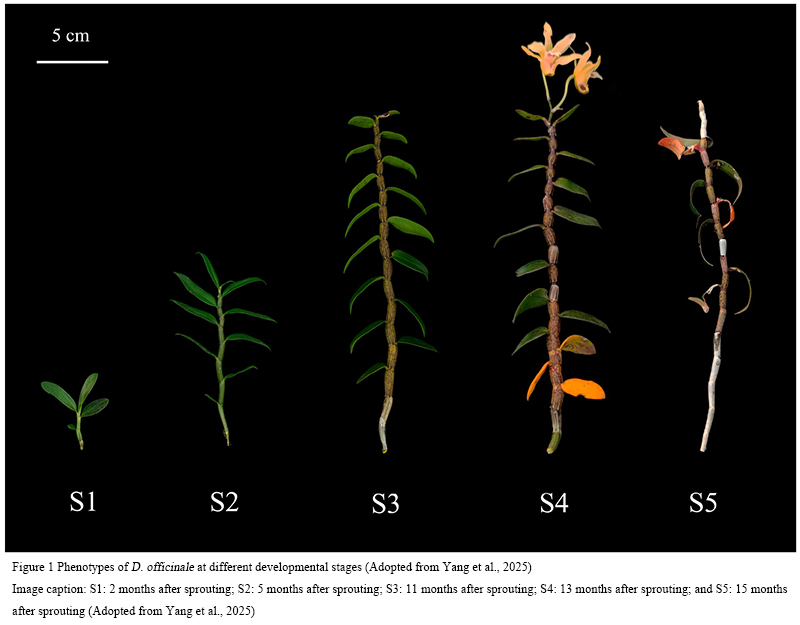
Temperature regulates polysaccharide accumulation by altering carbon turnover, respiration, and sugar-metabolic gene expression. Within a suitable range, rising temperature increases hydrolase activity, accelerates starch hydrolysis, and raises soluble sugar content, whereas lower temperature weakens respiration and sugar consumption, thereby favoring sugar accumulation (Chen et al., 2024). Seasonal monitoring in D. officinale confirms that sugar accumulation is strongly climate-dependent: stem sugars mainly accumulated from October to April, with rapid accumulation from October to February, and related genes were enriched in photosynthesis and starch-sucrose metabolism pathways. Weighted gene co-expression analysis further identified hub genes that appear to maintain sugar metabolism by coordinating photosynthesis-related pathways under low-temperature and drought stress. Developmental transcriptomics also supports this carbon-metabolic basis, because stages with changing stem water-soluble polysaccharide content were enriched in starch and sucrose metabolism, indicating that temperature effects act through a pathway already central to endogenous polysaccharide formation (Figure 1) (Yang et al., 2025).
|
Figure 1 Phenotypes of D. officinale at different developmental stages (Adopted from Yang et al., 2025) Image caption: S1: 2 months after sprouting; S2: 5 months after sprouting; S3: 11 months after sprouting; S4: 13 months after sprouting; and S5: 15 months after sprouting (Adopted from Yang et al., 2025) |
Day–night temperature difference is a particularly important regulatory lever in controlled environments. In protocorm-like bodies, the DIF treatment favored soluble polysaccharide accumulation and produced higher chlorophyll, polysaccharide, and flavonoid contents than constant-temperature treatments. Transcriptome analysis under DIF showed differential expression of genes involved in sugar metabolism, including SUS, SUT, HKL1, HGL, AMY1, and SS3, together with heat-stress-responsive HSPs and HSFs, indicating that temperature amplitude changes both carbon partitioning and stress adaptation networks (Chen et al., 2024). The response is not simply “larger DIF is better,” because plant species differ in how diurnal temperature amplitude balances photosynthesis, respiration, and metabolite allocation: tea showed reduced photosynthesis at excessive DIFs and sorghum showed reduced soluble sugars and biomass when diurnal temperature amplitude narrowed through elevated night respiration (Sunoj et al., 2020). Taken together, the D. officinale evidence supports an intermediate, physiologically coordinated DIF that enhances daytime carbon gain while limiting nighttime carbon loss and redirecting assimilates toward polysaccharide accumulation.
3.3 Integrated regulation of polysaccharide synthesis and quality formation by light-temperature interactions
Light and temperature act jointly because both determine whether D. officinale operates closer to CAM, C3, or an intermediate photosynthetic mode, and this sets the overall carbon supply for polysaccharide synthesis (Zhang et al., 2014). In natural and controlled conditions alike, CO2 exchange patterns vary across sunny, cloudy, and rainy days, reflecting combined effects of irradiance, humidity, and air temperature rather than any single factor alone. Ecological-factor analysis likewise identified maximum temperature and sunshine duration among the key variables influencing medicinal quality in cultivated D. officinale, showing that light and thermal conditions are already coupled at the production scale. Recent reviews reach the same conclusion more broadly, noting that light, temperature, and water significantly affect the synthesis and accumulation of functional components across growth stages.
Mechanistically, light-temperature interactions converge on photosynthesis, sugar metabolism, and quality gene networks. Light quality regulates UGPase expression and Ca2+-CaM-mediated sucrose metabolism, whereas high light activates DoHY5-dependent transcription of polysaccharide biosynthetic genes; temperature and DIF regulate SUS-centered sugar turnover, chlorophyll status, and abiotic-stress pathways (Lei et al., 2021; Chen et al., 2024; Wang et al., 2024). This means polysaccharide accumulation is determined not only by how much carbon is fixed, but also by how efficiently assimilated carbon is retained, transported, and converted into mannose- and glucose-rich polymers that define medicinal quality (Lai et al., 2024). For controlled cultivation, the practical implication is that light and temperature should be co-optimized rather than regulated independently, because suitable spectral composition, moderate effective irradiance, and an appropriate day-night temperature regime together promote biomass, sugar precursor supply, and stable quality formation (Li et al., 2023).
4 Effects of Water, Humidity, and Nutrient Conditions on Polysaccharide Accumulation in Dendrobium officinale
4.1 Effects of water supply and air humidity on carbon assimilation and sugar metabolism
Water supply and air humidity regulate carbon assimilation in D. officinale largely by altering photosynthetic behavior and internal sugar balance. D. officinale is a facultative CAM plant, and decreasing substrate water content shifts it toward a more typical CAM pattern, whereas rewatering restores mixed C3/CAM behavior. As the substrate dries, nocturnal leaf titratable acidity increases and then declines again after rewatering, indicating that plant water status directly changes nighttime carbon fixation and acid metabolism (Zhang et al., 2014). Seasonal evidence likewise shows that sugar accumulation patterns in stems and leaves are influenced by temperature and humidity variation, with stem sugars accumulating mainly from October to April and especially rapidly from October to February.
Humidity is also an ecological determinant of medicinal quality rather than only a background climate factor. In cultivation-scale analyses, maximum and minimum relative humidity were identified among the key ecological factors influencing the medicinal quality of cultivated D. officinale together with maximum temperature, sunshine duration, and soil nutrients. Physiological and transcriptomic results further indicate that humidity-linked seasonal change affects sugar metabolism through pathways involving photosynthesis and starch–sucrose metabolism, while hub genes appear to maintain sugar metabolism under low-temperature and drought conditions. At the transport level, orchid mycorrhizal colonization creates an additional carbon sink in roots, increases allocation of photosynthates belowground, and raises glucose, fructose, and sucrose levels, showing that water- and humidity-sensitive root environments can reshape whole-plant carbon distribution rather than only leaf assimilation.
4.2 Regulatory effects of moderate water stress on polysaccharide synthesis and accumulation
Moderate water stress appears to promote polysaccharide-related carbon reallocation in D. officinale, although severe or combined stress impairs growth and quality. Recent work on the Danxia cultivar showed that harsh environments characterized by intense heat and limited rainfall were associated with substantial accumulation of bioactive polysaccharides, and that abiotic stress enhanced soluble sugar accumulation by transcriptionally activating sucrose synthase genes (Liu et al., 2025). Among these genes, DoSUS2 responded strongly to drought and ABA, and its heterologous expression enhanced drought tolerance, soluble sugar accumulation, and ROS scavenging capacity, supporting a mechanism in which stress-induced sucrose turnover increases osmotic protection and precursor supply for polysaccharide synthesis. Consistent with this, dehydration increased soluble sugar content in leaves, and cold stress increased soluble sugars in both leaves and stems, while acid invertase genes were implicated in stress-responsive sucrose hydrolysis and osmotic homeostasis (Liu et al., 2024).
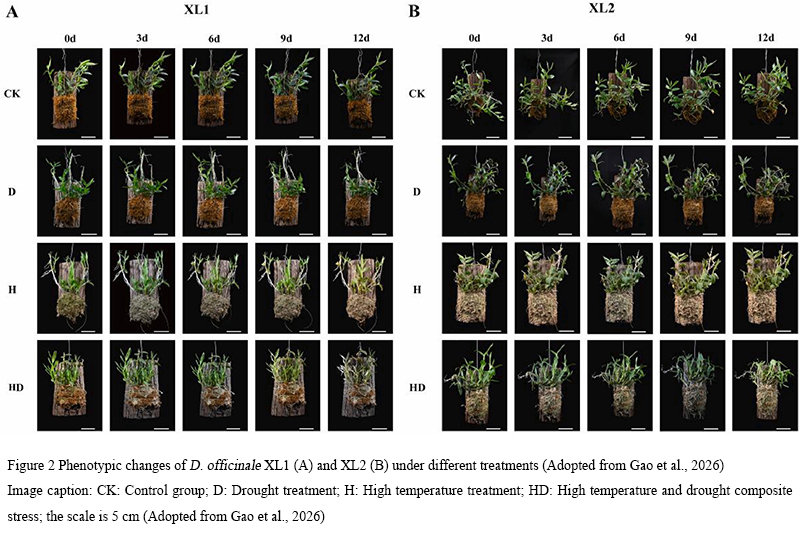
The beneficial effect is conditional, because genotype and stress intensity matter. Comparative drought analysis showed that the drought-tolerant genotype maintained stronger antioxidant capacity, with higher proline, APX, and CAT under intensifying drought, whereas the drought-sensitive genotype showed more severe repression of photosynthesis-related genes (Huang et al., 2023). Under combined heat–drought stress, D. officinale showed marked genotype-dependent differences in morphology, antioxidative capacity, polysaccharide accumulation, and transcriptome response, and dual stress induced glycosyltransferase genes that likely support stress adaptation (Figure 2) (Gao et al., 2026). Additional mechanistic evidence shows that drought-related transcription factors can directly regulate mannan biosynthesis: DoMYB75 activates DoCSLA genes and improves drought tolerance, and DoDof7 promotes polysaccharide biosynthesis under combined heat-drought stress by activating DoGMPP2 and increasing mannose content (He et al., 2026; Yang et al., 2026). Together with evidence that droughted strains differ in intracellular water utilization, nutrient transport, and metabolic capacity, these findings indicate that moderate stress promotes accumulation, but excessive stress shifts the balance toward injury and growth suppression (Luo et al., 2024).
|
Figure 2 Phenotypic changes of D. officinale XL1 (A) and XL2 (B) under different treatments (Adopted from Gao et al., 2026) Image caption: CK: Control group; D: Drought treatment; H: High temperature treatment; HD: High temperature and drought composite stress; the scale is 5 cm (Adopted from Gao et al., 2026) |
4.3 Effects of mineral nutrition and water-fertilizer interactions on polysaccharide formation
Mineral nutrition affects polysaccharide formation by changing both precursor metabolism and the transcription of mannan-biosynthetic genes. Ecological-factor analysis in cultivated D. officinale identified soil total nitrogen, total phosphorus, and available phosphorus as important variables affecting medicinal ingredients, indicating that nutrient supply is a major component of quality formation. Nitrogen responses are not linear: under low nitrogen, growth and photosynthesis were inhibited, but polysaccharide and flavonoid contents increased significantly, suggesting that nutrient limitation can redirect carbon away from growth and toward secondary and storage metabolism (Wu et al., 2023). Phosphorus limitation shows a similar pattern. Moderate phosphorus deficiency had little effect on stem height inhibition but promoted polysaccharide accumulation and increased the mannose-to-glucose ratio, while expression of active-ingredient pathway genes including DoCSLA6 increased significantly (Liu et al., 2021).
Mechanistic work now links phosphorus starvation directly to mannan synthesis. Low-phosphorus environments promoted polysaccharide accumulation, and DoCSLA6, a CSLA-family gene directly involved in mannose synthesis, was highly positively correlated with that accumulation (Feng et al., 2024). The DoSPX1-DoMYB37-DoCSLA6 pathway explains part of this response: DoSPX1 and DoMYB37 reduced phosphate accumulation and increased DoCSLA6 expression, providing a direct regulatory bridge between phosphate status and polysaccharide biosynthesis. Nutrient interactions can also enhance quality when supply is balanced rather than restrictive. Carbon–nitrogen co-application improved photosynthetic performance and quality, and the 0.4AN/20KG treatment increased stem soluble sugar, micronutrient content, carbon-metabolism enzyme activity, and metabolite accumulation more than single-factor treatments, whereas high nitrogen alone had adverse effects on photosynthetic trends (Yin et al., 2026). Supporting evidence from another Dendrobium species showed that optimized N-P-K fertilization increased polysaccharide content by 26.84% and that nitrogen had the strongest overall effect, while rhizosphere bacteria such as Pandoraea may further promote polysaccharide production and provide a basis for microbiome-informed fertilizer design (Fan et al., 2023; Zhu et al., 2025).
5 Effects of Cultivation Substrates and the Rhizosphere Environment on Polysaccharide Accumulation in Dendrobium officinale
5.1 Effects of substrate physicochemical properties on root growth and nutrient uptake
D. officinale is now cultivated mainly under epiphytic or simulated-natural systems, so the substrate is not just physical support but a primary regulator of water retention, nutrient availability, and root-zone microhabitat (Zhu et al., 2022). Comparative metabolomics showed that different cultivation substrates have distinct physical properties such as water-holding capacity and distinct chemical properties such as nitrogen, phosphorus, and potassium content, and that these differences strongly reshape D. officinale metabolism. The same study found clear metabolic separation among substrate groups, indicating that substrate-driven differences are large enough to alter global metabolite profiles rather than only isolated compounds (Zuo et al., 2020). At the cultivation-scale ecological level, soil pH, total nitrogen, total phosphorus, and available phosphorus were identified as key quality-related factors in cultivated D. officinale, reinforcing that substrate chemistry is tightly linked to medicinal-component formation.
These substrate effects are expressed first through the root system. Mycorrhizal inoculation increased peloton formation in root cortical cells and produced more flourishing roots than uninoculated plants, showing that a biologically compatible root-zone environment can directly improve root vigor. In field cultivation, the same mycorrhizal treatment ultimately increased plant and stem dry weight to 2.69-fold and 2.87-fold of the control after 19 months, indicating that improved root symbiosis can translate into substantially greater sink capacity for polysaccharide accumulation (Chen et al., 2016). Substrate choice also changes downstream chemical quality: pine bark, coconut coir, and mixed substrates produced similar classes of metabolites but significantly different abundances, and pine bark favored flavonoid accumulation, while stone-epiphytic and greenhouse systems produced higher polysaccharide content than live-tree epiphytic cultivation (Zuo et al., 2020; Yang et al., 2023). Case-based cultivation analyses similarly suggest that pine bark substrate has high potential for improving quality traits, and that mycorrhizal fungi enhance drought and disease resistance, which would be expected to stabilize root uptake under controlled production (Zhang et al., 2024).
5.2 Regulation of polysaccharide accumulation by rhizosphere water–air conditions and nutrient supply
Rhizosphere water, aeration, and nutrient supply regulate polysaccharide accumulation by controlling root respiration, nutrient flux, and the balance between growth and stress metabolism. Across Dendrobium, soil total nitrogen, available phosphorus, ammonium nitrogen, and pH are among the strongest drivers of rhizosphere microbial composition, and soil is considered the dominant factor shaping these microbial communities. In cultivated Dendrobium rhizospheres, dominant bacterial groups repeatedly include Proteobacteria, Bacteroidetes, Actinobacteria, and Acidobacteria, indicating a fairly consistent microbial core that still shifts with species and environment (Zuo et al., 2021). Because rhizosphere microbes promote nutrient absorption and can improve medicinal-plant yield and quality, shifts in water and nutrient conditions are likely to affect polysaccharide accumulation partly through microbial mediation rather than only through direct plant physiology (Sarsaiya et al., 2025). This interpretation is supported by recent D. officinale data linking polysaccharide accumulation closely to rhizosphere bacteria and identifying Pandoraea as a candidate polysaccharide-promoting genus (Zhu et al., 2025).
Water–air status in the rhizosphere is especially important because excess moisture can drive hypoxia and impair aerobic root metabolism. Broader rhizosphere evidence shows that hypoxia caused by waterlogging or compaction inhibits root aerobic respiration, disrupts energy metabolism, and alters rhizosphere microecology, while micro-nano bubble aeration can improve pore structure, continuously release oxygen, regulate microbial communities, and increase aeration in irrigation systems (Zheng et al., 2025). Although this was not tested directly in D. officinale, it fits the crop’s dependence on an aerated epiphytic root zone and suggests a plausible controlled-environment strategy for avoiding carbon loss belowground (Zhu et al., 2022). Nutrient supply interacts with water status rather than acting independently: in another medicinal plant, the highest biomass and alkaloid accumulation occurred under an intermediate water–nitrogen regime, illustrating that water-fertilizer coordination can optimize rhizosphere physicochemical status and metabolite accumulation better than maximizing either input alone (Huang et al., 2024). In D. officinale, recent karst-environment work further showed that high-calcium limestone soils altered both rhizosphere properties and stem metabolism, with long-term calcium-rich conditions promoting calcium accumulation and mannose synthesis in stems, linking root-zone chemistry directly to polysaccharide-related carbon flow (Du et al., 2025).
5.3 Synergistic effects of the rhizosphere microenvironment and aboveground controlled environment
The strongest current model is that polysaccharide formation depends on synergy between the rhizosphere microenvironment and the aboveground controlled environment, rather than on either domain alone. Cultivation mode alters both substrate-associated and plant-associated bacterial and fungal communities, and some of these taxa are positively correlated with the main chemical components of Dendrobium catenatum, including stem polysaccharides. The same work showed that pot cultivation differed significantly from living-tree and cliff-epiphytic modes in microbial community structure, indicating that cultivation architecture and aboveground conditions feed back onto the rhizosphere and root microbiome (Zhu et al., 2022). More broadly, rhizosphere microbial communities vary among Dendrobium species and rhizocompartments, and the root environment acts as a selective interface for bacteria and fungi that support nutrient cycling, pathogen suppression, and stress resilience (Xie et al., 2024; Sarsaiya et al., 2025). In stressful Danxia habitats, the D. officinale microbiome showed diverse taxonomic and metabolic functions, including abundant carbohydrate- and energy-metabolism potential, which likely helps sustain plant growth in nutrient-poor environments.
This belowground support interacts with aboveground regulation through carbon supply and plant signaling. Root exudation dynamics shape microbial interactions, and beneficial rhizosphere bacteria and fungi enhance nutrient uptake, phytohormone status, stress tolerance, and root growth, which together increase the plant’s capacity to convert photosynthate into polysaccharides (Sarsaiya et al., 2025). Orchid mycorrhizae likely contribute not only nutrients but also carbon, because photosynthetic orchids can be mixotrophic and recover carbon from root-associated fungi (Chen et al., 2016). Consistent with this, beneficial taxa such as Sphingomonas paucimobilis have been reported to promote growth and active polysaccharide accumulation in Dendrobium, while nitrogen-fixing and stress-responsive genera such as Devosia are enriched in rhizocompartments and may support adaptation to nutrient-poor or stressful substrates (Xie et al., 2024). The practical implication is that precise greenhouse control of light, temperature, and moisture should be coordinated with substrate selection, root-zone aeration, and microbiome management, because sustainable improvement in D. officinale polysaccharide accumulation appears to emerge from this whole-plant environmental network rather than from single-factor optimization.
6 Mechanisms of Controlled-Environment Regulation of Polysaccharide Accumulation in Dendrobium officinale
6.1 Regulation of carbon supply for polysaccharide synthesis through photosynthesis
Photosynthesis is the primary upstream source of carbon for polysaccharide synthesis in Dendrobium officinale, and controlled environments regulate this source first by altering the plant’s photosynthetic mode and then by changing total assimilate supply. D. officinale is a facultative CAM plant that can switch between CAM, C3, and intermediate states depending on substrate moisture and light-dark regime, so environmental regulation changes not only photosynthetic rate but also the timing and pathway of carbon fixation (Zhang et al., 2014). Under natural weather variation, sunny days favor a typical CAM-like pattern, rainy days favor C3-like daytime uptake, and cloudy days produce an intermediate pattern, indicating that light intensity, humidity, and temperature together determine whole-day CO2 assimilation behavior. Controlled cultivation can exploit this plasticity: shortening the light-dark cycle to 4 h/4 h or 2 h/2 h improved photosynthetic apparatus status, shifted carbon fixation toward C3 behavior, doubled daily net CO2 exchange and biomass increase relative to 12 h/12 h, and increased soluble polysaccharide yield, especially under 2 h/2 h conditions (Cheng et al., 2019).
Carbon supply is further regulated by light and temperature effects on photosynthetic efficiency and by their downstream effects on carbohydrate metabolism. Developmental transcriptomics showed that changes in stem polysaccharide content are tightly associated with genes enriched in starch and sucrose metabolism, indicating that photosynthetic carbon enters a regulated source-to-sink pathway rather than passively accumulating (Yang et al., 2025). Seasonal transcriptomics similarly found that genes associated with sugar accumulation were enriched in photosynthesis and starch-sucrose metabolism, and identified hub genes that appear to stabilize sugar metabolism under low-temperature and drought conditions. Temperature studies show an important source-sink distinction: net photosynthesis and vegetative growth were highest around 30℃, but stem polysaccharide content was highest at 20℃, indicating that maximal carbon fixation does not necessarily produce maximal polysaccharide concentration because carbon partitioning also shifts with temperature. Consistent with this, carbon-nitrogen co-application improved photosynthetic pigments, net photosynthetic rate, carbon-metabolism enzyme activity, soluble sugars, and overall quality, showing that controlled environments increase polysaccharides partly by strengthening the upstream carbon source that feeds downstream biosynthesis (Yin et al., 2026).
6.2 Promotion of polysaccharide formation through sugar transport and metabolic enzyme activity
Once carbon is fixed, controlled-environment regulation promotes polysaccharide formation by controlling sugar transport, sucrose cleavage, precursor interconversion, and polymer assembly. Transcriptome analysis identified 430 glycosyltransferase genes and 89 cellulose synthase-related genes in D. officinale, establishing that polysaccharide formation depends on a large enzymatic network rather than a single biosynthetic step (Zhang et al., 2016). Developmental expression profiling further showed that polysaccharide-associated genes change across stem growth stages and that 15 key genes are positively correlated with water-soluble polysaccharide content (Yang et al., 2025). Sugar transporter regulation is now directly implicated in this process: comparative genomics and silencing experiments identified several DoSWEET genes as candidate regulators, and silencing six candidates reduced polysaccharide accumulation by 14~22%, with the strongest effects for DoSWEET1, 8, 13, 17, and 24. Because these SWEET genes also contain abiotic-stress-responsive cis-elements and show stress-dependent expression, controlled environments likely regulate polysaccharide accumulation partly by changing sugar export, unloading, and redistribution between source and sink tissues.
Sucrose-metabolizing enzymes provide the second major mechanistic layer. Abiotic stress induced the transcriptional activation of DoSUS genes, and DoSUS2 responded strongly to drought and ABA; heterologous expression of DoSUS2 increased soluble sugar accumulation and stress tolerance, while the DobHLH14-DoSUS2 module was linked to a broader saccharometabolism network involving DoSUS1, DoGT5, DoUGE2, DoUGE3, and DoVIN2 (Liu et al., 2025). Acid invertases act in parallel: cold and dehydration increased soluble sugar content in leaves and stems, and the associated upregulation of DoAINV genes likely enhanced sucrose hydrolysis into glucose and fructose, thereby supporting osmotic homeostasis and polysaccharide accumulation (Liu et al., 2024). Diurnal temperature difference further altered expression of SUS, SUT, HKL1, HGL, AMY1, and SS3, indicating that environmental control acts on transport, sucrose turnover, starch breakdown, and hexose metabolism simultaneously (Chen et al., 2024). Related Dendrobium evidence is mechanistically consistent: cell wall invertase activity rises with sink activation and sucrose feeding stimulates hexose accumulation, supporting a general model in which increased sink-side sucrose cleavage promotes downstream carbohydrate deposition.
6.3 Regulation of carbon allocation and polysaccharide accumulation through environmental stress responses and multifactor interactions
Controlled environments also regulate polysaccharide accumulation by redistributing carbon under stress and by integrating multiple environmental signals. In D. officinale, seasonal sugar accumulation depends on temperature and humidity variation, and related genes are enriched in abiotic-stress, photosynthesis, and starch-sucrose metabolism pathways, showing that carbon allocation is embedded in a stress-response framework. Drought and cold often increase soluble sugar pools rather than depleting them, because carbon is redirected toward osmotic adjustment and protective metabolism; under dehydration or cold, soluble sugars rose and AINV-related sucrose cleavage increased, while long-term dehydration changed genes involved in stress response, photosynthesis, phytohormone signaling, carbon metabolism, and fructose/mannose pathways (Liu et al., 2024). This stress-buffering role is consistent with the biology of the species: D. officinale can survive prolonged water deficit and rapidly resume growth after rehydration, and its thick, polysaccharide-rich organs are part of that drought-adaptive system (Yu et al., 2025). Moderate stress can therefore favor accumulation, but the response is conditional. In Dendrobium nobile, 0℃ for 4 d increased polysaccharides by 56.18%, whereas -4℃ caused severe damage, indicating that beneficial accumulation occurs within a stress window rather than under unlimited stress intensity (Fan et al., 2024).
The mechanism becomes more complex under combined stresses, because light, temperature, humidity, and water supply interact rather than acting additively. In D. officinale, combined high temperature and drought caused genotype-dependent differences in morphology, antioxidative capacity, polysaccharide accumulation, and gene expression, and dual stress markedly upregulated glycosyltransferase genes, linking multifactor stress directly to polysaccharide-related biosynthetic capacity (Gao et al., 2026). Broader plant evidence supports the same carbon-allocation principle: drought under elevated temperature tends to reduce starch more than soluble sugars, implying that stored carbon is degraded to maintain osmotic regulation and defense demands when current photosynthesis cannot fully meet metabolic need (Wang and Wang, 2023). At the cultivation scale, ecological analyses identified maximum temperature, humidity, sunshine duration, pH, and soil nitrogen and phosphorus as key variables affecting medicinal quality, confirming that polysaccharide accumulation emerges from multifactor coordination rather than single-factor control.
7 Current Challenges and Future Directions
A central challenge is that the environmental determinants of polysaccharide accumulation are clearly multifactorial, but their optimal thresholds and interaction patterns are still not resolved. Ecological analysis identified eight key factors affecting medicinal quality-maximum and minimum relative humidity, maximum temperature, sunshine duration, soil pH, soil total nitrogen, soil total phosphorus, and available phosphorus-showing that polysaccharide formation depends on a coupled environmental network rather than any single variable. Seasonal work further showed that stem sugar accumulation follows a nonlinear annual pattern and is jointly shaped by temperature and humidity, with rapid accumulation from October to February and transcriptomic enrichment in photosynthesis, abiotic stress, and starch-sucrose metabolism pathways. At the treatment scale, environmental responses are also non-monotonic: red light most strongly promoted UGPase expression under different light qualities, high light induced mannose-rich polysaccharide accumulation through DoHY5-dependent signaling, and a 25/13℃ day-night regime gave higher polysaccharide content than constant temperatures in protocorm-like bodies. Moderate light also appears superior to extremes, because 11 000 lx simultaneously maximized biomass, bioactive compound yield, and sensory quality, whereas extreme high light increased structural carbohydrates but compromised growth-related and edible-quality traits. The main unresolved issue, therefore, is not whether light, temperature, humidity, and nutrients matter, but how their nonlinear interactions, developmental dependence, and cultivation-mode dependence should be parameterized into transferable threshold models for production.
A second challenge is establishing a regulation system that balances biomass production with polysaccharide quality, because maximizing growth does not always maximize medicinal value. Temperature studies showed that photosynthesis and vegetative growth were more favorable at 30℃, whereas stem polysaccharide content was significantly higher at 20℃, directly demonstrating a source–sink tradeoff between biomass expansion and polysaccharide concentration. Different cultivation environments also produce different quality profiles: tree-epiphytic stems had significantly lower polysaccharide content than stone-epiphytic and greenhouse samples, but stone epiphytic cultivation often accumulated more differential metabolites and stronger antioxidant-related quality traits, indicating that equal polysaccharide levels do not imply equal overall quality. This matters because polysaccharides remain the main Pharmacopoeia quality marker, yet regional metabolomics showed that small-molecule profiles can vary inversely with polysaccharide rankings, making polysaccharide-only evaluation incomplete for judging medicinal quality. Future regulation systems should therefore optimize for multiple endpoints at once: biomass yield, polysaccharide content, polysaccharide composition, and broader metabolite quality markers, ideally with cultivation-mode-specific targets for greenhouse, stone-epiphytic, and bionic systems. This is also the practical path for scaling artificial cultivation, since greenhouse production now dominates supply because of stable output and fast growth, yet uncontrolled optimization for yield alone risks weakening the medicinal traits that originally define high-quality D. officinale.
A third priority is integrating environmental monitoring, quality prediction, and intelligent control into a true precision-regulation platform. Recent predictive work already shows that this is feasible: machine-learning models outperformed linear models for predicting polysaccharide content across production areas, with XGBoost performing best, and also revealed that facility agriculture shifts the dominant drivers of high-quality production from rainfall and temperature toward altitude and sunlight. Harvest optimization studies similarly achieved high-accuracy prediction of dry matter content and suitable harvest period using chemometrics, and identified November to April, especially December, as the suitable harvest window, with specific daily water and shading recommendations. At the systems level, an IoT edge-computing and hybrid digital-twin platform for D. officinale improved prediction accuracy to 92.7%, increased production by 23.6%, and reduced energy use by 42.6%, showing the technical plausibility of closed-loop intelligent cultivation. Broader precision-agriculture evidence indicates that smart sensors for moisture, pH, and plant stress, combined with IoT, AI, and automated control, enable real-time irrigation, fertilization, and predictive analytics, but adoption remains constrained by cost, data-management complexity, technical expertise, and connectivity limitations. Future precision regulation in D. officinale should therefore couple sensor networks, transcriptome-and metabolome-informed quality models, and automated environmental control so that quality prediction moves upstream from post-harvest testing to dynamic cultivation management.
Conflict of Interest Disclosure
The authors affirm that this research was conducted without any commercial or financial relationships that could be construed as a potential conflict of interest.
Chen Q.Q., Zhang C.Y., Chen Y.K., Wang C.Q., and Lai Z.X., 2024, Transcriptomic analysis for diurnal temperature differences reveals gene-regulation-network response to accumulation of bioactive ingredients of protocorm-like bodies in Dendrobium officinale, Plants, 13(6): 874.
https://doi.org/10.3390/plants13060874
Chen X.M., Yan H.L., Wang C.L., Tian L.X., Wang A.R., and Guo S.X., 2016, Effects of mycorrhizal fungus Mycena sp. on the growth and polysaccharide properties of Dendrobium officinale, Science China Life Sciences, 59(9): 974-976.
https://doi.org/10.1007/s11427-015-0367-0
Chen Y., Cai G., Chen H., Zhou H., Qu H., and Yang H., 2025, Physicochemical properties and biological activities of polysaccharides from Dendrobium officinale leaves in response to different extraction methods, Foods, 14(12): 2029.
https://doi.org/10.3390/foods14122029
Cheng Y.S., He D.X., He J., Niu G.H., and Ji F., 2019, Effects of short light/dark cycles on photosynthetic pathway switching and growth of medicinal Dendrobium officinale in aeroponic cultivation, International Journal of Agricultural and Biological Engineering, 12(5): 38-43.
https://doi.org/10.25165/j.ijabe.20191205.4864
Du G., Zhou Y., Liu C., Ghorbanpour M., Hou Y., and Li J., 2025, Rhizosphere characteristics combined with physiology and transcriptomics reveal key metabolic pathway responses in Dendrobium officinale upon exposure to calcium-rich karst environments, Environmental and Experimental Botany, 232: 106115.
https://doi.org/10.1016/j.envexpbot.2025.106115
Fan Y., Xu E., Wang G., He D., Ma J., Liu Y., Li X., and Luo A., 2023, Transcriptional and physiological analysis reveal new insights into the regulation of fertilization (N, P, K) on the growth and synthesis of medicinal components of Dendrobium denneanum, International Journal of Molecular Sciences, 24(2): 1522.
https://doi.org/10.3390/ijms24021522
Fan Y., Xu L., Wang G., Zhao J., Ma J., Wang H., Li T., Li X., and Luo A., 2024, Transcriptome: new perspective for the rational planting of Dendrobium nobile and the improvement of medicinal quality through cold stimulation, Scientia Horticulturae, 335: 113348.
https://doi.org/10.1016/j.scienta.2024.113348
Feng Z., Li Y., Zhang S., Song J., Xiang H., Huang J., Fan H., and Liu L., 2024, DoSPX1 and DoMYB37 regulate the expression of DoCSLA6 in Dendrobium officinale during phosphorus starvation, BMC Plant Biology, 24(1): 803.
https://doi.org/10.1186/s12870-024-05512-8
Gao M., Huang S., Yang T., Tian S., He L., Wang A.Q., and Zhang S., 2026, Physiological and transcriptomic analysis reveal responses of two different phenotypes of Dendrobium officinale to high temperature and drought stress, Plant Physiology and Biochemistry, 232: 111188.
https://doi.org/10.1016/j.plaphy.2026.111188
Guo R., Liao J., Sun Y., Wang Y., Li P., and Du B., 2025, A review of advances in the extraction, structural characterization, gel properties, and biological activity mechanisms of Dendrobium officinale polysaccharides, International Journal of Biological Macromolecules, 311(Pt 2): 143756.
https://doi.org/10.1016/j.ijbiomac.2025.143756
He C., Wu K., Zhang J., Liu X., Zeng S., Yu Z., Zhang X., Teixeira da Silva J.A., Deng R., Tan J., Luo J., and Duan J., 2017, Cytochemical localization of polysaccharides in Dendrobium officinale and the involvement of DoCSLA6 in the synthesis of mannan polysaccharides, Frontiers in Plant Science, 8: 173.
https://doi.org/10.3389/fpls.2017.00173
He C., Zeng D., Zhang M., Si C., Li S., Chen J., Shi H., Dai G., Liu Z.J., and Duan J., 2026, DoMYB75 coordinately regulates polysaccharide and anthocyanin biosynthesis in Dendrobium officinale, Horticulture Research, 13(2): uhaf291.
https://doi.org/10.1093/hr/uhaf291
He Y., Li L., Chang H., Cai B., Gao H., Chen G., Hou W., Jappar Z., and Yan Y., 2022, Research progress on extraction, purification, structure and biological activity of Dendrobium officinale polysaccharides, Frontiers in Nutrition, 9: 965073.
https://doi.org/10.3389/fnut.2022.965073
Huang H., Jiao Y., Tong Y., and Wang Y., 2023, Comparative analysis of drought-responsive biochemical and transcriptomic mechanisms in two Dendrobium officinale genotypes, Industrial Crops and Products, 199: 116766.
https://doi.org/10.1016/j.indcrop.2023.116766
Huang X., Niu P., Gao Y., Rong W., Luo C., Zhang X., Jiang P., Wang M., and Chu G., 2024, Effects of water and nitrogen on growth, rhizosphere environment, and microbial community of Sophora alopecuroides: their interrelationship, Plants, 13(14): 1970.
https://doi.org/10.3390/plants13141970
Lai C.H., Huo C.Y., Xu J., Han Q.B., and Li L.F., 2024, Critical review on the research of chemical structure, bioactivities, and mechanism of actions of Dendrobium officinale polysaccharide, International Journal of Biological Macromolecules, 263(Pt 1): 130315.
https://doi.org/10.1016/j.ijbiomac.2024.130315
Lei T., Gao S., Lin X., Zhang K., Liu Y., Li W., Hu D., Yu X., Jiang M., Chen Q., and Sun Y., 2021, Calcium signalling mediated the regulation of growth and polysaccharide accumulation by light quality in Dendrobium officinale protocorms, Horticulture, Environment, and Biotechnology, 62(2): 287-297.
https://doi.org/10.1007/s13580-020-00304-z
Li D., Ye G., Li J., Lai Z., Ruan S., Qi Q., Wang Z., Duan S., Jin H.L., and Wang H.B., 2023, High light triggers flavonoid and polysaccharide synthesis through DoHY5-dependent signaling in Dendrobium officinale, The Plant Journal, 115(4): 1114-1133.
https://doi.org/10.1111/tpj.16284
Liang R., Chen L., Wang H., Wang X., Wu W., Huang S., Li X., Luo H., Huang B., Simal-Gandara J., Zhu H., and Zhang M., 2025, Advances in research on Dendrobium officinale polysaccharide: extraction techniques, structural features, biological functions, structure-activity relationships, biosynthesis and resources, Results in Engineering, 27: 106454.
https://doi.org/10.1016/j.rineng.2025.106454
Liu L., Xiang H., Shen H.M., Dong Y., Sun X., Cai Y., and Fan H.H., 2021, Effects of low phosphorus stress on the main active ingredients and antioxidant activities of Dendrobium officinale, Industrial Crops and Products, 173: 114095.
https://doi.org/10.1016/j.indcrop.2021.114095
Liu Y., Liu B., Li Y., Meng L., Chen J., Zhang Y., Zhang Y., Xia R., Hao Y., Liu Y., Zeng Z., and Li X., 2025, Stress-responsive sucrose synthase gene, DoSUS2, improves soluble sugar accumulation in Dendrobium officinale, Industrial Crops and Products, 234: 121641.
https://doi.org/10.1016/j.indcrop.2025.121641
Liu Y., Liu B., Luo K., Yu B., Li X., Zeng J., Chen J., Xia R., Xu J., and Liu Y., 2024, Genomic identification and expression analysis of acid invertase (AINV) gene family in Dendrobium officinale Kimura et Migo, BMC Plant Biology, 24(1): 396.
https://doi.org/10.1186/s12870-024-05102-8
Luo M., Liu X., Wu R., Yang P., Yang L., Zhou M., and Wu M., 2024, Screening of new Dendrobium officinale strains adapted to karst forest environmental stress based on electrophysiological detection method, Agronomy, 14(7): 1530.
https://doi.org/10.3390/agronomy14071530
Okoro N.O., Odiba A.S., Yu Q., He B., Liao G., Jin C., Fang W., and Wang B., 2023, Polysaccharides extracted from Dendrobium officinale grown in different environments elicit varying health benefits in Caenorhabditis elegans, Nutrients, 15(12): 2641.
https://doi.org/10.3390/nu15122641
Sarsaiya S., Jain A., Singh R., Gong Q., Wu Q., Chen J., and Shi J., 2025, Unveiling the rhizosphere microbiome of Dendrobium: mechanisms, microbial interactions, and implications for sustainable agriculture, Frontiers in Microbiology, 16: 1531900.
https://doi.org/10.3389/fmicb.2025.1531900
Sunoj V.S.J., Prasad P.V.V., Ciampitti I.A., and Maswada H.F., 2020, Narrowing diurnal temperature amplitude alters carbon tradeoff and reduces growth in C4 crop sorghum, Frontiers in Plant Science, 11: 1262.
https://doi.org/10.3389/fpls.2020.01262
Wang Y., Li X., Chen L., Wang X., Huang D., Teng J., Dai Z., Bai Y., Dong X., Zhang M., and Zhu H., 2024, Sequencing and analysis of transcriptome to reveal regulation of gene expression for polysaccharide synthesis in Dendrobium officinale under different light quality, Notulae Botanicae Horti Agrobotanici Cluj-Napoca, 52(2): 13606.
https://doi.org/10.15835/nbha52213606
Wang Z., and Wang C.K., 2023, Interactive effects of elevated temperature and drought on plant carbon metabolism: a meta-analysis, Global Change Biology, 29(10): 2824-2835.
https://doi.org/10.1111/gcb.16639
Wu H., Li J., Pu Q., Mi C., Zeng G., Chen Y., Kong D., Zuo X., Hu X.F., and Li O., 2023, Physiological and transcriptome analysis of Dendrobium officinale under low nitrogen stress, Functional Plant Biology, 50(4): 314-334.
https://doi.org/10.1071/FP22061
Xie G., Yin Z., Zhang Z., Wang X., and Sun C., 2024, Microbial diversity and potential functional dynamics within the rhizocompartments of Dendrobium huoshanense, Frontiers in Plant Science, 15: 1450716.
https://doi.org/10.3389/fpls.2024.1450716
Xu E., Liu Y., Guo L., Fan Y., Xu L., Li X., Ma J., Wang H., He S., Li T., Xiao J., Qin Y., and Luo A., 2024, Transcriptional analysis reveals new insights into the different light intensities of red and blue light on the growth and synthesis of medicinal ingredients in Dendrobium denneanum, Industrial Crops and Products, 210: 118065.
https://doi.org/10.1016/j.indcrop.2024.118065
Xu X., Zhang C., Wang N., Xu Y., Tang G., Xu L., and Feng Y., 2022, Bioactivities and mechanism of actions of Dendrobium officinale: a comprehensive review, Oxidative Medicine and Cellular Longevity, 2022: 6293355.
https://doi.org/10.1155/2022/6293355
Yang D., Song Y., Lu A., Qin L., Tan D., Zhang Q., He Y., and Lu Y., 2023, Metabolomics-based analysis of the effects of different cultivation strategies on metabolites of Dendrobium officinale Kimura et Migo, Metabolites, 13(3): 389.
https://doi.org/10.3390/metabo13030389
Yang T., Huang S., Tian S., Gao M., He L., and Zhang S., 2026, Genome-wide identification of the Dof family in Dendrobium officinale and functional characterization of DoDof7 in enhancing polysaccharides biosynthesis during combined heat-drought stress, Industrial Crops and Products, 239: 122566.
https://doi.org/10.1016/j.indcrop.2025.122566
Yang T., Huang S., Tian S., Gao M., Zhang X., He L., and Zhang S., 2025, Identification of potential key genes for stem polysaccharide synthesis based on transcriptome analysis of different developmental stages of Dendrobium officinale, Horticulturae, 11(6): 679.
https://doi.org/10.3390/horticulturae11060679
Yin Y., Chen G., Chen J., Hu J., Zheng B., and Yan D., 2026, The effects of carbon and nitrogen co-application on photosynthetic characteristics, quality, and carbon-nitrogen metabolism of Dendrobium officinale, Journal of Plant Nutrition, 49(7): 1247-1264.
https://doi.org/10.1080/01904167.2026.2621034
Yu L., Asghar M.A., Petridis A., and Xu F., 2025, Unlocking Dendrobium officinale's drought resistance: insights from transcriptomic analysis and enhanced drought tolerance in tomato, Journal of Integrative Agriculture, 24(11): 4282-4293.
https://doi.org/10.1016/j.jia.2025.06.001
Zhang J., He C., Wu K., Teixeira da Silva J.A., Zeng S., Zhang X., Yu Z., Xia H., and Duan J., 2016, Transcriptome analysis of Dendrobium officinale and its application to the identification of genes associated with polysaccharide synthesis, Frontiers in Plant Science, 7: 5.
https://doi.org/10.3389/fpls.2016.00005
Zhang Z., He D., Niu G., and Gao R., 2014, Concomitant CAM and C3 photosynthetic pathways in Dendrobium officinale plants, Journal of the American Society for Horticultural Science, 139(3): 290-298.
https://doi.org/10.21273/JASHS.139.3.290
Zhang Z.Y., Wang L.J., and Fan X.Q., 2024, Study on the correlation between the physiological characteristics of Dendrobium officinale and optimal cultivation conditions, Medicinal Plant Research, 14(4): 234-244.
https://doi.org/10.5376/mpr.2024.14.0020
Zheng K., Zeng H., Liu R., Wu L., Pan Y., Li J., and Shang C., 2025, Research progress on the regulation of plant rhizosphere oxygen environment by micro-nano bubbles and their application prospects in alleviating hypoxic stress, Agronomy, 15(11): 2620.
https://doi.org/10.3390/agronomy15112620
Zhong C., Tian W., Chen H., Yang Y., Xu Y., Chen Y., Chen P., Zhu S., Li P., and Du B., 2022, Structural characterization and immunoregulatory activity of polysaccharides from Dendrobium officinale leaves, Journal of Food Biochemistry, 46(1): e14023.
https://doi.org/10.1111/jfbc.14023
Zhu H., Mo Z., Wang Y., and Su J., 2025, The accumulation of polysaccharides in Dendrobium officinale is closely related to rhizosphere bacteria, International Microbiology, 28(5): 993-1004.
https://doi.org/10.1007/s10123-024-00592-w
Zhu M.X., Chen H., Si J., and Wu L., 2022, Effect of cultivation mode on bacterial and fungal communities of Dendrobium catenatum, BMC Microbiology, 22(1): 221.
https://doi.org/10.1186/s12866-022-02635-6
Zuo J., Zu M., Liu L., Song X., and Yuan Y., 2021, Composition and diversity of bacterial communities in the rhizosphere of the Chinese medicinal herb Dendrobium, BMC Plant Biology, 21(1): 127.
https://doi.org/10.1186/s12870-021-02893-y
Zuo S.M., Yu H.D., Zhang W., Zhong Q., Chen W., Chen W., Yun Y.H., and Chen H., 2020, Comparative metabolomic analysis of Dendrobium officinale under different cultivation substrates, Metabolites, 10(8): 325.
https://doi.org/10.3390/metabo10080325


. HTML
Associated material
. Readers' comments
Other articles by authors
. Xinchao Cao

Related articles
. Dendrobium officinale
. Polysaccharide accumulation
. Controlled-environment regulation
. Sugar metabolism
. Carbon allocation
Tools
. Post a comment