Review and Progress
Effects of Organic Fertilizer Substitution for Chemical Fertilizers on Yield and Quality Formation of Atractylodes macrocephala 

 Author Correspondence author
Medicinal Plant Research, 2026, Vol. 16, No. 3
Received: 02 May, 2026 Accepted: 13 Jun., 2026 Published: 22 Jun., 2026
This review examines the effects of organic fertilizer substitution for chemical fertilizers on the growth environment, yield formation, quality accumulation, stress resistance, and ecological benefits of Atractylodes macrocephala Koidz. The results indicate that organic fertilizer substitution provides favorable conditions for the growth and development of A. macrocephala by increasing soil organic matter content, improving soil physicochemical properties, optimizing nutrient supply, and regulating rhizosphere microbial community structure. Meanwhile, organic fertilizer substitution promotes rhizome yield by enhancing root development, increasing photosynthetic assimilate accumulation, and regulating dry matter allocation. In terms of quality formation, organic fertilizer substitution facilitates the accumulation of key active constituents, including atractylenolides, polysaccharides, and volatile oils, and its underlying mechanisms are closely associated with nutrient regulation, activation of secondary metabolic pathways, and rhizosphere microbial-mediated regulation. Furthermore, organic fertilizer substitution improves the stress resistance of A. macrocephala, reduces agricultural non-point source pollution, promotes resource recycling, and supports the sustainable development of the medicinal plant industry. However, suitable substitution ratios vary among different ecological regions and cultivation conditions, and the molecular mechanisms underlying quality formation and precision fertilization systems require further investigation. Future studies should integrate multi-omics approaches, precise soil monitoring, and intelligent management technologies to establish a quality-oriented, green, and efficient cultivation system for Atractylodes macrocephala.
1 Introduction
Atractylodes macrocephala Koidz., commonly known as Baizhu, is one of the most important traditional Chinese medicinal plants in East Asia and has been used for more than 2 000 years. Its rhizome is widely employed in clinical and health-related applications, and modern studies attribute its medicinal value to multiple bioactive constituents, especially sesquiterpenoids such as atractylenolides and atractylone, as well as polysaccharides and other secondary metabolites (Lin et al., 2024; Cui et al., 2025). Pharmacological studies indicate that A. macrocephala has anti-inflammatory, antioxidant, neuroprotective, immunomodulatory, gastrointestinal regulatory, and other bioactivities, which has sustained strong clinical and market demand for this species (Zhu et al., 2018). At the same time, the medicinal quality of A. macrocephala depends not only on rhizome yield, but also on the accumulation of key active compounds, because atractylenolides, atractylone, and related constituents are widely used as quality markers for evaluating its pharmacological potential and consistency. Recent work further shows that both biomass and active component content are significantly higher in authentic production areas than in emerging production regions, while rhizome growth and phytochemical composition can respond differently to environmental conditions, indicating that the industry increasingly requires cultivation practices that can coordinate both yield and quality rather than pursuing output alone (Lee et al., 2025; Zhou et al., 2025).
With the expansion of artificial cultivation and rising demand for high-quality medicinal materials, A. macrocephala production faces increasingly strict requirements for stable yield, superior medicinal quality, and ecological sustainability. Wild resources have become scarce because of increasing demand, habitat degradation, and slow growth, which has made standardized cultivation the main pathway for ensuring supply (Cui et al., 2025). However, studies on A. macrocephala indicate that achieving consistent quality in cultivation remains difficult, and that soil properties and climate are closely associated with atractylenolide accumulation, while biomass and quality may be regulated by partly independent environmental networks (Lee et al., 2025). Regional comparison also shows that rhizosphere microbial structure, organic matter decomposition, pH, and enzyme-related soil characteristics are closely linked with the quality formation of A. macrocephala (Zhou et al., 2025). In medicinal plants more broadly, rhizosphere microecology directly or indirectly affects growth, metabolic regulation, and active ingredient accumulation, and medicinal plant production is especially sensitive to changes in soil fertility and biological properties because quality formation is inseparable from secondary metabolism (Wang et al., 2022; Rostaei et al., 2024). Therefore, for the Baizhu industry, fertilizer management must satisfy dual production goals: maintaining rhizome biomass while promoting the synthesis and accumulation of pharmacodynamically important compounds.
In practice, however, the pursuit of higher yields in medicinal plant cultivation has often led to excessive dependence on chemical fertilizers, and this strategy is increasingly recognized as unsustainable. Across medicinal plant systems, long-term or excessive chemical fertilizer use causes soil compaction, acidification, nutrient imbalance, decline of soil organic matter, and deterioration of microbial diversity and abundance (Su et al., 2025). Excessive chemical fertilizer application has also been linked to soil degradation in Pinellia ternata cultivation, where yield reduction and disease pressure were associated with deteriorated physicochemical properties, nutrient imbalance, and unfavorable shifts in the soil microflora.
In Salvia miltiorrhiza, lack of scientific fertilization guidance and excessive chemical fertilizer use directly reduced the content of tanshinones in roots, demonstrating that fertilization can impair not only soil health but also medicinal quality (Ji et al., 2025). Similar concerns appear in other medicinal crops: overuse of agrochemicals in Polygala tenuifolia compromised both soil health and medicinal quality, while continuous chemical fertilizer use in Chinese herbal medicine systems has promoted disease occurrence and inferior quality compared with bio-organic alternatives (Huang et al., 2024). Although chemical fertilizer can contribute substantially to crop yield and provides rapid nutrient release, its low use efficiency, with more than 50% of applied nitrogen reportedly not absorbed by crops, means that high-input cultivation often brings ecological costs without proportionate gains in sustainable productivity (Rostaei et al., 2024).
This review examines investigates the mechanisms underlying the effects of organic fertilizer substitution for chemical fertilizers on the growth environment, yield formation, and quality accumulation of Atractylodes macrocephala, aiming to provide a theoretical basis for sustainable and green cultivation of medicinal plants. Organic fertilizer substitution can improve soil conditions, enhance nutrient-use efficiency, promote microbial activity, and regulate the formation of medicinal quality. Previous studies have shown that in Pinellia ternata cultivation, replacing 75% of chemical fertilizer with organic fertilizer increased yield by 44.93% without reducing alkaloid content; in Codonopsis pilosula production, bio-organic fertilizer improved emergence rate and yield while reducing disease incidence; and in Polygala tenuifolia cultivation, partial substitution with microalgae fertilizer increased underground biomass and active compound content. In addition, organic fertilizer substitution has demonstrated beneficial effects on improving soil fertility, maintaining yield, and enhancing quality in crops such as maize, Saposhnikovia divaricata, senna, Prangos ferulacea, tea, and Salvia miltiorrhiza.
However, the effectiveness of organic fertilizer substitution is influenced by crop species, soil conditions, fertilizer sources, and application methods, and it does not always outperform chemical fertilization under all conditions. Therefore, this review systematically analyzes the effects of organic fertilizer substitution for chemical fertilizers on soil environment, yield formation, quality accumulation, and ecological benefits of Atractylodes macrocephala, aiming to clarify its underlying mechanisms and provide a theoretical foundation for the development of green cultivation practices and scientific fertilization strategies for Atractylodes macrocephala.
2 Effects of Organic Fertilizer Substitution for Chemical Fertilizers on the Growth Environment of Atractylodes macrocephala
2.1 Improvement effects on soil physical and chemical properties
Organic fertilizer substitution improves soil structure mainly by increasing soil organic matter and aggregate stability, which then enhances aeration and water retention. In a long-term field experiment, manure and compost increased soil organic matter by 1.86~2.47% and also increased water-stable aggregates and air permeability at two soil depths (Acar et al., 2025). The same study found that organic fertilizer treatments increased field capacity and available water content in surface soil and improved bulk density and total porosity in deeper soil layers, indicating broad physical improvement beyond short-term nutrient input. A review of organic amendments similarly concluded that they lower bulk density by more than 5% relative to sole urea fertilization and increase water-holding capacity as soil organic matter rises (Aytenew and Bore, 2020). Under drought- and salinity-prone conditions, organic-input systems also maintained higher maximum water-holding capacity and lower bulk density than chemical-based systems, showing that the structural benefits of organic matter can strengthen soil resilience under stress (Sharma, 2022).
Organic substitution also tends to moderate adverse chemical conditions created by fertilizer overuse, although the exact direction of pH change depends on the starting soil condition and organic material used. Excessive chemical fertilizer application has been associated with soil compaction and acidification in medicinal-plant cultivation systems (Wang et al., 2022; Huang et al., 2024). In short-term substitution experiments, organic manure reduced soil bulk density, pH, and electrical conductivity while increasing nutrient status and enzyme activity (Ren et al., 2021). In strongly acidic soils, organic fertilizer compost ameliorated soil quality and shifted microbial communities toward structures closer to native soils. In other systems, alkaline organic inputs moved soil pH toward neutral conditions and significantly altered bacterial richness, showing that pH regulation is context dependent but agronomically important (Shang et al., 2020). For A. macrocephala, this matters because regional differences in organic matter, electrical conductivity, and pH are part of the soil factor set associated with quality formation and fungal network structure.
2.2 Regulation of soil nutrient supply capacity
Organic fertilizer substitution regulates soil nutrient supply by increasing organic matter inputs, broadening nutrient pools, and stimulating enzyme-mediated nutrient transformation. A three-year substitution experiment found that partial organic fertilizer replacement significantly increased alkali-hydrolyzable nitrogen, available phosphorus, available potassium, and soil organic matter, with especially strong effects at 30-50% substitution ratios (Lu et al., 2025). In tea plantations, organic-only treatments produced the highest total nitrogen, available nitrogen, organic matter, and pH, while mixed organic-chemical regimes improved overall growth and soil function more effectively than chemical fertilizer alone (Miao et al., 2024). Organic inputs in cotton also increased total nitrogen, hydrolyzed nitrogen, available phosphorus, and available potassium across the 0~40 cm soil layer while reducing salinity (Zhao et al., 2025). In degraded grassland soil, vermicompost and mushroom residue particularly increased available phosphorus and available potassium, confirming that organic materials can selectively enhance the readily available nutrient fractions most relevant to plant uptake (Shang et al., 2020).
The nutrient-regulation effect of organic substitution is not limited to nutrient stocks; it also changes nutrient form, cycling rate, and use efficiency through enzyme activity and decomposition pathways. In Fritillaria thunbergii, both organic and inorganic fertilization lowered the NH4+/NO3− ratio by 64%, increased bulb yield 6.8-fold, and showed that a lower ratio favored yield, while organic fertilizer uniquely maintained urease activity relative to inorganic fertilizer (Du et al., 2024). In maize rhizosphere soil, partial substitution increased urease, invertase, and alkaline phosphatase activities, and path analysis showed that soil physicochemical changes influenced enzyme activity through shifts in microbial communities (Ren et al., 2021). Repeated application of organic amendments has been reported to increase microbial biomass by up to 100% and enzymatic activity by up to 30%, providing a broader mechanism for improved nutrient mineralization and cycling (Aytenew and Bore, 2020). Because the synthesis of active constituents in medicinal plants depends on nutrient status and rhizosphere ecology, this stronger and more buffered nutrient supply is likely to be important for coordinating rhizome growth with quality formation in A. macrocephala (Wang et al., 2022; Zhou et al., 2025).
2.3 Effects on soil microbial community structure
Organic fertilizer substitution markedly alters soil microbial community structure, usually with stronger effects on bacteria than fungi and with consequences for disease suppression, nutrient cycling, and crop performance. In maize rhizosphere soil, partial substitution changed both bacterial and fungal community composition, but the effect was stronger on bacterial alpha diversity, and community shifts were closely related to soil water, organic carbon, nitrate, and total nitrogen (Ren et al., 2021). Long-term organic fertilization in medicinal-plant systems has also been reported to promote microbial diversity and soil enzyme activity, whereas excessive chemical fertilizer can reduce microbial diversity and soil fertility. In acidified soils, organic fertilizer enhanced bacterial network complexity, increased microbial abundance, and improved network stability, indicating that substitution can reorganize microbial interactions rather than only changing taxonomic composition. Oilseed rape experiments further showed that a 25% chemical plus 75% organic treatment increased bacterial abundance, species diversity, and ecological network complexity, although it also increased potential plant pathogenicity risk.
Evidence from medicinal plants suggests that these microbial shifts can translate into better soil health and may influence medicinal quality, but the effects are not uniformly positive across all systems. In Codonopsis pilosula, bio-organic fertilizer produced stronger and more stable microbial networks than chemical fertilizer and reduced root-rot disease index by 76.60% while increasing emergence rate and yield by 21.12% and 33.65%, respectively (Huang et al., 2024). In Fritillaria thunbergii, organic fertilization increased saprotrophic fungi, enhanced Pezizales abundance tenfold, reduced Hypocreales by 51%, and was considered favorable for maintaining soil health and high yield (Du et al., 2024). For A. macrocephala, authentic production areas showed the most complex rhizosphere fungal networks, and fungi involved in organic matter decomposition, including Mortierella and Basidiomycota-related groups, were linked to medicinal quality. However, long-term work in Huajuhong found that organic fertilizer was not inherently superior to chemical fertilizer and could increase pathogenic fungi abundance, so the value of substitution in A. macrocephala likely depends on substitution ratio, fertilizer maturity, and local soil conditions.
3 Effects of Organic Fertilizer Substitution for Chemical Fertilizers on Growth Development and Yield Formation of Atractylodes macrocephala
3.1 Effects on vegetative growth characteristics of Atractylodes macrocephala
Organic fertilizer substitution generally promotes the vegetative growth of Atractylodes macrocephala by improving the rhizosphere conditions that support aboveground development and root activity. In a direct study on A. macrocephala, several organic fertilizers produced yields comparable to customary fertilization under basal application, and suitable dosage ranges were identified, indicating that organic nutrient supply can sustain normal plant growth in this species (Kim et al., 2016). Evidence from other medicinal plants shows the same growth-promoting direction: in Polygonum cuspidatum, organic residue amendment significantly increased plant height, stem diameter, leaf number, node number, and both aboveground and root biomass, with the intermediate rate performing best. In soybean, moderate organic-inorganic fertilization increased plant height, root length, biomass, nodulation, nitrogenase activity, and photosynthetic capacity relative to full chemical fertilization and full organic fertilization, showing that balanced substitution often supports stronger vegetative vigor than either extreme (Zhang et al., 2026).
The growth-promoting effect appears to depend on improved photosynthesis, hormone balance, and rhizosphere biological activity rather than nutrient input alone. In P. cuspidatum, organic amendment increased SPAD value, net photosynthetic rate, transpiration rate, and intercellular CO2 concentration, while root IAA and zeatin riboside rose by 11.0~41.7% and 17.8~46.0%, respectively, and both hormones were positively correlated with root biomass. In white lupin, a PGPB-enriched organic fertilizer increased shoot weight by 70~88%, total biomass by about 80%, and shoot elongation by up to 36%, supporting the view that organic matrices combined with beneficial microbes can directly stimulate plant growth (Robas-Mora et al., 2026). More broadly, biofertilizer-associated microorganisms can enhance nutrient acquisition, stress tolerance, and pathogen suppression, all of which contribute to improved vegetative development (Fasusi et al., 2021). For A. macrocephala, this suggests that partial replacement of chemical fertilizer with well-matured organic inputs is likely to favor seedling establishment, canopy growth, and root system activity when nutrient release is matched to crop demand.
3.2 Effects on rhizome expansion and yield formation
For a rhizome medicinal plant such as A. macrocephala, the central agronomic question is whether organic substitution promotes assimilate accumulation into the underground organ. Direct evidence indicates that organic fertilizer can do so. In A. macrocephala, application of organic fertilizer 1 at 2.0 times the standard amount increased yield to 203.0 kg per 10 a, compared with 134.0 kg under conventional fertilization, and this difference was statistically significant (Kim et al., 2016). In Rhizoma atractylodis, vermicompost bio-organic fertilizer increased yield by 70% compared with the control while also increasing key sesquiterpenoid constituents, showing that organic fertilization can simultaneously support underground biomass accumulation and medicinal-quality formation in Atractylodes species. Similar rhizome responses were observed in Paris polyphylla var. yunnanensis, where inoculation with organophosphate-degrading bacteria increased rhizome biomass by 134.58% in the best treatment and raised steroidal saponins together with soil available phosphorus.
Yield formation under organic substitution is closely tied to better phosphorus activation, carbon turnover, and beneficial microbial recruitment in the rhizosphere. In Polygala tenuifolia, substituting 40% of chemical fertilizer with microalgae increased underground biomass by 29.30%, and the abundance of Chloroflexi was positively correlated with both underground biomass and active-compound content (Su et al., 2025). A global meta-analysis found that replacing chemical fertilizers with organic fertilizers increased crop yield by 10.89%, and yield gains were positively related to increases in total nitrogen, available phosphorus, AM fungal richness, and soil health index (Figure 1) (Wang et al., 2025). Long-term greenhouse vegetable data further showed that organic substitution increased enzyme activity, microbial PLFAs, and soil nitrogen transformation, and these changes improved soil nitrogen supply capacity and yield (Yuan et al., 2024). Taken together, these findings indicate that rhizome expansion in A. macrocephala under organic substitution likely results from a coordinated improvement in nutrient activation, root-microbe interactions, and sustained assimilate supply to the underground storage organ.
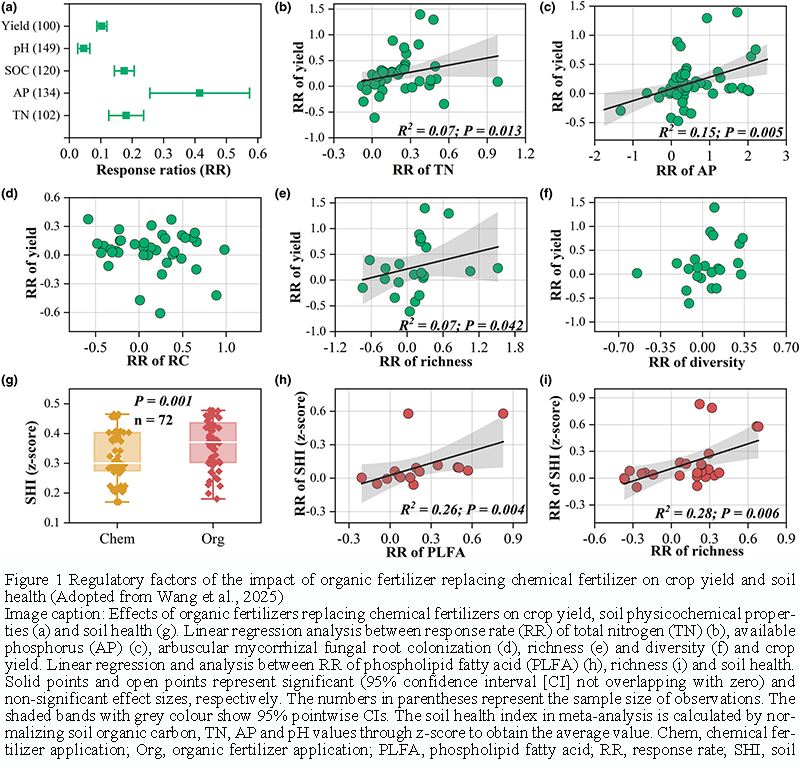 Figure 1 Regulatory factors of the impact of organic fertilizer replacing chemical fertilizer on crop yield and soil health (Adopted from Wang et al., 2025) Image caption: Effects of organic fertilizers replacing chemical fertilizers on crop yield, soil physicochemical properties (a) and soil health (g). Linear regression analysis between response rate (RR) of total nitrogen (TN) (b), available phosphorus (AP) (c), arbuscular mycorrhizal fungal root colonization (d), richness (e) and diversity (f) and crop yield. Linear regression and analysis between RR of phospholipid fatty acid (PLFA) (h), richness (i) and soil health. Solid points and open points represent significant (95% confidence interval [CI] not overlapping with zero) and non-significant effect sizes, respectively. The numbers in parentheses represent the sample size of observations. The shaded bands with grey colour show 95% pointwise CIs. The soil health index in meta-analysis is calculated by normalizing soil organic carbon, TN, AP and pH values through z-score to obtain the average value. Chem, chemical fertilizer application; Org, organic fertilizer application; PLFA, phospholipid fatty acid; RR, response rate; SHI, soil health index (Adopted from Wang et al., 2025) |
3.3 Regulation effects of different organic fertilizer substitution modes on Atractylodes macrocephala yield
Different organic fertilizer substitution modes do not produce the same yield response, and moderate substitution usually outperforms both sole chemical fertilization and excessive organic replacement. In Polygala tenuifolia, 40% chemical fertilizer substitution with microalgae gave the strongest growth-promoting effect, whereas microbial inoculant treatments with reduced chemical fertilizer showed no significant difference from full chemical fertilizer in underground growth (Su et al., 2025). In muskmelon, 15% and 30% organic substitution increased yield by 5.60~11.9% compared with conventional chemical fertilization and also improved economic returns (Yu et al., 2025). In rice, long-term green manure substitution improved yield sustainability only within a moderate range, with 0~40% substitution in early rice and 0~20% in late rice improving both soil quality and yield stability, whereas further increases reduced the sustainability yield index (Zhang et al., 2023).
This pattern is reinforced across broader substitution experiments. In soybean, 30% organic plus 70% inorganic fertilization was identified as the optimal strategy, outperforming both full chemical and full organic treatments for growth and yield (Zhang et al., 2026). In maize dryland production, a relatively low substitution rate of 12.5% increased grain yield by 6.60% and biomass by 4.59% compared with chemical fertilizer, and 12.5~37.5% substitution improved key carbon fractions linked to yield (Chen et al., 2025). In double-rice systems, substituting 20% of phosphorus fertilizer with organic manure increased grain yield by 4.59% and soil Olsen-P by 25.48%, while reduced-phosphorus substitution maintained yields comparable to conventional fertilization (Jin et al., 2025). However, evidence from Huajuhong shows that organic fertilizer is not inherently superior in all cases and may increase pathogenic fungi abundance under long-term use, so complete substitution is not always the best option. Therefore, for A. macrocephala, the most reasonable expectation is that yield can be optimized by a moderate substitution strategy that combines chemical fertilizer with organic fertilizer or bio-organic inputs, rather than by absolute replacement.
4 Mechanisms of Organic Fertilizer Substitution for Chemical Fertilizers in Quality Formation of Atractylodes macrocephala
4.1 Effects on accumulation of main active components in Atractylodes macrocephala
Organic fertilizer substitution can promote the accumulation of the main active components of Atractylodes macrocephala, but the effect is selective and depends on the fertilization mode and the physiological pathway being regulated. In a direct fertilization study on A. macrocephala, the HA organic fertilizer treatment produced a significantly higher atractylenolide I content than bacterial filtrate or conventional fertilization, and the highest atractylone-related index also appeared under HA treatment (Kim et al., 2016). This indicates that organic substitution can improve medicinal quality not only through biomass increase but also through enhancement of sesquiterpene lactone accumulation, which is one of the core quality targets in A. macrocephala (Lee et al., 2025). Independent reviews further show that the major active constituents of A. macrocephala include volatile oils, polysaccharides, and lactones, and that polysaccharides themselves are important pharmacodynamic substances rather than only reserve carbohydrates. Therefore, any fertilization practice that simultaneously favors lactone and polysaccharide accumulation is directly relevant to medicinal quality formation in this crop (Figure 2) (Liu et al., 2022; Li et al., 2022).
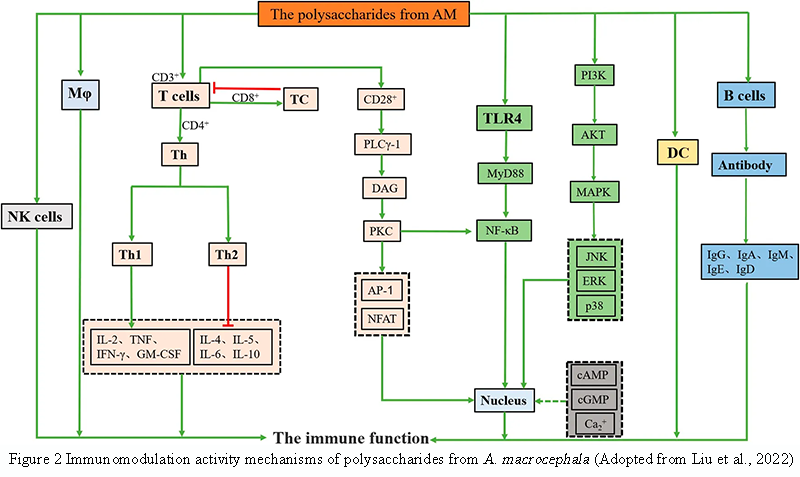 Figure 2 Immunomodulation activity mechanisms of polysaccharides from A. macrocephala (Adopted from Liu et al., 2022) |
The likely mechanism is that organic substitution enhances secondary metabolism through rhizosphere signaling, carbon supply, and regulation of terpenoid biosynthesis pathways. In A. macrocephala, elicitation with exogenous plant polysaccharides significantly increased biomass, atractylenolides, and polysaccharides, and RT-qPCR showed that the induced terpenoid increase mainly depended on the mevalonate pathway (Zhou et al., 2021). Rhizosphere evidence also supports this interpretation: multiple bacterial and fungal genera in A. macrocephala soils were positively or negatively correlated with the accumulation of polysaccharides, atractylone, and lactones I-III, indicating that active-component formation is tightly linked to microbial community structure (Song et al., 2023). Similar organic-input responses have been reported in other medicinal plants: bio-organic fertilizer increased lignans, flavonoids, polysaccharides, and polyphenols in Schisandra chinensis, while integrated organic and inorganic fertilization improved rhizome bioactive content in Kaempferia galanga (Saitama, 2025; Xu et al., 2025). Together, these findings suggest that organic fertilizer substitution promotes quality formation in A. macrocephala by coordinating nutrient availability with secondary-metabolite biosynthesis and rhizosphere biological activation.
4.2 Effects on volatile components and quality evaluation of medicinal materials
The quality of A. macrocephala medicinal materials is strongly associated with its volatile components, especially atractylone and related sesquiterpenes, so the effect of organic substitution on volatile profiles is a central quality issue. Comparative metabolomic and GC/MS studies show that A. macrocephala is chemically characterized by volatile oils dominated by atractylone, while atractylolactones also serve as distinguishing constituents among Atractylodes species (Zhang et al., 2025). A GC/MS chemometric study of 59 batches identified 50 volatile components and proposed five characteristic markers for Atractylodes quality evaluation, including atractylone and Atractylenolide. More broadly, volatile oils are recognized as important active constituents and characteristic quality indicators in Chinese medicinal materials, including A. macrocephala (Zhu et al., 2019). Since organic fertilizer can increase atractylone- and lactone-related indices in A. macrocephala cultivation, it likely acts on precisely the fraction most relevant to medicinal-grade evaluation (Kim et al., 2016).
Volatile quality formation is mechanistically sensitive to both environment and post-accumulation transformation. For A. macrocephala, precipitation during the early growth season had an important effect on volatile-oil accumulation, showing that water and nutrient environment during vegetative and early rhizome development can shape the final volatile profile (Zhu et al., 2019). Environmental analysis also showed that atractylenolide content was robustly associated with soil texture, cation exchange capacity, temperature, and humidity, whereas growth and phytochemical quality were regulated by partly independent environmental networks (Lee et al., 2025). Processing studies add an important quality-evaluation perspective: raw essential oil is rich in atractylon, whereas processing significantly depletes atractylon and increases atractylenolides I, II, and III through time-dependent chemical conversion (Li et al., 2025). Because crude and processed A. macrocephala also differ in the number of detected volatile components and in bioactivity profiles, quality evaluation should consider not only total oil yield but also the balance among key volatile markers and their transformation products (Gu et al., 2019).
4.3 Mechanisms of nutrient regulation promoting quality formation of Atractylodes macrocephala
The nutrient-regulation mechanism by which organic fertilizer substitution promotes quality formation appears to involve both improved nutrient supply and activation of key biosynthetic enzymes and genes. Studies on medicinal plants consistently show that the biosynthesis of secondary metabolites is sensitive to nutrient status, especially nitrogen and phosphorus, and that fertilization method and application rate must be matched to the target compounds. In Atractylodes chinensis, high-phosphorus fertilization promoted the accumulation of volatile-oil components and increased the expression of ACC and FPPS, while HMGR also contributed to sesquiterpene regulation. This is mechanistically relevant to A. macrocephala because sesquiterpenes such as atractylone and atractylenolides are key quality constituents, and terpenoid synthesis in Atractylodes depends on precursor supply and pathway activity (Sun et al., 2022). Nutrient effects on volatile quality are also seen in other medicinal plants: increasing phosphorus significantly increased essential-oil production in Vitex negundo, plausibly because phosphorus supports acetyl-CoA-dependent terpenoid biosynthesis (Peng and Ng, 2022).
Organic substitution adds another layer by reshaping microbial nutrient cycling and root-zone signaling, which can stabilize nutrient release and improve metabolic efficiency. Organic fertilizer increased soil organic matter, total nitrogen, total phosphorus, alkali-hydrolyzable nitrogen, and available phosphorus in rubber rhizosphere, while upregulating microbial genes involved in organic N metabolism, nitrate transport, nitrification, denitrification, and organic P mineralization (Geng et al., 2026). In Schisandra chinensis, bio-organic fertilizer altered transcriptomic and metabolomic pathways associated with plant growth and nutrient accumulation, consistent with higher levels of multiple quality compounds (Xu et al., 2025). Nutrient interaction studies further show that N and P coordination can remodel root structure, transporter activity, organic-acid metabolism, and hormone signaling, thereby improving nutrient uptake efficiency rather than simply increasing fertilizer input (Tang et al., 2025). Accordingly, the quality-promoting effect of organic fertilizer substitution in A. macrocephala likely arises from a coupled process in which slower but more buffered nutrient release, stronger rhizosphere microbial function, and enhanced terpenoid-biosynthetic signaling together promote the accumulation of lactones, polysaccharides, and volatile oils.
5 Effects of Organic Fertilizer Substitution for Chemical Fertilizers on Stress Resistance and Ecological Benefits of Atractylodes macrocephala
5.1 Enhancement of stress resistance in Atractylodes macrocephala
Organic fertilizer substitution can enhance the stress resistance of Atractylodes macrocephala mainly by improving soil water retention, nutrient buffering, antioxidant capacity, and rhizosphere biological stability. A recent review concluded that organic fertilizers improve tolerance to drought, salinity, heat, and heavy metal stress by improving leaf water status, nutrient homeostasis, chlorophyll synthesis, osmolyte accumulation, antioxidant activity, and stress-related gene expression (Liu et al., 2024). Integrated organic-inorganic nutrition also tends to improve water and nutrient uptake and strengthen drought tolerance while reducing dependence on sole chemical fertilization (Kazemalilou et al., 2021). In medicinal and field crops under drought, organic amendments increased photosynthesis, membrane stability, proline and sugar accumulation, and the activities of antioxidant enzymes such as SOD, POD, CAT, APX, GR, and GPX, thereby mitigating oxidative damage (Ahanger et al., 2021; Najafi et al., 2021). Similar responses were reported in maize, where poultry manure and farmyard manure improved growth and yield under severe drought and enhanced antioxidant defense through SOD, POD, and CAT (Shah et al., 2023).
For medicinal plants, this stress-mitigation effect is especially important because resistance traits and secondary-metabolite accumulation are closely linked. In Dracocephalum kotschyi, organic and microbial fertilizers under mild to moderate drought increased CAT, POD, PPO, and APX activity together with proline, phenolics, flavonoids, and anthocyanins, indicating coordinated improvement in oxidative stress mitigation and phytochemical accumulation. Biofertilizer treatments also improved biochemical stress indicators and increased flavonoid and anthocyanin contents under drought, while generally outperforming chemical fertilizer for stress tolerance and phytochemical enrichment (Heidarzadeh et al., 2026). In Atractylodes systems, vermicompost increased fungal diversity, available phosphorus, and enzyme activities, and humic substances in vermicompost can promote phenolic synthesis while enhancing root growth, soil structure, aeration, and water-holding capacity. Microbial fertilizers also help plants resist stress by recruiting beneficial rhizosphere organisms that compete with pathogens and induce systemic resistance, which provides a plausible mechanism for improved resilience in A. macrocephala under reduced chemical fertilizer input (Xing et al., 2025).
5.2 Reduction of agricultural non-point source pollution
Organic fertilizer substitution can reduce agricultural non-point source pollution, especially nitrogen leaching and runoff, when it replaces rather than simply adds to chemical fertilizer. A global meta-analysis of 129 studies found that organic inputs reduced overall nitrogen leaching by 15% and runoff by 29% without compromising yield, and substitution based on equal total nitrogen reduced both leaching and runoff by more than 30%. The same analysis showed lower loss ratios for organic fertilizer than chemical fertilizer and identified optimal substitution ranges of 40~60% for leaching control and 60~100% for runoff control under equal-total-N substitution (Wei et al., 2021). Field evidence is broadly consistent: in tobacco systems, combined organic-inorganic fertilization improved nutrient uptake while reducing runoff and leaching losses of both N and P compared with farmers’ organic practice. In paddy fields, substituting more than 30% of chemical N with organic N significantly lowered TN concentrations in ponded water while maintaining rice yield at comparable levels (Zhou, 2023).
The ecological advantage, however, depends on management details. Partial organic substitution in vegetable production reduced N2O emission, N leaching, and runoff, likely because it lowered inorganic nitrogen surplus, and it also prevented soil acidification (Tang et al., 2022). A short-term Tibetan incubation study found that 40% substitution with compost, straw, or sheep dung reduced cumulative N2O emissions by 16.64~53.43%, but nitrate tended to accumulate, indicating possible leaching risk if nitrogen transformation is not synchronized with crop uptake. Another study reported that organic fertilizers can be more easily washed out because of their soluble components, but combining fertilizer reduction with biochar and microbial agents reduced nutrient concentrations in infiltration and runoff waters by 5-10% while maintaining yield similar to full fertilization. Therefore, for A. macrocephala, organic substitution appears most effective for reducing non-point source pollution when used at moderate substitution rates and in combination with practices that stabilize nitrogen and phosphorus in the soil-plant system.
5.3 Promotion of sustainable development of the Atractylodes macrocephala industry
For the Atractylodes macrocephala industry, organic fertilizer substitution supports sustainable development by linking medicinal-material quality, soil restoration, waste recycling, and long-term input efficiency. Excessive chemical fertilizer use is associated with soil degradation, declining fertility, nutrient-use inefficiency, and broader environmental crisis, with only 30~50% nitrogen-use efficiency in major cereal systems and large fractions of applied nutrients lost through volatilization or leaching (Xing et al., 2025). Balanced mineral-organic fertilization instead improves soil structure, boosts water and nutrient retention, increases microbial biomass, and mitigates greenhouse-gas emissions and nutrient leaching while sustaining yields. In Atractylodes cultivation itself, suitable organic fertilizers increased rhizome yield and atractylenolide I content, showing that ecological fertilization can serve both production and medicinal-quality goals (Kim et al., 2016). Vermicompost studies in Atractylodes also demonstrate the value of converting agricultural wastes into high-value organic fertilizer, which broadens the utilization of organic residues while improving medicinal-herb yield and quality.
Sustainable industrial development also depends on profitability and risk control, not only on ecological outcomes. Partial substitution of chemical fertilizer with organic forms increased economic benefit per unit area by 37~46% in vegetable production and reduced agricultural inputs and environmental impacts per unit product by 22~44%, with 50% pig-manure substitution the most profitable strategy (Tang et al., 2022). Bio-organic fertilizer strategies in medicinal plants likewise provide an eco-friendly basis for reducing chemical fertilizer use while maintaining or improving medicinal-plant productivity and quality (Su et al., 2025). Microalgae-based biofertilizers offer an additional sustainability route because they improve nutrient cycling, reduce reliance on synthetic fertilizers, support beneficial soil microbiota, and can contribute to carbon sequestration (Gonçalves et al., 2023). Overall, organic fertilizer substitution appears to be a practical pathway for the sustainable development of the A. macrocephala industry, but the strongest evidence supports balanced substitution, not unconditional replacement, because some systems still show risks of nitrate accumulation, phosphorus mobilization, or pollutant wash-off under poorly matched organic inputs (Zhou, 2023; Xing et al., 2025).
6 Current Research Challenges and Future Development Directions
6.1 Optimization of organic fertilizer substitution ratios and application methods
At present, one major challenge is that the optimal substitution ratio of organic fertilizer for chemical fertilizer is not fixed, but varies with crop species, target traits, and local soil conditions. In Epimedium pubescens, 25% organic substitution produced the highest comprehensive score and was recommended for first-year production, even though fully or highly substituted treatments improved some soil indices or enzyme activities (Lai et al., 2024). In yam, the 25% organic plus 75% chemical treatment achieved the highest yield, commodity rate, and nitrogen use efficiency, while higher organic ratios reduced some yield traits. In contrast, Euryales Semen performed best at a 7:3 organic-to-chemical ratio, and tea responded most favorably to a 25% partial substitution treatment rather than complete replacement. These differences show that a single uniform substitution ratio cannot be directly transferred to A. macrocephala production.
Application method is another unresolved issue. Evidence across crops shows that substitution effects depend not only on proportion, but also on nutrient-equivalent design, fertilizer type, timing, and auxiliary amendments. The yam study maintained equal nitrogen input across treatments, which allowed a clearer comparison of substitution effects. In Saposhnikovia divaricata, the highest comprehensive scores came from a mode combining organic fertilizer, reduced chemical fertilizer, and biochar as a soil conditioner, indicating that optimization should include amendment combinations rather than ratio alone. A 20% commercial organic fertilizer substitution increased wheat yield and soil quality, but the authors emphasized that continued application requires monitoring soil organic matter and available nutrients to adjust fertilization over time (He et al., 2022). For A. macrocephala, future work should therefore move from simple ratio screening to multi-factor optimization that integrates substitution proportion, nutrient equivalence, fertilizer source, topdressing schedule, and soil-improving co-inputs under different production regions.
6.2 Insufficient research on the mechanisms of quality formation in Atractylodes macrocephala
A second major challenge is that the quality-formation mechanism of A. macrocephala remains insufficiently resolved. Environmental evidence shows that the factors regulating rhizome growth and those regulating atractylenolide accumulation are largely independent, and that optimizing yield and phytochemical quality may require different cultivation strategies. The same work argued that future cultivation should consider not only external conditions but also internal physiological mechanisms such as sink-source dynamics and storage-capacity development (Lee et al., 2025). This means that current fertilizer studies on A. macrocephala still explain outcomes mainly through correlations with soil properties, while the causal chain linking nutrient regulation to rhizome metabolite accumulation remains incomplete.
Mechanistic gaps also exist at the levels of microbiome, metabolism, and molecular regulation. Rhizosphere studies showed that 16 bacterial and 10 fungal genera were correlated with the accumulation of polysaccharides, atractylone, and lactones, but these results remain largely associative rather than functional (Song et al., 2023). Regional analysis further showed that authentic production areas had higher biomass and active-component levels, and that decomposer-associated fungi such as Mortierella and Basidiomycota were linked to quality formation (Zhou et al., 2025). At the plant level, A. macrocephala quality involves volatile oils, polysaccharides, and lactones (Liu et al., 2022; Yu et al., 2023); older rhizomes accumulate more sesquiterpenoids and phenolic acids, with upregulation of terpenoid and phenylpropanoid biosynthetic genes such as HMGR, DXS, idi, GPS, and GGPS (Cui et al., 2025). However, there is still no integrated framework showing how organic fertilizer substitution alters nutrient transformation, microbial networks, carbon allocation, and biosynthetic gene expression to jointly determine medicinal quality. Future research should combine controlled fertilization experiments with metabolomics, transcriptomics, enzyme assays, and rhizosphere microbiome manipulation to identify the key regulatory nodes of quality formation.
6.3 Establishment of green and precision fertilization technology systems
A third challenge is the lack of a green and precision fertilization technology system specifically tailored to A. macrocephala. Precision fertilization is increasingly recognized as a core pathway for optimizing nutrient application, improving productivity, and minimizing environmental harm through site-specific management, real-time monitoring, and variable-rate application. Reviews of specialty crops similarly show that precision systems should integrate crop and soil diagnostics, variable-rate fertilizer and irrigation management, and decision-support tools, while also incorporating organic and bio-based fertilizers into adaptive management frameworks (Khoddamzadeh et al., 2026). For A. macrocephala, this is especially relevant because soil texture, cation exchange capacity, humidity, and temperature all affect active-component accumulation, so fertilization should eventually be linked to fine-scale environmental diagnosis rather than uniform field application (Lee et al., 2025).
The future direction is to establish a fertilization system that combines soil testing, sensor monitoring, decision models, and organic substitution strategies. Site-specific nutrient management aims to match nutrient supply with spatial and temporal crop demand using tools such as remote sensing, GPS, GIS, and variable-rate technology, thereby improving nutrient-use efficiency and economic return rather than simply increasing inputs (Akhil et al., 2025). Precision water-fertilizer reviews further emphasize the need to couple nutrient management with irrigation, improve soil testing, refine predictive models, and build standardized indicator systems that account for soil heterogeneity and nutrient transformation processes (Xing and Wang, 2024). Practical experience from SSNM decision-support systems also shows that precision fertilization can improve productivity, soil fertility, microbial activity, and nutrient-use efficiency while remaining operational for extension and farm use (Pooniya et al., 2015). Accordingly, future A. macrocephala research should build region-specific green fertilization models for authentic and emerging production areas, develop quality-oriented nutrient recommendation standards, and integrate organic fertilizer substitution into digital, scalable precision management systems.
7 Conclusions and Prospects
Organic fertilizer substitution for chemical fertilizers should be regarded as an important approach for improving the production quality of Atractylodes macrocephala, but the evidence supports balanced substitution more strongly than complete replacement. In A. macrocephala itself, HA organic fertilizer maintained or exceeded conventional yield and significantly increased atractylenolide I content from 0.023% under customary fertilization to 0.036%, while the highest yield reached 203.0 kg per 10 a at the appropriate HA application rate. In related Atractylodes research, vermicompost increased yield by 70% and raised atractylenolide II, β-eudesmol, atractylenol, and atractylenolone by 34%, 175%, 72%, and 24%, respectively, while also increasing available phosphorus and lowering nitrate nitrogen. Across medicinal and field crops, partial substitution often performs best: 40% microalgae substitution increased underground biomass and active components in Polygala tenuifolia 25% partial substitution improved tea soil quality and amino acid quality traits while raising nitrogen use efficiency, and 20~40% mineral replacement is repeatedly associated with lower environmental risk while sustaining productivity. Because long-term chemical-fertilizer dependence reduces soil organic matter and disrupts soil biological activity, whereas organic inputs improve soil structure, nutrient retention, and microbial function, organic substitution should be treated as a core pathway for coordinating rhizome yield, medicinal quality, and ecological safety in A. macrocephala production.
Nutrient regulation is the key driver connecting fertilization mode with quality formation in A. macrocephala, because active-component accumulation depends not simply on nutrient quantity but on the balance among nutrient supply, rhizosphere transformation, and secondary-metabolite biosynthesis. In Atractylodes chinensis, precise NPK regulation showed that high-phosphorus fertilization increased yield and promoted sesquiterpene and polyacetylene accumulation by increasing ACC and FPPS expression, while HMGR responded more strongly under a different formula, indicating that different nutrient ratios regulate different biosynthetic branches (Sun et al., 2022). More broadly, medicinal-plant studies show that appropriate N and P improve biomass, essential oils, and bioactive compounds, but species differ in their optimal ratios and excessive or imbalanced fertilization can reduce target metabolites. Nitrogen also changes metabolic allocation: low N increased phenolic acids and flavonoids in Artemisia argyi, whereas high N increased volatile oil and terpene-related gene expression. At the system level, organic substitution improves soil organic matter, available nutrients, microbial diversity, and nutrient-use efficiency, while compost optimization with biochar can reduce nitrogen loss by 28.1% and preserve phosphorus availability before the fertilizer even reaches the field. Future work on A. macrocephala should therefore focus on how nitrogen, phosphorus, potassium, organic carbon, and rhizosphere microbes jointly regulate lactones, volatile oils, and polysaccharides rather than evaluating fertilizer treatments only by yield response.
The future prospect for A. macrocephala is the construction of a green and efficient cultivation technology system that integrates organic substitution, formula fertilization, soil testing, and precision management. Precision agriculture in medicinal plants is defined by site-specific monitoring and response, using tools such as GIS, GPS, crop scouting, remote sensing, and variable-rate technology to optimize output with lower resource use. Smart-farming reviews further show that data-driven irrigation and nutrient management can improve medicinal-plant yield, phytochemical consistency, and sustainability by directly regulating photosynthesis, nutrient uptake, stress response, and secondary-metabolite biosynthesis, although cost and scalability remain constraints. For fertilization practice, soil testing and formula-based nutrient management are recommended because proper fertilization improves bioactive compounds, whereas excess or imbalance can have the opposite effect. Organic-inorganic integration also improves drought tolerance and resource-use efficiency, and nano-organic fertilizer has been shown to enhance antioxidant metabolism, osmolyte accumulation, mineral nutrition, photosynthesis, and membrane stability under drought stress. Accordingly, future A. macrocephala cultivation should establish region-specific nutrient recommendation models for authentic and emerging production areas, dynamically monitor soil organic matter and available nutrients during long-term substitution, and combine ecological fertilization with digital decision support so that high yield, stable quality, stress resistance, and environmental protection can be achieved simultaneously.
Conflict of Interest Disclosure
The author affirms that this research was conducted without any commercial or financial relationships that could be construed as a potential conflict of interest.
Acar M., Wahab T.S., Kaya Karaca Ö., Işık M., Sariyev A., and Ortaş İ., 2025, Exposing how long-term organic and inorganic fertilizers affect the physical characteristics of soil, Journal of Soil Science and Plant Nutrition, 25(2): 5187-5201.
https://doi.org/10.1007/s42729-025-02457-1
Ahanger M.A., Qi M., Huang Z., Xu X., Begum N., Qin C., Zhang C., Ahmad N., Mustafa N.S., Ashraf M., and Zhang L., 2021, Improving growth and photosynthetic performance of drought stressed tomato by application of nano-organic fertilizer involves up-regulation of nitrogen, antioxidant and osmolyte metabolism, Ecotoxicology and Environmental Safety, 216: 112195.
https://doi.org/10.1016/j.ecoenv.2021.112195
Akhil K., Renukaswamy N.S., Sowjanya J., Aruna, Kishore S.M., Bharthisha S.M., and Dasannavar G., 2025, Site-specific nutrient management: revolutionizing fertilization for future farming, International Journal of Advanced Biochemistry Research, 9(3): 544-549.
https://doi.org/10.33545/26174693.2025.v9.i3g.3995
Aytenew M., and Bore G., 2020, Effects of organic amendments on soil fertility and environmental quality: a review, Journal of Plant Sciences, 8(5): 112-119.
https://doi.org/10.11648/j.jps.20200805.12
Chen Q., Xie J., Li L., Khan K.S., Wang L., Chang L., and Du C., 2025, Partial substitution of chemical fertilizer with organic fertilizer: a promising circular economy approach for improvement soil physical and chemical properties and sustainable crop yields, Frontiers in Plant Science, 16: 1565081.
https://doi.org/10.3389/fpls.2025.1565081
Cui X., Wang Y., Yu G., He B., Huang L., Liu Y., and Zhan Z., 2025, Integrated morphological observation, metabolomics, and transcriptomics to investigate the effect of growth years on the quality of Atractylodes macrocephala Koidz., BMC Plant Biology, 25(1): 912.
https://doi.org/10.1186/s12870-025-06958-0
Du J., Yu Y., Tang C., Zong K., Zhang S., Zhang Q., Fang L., and Li Y., 2024, Organic fertilizers increase the proportion of saprotrophs favoring soil nitrification under medicinal plants Fritillaria thunbergii, Industrial Crops and Products, 219: 119129.
https://doi.org/10.1016/j.indcrop.2024.119129
Fasusi O.A., Cruz C., and Babalola O.O., 2021, Agricultural sustainability: microbial biofertilizers in rhizosphere management, Agriculture, 11(2): 163.
https://doi.org/10.3390/agriculture11020163
Geng S., Shi X., Zhang Q., Yang J., Yang C., and Yang L., 2026, Organic fertilizer enhances microbial functional genes related to nitrogen and phosphorus cycling in rubber tree (Hevea brasiliensis) rhizosphere, Frontiers in Microbiology, 17: 1833968.
https://doi.org/10.3389/fmicb.2026.1833968
Gonçalves J., Freitas J., Fernandes I., and Silva P., 2023, Microalgae as biofertilizers: a sustainable way to improve soil fertility and plant growth, Sustainability, 15(16): 12413.
https://doi.org/10.3390/su151612413
Gu S., Li L., Huang H., Wang B., and Zhang T., 2019, Antitumor, antiviral, and anti-inflammatory efficacy of essential oils from Atractylodes macrocephala Koidz. produced with different processing methods, Molecules, 24(16): 2956.
https://doi.org/10.3390/molecules24162956
He H., Peng M., Lu W., Hou Z., and Li J., 2022, Commercial organic fertilizer substitution increases wheat yield by improving soil quality, Science of the Total Environment, 851(Pt 1): 158132.
https://doi.org/10.1016/j.scitotenv.2022.158132
Heidarzadeh A., Modarres-Sanavy S.A.M., and Mokhtassi-Bidgoli A., 2026, Phytochemical responses of Dracocephalum kotschyi Boiss. to water deficit stress and different fertilizers, Scientific Reports, 16: 11951.
https://doi.org/10.1038/s41598-026-41394-6
Huang B., Chen Y., Cao Y., Liu D., Fang H., Zhou C.H., Wang D., and Wang J., 2024, The structure and function of rhizosphere bacterial communities: impact of chemical vs. bio-organic fertilizers on root disease, quality, and yield of Codonopsis pilosula, Frontiers in Microbiology, 15: 1484727.
https://doi.org/10.3389/fmicb.2024.1484727
Ji C., Li W., Yao L., He X., Luo D., Han T., He C., and Li X., 2025, Impact of various fertilization types and application rates on Salvia miltiorrhiza quality and the composition of its root microbial community, Industrial Crops and Products, 230: 121071.
https://doi.org/10.1016/j.indcrop.2025.121071
Jin B., Teng Z., Shu Y., Li K., Lin X., and Liu X., 2025, Partial substitution of inorganic fertilizer with organic manure and reduced phosphorus inputs enhance rice yields and phosphorus fertilizer efficiency, Sustainability, 17(9): 3878.
https://doi.org/10.3390/su17093878
Kazemalilou S., Lajayer B.A., and Ghorbanpour M., 2021, Increasing the tolerance of water-deficit stress in plants with integrated application of organic and inorganic fertilizers, In: Agri-Based Bioeconomy: Reintegrating Trans-disciplinary Research and Sustainable Development Goals, pp. 299-312.
https://doi.org/10.1201/9781003033394-20
Khoddamzadeh A.A., Singh S., and Bhaskar M.S.B., 2026, Editorial: optimizing fertilizer and irrigation for specialty crops using precision agriculture technologies, Frontiers in Plant Science, 17: 1760142.
https://doi.org/10.3389/fpls.2026.1760142
Kim Y.G., An T.J., Kim Y.I., Lee E.S., Jung C.S., Song B.H., and An C.H., 2016, Effect of organic fertilizer on growth and yield components of Atractylodes macrocephala, The Korean Journal of Medicinal Crop Science, 24(6): 444-450.
https://doi.org/10.7783/KJMCS.2016.24.6.444
Lai K., Xiao J., Wan X.F., Fan R., Yan B.B., Kang C.Z., Sun K., Lyu C., Ke X., He G., Zhang Y., and Guo L.P., 2024, Effect of combined application of organic and chemical fertilizers on yield and quality of Epimedium pubescens, Zhongguo Zhong Yao Za Zhi (China Journal of Chinese Materia Medica), 49(11): 2871-2881.
https://doi.org/10.19540/j.cnki.cjcmm.20240317.101
Lee D.H., Son Y., Jang J.H., Jeong D.H., Kim H.J., and Kim J.A., 2025, Environmental effects on Atractylodes macrocephala rhizome growth and compounds, Agriculture, 15(18): 1950.
https://doi.org/10.3390/agriculture15181950
Li W., Yang H., Yu C., Zhang Y., Lai C.J.S., and Xie J., 2025, Stir-frying modulates chemical transformation in Atractylodes macrocephala essential oil: mechanistic insights into volatile component dynamics, Journal of Chromatography A, 1757: 466116.
https://doi.org/10.1016/j.chroma.2025.466116
Li X., Rao Z., Xie Z., Qi H., and Zeng N., 2022, Isolation, structure and bioactivity of polysaccharides from Atractylodes macrocephala: a review, Journal of Ethnopharmacology, 296: 115506.
https://doi.org/10.1016/j.jep.2022.115506
Lin F., Xu Y., Liu B., Li H., and Chen L., 2024, Research progress on extraction, separation, structure, and biological activities of polysaccharides from the genus Atractylodes: a review, International Journal of Biological Macromolecules, 283(Pt 1): 137550.
https://doi.org/10.1016/j.ijbiomac.2024.137550
Liu C., Wang S., Xiang Z., Xu T., He M., Xue Q., Song H., Gao P., and Cong Z., 2022, The chemistry and efficacy benefits of polysaccharides from Atractylodes macrocephala Koidz., Frontiers in Pharmacology, 13: 952061.
https://doi.org/10.3389/fphar.2022.952061
Liu Y., Lan X., Hou H., Ji J., Liu X., and Lv Z., 2024, Multifaceted ability of organic fertilizers to improve crop productivity and abiotic stress tolerance: review and perspectives, Agronomy, 14(6): 1141.
https://doi.org/10.3390/agronomy14061141
Lu W., Zhou Y., Ma X., Gao J., Guo J., Fan X., Xing W., Gao W., Lin M., and Wang R., 2025, Impacts of organic fertilizer substitution on soil ecosystem functions: synergistic effects of nutrients, enzyme activities, and microbial communities, Agronomy, 15(12): 2798.
https://doi.org/10.3390/agronomy15122798
Miao P., Pang X., Zhang M., Cheng W., Zhou Z., Li Y., Wang H., Jia X., Ye J., and Zhang Q., 2024, Enhancing soil health and tea plant quality through integrated organic and chemical fertilization strategies, Horticulturae, 10(12): 1311.
https://doi.org/10.3390/horticulturae10121311
Najafi S., Nasi H.N., Tuncturk R., Tuncturk M., Sayyed R.Z., and Amirnia R., 2021, Biofertilizer application enhances drought stress tolerance and alters the antioxidant enzymes in medicinal pumpkin (Cucurbita pepo convar. pepo var. Styriaca), Horticulturae, 7(12): 588.
https://doi.org/10.3390/horticulturae7120588
Peng L., and Ng L., 2022, Impacts of nitrogen and phosphorus fertilization on biomass, polyphenol contents, and essential oil yield and composition of Vitex negundo Linn., Agriculture, 12(6): 859.
https://doi.org/10.3390/agriculture12060859
Pooniya V., Jat S.L., Choudhary A.K., Singh A.K., Parihar C.M., Bana R.S., Swarnalakshmi K., and Rana K.S., 2015, Nutrient Expert assisted site-specific-nutrient-management: an alternative precision fertilization technology for maize-wheat cropping system in South-Asian Indo-Gangetic Plains, The Indian Journal of Agricultural Sciences, 85(8): 996-1002.
https://doi.org/10.56093/ijas.v85i8.50796
Ren J., Liu X., Yang W., Yang X., Li W., Xia Q., Li J., Gao Z., and Yang Z., 2021, Rhizosphere soil properties, microbial community, and enzyme activities: short-term responses to partial substitution of chemical fertilizer with organic manure, Journal of Environmental Management, 299: 113650.
https://doi.org/10.1016/j.jenvman.2021.113650
Robas-Mora M., Fernández-Pastrana V.M., González-Reguero D., Probanza A., and Jiménez-Gómez P.A., 2026, Effect of PGPB-enriched organic fertilizer ORGAON®PK on the rhizospheric microbiota and biomass of Lupinus albus (L.): a sustainable alternative to chemical fertilizer, Environmental Microbiome, 21(1): 6.
https://doi.org/10.1186/s40793-025-00827-x
Rostaei M., Fallah S., Carrubba A., and Lorigooini Z., 2024, Organic manures enhance biomass and improve content, chemical compounds of essential oil and antioxidant capacity of medicinal plants: a review, Heliyon, 10(17): e36693.
https://doi.org/10.1016/j.heliyon.2024.e36693
Saitama A., Zaini A.H., Ikbal A.M.D.P., Adianingsih O.R., Hariyono D., and Widaryanto E., 2025, Implementation of Good Agricultural Practices (GAP) in Kaempferia galanga L.: enhancing inorganic fertilizer efficiency through substitution with organic fertilizers and plant growth regulators (PGRs), Transactions of the Chinese Society of Agricultural Machinery, 56(12): 12-24.
https://doi.org/10.62321/issn.1000-1298.2025.12.2
Shah M.N., Wright D., Hussain S., Koutroubas S.D., Seepaul R., George S., Ali S., Naveed M., Khan M., Altaf M.T., Ghaffor K., Dawar K., Syed A., and Eswaramoorthy R., 2023, Organic fertilizer sources improve the yield and quality attributes of maize (Zea mays L.) hybrids by improving soil properties and nutrient uptake under drought stress, Journal of King Saud University - Science, 35(4): 102570.
https://doi.org/10.1016/j.jksus.2023.102570
Shang L., Wan L., Zhou X., Li S., and Li X., 2020, Effects of organic fertilizer on soil nutrient status, enzyme activity, and bacterial community diversity in Leymus chinensis steppe in Inner Mongolia, China, PLOS ONE, 15(10): e0240559.
https://doi.org/10.1371/journal.pone.0240559
Sharma S.B., 2022, Trend setting impacts of organic matter on soil physico-chemical properties in traditional vis-a-vis chemical-based amendment practices, PLOS Sustainability and Transformation, 1(3): e0000007.
https://doi.org/10.1371/journal.pstr.0000007
Song P., Liu J., Huang P., Han Z., Wang D.L., and Sun N., 2023, Diversity and structural analysis of rhizosphere soil microbial communities in wild and cultivated Rhizoma Atractylodis Macrocephalae and their effects on the accumulation of active components, PeerJ, 11: e14841.
https://doi.org/10.7717/peerj.14841
Su Y., Ren Y., Wang G., Li J., Zhang H., Yang Y., Pang X., and Han J., 2025, Microalgae and microbial inoculant as partial substitutes for chemical fertilizer enhance Polygala tenuifolia yield and quality by improving soil microorganisms, Frontiers in Plant Science, 15: 1499966.
https://doi.org/10.3389/fpls.2024.1499966
Sun J., Luo H., Jiang Y., Wang L., Xiao C., and Weng L., 2022, Influence of nutrient (NPK) factors on growth, and pharmacodynamic component biosynthesis of Atractylodes chinensis: an insight on acetyl-CoA carboxylase (ACC), 3-hydroxy-3-methylglutaryl-CoA reductase (HMGR), and farnesyl pyrophosphate synthase (FPPS) signaling responses, Frontiers in Plant Science, 13: 799201.
https://doi.org/10.3389/fpls.2022.799201
Tang Q., Cotton A., Wei Z., Xia Y., Daniell T., and Yan X., 2022, How does partial substitution of chemical fertiliser with organic forms increase sustainability of agricultural production?, Science of the Total Environment, 803: 149933.
https://doi.org/10.1016/j.scitotenv.2021.149933
Tang X., Zhang Y., Meng P., Yuan Y., Li C., Zhi X., and Wang C., 2025, The impact of nitrogen and phosphorus interaction on growth, nutrient absorption, and signal regulation in woody plants, Biology, 14(5): 490.
https://doi.org/10.3390/biology14050490
Wang G., Ren Y., Bai X., Su Y., and Han J., 2022, Contributions of beneficial microorganisms in soil remediation and quality improvement of medicinal plants, Plants, 11(23): 3200.
https://doi.org/10.3390/plants11233200
Wang H., Guo R., Xu J., Yang T., Wang M., Zhang L., Jiang L., Gao Y., Guo J., Shi L., Gao Y., Sun M., and Zhang T., 2025, Organic fertilizer enhances crop yield and soil health by increasing arbuscular mycorrhizal fungi species richness, Functional Ecology, 39: 3210-3224.
https://doi.org/10.1111/1365-2435.70151
Wei Z., Hoffland E., Zhuang M., Hellegers P., and Cui Z., 2021, Organic inputs to reduce nitrogen export via leaching and runoff: a global meta-analysis, Environmental Pollution, 291: 118176.
https://doi.org/10.1016/j.envpol.2021.118176
Xing Y., and Wang X., 2024, Precise application of water and fertilizer to crops: challenges and opportunities, Frontiers in Plant Science, 15: 1444560.
https://doi.org/10.3389/fpls.2024.1444560
Xing Y., Xie Y., and Wang X., 2025, Enhancing soil health through balanced fertilization: a pathway to sustainable agriculture and food security, Frontiers in Microbiology, 16: 1536524.
https://doi.org/10.3389/fmicb.2025.1536524
Xu R., Zhang W., Chen S., Song S., Dong J., Yang Z., and Ma Y., 2025, Integrated transcriptomic and metabolomic analyses reveal the mechanisms underlying bio-organic fertilizer-mediated growth and nutrient enhancement in Schisandra chinensis (Turcz.) Baill, Frontiers in Plant Science, 16: 1662470.
https://doi.org/10.3389/fpls.2025.1662470
Yu Y., Fu D., Zhou H., Su J., Chen S., and Lv G., 2023, Potential application of Atractylodes macrocephala Koidz. as a natural drug for bone mass regulation: a review, Journal of Ethnopharmacology, 315: 116718.
https://doi.org/10.1016/j.jep.2023.116718
Yu Z., Guo B., Sun T., Li R., Zhao Z., and Yao L., 2025, Effects of organic fertilizer substitution for mineral fertilizer on soil fertility, yield, and quality of muskmelons, Agronomy, 15(3): 639.
https://doi.org/10.3390/agronomy15030639
Yuan S., Li R.N., Zhang Y., Luan H.A., Tang J.W., Wang L., Ji H., and Huang S., 2024, Effects of long-term partial substitution of inorganic fertilizer with pig manure and/or straw on nitrogen fractions and microbiological properties in greenhouse vegetable soils, Journal of Integrative Agriculture, 23(6): 2083-2098.
https://doi.org/10.1016/j.jia.2024.02.017
Zhang C.C., Wang S., Li Q., Zhang Y., He Y., Yan B., Zhou L., and Guo L., 2025, Metabolomic profiling and chemical marker identification in medicinal plants of Atractylodes, Science of Traditional Chinese Medicine, 3(1): 87-95.
https://doi.org/10.1097/ST9.0000000000000059
Zhang J., Liu Q., Chen J., Zhou Y., Zhang B., Yuan Z., Li P., and Pang Z., 2026, Moderate organic-inorganic fertilization optimizes soybean productivity by reshaping rhizosphere microbiome-metabolite networks, Frontiers in Plant Science, 17: 1823609.
https://doi.org/10.3389/fpls.2026.1823609
Zhang J., Nie J., Cao W., Gao Y.J., Lu Y.H., and Liao Y., 2023, Long-term green manuring to substitute partial chemical fertilizer simultaneously improving crop productivity and soil quality in a double-rice cropping system, European Journal of Agronomy, 142: 126641.
https://doi.org/10.1016/j.eja.2022.126641
Zhao Y., Bian Q., Dong Z., Rao X., Wang Z., Fu Y., and Chen B., 2025, The input of organic fertilizer can improve soil physicochemical properties and increase cotton yield in southern Xinjiang, Frontiers in Plant Science, 15: 1520272.
https://doi.org/10.3389/fpls.2024.1520272
Zhou J., 2023, The effects of organic fertilizer on loss risk of nitrogen and phosphorus in paddy ponded water, Environmental Science and Pollution Research, 30(19): 55529-55540.
https://doi.org/10.1007/s11356-023-26296-8
Zhou Y., Gu X., Xu J., Zhao Y., Fan S., Zhu N., Meng Q., Dai S., Zhu B., and Yuan X., 2025, Fungal diversity and network analysis in rhizosphere soil of Atractylodes macrocephala across different cultivation regions, Scientific Reports, 15(1): 19889.
https://doi.org/10.1038/s41598-025-96810-0
Zhou Y., Lu X., Chen L., Zhang P., Zhou J., Xiong Q., Shen Y., and Tian W., 2021, Polysaccharides from Chrysanthemum indicum L. enhance the accumulation of polysaccharide and atractylenolide in Atractylodes macrocephala Koidz., International Journal of Biological Macromolecules, 190: 649-659.
https://doi.org/10.1016/j.ijbiomac.2021.09.010
Zhu B., Zhang Q., Hua J., Cheng W., and Qin L., 2018, The traditional uses, phytochemistry, and pharmacology of Atractylodes macrocephala Koidz.: a review, Journal of Ethnopharmacology, 226: 143-167.
https://doi.org/10.1016/j.jep.2018.08.023
Zhu S.D., Guo L., Cui Y., Xiao R., Yu Z.D., Jin Y., Fu R.J., Zhang J., Xu T., Chen J., Nan T., Tang J., Kang L., and Huang L., 2019, Quality suitability modeling of volatile oil in Chinese Materia Medica-Based on maximum entropy and independent weight coefficient method: case studies of Atractylodes lancea, Angelica sinensis, Curcuma longa and Atractylodes macrocephala, Industrial Crops and Products, 142: 111807.
https://doi.org/10.1016/j.indcrop.2019.111807


. FPDF(win)
. FPDF(mac)
. HTML
. Online fPDF
Associated material
. Readers' comments
Other articles by authors
. Guangman Xu

Related articles
. Atractylodes macrocephala
. Organic fertilizer substitution
. Yield formation
. Medicinal quality
. Green cultivation
Tools
. Post a comment