Research Insight
Development of Local Characteristic Resources of Tetrastigma hemsleyanum and Optimization of Under-Forest Industry Development Pathways 

 Author Correspondence author
Medicinal Plant Research, 2026, Vol. 16, No. 3
Received: 20 Apr., 2026 Accepted: 28 May, 2026 Published: 09 Jun., 2026
Tetrastigma hemsleyanum is an important characteristic medicinal plant resource in southern China, with traditional medicinal, edible, and modern functional product development value. With the continuous decline of wild resources and increasing market demand, artificial cultivation and ecological under-forest cultivation have gradually become important approaches for resource conservation and industrial development of T. hemsleyanum. Focusing on the development of local characteristic resources and the under-forest industry of T. hemsleyanum, this study systematically analyzes the distribution of germplasm resources, characteristics of local types, and differences in quality and ecological conditions among producing areas, and further elucidates the ecological basis of under-forest production in terms of light and temperature, moisture and soil conditions, and forest stand types. On this basis, under-forest wild-simulated cultivation and forest-medicinal plant integrated management models are compared, and the comprehensive utilization of tuberous roots, stems, leaves, and other resources, deep processing of characteristic products, and local brand development are further discussed. The results indicate that the current T. hemsleyanum industry still faces several major constraints, including insufficient conservation of wild and elite germplasm resources, limited supply of high-quality seedlings, low levels of standardization and large-scale under-forest cultivation, and insufficient product development, quality control, and industrial chain extension. Future development should strengthen local germplasm conservation and elite germplasm utilization, establish standardized under-forest cultivation technologies adapted to regional ecological conditions, promote whole-plant resource utilization, deep processing, quality traceability, and regional brand development, and ultimately establish an integrated industrial system linking “germplasm conservation-ecological cultivation-processing and value addition-brand development.” This study provides a reference for the sustainable utilization of T. hemsleyanum resources and the development of local characteristic under-forest industries.
1 Introduction
Tetrastigma hemsleyanum Diels et Gilg, commonly known as Sanyeqing, is a rare perennial vine and an important traditional Chinese medicinal plant widely distributed in subtropical regions of southern China, especially along the Yangtze River basin and in provinces such as Zhejiang, Fujian, and Guangxi. It has a long history of medicinal use, with records tracing back to ancient materia medica, where it was used for clearing heat, detoxification, promoting blood circulation, and treating high fever, pneumonia, hepatitis, snake bite, jaundice, and infantile febrile convulsions (Xia et al., 2023). Modern phytochemical and pharmacological studies further show that T. hemsleyanum contains abundant flavonoids, phenolic acids, polysaccharides, organic acids, terpenoids, steroids, and other constituents, with roughly 142~150 compounds reported to date (Hu et al., 2021).
These compounds support a broad spectrum of biological activities, including anti-tumor, anti-inflammatory, antioxidant, antipyretic, antiviral, immunomodulatory, hepatoprotective, analgesic, and antibacterial effects, which explains the strong and growing scientific and market interest in this species. Experimental studies have identified anti-cancer and anti-inflammatory effects in liver cancer cell models, inflammatory cell models, tumor-bearing mice, and ulcerative colitis models, while also linking activity to compounds such as chlorogenic acid, rutin, quercetin, kaempferol derivatives, alkaloids, and polysaccharides (Wang et al., 2018; Feng et al., 2024). Polysaccharide fractions, in particular, have shown antitumor, anti-inflammatory, immune-regulatory, antioxidant, thermoregulatory, and metabolic-regulatory potential, with possible applications extending beyond medicine to food and cosmetic industries (Zhou et al., 2022).
Despite its high medicinal and economic value, the resource base of T. hemsleyanum faces significant pressure. Multiple reviews note that wild populations have been overexploited because of increasing demand, narrow habitat requirements, and the long-standing preference for wild medicinal materials, leaving this species on the verge of extinction in some areas and even placing it among preferentially protected crop germplasm resources in Zhejiang Province (Hu et al., 2021; Ji et al., 2021). More broadly, medicinal plant research in China shows that wild herbal resources are increasingly unable to meet market demand, making artificial cultivation the most feasible and inevitable route for conservation and stable supply (Rao et al., 2004). At the same time, the quality and clinical efficacy of Chinese medicinal materials depend directly on cultivation processes, and ecological planting, under-forest economy, intercropping, and industrialized production have become major research hotspots in recent years (Miao et al., 2024). For T. hemsleyanum specifically, current bottlenecks remain clear: its active material basis is not fully resolved, quality control standards are still imperfect, backward processing and storage problems persist, and physiological cultivation studies have focused mainly on light and fertilizer, leaving many production mechanisms insufficiently understood. These constraints limit industrial scaling, product standardization, premium branding, and the conversion of local germplasm advantages into a stable characteristic industry (Xia et al., 2023).
Against this background, developing local characteristic resources of T. hemsleyanum has clear practical significance at the ecological, economic, and regional development levels. Understory cultivation of medicinal plants makes fuller use of land, light, and heat resources, is based on forest-medicine symbiosis, and contributes to sustainable utilization of forest resources, plant diversity conservation, and ecological improvement (Li et al., 2025). Agroforestry more generally is well suited to shade-tolerant medicinal plants, offering a practical strategy for simultaneous cultivation and conservation while also creating remunerative alternative crops for smallholders (Rao et al., 2004). Chinese ecological agriculture research likewise argues that underwood planting and imitation-wild habitat cultivation are important pathways to achieve high-quality, efficient, and sustainable medicinal material production while increasing mountain-area incomes and reducing pressure on wild resources (Wang et al., 2020). Experimental evidence from forest-medicinal plant systems further suggests that understory planting can improve soil nutritional status, enrich rhizosphere microbial communities, and enhance soil carbon utilization, indicating that the forest-medicine compound model can generate both ecological and economic benefits (Yu et al., 2023). However, understory industries also face real constraints, including mismatches between canopy density and crop light demand, unstable input-output relationships, weak technical systems, insufficient regulation, and high trial-and-error costs, so optimization must be grounded in species traits, local forest conditions, and market demand (Wen et al., 2025).
This study will explore the development of local characteristic resources of Tetrastigma hemsleyanum and the optimization of its under-forest industrial development pathways by comprehensively analyzing its medicinal resource endowment, local ecological conditions, and current industrial development needs. Particular attention will be given to the intrinsic relationships among resource conservation, ecological cultivation, standardized production, and industrial utilization of T. hemsleyanum within the framework of the under-forest economy. On this basis, the study will systematically summarize the characteristics and development foundations of local germplasm resources, analyze the effects of different ecological conditions and under-forest production models on resource utilization and industrial development, identify the key constraints limiting the transformation of local resource advantages and the large-scale development of the under-forest industry, and propose corresponding optimization pathways in terms of elite germplasm utilization, selection of ecologically suitable forest sites, standardization of cultivation technologies, quality evaluation, deep processing of products, and brand development. By establishing a development framework of “resource conservation-ecological cultivation-processing and value addition-industrial integration,” this study aims to provide a reference for the conservation of elite T. hemsleyanum germplasm resources, rational utilization of forest-land resources, and ecological under-forest production. It also seeks to improve product quality consistency and market competitiveness, promote the transformation of local medicinal plant resource advantages into industrial advantages, and provide theoretical and practical support for the coordinated development of regional specialty agriculture, the under-forest economy, and the health industry.
2 Characteristics and Development Basis of Local Tetrastigma hemsleyanum Resources
2.1 Distribution of germplasm resources and characteristics of local types
Tetrastigma hemsleyanum is a perennial medicinal vine endemic to subtropical China and is distributed mainly in regions south of the Yangtze River, including Zhejiang, Fujian, Jiangxi, Hunan, Guangxi, Guizhou, Yunnan, Guangdong, Chongqing, and Taiwan, with Guangxi and Zhejiang recognized as areas with relatively abundant diversity (Chen et al., 2022; Han et al., 2026). Field and survey studies further show that this species typically occurs in valleys, shrubs, forests, gullies, slopes, moist grasslands, rock crevices, and valley streams, usually under scattered light and at elevations of about 300~1300 m, indicating a distinct dependence on shaded, humid, and relatively specific mountain habitats. In Guangxi, wild populations are concentrated mainly in the north and west, and the associated plant communities include tree, shrub, and herb layers with more than 50 accompanying species, which reflects the ecological complexity of the local germplasm habitat. Across its full range, the species spans broad longitudinal, latitudinal, and elevational gradients, which provides the environmental basis for the differentiation of local germplasm and adaptive types.
Local types of T. hemsleyanum show both shared species traits and geographically structured variation. Morphologically, the plant is a climbing liana with slender stems, trifoliate leaves, and spindle-, ovate-, or calabash-shaped tuberous roots, while root tubers from different regions generally retain similar external and microscopic diagnostic features, making simple morphology insufficient for origin discrimination (Dong et al., 2022). However, genetic studies consistently show clear differentiation among regional germplasms. ISSR analysis of 24 accessions detected definite genetic diversity and grouped samples into four clusters, with Zhejiang materials clustering independently and Guizhou germplasm forming a separate group. A larger ISSR-SRAP study of 27 accessions also found a clear clustering pattern corresponding to geographic distribution, higher similarity within populations than between populations, and higher similarity in cultivated than wild populations. Landscape genomics further resolved four major genetic groups corresponding broadly to Southwest, Central, South, and East China, confirming that local types are not only regional production concepts but genetically structured resource units shaped by long-term environmental differentiation.
2.2 Differences in resource quality and ecological conditions among different producing areas
The quality of T. hemsleyanum resources differs substantially among producing areas, and these differences are closely tied to both germplasm background and ecological conditions. Comparative genomic and pharmacognostic studies note that although root tubers from Zhejiang, Fujian, Jiangxi, Guangxi, and Sichuan are similar in external shape and microstructure, significant regional differences still exist in yield and medicinal quality, indicating that quality variation cannot be reliably judged by appearance alone. Evidence across several studies shows that samples from Zhejiang and Fujian had the highest total flavonoid contents and the strongest inhibitory activity against HepG2 cells, highlighting the importance of geographical origin in determining functional quality (Dong et al., 2022). Broader metabolomic work on 254 samples from eight areas identified 49 potential chemical markers and further linked origin to differences in metabolic profiles and antioxidant-related quality markers such as catechin and darendoside B (Chu et al., 2024). A multi-constituent comparison across southeastern and southwestern habitats likewise found significant differences in 60 bioactive compounds and concluded that southeastern samples were superior overall in quality evaluation (Chen et al., 2022).
Regional quality divergence is inseparable from ecological heterogeneity. T. hemsleyanum grows best under moist, shaded, acidic conditions, with suitable temperatures around 18~25℃, pH 5.0~7.0 soils, and mountain habitats that buffer excessive light and drought stress. Seasonal and climatic factors directly influence metabolite accumulation: under precipitation of 2.0~6.6 mm, temperature of 17.5~24.1℃, humidity of 67.3%~80.2%, and sunshine duration of 3.4~5.8 h from April to May, total flavonoid content reached relatively high levels, and the flavonoid biosynthetic pathway showed clear environmental responsiveness (Shi et al., 2022). Genomic evidence indicates that climatic variation explains more genomic variation than geographical distance, with winter precipitation acting as the strongest predictor of contemporary genetic structure, which supports the view that producing-area differences reflect local climate adaptation rather than simple geographic separation. Even under cultivation, habitat conditions remain decisive: dryland systems can show 30%~35% lower flavonoid concentrations than forest understory systems, while biochar-mediated improvement of soil enzymes and fungal communities can partly bridge this quality gap, demonstrating that local soil microecology is a major component of resource quality formation (Zhang et al., 2026).
2.3 Conservation of local characteristic resources and utilization of elite germplasm
The conservation of local characteristic T. hemsleyanum resources has become urgent because wild populations have been sharply reduced by overharvesting, slow natural growth, and strict habitat requirements. Reviews and field investigations note that the species usually needs 3~5 years to reach commercial medicinal standards, while excessive collection and ecological change have caused rapid contraction of wild distribution areas and serious depletion of natural reserves (Ji et al., 2021). In Guangxi, surveyed reserves were only about 24 441.20 kg, and the study explicitly recommended active protection measures to ensure sustainable utilization. Genetic evidence suggests that conservation should focus not only on preserving populations in situ, but also on promoting gene exchange among populations, because cultivated materials show higher within-group similarity and natural populations contain richer diversity needed for long-term utilization. Climate-change risk adds another layer of urgency, as landscape genomic modelling identified high genomic vulnerability in central-northern parts of the species range and supported proactive management for populations facing future genotype-environment mismatch.
The utilization of elite germplasm should therefore combine origin identification, resistant parent selection, ex situ preservation, and directed breeding. Molecular traceability tools based on chloroplast genomes, mutational hotspots, and trnL-trnN barcodes can distinguish major geographic groups and support the authentication of local characteristic materials, while isotope-element models with machine learning achieved 100% prediction accuracy for origin traceability in tested samples (Bai et al., 2025). For breeding, the Zhejiang ZJWZ strain showed the best overall stress resistance among five provincial strains and was identified as preferred parental material for resistance improvement. Ex situ conservation technologies are also increasingly feasible: slow-growth culture at 8℃ with 0.2 mg/L MH prolonged subculture to at least 10 months while maintaining genetic stability and stable flavonoid content, and callus studies indicate that subculture frequency should be controlled within four cycles for clonal fidelity or extended to 6~8 cycles when somatic variation is intentionally used for germplasm improvement. At the utilization end, differentiated use of roots, stems, and leaves and optimization of cultivation mode can raise the value of elite germplasm, since leaves contain significantly higher flavonoid and phenolic acid levels than roots and stems, and greenhouse plus stereoscopic planting improved both yield and quality, providing practical pathways for converting superior local resources into stable industrial advantages (Hu et al., 2023).
3 Ecological Basis for the Development of the Under-Forest Tetrastigma hemsleyanum Industry
3.1 Effects of under-forest light and temperature conditions on growth adaptability
Tetrastigma hemsleyanum is a shade-adapted species whose natural habitat is typically under forest cover, valley shade, rock crevices, moist grasslands, and mountain gullies, indicating that weak light and buffered thermal conditions are part of its basic ecological niche (Shi et al., 2022). Controlled shade experiments consistently show that excessive irradiance suppresses its photosynthetic performance and growth, while moderate canopy filtering improves leaf development and carbon assimilation. In one classic experiment, plants achieved the greatest leaf size and highest net photosynthetic rate under 67% shade, and light levels stronger than 50% shade depressed photosynthetic activity, whereas overly deep shade also reduced growth (Dai et al., 2009). A later gradient study reached a closely matching conclusion, finding that most photosynthetic indices peaked under 70% shading, with rapid-growth-stage values markedly higher than those in the slow-growth stage (Xu et al., 2018).
Physiologically, increasing shade raises chlorophyll a, chlorophyll b, and total chlorophyll content, while reducing the chlorophyll a/b ratio, which reflects adjustment to low-light capture under the canopy (Xu et al., 2018). Full sunlight and only light shading reduce electron transport and photochemical quenching while increasing non-photochemical quenching, showing that strong light imposes photoprotective stress rather than promoting efficient photosynthesis (Dai et al., 2009). Temperature interacts with shade rather than acting independently, because strong light, high temperature, and low humidity together reduce photosynthetic activity and slow growth, while seasonal evidence suggests a favorable temperature range around 17.5~24.1℃ for higher flavonoid accumulation and around 18℃ in natural habitats (Shi et al., 2022). More broadly, understorey ecology shows that shade modifies not only irradiance but also humidity, nocturnal temperature, and plant stress tolerance, so canopy conditions should be managed as a combined microclimatic system rather than as light reduction alone.
3.2 Effects of under-forest moisture and soil conditions on plant growth
Water availability and soil environment are major determinants of T. hemsleyanum growth because the species is best suited to moist hillsides or valleys and is recognized as drought-sensitive across its native range. Landscape-genomic analysis indicates that climatic variation explains more genomic variation than geographic distance, and precipitation-related variables are among the strongest predictors of population structure, which supports the ecological importance of moisture conditions for local adaptation. Seasonal metabolite studies further show that higher flavonoid levels occurred under moderate precipitation, 67.3%~80.2% humidity, and 17.5~24.1℃ from April to May, while sterol accumulation was inhibited by excessively high humidity and temperature extremes. The same work found that phenolic accumulation was negatively correlated with precipitation and humidity but could be enhanced within controlled soil-moisture ranges, indicating that water supply must be sufficient but not excessive if both growth and quality are goals (Shi et al., 2022).
Soil effects extend beyond fertility to rhizosphere processes and microbial regulation of secondary metabolism. Wild Zhejiang material had higher total flavonoids and PAL activity than cultivated material, and its rhizosphere soil contained higher available phosphorus and potassium together with distinct microbial taxa and metabolic pathways linked to nitrogen, phosphorus, and phenylalanine metabolism. Stony soils supported larger tubers, greater bacterial diversity, and bacterial groups associated with phytohormone biosynthesis, photosynthesis, and stress resistance, showing that physical soil structure and microbiota jointly shape tuber development (Hong et al., 2021). Fertilization studies also show that biochar or pyrogenic organic matter improves plant height, fresh root weight, and total flavonoids by increasing soil pH, organic matter, available nutrients, and enzyme activities, and in bamboo-forest or forest-soil systems these effects appear partly mediated by reshaped fungal and bacterial communities (Zhang et al., 2020; Zhang et al., 2026).
3.3 Adaptability of Tetrastigma hemsleyanum to different forest stand types
Tetrastigma hemsleyanum shows real adaptability to multiple under-forest settings, but that adaptability is conditional on stand structure and microhabitat matching. Field surveys in Guangxi found it suitable in valleys, shrubs, and higher-altitude forests, where communities include tree, shrub, and herb layers with more than 50 accompanying species. The species occurs across warm-temperate evergreen forest regions spanning large climatic and elevational gradients, and populations from different regions show substantial morpho-agronomic, phytochemical, and genetic variation shaped by local climate adaptation. This means stand selection for industrial development should follow local provenance and ecological matching rather than assume uniform performance across forest types. Reviews of understorey medicinal-plant systems reach the same practical conclusion: under-forest cultivation can efficiently use land, light, and heat resources, but success depends on understanding the growth environment and forest-medicine symbiosis (Li et al., 2025).
Evidence from specific stand types suggests that some forest systems are especially promising. Under a Moso bamboo forest with about 80% canopy density, biochar-based organic fertilizer increased T. hemsleyanum biomass while improving soil pH, organic carbon, and microbial community structure, supporting bamboo-forest intercropping as a feasible under-forest pathway (Zhang et al., 2020). Simulated-wild cultivation under tree canopies in hilly mountain regions exposes plants to cooler, more heavily shaded, rain-fed conditions than greenhouse systems, and these environmental differences produce detectable physiological and isotopic distinctions between cultivation modes (Wang et al., 2026). At the same time, stand type involves tradeoffs: greenhouse plus stereoscopic planting improved both yield and quality relative to understory planting in one cultivation comparison, so under-forest systems are ecologically suitable but not automatically superior for all production targets (Hu et al., 2023). The under-forest industry basis of T. hemsleyanum lies in its moderate-shade preference, moisture dependence, and sensitivity to soil microecology, while the optimal stand should be chosen by balancing ecological suitability, target quality traits, and local management capacity.
4 Under-Forest Cultivation and Production Models of Tetrastigma hemsleyanum
4.1 Under-forest wild-simulated cultivation model
The under-forest wild-simulated cultivation model of Tetrastigma hemsleyanum is essentially an agroforestry production pathway that places the species under forest canopies or near-natural shaded habitats to reproduce the microenvironment of wild populations, especially moderated light, cooler temperature, higher humidity, and biologically active forest soils (Li et al., 2025). This model has become attractive because simulated-wild and wild-labeled T. hemsleyanum products command higher market prices than greenhouse-grown material, and existing evidence indicates that agroforestry-grown products are generally regarded as higher quality than conventionally cultivated counterparts (Wang et al., 2026). Its practical logic also matches the broader medicinal-plant literature, which shows that forest farming is a promising alternative to continued wild harvesting when natural populations are under pressure (Naud et al., 2010; Pang et al., 2024). For T. hemsleyanum specifically, the model is ecologically plausible because the species naturally grows under the shade of mountainous cliffs, requires 3~5 years to form tubers in natural environments, and is increasingly dependent on artificial cultivation because of overexploitation and harsh habitat constraints (Shi et al., 2022).
Current evidence supports the quality advantage of this model, but also shows that the advantage is not produced by shade alone. Forest understory cultivation of T. hemsleyanum typically produces flavonoid concentrations 30%~35% higher than dryland greenhouse systems, and the likely reason is the combined effect of acidic forest soils, higher organic matter, and distinct microbial communities that conventional dryland soils do not provide (Zhang et al., 2026). Stable-isotope work also shows that simulated-wild and greenhouse products can be distinguished scientifically, with greenhouse tissues having more positive δ13C and δ15N values, which supports the idea that cultivation pathway leaves measurable ecological and metabolic signatures (Wang et al., 2026). At the same time, the wild-simulated model is not identical to undisturbed wild growth, because commercial systems often use in situ pots to avoid competition from dominant native species and to facilitate tuber harvest, so the model should be understood as a controlled approximation of wild habitat rather than a perfect replica. In production practice, its success therefore depends on matching the natural habitat as closely as possible while retaining operational control over planting density, harvest, and soil regulation (Wen et al., 2025; Zhang et al., 2025).
4.2 Forest-medicinal plant integrated management model
The forest-medicinal plant integrated management model goes beyond simple under-canopy planting and treats the forest and the medicinal crop as a coupled production system in which canopy structure, soil processes, microbial communities, and economic outputs are managed together (Yu et al., 2023). This model is widely recommended because understory medicinal-plant cultivation can make fuller use of land, light, and heat resources while promoting the protection and sustainable use of forest resources and biodiversity. The agronomic premise is that stand structure and interspecific interactions are manageable variables rather than background conditions: tree species, stand density, canopy openness, crop position, and intercropping combinations all influence understory light, humidity, soil traits, and ultimately yield and active-compound formation (Zubay et al., 2021). In this sense, the model is especially relevant for T. hemsleyanum, whose quality formation is sensitive to microecology, fungal composition, soil enzymes, and habitat-specific soil chemistry (Zhang et al., 2026).
Evidence from other medicinal-plant systems shows why this integrated approach matters. In a South China forest-medicine compound system, understory planting improved soil nutrient status, increased rhizosphere microbial communities, and enhanced microbial carbon-source utilization, indicating that compound management can generate both ecological and production benefits (Yu et al., 2023). Agroforestry trials in medicinal plants also show that management details shift outcomes: lower cocoa-tree density increased biomass and essential-oil yield for some species, whereas higher cocoa-tree density favored flavonoid accumulation in another species, showing that stand design must be linked to the target product trait rather than assumed uniform (Barazetti et al., 2022). Parallel understory studies found that inter-row positions can outperform under-canopy positions, with Epimedium pubescens yield increasing by 90~107% relative to under-canopy locations across three plantation types, and economic assessment identified a 75% shading treatment as optimal in one system. For T. hemsleyanum, this implies that integrated management should include deliberate canopy regulation, stand selection, and soil amendment rather than simply planting beneath any available forest cover (Jaroszewicz et al., 2024).
4.3 Comprehensive comparison of different under-forest production models
Taken together, the main under-forest production options for T. hemsleyanum can be divided into a wild-simulated model, a more interventionist forest-medicinal integrated management model, and loosely managed or extensive under-canopy planting systems. Their strengths differ. Wild-simulated cultivation is closest to the species’ native ecological niche and best aligned with market preferences for high-quality, near-natural products (Figure 1) (Shi et al., 2022; Wang et al., 2026). Integrated management is stronger for scaling, because it explicitly optimizes stand composition, light environment, fertilization, and forest-floor use efficiency (Barazetti et al., 2022). Extensive under-canopy planting has lower technical thresholds and can still be economically viable, but evidence from silvi-medicinal systems shows that open conditions often produce higher yields and returns than below-canopy conditions even when understory systems remain profitable, so low-input forest planting is not automatically the highest-performing option (Sanwal et al., 2016). Comparative work in other medicinal plants also shows that different planting environments can produce large differences in both quality and yield, and some forest types are clearly more suitable than others (Lan et al., 2023).
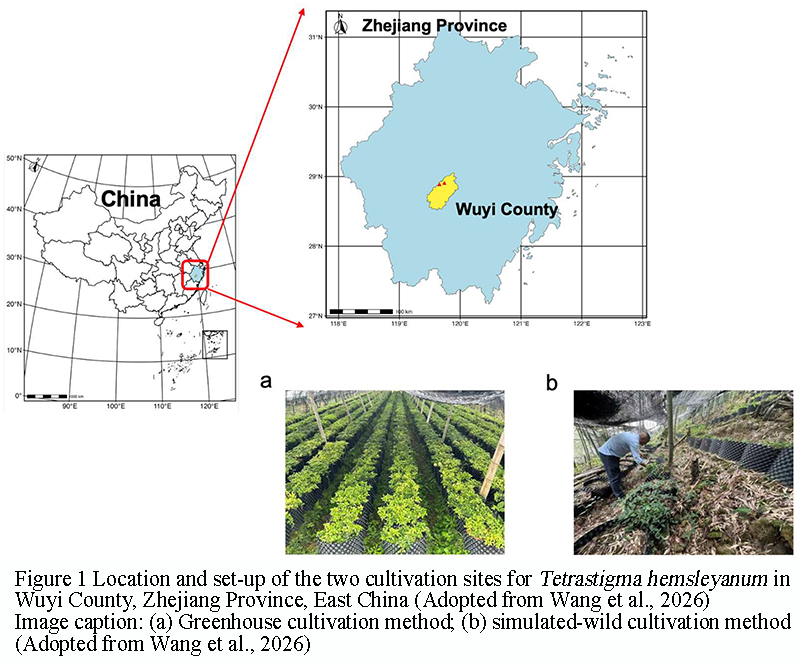 Figure 1 Location and set-up of the two cultivation sites for Tetrastigma hemsleyanum in Wuyi County, Zhejiang Province, East China (Adopted from Wang et al., 2026) Image caption: (a) Greenhouse cultivation method; (b) simulated-wild cultivation method (Adopted from Wang et al., 2026) |
The core tradeoff across models is between ecological authenticity, managerial controllability, and production stability. Under-forest systems can enhance active-compound accumulation, as seen in ginseng and T. hemsleyanum, but medicinal-plant studies repeatedly show that higher biomass and higher chemical quality do not always peak under the same conditions (Lan et al., 2023). The best model therefore depends on the development objective: if the goal is premium medicinal quality and ecological branding, wild-simulated cultivation under suitable forest stands is more advantageous; if the goal is standardized, scalable, and technically optimized supply, the forest-medicinal integrated management model is more appropriate (Duc et al., 2025; Le et al., 2026;). For local industry development of T. hemsleyanum, the most practical pathway is likely a graded model in which core production areas adopt wild-simulated cultivation under high-quality forest habitats, while broader supply areas use integrated management with provenance-matched seedlings, canopy regulation, and soil-microecological improvement (Pang et al., 2024; Zhang et al., 2026). In this sense, optimizing under-forest production models for T. hemsleyanum is not a choice of one fixed template, but a process of matching habitat quality, management intensity, and product positioning to local resource conditions.
5 Diversified Development and Utilization of Local Characteristic Tetrastigma hemsleyanum Resources
5.1 Comprehensive development of medicinal and aboveground resources
The diversified utilization of local Tetrastigma hemsleyanum should begin with a shift from root-centered use to whole-plant development, because current evidence shows that not only the tuberous roots but also the stems, leaves, whole grass, and aboveground fractions contain valuable bioactive constituents and practical medicinal functions (Li et al., 2023). Root tubers remain the traditional core medicinal part and are widely used in clinics and functional food products for fever, pneumonia, hepatitis, asthma, convulsions, and related inflammatory conditions (Sun et al., 2021). However, the aboveground parts already have recognized use value: leaves are consumed as functional tea or dietary supplements, and aerial portions have been developed as potential new traditional Chinese medicine preparations (Bai et al., 2022; Luo et al., 2022). This broader utilization route is especially important because the species grows slowly, usually requiring 3~5 years to meet medicinal standards, and overdependence on roots increases harvesting pressure on an already scarce resource (Figure 2) (Ji et al., 2021).
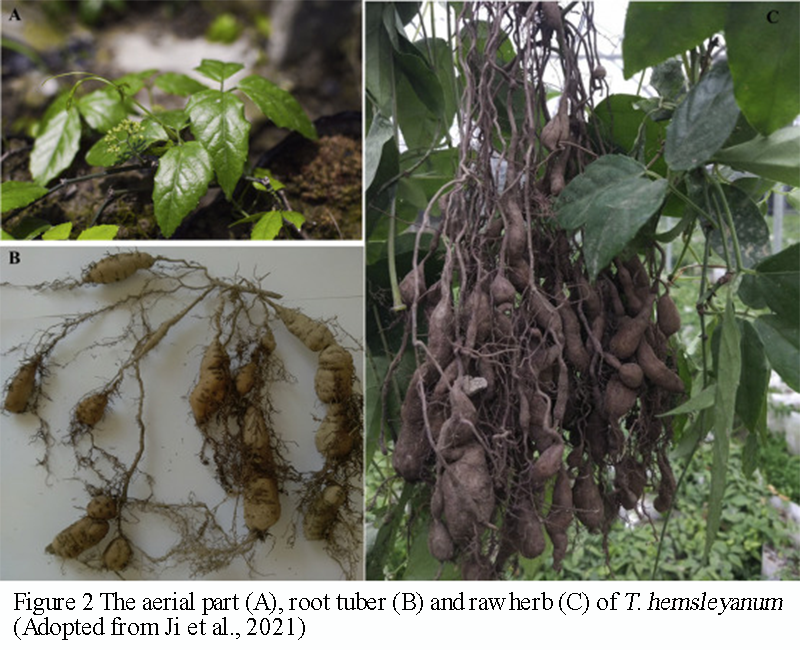 Figure 2 The aerial part (A), root tuber (B) and raw herb (C) of T. hemsleyanum (Adopted from Ji et al., 2021) |
The evidence also shows that aboveground resources are not inferior by default and may be superior for some target products. Quantitative comparisons found that leaves contain significantly higher levels of flavonoids and phenolic acids than roots and stems, while metabolomic imaging detected higher abundance of most organic acids and flavonoids in leaves than in underground parts (Luo et al., 2022). Leaves also contain unique compounds, with 24 components detected only in leaves, compared with 3 unique to tuberous roots and 7 unique to fibrous roots, and both leaves and fibrous roots have been proposed as new medicinal parts for future development. Functional evidence supports this direction: leaf phenolics were metabolized into bioavailable forms during digestion and fermentation, and leaf supplementation ameliorated DSS-induced colitis by improving tight-junction proteins, suppressing pro-inflammatory cytokines, activating Nrf2-related antioxidant defenses, and reshaping gut microbiota and short-chain fatty acids (Wu et al., 2021). Aboveground polysaccharides are also promising, since a novel pectic polysaccharide extracted from the aboveground part showed macrophage immune-enhancing activity and may contain a core active domain suitable for immune-regulatory product development (Tian et al., 2025).
5.2 Development of characteristic products and deep processing
The next step is to convert local raw materials into characteristic products through standardized extraction, processing, and value-added development. T. hemsleyanum already has has both medicinal value and potential for food-related development and food, and its roots are widely used as functional tea, dietary supplements, and health-related food materials (Sun et al., 2021). Its chemical basis for product development is broad, with about 142~150 identified compounds, especially flavonoids and polysaccharides, and these components show antioxidant, anti-inflammatory, anti-tumor, immunoregulatory, antipyretic, and hepatoprotective activities (Hu et al., 2021; Ding et al., 2025). This supports development not only of traditional decoction pieces and health teas, but also of antioxidant extracts, immune-enhancing polysaccharide products, liver-protective preparations, and food, medicine, and cosmetic derivatives (Tian et al., 2025; Xu et al., 2026). At the same time, reviews note that backward processing methods, storage difficulties, and limited quality standards still constrain industrial upgrading, so deep processing must be coupled with stronger process control.
Several studies show that processing and extraction conditions materially change product quality, which makes post-harvest standardization central to deep processing. Extraction optimization increased the total yield of five key flavonoids to 788.12 mg/kg under optimized ethanol-ultrasound conditions, and the resulting extract showed strong DPPH scavenging activity (Shu et al., 2023). Extraction method matters more broadly: ethanol extracts showed better antioxidant and antiproliferative activity than water extracts, while bioactivity of water extracts declined as extraction temperature increased. Processing method also changes efficacy. Different drying methods caused large shifts in ten major constituents, especially rutin, proanthocyanidin B1, and catechin, and among three processed products, the freeze-dried extract preserved bioactive constituents best and showed the strongest hepatoprotective effect (Xu et al., 2026). For polysaccharide products, both extraction technology and structure-function analysis are advancing quickly: multiple extraction and purification methods have been developed, and a glucan isolated after optimized ultrasound-assisted extraction showed significant antipyretic activity through suppression of TNF-α, IL-1β, cAMP, and PGE2 (Ding et al., 2025). Biotechnological deep processing is another reserve pathway, because hairy roots can be induced at high efficiency and in some cases contain higher levels of several flavonoids and stronger antioxidant activity than 3-year true roots, suggesting a feasible alternative source of raw material for high-value extracts.
5.3 Local brand building and development of regional characteristic industries
Local brand building should rely on the joint logic of origin, quality, and regional identity. T. hemsleyanum is already embedded in Zhejiang’s regional medicinal identity: it is regarded as one of the new eight Genuine Medicinal Materials of Zhejiang and as the new “Zhebawei,” and it has been included in the medical insurance system of Zhejiang and other provinces (Bai et al., 2022). Product markets already distinguish by producing area, and root price varies with origin, which means local branding can build directly on demonstrated geographical quality differentiation (Chu et al., 2024). That differentiation is scientifically supportable: metabolomics across 254 samples from eight areas identified 49 potential chemical markers, including catechin and darendoside B as antioxidant-related quality markers, while origin studies across southern sites showed differences in quercetin and kaempferol and provided technical support for quality evaluation from different origins (Li et al., 2023). A strong local brand therefore needs provenance-linked quality standards, origin authentication, and differentiated product positioning rather than generic bulk sales.
Regional characteristic industry development also depends on organization and governance, not just on resource endowment. Research on medicinal-plant bioeconomies shows that geographical indication labeling can support value-added, but only when paired with cooperative organization, industrialization policy, phytopharmacovigilance capacity, and equitable collaboration with enterprises (Lindberg et al., 2023). For T. hemsleyanum, this implies a regional pathway that links under-forest cultivation bases, local processing enterprises, and county-level public brands around authenticated origin, standardized drying and extraction, and diversified products such as medicinal slices, health teas, antioxidant extracts, polysaccharide preparations, and functional-food derivatives (Guo et al., 2023; Chu et al., 2024). Because this species has high medicinal value but limited wild resources, local industry upgrading should emphasize resource-saving whole-plant use, high-value deep processing, and place-based brand premiums instead of simple expansion of raw root sales (Hu et al., 2021; Ji et al., 2021). In this way, diversified development of local characteristic T. hemsleyanum resources can support both conservation and the formation of a stable regional under-forest characteristic industry.
6 Major Problems in the Development of the Under-Forest Tetrastigma hemsleyanum Industry
6.1 Insufficient conservation of elite germplasm resources and limited supply of high-quality propagation materials
Wild resource depletion and incomplete elite germplasm conservation still restrict the long-term supply basis of the under-forest industry. Wild T. hemsleyanum resources are scarce because the species has strict habitat requirements and has been over-excavated for years (Hang et al., 2023). In Guangxi, field investigation found that wild reserves were only about 24 441.20 kg and that distribution areas were becoming increasingly limited under combined pressure from overcollection and ecological change. This pressure has already affected genetic diversity, with recent work noting that indiscriminate exploitation has severely reduced diversity and pushed the species toward potential extinction risk, while climate change and pollution further intensify survival pressure. Although the species has high medicinal value, its slow growth means it generally requires 3~5 years to reach medicinal standards, so losses of local germplasm cannot be quickly replaced through ordinary production cycles (Ji et al., 2021; Shi et al., 2022).
The second layer of this problem is that the supply of high-quality propagation materials remains limited, and breeding of elite, stress-resistant strains is still insufficiently developed. Seed yield is low, and conventional vegetative propagation by cuttings produces only limited numbers of plants, which directly constrains commercial expansion (Pang et al., 2024). Artificial cultivation has been established, but ensuring stable yield and quality still requires identification and expansion of resistant cultivated strains, while research on resilient-strain breeding remains limited. Recent stress-screening work identified the Zhejiang ZJWZ strain as promising parental material for resistance breeding, but this also shows that elite-strain selection is only beginning rather than already widely deployed. Tissue culture and conservation technologies provide solutions but have not yet fully translated into broad industrial supply: slow-growth storage can maintain genetically stable microplants for at least 10 months, and organogenesis protocols can achieve mass propagation with over 98% acclimatization survival, yet these are still technical pathways that need wider integration into breeding, nursery systems, and under-forest seedling supply chains.
6.2 Low levels of standardization and large-scale production in under-forest cultivation
The low level of standardization in under-forest cultivation weakens the reproducibility of both yield and quality. Reviews note that current physiological research on T. hemsleyanum has focused mainly on light and fertilizer, while many other cultivation factors remain insufficiently studied. The species also faces a long cultivation cycle, low yield, and variable quality under artificial planting, and these are described as critical obstacles to industrial production (Hang et al., 2023). Current planting modes are described as chaotic and complicated, and comparative cultivation research was undertaken precisely because an optimal mode for jointly improving quality and yield had not been clearly established (Hu et al., 2023). This lack of standardization is especially problematic in under-forest systems, where habitat differences strongly affect quality formation: dryland cultivation can show 30~35% lower flavonoid concentrations than forest understory systems, and even corrective measures such as biochar have habitat-specific effects rather than universal ones (Zhang et al., 2026).
Large-scale production is further limited because suitable production parameters are not yet unified across provenance, habitat, and cultivation mode. Environmental studies show that metabolite accumulation changes markedly with temperature, humidity, precipitation, and season, indicating that large-scale cultivation cannot rely on a single fixed technical package across all producing areas (Shi et al., 2022). Under-forest planting under Moso bamboo can increase biomass when supported by biochar-based organic fertilizer, but this effect depends on changes in soil physicochemical properties and microbial communities, again showing that management standards must be ecologically specific. Even where more productive systems have been identified, they do not always align with the under-forest model: greenhouse cultivation combined with stereoscopic planting improved both yield and quality and outperformed understory planting in some comparisons, which suggests that under-forest cultivation still lacks a consistently validated standard model for industrial scaling (Hu et al., 2023). In practice, this means current under-forest development often remains fragmented, with uneven technical levels, weak nursery standardization, and limited capacity to build certified large-scale production bases despite policy interest in the under-forest economy (Zhang et al., 2020).
6.3 Insufficient product development, brand building, and industrial chain extension
Product development and deep processing still lag behind the resource base and pharmacological potential of T. hemsleyanum. Around 150 compounds have been isolated from the species, and the plant shows broad anti-inflammatory, anti-tumor, antioxidant, immunoregulatory, and related bioactivities, yet reviews explicitly argue that new clinical uses and more comprehensive utilization still need to be developed (Hu et al., 2021). The same reviews note backward processing methods, storage difficulties, and imperfect detection methods, all of which directly limit industrial upgrading (Ji et al., 2021). Mechanistic quality research also shows that the active material basis is still not fully clear and that the industry lacks a scientific, universal, and measurable quality-control system, making it difficult to support stable high-end products in market circulation (Xia et al., 2023). Although roots are already marketed as functional foods and their price varies by origin, this market differentiation is not yet equivalent to mature brand construction, because origin-linked metabolic profiles and bioactivity markers still need further clarification for credible product grading and certification (Chu et al., 2024).
Industrial chain extension is also insufficient because the species’ aboveground resources, polysaccharides, and origin-authentication tools have not yet been fully converted into a coordinated local specialty industry. Leaves and fibrous roots contain many distinctive metabolites and have been proposed as potential new medicinal parts, but current commercialization remains far more root-centered than evidence would justify. Polysaccharides show broad potential in food, medicine, and cosmetics, and new aboveground pectic polysaccharides with immune-enhancing activity have already been characterized, but this remains an emerging development direction rather than a mature downstream sector (Tian et al., 2025). Brand building is further weakened by market-order problems: simulated-wild and greenhouse products differ measurably in isotopes, yet mislabeling of conventional products as higher-priced wild or simulated-wild material can occur for profit, showing that brand premiums are not secure without robust traceability systems (Wang et al., 2026). More broadly, even the genetic resource base is still incomplete, because the previous lack of mitochondrial-genome information was considered a limitation on breeding, conservation, and development, which underscores that industrial chain extension still depends on stronger upstream scientific infrastructure as well as downstream branding and processing (Han et al., 2026).
7 Optimization Pathways for Local Resource Development and Under-Forest Industrial Development of Tetrastigma hemsleyanum
7.1 Establishment of a system for local germplasm conservation and elite germplasm utilization
Establish an integrated system that combines in situ conservation, ex situ preservation, elite germplasm identification, and rapid propagation. Tetrastigma hemsleyanum remains under strong resource pressure because wild populations are scarce, growth is slow, and the species usually requires 3~5 years to reach commercial medicinal standards. This pressure is intensified by persistent market demand and overharvesting, and the species has already been listed among preferentially protected crop germplasm resources in Zhejiang Province (Hu et al., 2021). A local germplasm system should therefore begin with systematic surveys, provenance registration, and hierarchical conservation of wild and cultivated resources, especially materials from major producing regions and ecologically differentiated local populations (Bai et al., 2022). This is justified not only by conservation need, but also by utilization value, because the species contains abundant flavonoids, polysaccharides, and other metabolites with important medicinal and functional-food potential (Ji et al., 2021).
Elite germplasm utilization should then move from simple collection to targeted breeding and industrial seedling supply. Stress-screening evidence identified the Zhejiang ZJWZ strain as the strongest overall performer under cadmium, salt, and low-temperature stress, supporting its use as preferred parental material for resistance breeding. At the same time, large-scale production still suffers from low seed yield and limited cutting propagation, so micropropagation and organogenesis need to become routine components of germplasm utilization systems rather than isolated laboratory methods. Current regeneration protocols are already practical for this purpose, achieving a shoot proliferation coefficient of 6.73 within 30 days, 100% rooting of adventitious shoots, and over 98% survival after acclimatization (Pang et al., 2024). Beyond seedling multiplication, biotechnological approaches such as metabolic engineering and hairy-root systems should be incorporated into elite germplasm utilization strategy, because they can reduce dependence on wild materials and provide alternative routes for rapid production of target bioactive compounds.
7.2 Optimization of ecologically suitable and standardized under-forest cultivation technologies
Build ecologically matched and standardized under-forest cultivation technologies around the biological characteristics of the species. T. hemsleyanum naturally grows in shaded valley forests, cliffs, gullies, and moist mountain habitats, and both review and experimental evidence indicate that moderate shade is essential for stable growth and quality formation (Shi et al., 2022). The available physiological evidence shows that cultivation is most suitable under roughly 67% shade, while environmental studies further indicate that higher flavonoid accumulation occurs under moderate temperature, humidity, and seasonal moisture conditions rather than under uniformly intensified inputs. Standardization should therefore not mean uniform planting under any forest, but rather matching local provenance, canopy density, seasonal management, and site moisture to the ecological niche of the species. This is especially important because current studies still emphasize light and fertilizer more than broader under-forest ecological regulation, leaving many cultivation variables insufficiently standardized (Hu et al., 2021).
Standardization also needs to extend belowground, because quality formation depends strongly on soil properties, extracellular enzymes, and rhizosphere microbial communities. Biochar experiments show that dryland cultivation typically has 30%~35% lower flavonoid concentrations than forest understory systems, but targeted amendment can partly bridge this gap by stimulating enzyme activity and restructuring fungal communities (Zhang et al., 2026). The same work indicates that medicinal quality depends more on functional bio-inorganic habitat regulation than on simple nutrient addition, which supports the use of rhizosphere engineering in non-native or degraded production sites. Controlled-environment studies suggest that UV treatments may provide a reference for quality-oriented stress regulation can markedly increase flavonoid accumulation and antioxidant-enzyme activity in leaves and roots (Bai et al., 2022). In practice, a standardized under-forest technical system should integrate provenance-matched seedlings, canopy-light regulation, moisture control, soil amendment, microbial optimization, and stress-quality monitoring to create production protocols that are both locally adaptable and reproducible across bases.
7.3 Promotion of deep processing, brand building, and integrated industrial development
Promote deep processing, whole-plant utilization, and regional brand construction so that local industries capture more value than raw-root sales alone. The development basis is already strong: around 142~150 compounds have been identified from T. hemsleyanum, especially flavonoids and polysaccharides, and these exhibit anti-inflammatory, antioxidant, antitumor, immunomodulatory, antipyretic, and hepatoprotective activities. Product development should therefore expand from tuber medicine into functional foods, antioxidant extracts, immune-enhancing polysaccharides, and aboveground-resource products (Hu et al., 2021; Ji et al., 2021). This broader route is supported by compositional studies showing that leaves contain significantly higher flavonoid and phenolic-acid levels than roots and stems, with 24 compounds detected only in leaves, while leaves and fibrous roots have been proposed as potential new medicinal parts (Luo et al., 2022). Functional studies strengthen that case: leaf phenolics and their metabolites ameliorated DSS-induced colitis through barrier protection, oxidative-stress reduction, and gut-microbiota regulation, while aboveground polysaccharides showed macrophage immune-enhancing activity (Wu et al., 2021; Tian et al., 2025).
Deep processing should be paired with quality-oriented process optimization and origin-based branding. Extraction studies show that process conditions strongly affect active-compound yield, with optimized ethanol-ultrasound extraction producing a total yield of 788.12 mg/kg for five major flavonoids and strong DPPH scavenging activity (Shu et al., 2023). Processing method also affects efficacy: freeze-dried products preserved bioactive constituents better and showed the strongest hepatoprotective effect among three processed forms (Xu et al., 2026). Polysaccharide deep processing is also advancing, as optimized ultrasonic extraction has yielded structurally defined glucans with significant antipyretic activity, providing a clearer route from local resource to high-value product (Ding et al., 2025). Finally, regional branding should rely on scientifically verified origin-quality relationships, because root price already varies by origin and metabolomic studies across eight producing areas identified 49 potential chemical markers, including catechin and darendoside B as antioxidant-related quality markers (Chu et al., 2024). Building local public brands around authenticated provenance, standardized processing, and diversified products would align well with the species’ established identity as Zhejiang’s “New Zhebawei” and help convert local characteristic resources into an integrated under-forest specialty industry (Bai et al., 2022).
8 Conclusions and Perspectives
Tetrastigma hemsleyanum possesses traditional medicinal, edible, and modern pharmacological value, making it a local characteristic medicinal plant resource with considerable industrial potential. In addition to its traditionally used tuberous roots, the leaves, stems, and other aboveground parts are also rich in flavonoids, polysaccharides, phenolic acids, and other bioactive constituents, showing potential for further development into functional foods and plant-derived products. Its shade-tolerant and moisture-preferring ecological characteristics are highly compatible with under-forest environments characterized by relatively low light intensity, stable temperature and humidity, and active soil microecology. Therefore, under suitable conditions, under-forest cultivation can support quality formation, medicinal material quality improvement, and comprehensive forest-land utilization. Future local industrial development should fully integrate local germplasm resources, suitable forest stands, and ecological conditions to establish a characteristic industry system based on high-quality resources and ecological production.
At present, the T. hemsleyanum industry still faces several major challenges, including a fragile resource base, insufficient standardization, and a relatively short industrial chain. Wild resources have long been subjected to overharvesting, while the long growth cycle, low seed yield, and limited efficiency of conventional propagation continue to restrict the stable supply of elite germplasm and high-quality seedlings for large-scale production. Meanwhile, substantial differences in yield and quality occur among producing areas, habitats, and cultivation models, and standardized under-forest cultivation technologies with strong regional adaptability are still lacking, particularly for light, moisture, soil, and stand management. In the processing sector, problems such as limited product diversity, incomplete quality-control systems, insufficient industrial application of deep-processing technologies, and inadequate traceability of geographical origin and cultivation mode continue to hinder the transformation of local resource advantages into brand and market competitiveness.
Future development should promote the coordinated upgrading of the under-forest T. hemsleyanum industry through germplasm conservation, ecological cultivation, and industrial value addition. Upstream efforts should strengthen surveys of local germplasm resources, selection of elite germplasm, and rapid propagation technologies to establish a stable system for improved-variety breeding and seedling supply. At the production level, shading, water management, soil conditions, microbial regulation, and cultivation practices should be optimized according to germplasm and forest-site conditions to achieve standardized production and precise ecological regulation. Downstream development should emphasize comprehensive utilization of both tuberous roots and aboveground resources, promote high-value products such as polysaccharides, flavonoid extracts, and functional foods, and improve origin traceability, quality evaluation, and processing standards. By integrating resource conservation, standardized under-forest production, deep processing, and regional brand development, T. hemsleyanum can gradually shift from a traditional medicinal material resource toward an integrated under-forest industry with distinctive local characteristics.
Conflict of Interest Disclosure
The author affirms that this research was conducted without any commercial or financial relationships that could be construed as a potential conflict of interest.
Bai L., Zhang Z., Li Y., Zhao S., Yang X., Chen C., Zhao S., Zhang P., Peng X., Zhao Y., and Liang K., 2025, Combining stable isotopes and multi-elements with machine learning chemometric models to identify the geographical origins of Tetrastigma hemsleyanum Diels et Gilg, Food Chemistry, 469: 142496.
https://doi.org/10.1016/j.foodchem.2024.142496
Bai Y., Gu Y., Liu S., Jiang L., Han M., and Geng D., 2022, Flavonoids metabolism and physiological response to ultraviolet treatments in Tetrastigma hemsleyanum Diels et Gilg, Frontiers in Plant Science, 13: 926197.
https://doi.org/10.3389/fpls.2022.926197
Barazetti V.M., Lima T.M., Sodré G.A., and Gross E., 2022, Management perspectives aimed at maximizing the production of secondary metabolites from medicinal plants in agroforestry systems, Agroforestry Systems, 96(4): 681-695.
https://doi.org/10.1007/s10457-022-00731-0
Chen H.F., Zhou Y., Xue J., Yuan J., Cai Z., Wu N., Zou L., Yin S., Yang W., Liu X., Cheng J., and Tang L., 2022, Quality evaluation of Tetrastigmae Radix from two different habitats based on simultaneous determination of multiple bioactive constituents combined with multivariate statistical analysis, Molecules, 27(15): 4813.
https://doi.org/10.3390/molecules27154813
Chu C., Lv Y., Yao X., Ye H., Li C., Peng X., Gao Z., and Mao K., 2024, Revealing quality chemicals of Tetrastigma hemsleyanum roots in different geographical origins using untargeted metabolomics and random-forest based spectrum-effect analysis, Food Chemistry, 449: 139207.
https://doi.org/10.1016/j.foodchem.2024.139207
Dai Y., Shen Z., Liu Y., Wang L., Hannaway D., and Lu H., 2009, Effects of shade treatments on the photosynthetic capacity, chlorophyll fluorescence, and chlorophyll content of Tetrastigma hemsleyanum Diels et Gilg, Environmental and Experimental Botany, 65(2-3): 177-182.
https://doi.org/10.1016/j.envexpbot.2008.12.008
Ding Z., Zhang N., Ding M., Zhang S., Yao X., Xia Y., and Shi S., 2025, Optimization of ultrasonic extraction processes, structural characteristics and potential antipyretic mechanism of a glucan from Tetrastigma hemsleyanum Diels, Ultrasonics Sonochemistry, 120: 107456.
https://doi.org/10.1016/j.ultsonch.2025.107456
Dong S., Zhou M., Zhu J., Wang Q., Ge Y., and Cheng R., 2022, The complete chloroplast genomes of Tetrastigma hemsleyanum (Vitaceae) from different regions of China: molecular structure, comparative analysis and development of DNA barcodes for its geographical origin discrimination, BMC Genomics, 23(1): 620.
https://doi.org/10.1186/s12864-022-08755-7
Duc D.T., Minh N.T., Bon T.N., Khoi T.T., Thang N.T., Phuong N.T.T., and Do T.V., 2025, A medicinal plant, Ardisia gigantifolia grown under canopy of natural forest for sustainable management, International Journal of Forestry and Horticulture, 11(1): 34-40.
https://doi.org/10.20431/2454-9487.1101005
Feng Z., Ye W., and Feng L., 2024, Bioactives and metabolites of Tetrastigma hemsleyanum root extract alleviate DSS-induced ulcerative colitis by targeting the SYK protein in the B cell receptor signaling pathway, Journal of Ethnopharmacology, 322: 117563.
https://doi.org/10.1016/j.jep.2023.117563
Guo B.L., Mao Y., Yang L.B., Li D., Zhang H., and Zhang W.D., 2026, Problems and development recommendations for understory medicinal herb cultivation, Zhongguo Zhong Yao Za Zhi (China Journal of Chinese Materia Medica), 51(2): 596-600.
https://doi.org/10.19540/j.cnki.cjcmm.20250815.401
Guo Z., Chen L., and Liang X., 2023, Components research on Tetrastigma hemsleyanum Diels et Gilg: identification and effect of drying methods on the content of ten main constituents by targeting metabolomics method, Journal of Pharmaceutical and Biomedical Analysis, 229: 115375.
https://doi.org/10.1016/j.jpba.2023.115375
Han S., Lai J., Cheng S., Wu Y., and Fan M., 2026, Assembly and comparative analysis of the complete mitochondrial genome of Tetrastigma hemsleyanum Diels & Gilg: an invaluable traditional Chinese medicine, BMC Plant Biology, 26(1): 227.
https://doi.org/10.1186/s12870-025-08039-8
Hang S., Xu P., Zhu S., Ye M., Chen C., Wu X., Liang W.Q., and Pu J., 2023, Integrative analysis of the transcriptome and metabolome reveals the developmental mechanisms and metabolite biosynthesis of the tuberous roots of Tetrastigma hemsleyanum, Molecules, 28(6): 2603.
https://doi.org/10.3390/molecules28062603
Hong C., Shao Q., Qin W., Zhang J., Wei B., Shen D., Zheng B., and Guo H., 2021, Bacterial communities are associated with the tuber size of Tetrastigma hemsleyanum in stony soils, Biology and Fertility of Soils, 57(3): 373-388.
https://doi.org/10.1007/s00374-020-01530-4
Hu W., Jiang M., Liang Z., and Xia P., 2023, The stereoscopic planting mode improved the quality and yield of Tetrastigma hemsleyanum, South African Journal of Botany, 157: 44-52.
https://doi.org/10.1016/j.sajb.2023.03.048
Hu W., Zheng Y., Xia P., and Liang Z., 2021, The research progresses and future prospects of Tetrastigma hemsleyanum Diels et Gilg: a valuable Chinese herbal medicine, Journal of Ethnopharmacology, 271: 113836.
https://doi.org/10.1016/j.jep.2021.113836
Jaroszewicz B., Stojek K., Bruelheide H., Ponette Q., Scherer-Lorenzen M., Verheyen K., and Kiss A., 2024, Canopy openness, proportion of deciduous trees and topsoil C/N ratio drive the yield, but their effect on the polyphenol content of medicinal plants is species-specific, European Journal of Forest Research, 143(6): 1759-1771.
https://doi.org/10.1007/s10342-024-01724-7
Ji T., Ji W.W., Wang J., Chen H.J., Peng X., Cheng K.J., Qiu D., and Yang W.J., 2021, A comprehensive review on traditional uses, chemical compositions, pharmacology properties and toxicology of Tetrastigma hemsleyanum, Journal of Ethnopharmacology, 264: 113247.
https://doi.org/10.1016/j.jep.2020.113247
Jiang L., Zhang S., Liu S., Geng D., Li M., Xia J., Gu Y., Huang C., Li S., Wang H., and Yan B., 2024, Linking soil fertility, enzyme activity, and flavonoid-related enzymes to growth and quality of Tetrastigma hemsleyanum Diels et Gilg amended with pyrogenic organic matter and organic fertilizer, Journal of Soils and Sediments, 24(3): 1181-1193.
https://doi.org/10.1007/s11368-023-03696-4
Lan Y., Zhang M., Han M., and Yang L.M., 2023, Differences in the quality, yield, and soil microecology of ginseng in different planting environments, Horticulturae, 9(4): 520.
https://doi.org/10.3390/horticulturae9040520
Le Q.V., Dao T.N.M., Nguyen A.D., Nguyen T.T., and Nguyen T.B.P., 2026, Chemical terroir in forest understories: hypothesis, ecological co-cultivation, and research priorities for saponin-rich medicinal plants, Forests, 17(6): 643.
https://doi.org/10.3390/f17060643
Li G., Ge J., Zheng Y., Xu A., and Li Q., 2023, Tetrastigma hemsleyanum Diels et Gilg roots from different origins: pharmacognostical identification, content determination of functional composition and in vitro antioxidant activity, American Journal of Biochemistry and Biotechnology, 19(1): 36-46.
https://doi.org/10.3844/ajbbsp.2023.36.46
Li X., Liang H., Liang J., Ma J., Huang Y., and Liang Y., 2025, Understory cultivation of medicinal plants promotes sustainable forestry development, Agroforestry Systems, 99(2): 39.
https://doi.org/10.1007/s10457-025-01141-8
Lindberg K., Martvall A., Lima M.B.G., and Franca C.S.S., 2023, Herbal medicine promotion for a restorative bioeconomy in tropical forests: a reality check on the Brazilian Amazon, Forest Policy and Economics, 155: 103058.
https://doi.org/10.1016/j.forpol.2023.103058
Luo Y., Yang Y., Yang X., Sun C., and Chen H., 2022, Quality evaluation of Tetrastigma hemsleyanum different parts based on quantitative analysis of 42 bioactive constituents combined with multivariate statistical analysis, Phytochemical Analysis, 33(5): 754-765.
https://doi.org/10.1002/pca.3127
Miao P., Li Y., Fan Q.Z., Ni L., Liu S., Li J., and Zhang S., 2024, Research on Chinese medicinal materials cultivation: a bibliometric and visual analysis, Heliyon, 10(7): e28637.
https://doi.org/10.1016/j.heliyon.2024.e28637
Naud J., Olivier A., Bélanger A., and Lapointe L., 2010, Medicinal understory herbaceous species cultivated under different light and soil conditions in maple forests in southern Québec, Canada, Agroforestry Systems, 79(3): 303-326.
https://doi.org/10.1007/s10457-009-9262-6
Pang J., Xiong Y., Zeng Y., Chen X., Li J., Zhang X., Li Y., Wu K., Zeng S., Teixeira da Silva J.A., and Ma G., 2024, Shoot organogenesis from Tetrastigma hemsleyanum leaf and petiole explants, and subsequent plant regeneration and acclimatization, Journal of Plant Growth Regulation, 43(12): 4782-4795.
https://doi.org/10.1007/s00344-024-11433-5
Rao M.R., Palada M.C., and Becker B.N., 2004, Medicinal and aromatic plants in agroforestry systems, Agroforestry Systems, 61-62: 107-122.
https://doi.org/10.1023/B:AGFO.0000028993.83007.4b
Sanwal C.S., Kumar R., Anwar R., Kakade V., Kerketta S., and Bhardwaj S.D., 2016, Growth and yield of Solanum khasianum in Pinus roxburghii forest based silvi-medicinal system in mid hills of Indian Himalaya, Forest Ecosystems, 3(1): 19.
https://doi.org/10.1186/s40663-016-0078-3
Shi Y., Yang L., Yu M.F., Li Z., Ke Z.Q., Qian X.L., Ruan X., He L., Wei F., Zhao Y., and Wang Q., 2022, Seasonal variation influences flavonoid biosynthesis path and content, and antioxidant activity of metabolites in Tetrastigma hemsleyanum Diels & Gilg, PLOS ONE, 17(4): e0265954.
https://doi.org/10.1371/journal.pone.0265954
Shu J., Zhao Y., Zhou Y.T., Lin F., Song J., and Li X., 2023, Optimization of Tetrastigma hemsleyanum extraction process based on GA-BPNN model and analysis of its antioxidant effect, Heliyon, 9(10): e20200.
https://doi.org/10.1016/j.heliyon.2023.e20200
Sun Y., Guo F., Peng X., Cheng K., Xiao L., Zhang H., Li H., Jiang L., and Deng Z., 2021, Metabolism of phenolics of Tetrastigma hemsleyanum roots under in vitro digestion and colonic fermentation as well as their in vivo antioxidant activity in rats, Foods, 10(9): 2123.
https://doi.org/10.3390/foods10092123
Tian S., Mao Z., Wang Y., Li K., Li Y., Zhu B., Zhou F., Li J., Shen Y., and Ding Z., 2025, Structural characterization and immunomodulatory activity analysis of a novel pectic polysaccharide extracted from Tetrastigma hemsleyanum Diels et Gilg and its hydrolysis products, Carbohydrate Polymers, 357: 123502.
https://doi.org/10.1016/j.carbpol.2025.123502
Wang C., Wang X., Mei H., Zhang Y., Li C., Rogers K.M., Li Z., Yuan Y., and Nie J., 2026, Characterizing ethnomedicinal Tetrastigma hemsleyanum Diels et Gilg grown under different cultivation methods using stable isotopes and elemental analyses, Plants, 15(10): 1589.
https://doi.org/10.3390/plants15101589
Wang C.Y., Jang H.J., Han Y.K., Su X.D., Lee S.W., Rho M.C., Wang H.S., Yang S.Y., and Kim Y.H., 2018, Alkaloids from Tetrastigma hemsleyanum and their anti-inflammatory effects on LPS-induced RAW264.7 cells, Molecules, 23(6): 1445.
https://doi.org/10.3390/molecules23061445
Wang H., Kang C.Z., Zhang W.J., Zhou L., Wan X.F., Lyu C., Huang L., Liu D., and Guo L.P., 2020, Land use strategy of ecological agriculture of Chinese materia medica in future development, Zhongguo Zhong Yao Za Zhi (China Journal of Chinese Materia Medica), 45(9): 1990-1995.
https://doi.org/10.19540/j.cnki.cjcmm.20200302.104
Wen D., Zhang H., Qin F., Xu C.Q., Li D., and Guo B.L., 2025, Effects of understory environmental factors on understory planting of medicinal plants, Zhongguo Zhong Yao Za Zhi (China Journal of Chinese Materia Medica), 50(5): 1164-1171.
https://doi.org/10.19540/j.cnki.cjcmm.20241214.101
Wu T., Wang X., Xiong H., Deng Z., Peng X., Xiao L., Jiang L., and Sun Y., 2021, Bioactives and their metabolites from Tetrastigma hemsleyanum leaves ameliorate DSS-induced colitis via protecting the intestinal barrier, mitigating oxidative stress and regulating the gut microbiota, Food & Function, 12(23): 11760-11776.
https://doi.org/10.1039/D1FO02588K
Xia J., Li X., Lin M., Yu J., Zeng Z., Ye F., Hu G., Miu Q., He Q., Zhang X., and Liang Z., 2023, Screening out biomarkers of Tetrastigma hemsleyanum for anti-cancer and anti-inflammatory based on spectrum-effect relationship coupled with UPLC-Q-TOF-MS, Molecules, 28(7): 3021.
https://doi.org/10.3390/molecules28073021
Xu L., Liu S., Bai Y., Ding H., Hu X., Wu X., Xu H., and Zheng B., 2018, Effects of light intensity treatments on photosynthetic characteristics in Tetrastigma hemsleyanum, Journal of Zhejiang A&F University, 35(3): 467-475.
https://doi.org/10.11833/j.issn.2095-0756.2018.03.010
Xu Z., Wang S., Chen H., Lv T., Zhang Z., Pu F., Xie Z., Feng L.F., and Wang P., 2026, A comparative study of the hepatoprotective effects of the three processed products of Tetrastigma hemsleyanum Diels et Gilg: in vitro pharmacological investigation and integrating network pharmacology, Fitoterapia, 189: 107050.
https://doi.org/10.1016/j.fitote.2025.107050
Yu Y.H., Lin X., Guo Y., Guan Z., Tan J., Chen D., Su Y., Li J.Y., Qiu Q., and He Q., 2023, The compound forest-medicinal plant system enhances soil carbon utilization, Forests, 14(6): 1233.
https://doi.org/10.3390/f14061233
Zhang H., Wen D., Qin F., Suo F., Li D., and Guo B.L., 2025, Effects of understory environmental factors on dynamic variations in yield and active constituent content of Epimedium pubescens, Zhongguo Zhong Yao Za Zhi (China Journal of Chinese Materia Medica), 50(22): 6309-6318.
https://doi.org/10.19540/j.cnki.cjcmm.20250629.101
Zhang S., Wu C., Jiang P., Liu Y., and Huang C., 2026, Amendment bridges habitat-driven quality gaps in Tetrastigma hemsleyanum through coordinated regulation of soil enzymes and fungal communities, Plants, 15(6): 872.
https://doi.org/10.3390/plants15060872
Zhang X.P., Gao G.B., Wu Z., Wen X., Bian F., and Yang C., 2020, Biochar-based organic fertilizer application rates for Tetrastigma hemsleyanum planted under moso bamboo, Journal of Forestry Research, 31(5): 1813-1821.
https://doi.org/10.1007/s11676-019-00965-2
Zhou F.M., Lu Y., Sun T., Sun L., Wang B., Lu J., Li Z., Zhu B., Huang S., and Ding Z., 2022, Antitumor effects of polysaccharides from Tetrastigma hemsleyanum Diels et Gilg via regulation of intestinal flora and enhancing immunomodulatory effects in vivo, Frontiers in Immunology, 13: 1009530.
https://doi.org/10.3389/fimmu.2022.1009530
Zubay P., Ruttner K., Ladányi M., Deli J., Zámboriné É.N., and Szabó K., 2021, In the shade-screening of medicinal and aromatic plants for temperate zone agroforestry cultivation, Industrial Crops and Products, 170: 113764.
https://doi.org/10.1016/j.indcrop.2021.113764


. FPDF(win)
. FPDF(mac)
. HTML
. Online fPDF
Associated material
. Readers' comments
Other articles by authors
. Jianhui Li

Related articles
. Tetrastigma hemsleyanum
. Local characteristic resources
. Under-forest cultivation
. Germplasm resources
. Industrial development
Tools
. Post a comment