Research Insight
Construction of an Efficient Production and Quality Control Technology System for Ganoderma lucidum Spore Powder 

2 Zhejiang Agronomist College, Hangzhou, 310021, Zhejiang, China
 Author Correspondence author
Medicinal Plant Research, 2026, Vol. 16, No. 3
Received: 08 Apr., 2026 Accepted: 18 May, 2026 Published: 30 May, 2026
This article analyzes the construction of an efficient production and quality control technology system for Ganoderma lucidum spore powder, focusing on key technical aspects including elite strain selection, culture medium optimization, precise regulation of cultivation environments, establishment of high-yield spore production models, spore collection and processing technologies, and quality evaluation methods. The available evidence indicates that breeding high-spore-yield and contamination-resistant strains is an important foundation for improving production efficiency. Optimization of medium composition and environmental factors such as temperature, humidity, light, and aeration can promote spore formation and the accumulation of bioactive components. Sporoderm-breaking and sporoderm-removal technologies can improve the release efficiency of active compounds, but they should be developed with consideration of both bioactive preservation and processing safety. For quality control, a multi-indicator comprehensive evaluation system should be established by integrating appearance characteristics, physicochemical parameters, multi-component detection, authenticity identification, and safety assessment. Meanwhile, standardized production processes, digital environmental monitoring, and industrial chain extension will further promote the transformation of the G. lucidum spore powder industry from experience-based management toward precision and intelligent production. This study provides a theoretical basis and technical reference for high-quality production, quality control, and industrial upgrading of G. lucidum spore powder.
1 Introduction
Ganoderma lucidum is a medicinal and edible fungus with a long history of use in Asia, and its modern industrial development has accelerated as its bioactive components and health-related applications have become better characterized. Recent reviews describe G. lucidum as an important source of polysaccharides, triterpenoids, sterols, lipids, proteins, and other secondary metabolites with immunomodulatory, antioxidant, anti-inflammatory, antitumor, antidiabetic, hepatoprotective, and antimicrobial potential (Swallah et al., 2023; Ahmad et al., 2024). Against this background, G. lucidum products have expanded from traditional decoctions to powders, capsules, nutraceuticals, functional foods, and pharmaceutical preparations, and the international development of G. lucidum-based products is continuing to grow (Wu et al., 2023). Among these products, spore powder is widely recognized as a high-value form because it concentrates the reproductive essence of the fungus and has become extensively consumed as a functional food and dietary supplement, especially in China. Studies further note that G. lucidum spore powder contains abundant active constituents, and some reports indicate that the contents of major ingredients such as polysaccharides can exceed those of the fruiting body, while wall-broken or wall-removed spores improve the release and absorption of these compounds because the natural sporoderm is difficult to digest and degrades poorly (Shen et al., 2020). Consistent with this utilization value, recent chemical studies have identified 142 compounds in spore powder, including lipids, triterpenes, alkaloids, organic acids, sterols, and fatty acids, providing a material basis for its continued development in health foods, medicines, and related high-value products (Zhang et al., 2024).
However, the rapid expansion of the G. lucidum spore powder market has also exposed prominent constraints in production efficiency, raw material stability, and product consistency. Natural resource limitations, strict growth requirements, and difficulty maintaining stable yield and quality across cultivation batches still restrict large-scale development and utilization. At the cultivar level, current spore-oriented production remains overly dependent on a limited number of strains; in particular, “Longzhi No.1” has been widely used for spore production, yet its poor resistance to competing microorganisms has reduced its suitability for industrial cultivation, creating an urgent need for new varieties with both high spore yield and stronger resistance (Tang et al., 2023). Even after raw materials are obtained, quality variation remains substantial. Commercial and regional comparisons show marked differences in triterpenoid content, physicochemical properties, antioxidant activity, enzyme inhibition, and overall chemical composition among different sources, years, and producing areas, which directly affects the medicinal value, functional performance, and market credibility of downstream products (Zhang et al., 2023; Li et al., 2026). These findings indicate that production of G. lucidum spore powder still lacks a sufficiently integrated technical system linking strain selection, cultivation management, harvest timing, wall-breaking or wall-removal processing, and quality evaluation.
In addition to inconsistency, authenticity and safety risks remain major obstacles to standardization. Adulteration is a documented problem in the market, with dyed starch being deliberately mixed into G. lucidum spore powder to reduce production costs, prompting the development of rapid near-infrared and chemometric methods for authenticity identification and adulteration quantification (Shi et al., 2022). Fraudulent labeling of geographic origin is also a concern because active ingredient levels and commercial value vary significantly by origin, while cultivation region, stage, substrate, and cultivar can all affect elemental, isotopic, and chemical profiles; isotope-based traceability models have therefore been proposed as quality control tools with high classification accuracy (Wadood et al., 2023; Zhang et al., 2023). Safety control must also address contaminants introduced during processing and commercialization. Excessive phthalate plasticizers have been found in G. lucidum spore oil, highlighting process-related quality risks, while population exposure assessments for potentially toxic elements and the need for microbial and heavy-metal limits are consistent with broader calls for stronger safety assurance across the industrial chain (Qi et al., 2025). At the same time, manufacturing technology itself influences efficacy: wall-removed spore powder contains higher polysaccharide and triterpenoid levels and shows stronger antitumor effects than wall-broken powder, while process optimization based on industrial data can raise critical quality-property performance for moisture, fineness, crude polysaccharides, and total triterpenes to acceptable process capability levels (Zhong et al., 2023).
This study explores the construction pathway of an efficient production and quality control technology system for Ganoderma lucidum spore powder. It systematically analyzes key technical aspects, including elite strain selection, efficient cultivation, standardized harvesting, optimized sporoderm-breaking or sporoderm-removal processing, authenticity identification, quality traceability, and multi-indicator comprehensive evaluation. Existing standard systems have provided a certain foundation for the standardized development of the G. lucidum spore powder industry. However, previous studies have shown that current standard limits alone cannot fully address challenges associated with germplasm variation, changes in cultivation environments, regional quality differences, product authenticity, and alterations in active-component release and safety during processing. Therefore, this study further integrates key technical processes involved in G. lucidum spore powder production to establish a comprehensive technology system covering strain breeding, cultivation regulation, harvesting and processing, and quality evaluation. The proposed system aims to improve spore powder yield and batch stability, ensure product authenticity and safety, strengthen the control of characteristic active components, and provide a theoretical basis and technical reference for promoting the transformation of the G. lucidum industry from traditional experience-based management toward standardized, precise, and data-driven production models.
2 Biological Basis of Spore Powder Production
2.1 Growth and development characteristics of Ganoderma lucidum and spore formation process
Ganoderma lucidum is a white-rot basidiomycete that naturally grows on wood or lignocellulosic substrates, and its life cycle proceeds from basidiospore germination to primary mycelium formation, substrate colonization, primordium differentiation, young fruiting body formation, maturation, and finally spore release (Ren et al., 2025). Basidiospores can germinate rapidly under suitable nutritional conditions; one cultivation study reported efficient germination in coconut water gelatin within 72 h, after which the sporoderm produced a single germ tube that elongated, septated, and branched into monokaryotic primary mycelia. During fruiting, visible morphogenesis follows a recognizable sequence including mycelial coat hardening, primordial initiation, antler-like development, basidiocarp maturation, and spore liberation, indicating that efficient spore production depends on precise coordination between vegetative growth and reproductive differentiation. Recent developmental transcriptome analyses further divide fruiting and sporulation into sequential stages from mycelium, primordium, and young fruiting body to mature and post-sporulation stages, with large transcriptomic shifts especially at the mycelium-to-primordium and young-to-mature fruiting transitions (Liu et al., 2022).
Spore formation itself occurs on the abaxial side of the pileus and is closely linked to structural differentiation of pores, tube tissues, basidia, and spore walls (Cai et al., 2021). Ultrastructural work showed that young tubes first appear as slight depressions in the tramal surface, accompanied by extensive hyphal death and disintegration, while surviving hyphae become coated with extracellular matrix; developing basidia then push through this matrix into the tube lumen, where basidiospores are formed. Nuclear migration into spores begins only after lipid droplets start to coalesce and the spore wall has begun to form, and the mature G. lucidum spore wall comprises an outer primary layer, inter-wall pillars, and an inner secondary wall, features that help explain the robust sporoderm of commercial spore powder materials. At the molecular level, sporulation is associated with differential expression of genes involved in meiosis, carbohydrate metabolism, and transcriptional regulation; meiosis-related genes such as DMC1, MSH4, HOP1, and Mek1 are highly expressed during development, while genes for trehalose and malate synthesis are upregulated during spore morphogenesis, implying active energy provisioning and carbohydrate accumulation in mature spores (Liu et al., 2022).
2.2 Selection of elite strains and optimization of germplasm resources
Efficient production of G. lucidum spore powder begins with elite germplasm, because strain differences strongly affect growth rate, resistance, fruiting performance, and basidiospore yield. A major current limitation is that most cultivated varieties were bred for fruiting body production rather than spore powder, and “Longzhi No.1” has been one of the few varieties widely used for spores despite poor resistance to competing microorganisms, which has reduced its production suitability (Tang et al., 2023). Accordingly, recent breeding work has focused on selecting high-spore-yield, disease-resistant, and stable strains through mutation breeding, molecular identification, antagonism testing, and multi-site cultivation evaluation (Viceconte et al., 2021; Feng et al., 2024). This direction is consistent with broader industrial demand for fast-growing, high-yield strains capable of supporting the growing market for medicinal and nutraceutical Ganoderma products (Swallah et al., 2023).
Several studies now provide concrete breeding examples. UV mutagenesis of the high-spore-yield parent strain G0109 produced mutant UV119, which showed strong resistance to undesired microorganisms and increased fruiting body and basidiospore yields by 8.67% and 19.27% relative to the parent, with basidiospore yield 20.56% higher than “Longzhi No.1” (Tang et al., 2023). Another breeding study reported that strain XZ-2, obtained through tissue isolation and radiation treatment, delivered fruiting body yields 9.7%~30.1% higher and basidiospore yields 20.2%~45.7% higher than control strains across locations and years, while maintaining stable annual performance and elevated polysaccharide and triterpenoid levels. Atmospheric room-temperature plasma mutation combined with microbial microdroplet screening also yielded stable mutants YB05, YB09, and YB18 with faster growth, stronger antagonism, and higher biomass or triterpenoid production across five generations, showing that high-throughput breeding can accelerate germplasm improvement for industrial fermentation (Feng et al., 2024). Comparative local strain screening likewise identified G8 and Bendi as superior strains with faster mycelial growth, stronger spore-producing ability, higher biological efficiency, and better production characteristics, further indicating that regional germplasm evaluation remains an important complement to mutation breeding.
2.3 Optimization of culture medium and nutritional regulation technologies
After elite strains are obtained, efficient spore production depends on matching genotype with suitable carbon sources, nitrogen balance, substrate structure, pH, temperature, illumination, aeration, and spawn materials, because Ganoderma species have specific physiological requirements and growth performance varies sharply with medium composition and environmental control (Ahmad et al., 2024). Experimental optimization studies show that mycelial growth can be markedly improved under defined conditions. For example, one study found that coconut water gelatin at pH 6.0, under sealed and lighted conditions at 32 ℃, gave the most efficient mycelial growth, while corn grit was the most suitable grain spawn and a substrate of 70% rice straw and 30% sawdust produced the shortest fructification period of 17.33 days. These results support the view that low-cost agricultural residues can be effectively converted into production substrates, and that rational control of physical and nutritional parameters is a prerequisite for industrial cultivation (Akçay et al., 2025).
Nutritional regulation also affects not only biomass and fructification, but the accumulation of target active components relevant to spore powder quality. In submerged culture, sucrose favored mycelial growth, corn flour supplementation promoted biomass with an optimum around 7.0~7.5 g/L, and an optimized natural medium containing potato extract, sucrose, and corn flour achieved a mycelial yield of 7.51 g/L together with higher triterpenoid and intracellular polysaccharide contents than a nutrient-rich comparison medium (Zheng et al., 2026). Substrate composition likewise alters yield and chemical quality: coconut sawdust and other lignocellulosic substrates can improve biological efficiency, while supplements such as olive oil and copper enhance triterpenoid and phenolic contents (Zhu, 2024). Waste-based substrate screening further showed strong substrate dependence, with oak wood 91% + wheat bran 9% giving the highest mushroom yield at 46 g/kg, whereas corn husk gave the lowest, demonstrating that lignocellulosic composition and bran supplementation materially influence production performance (Akçay et al., 2025). At the level of developmental physiology, active component accumulation is stage-dependent: triterpenoids, steroids, and polyphenols peak in the budding stage, whereas polysaccharides, flavonoids, and purines are higher in the maturation stage of basidiospores, indicating that nutritional regulation and harvest timing should be coordinated to balance yield with the desired chemical profile (Gao et al., 2024). Together, these findings show that an efficient production system for G. lucidum spore powder must integrate superior strains, substrate engineering, and stage-specific nutritional regulation to achieve high yield, stable sporulation, and consistent quality (Ren et al., 2025).
3 Key Technologies for Ganoderma Spore Powder
3.1 Precise regulation technologies of cultivation environmental conditions
The efficient production of G. lucidum spore powder depends first on stage-specific control of the cultivation environment, because mycelial growth, primordium initiation, fruiting body development, and spore release do not share the same optimal requirements (Zhou, 2017). Studies of solid cultivation report that G. lucidum generally performs well at 18~25℃ and 85~90% humidity during growth, while fruiting body development is favored around 24~28℃ and high humidity, and temperatures below 20℃ can cause yellowing and growth arrest (Chanshorphea, 2019). Under subtropical bag cultivation, exposure of spawn bags to (30±1)℃ and 90~95% RH supported primordium initiation and completion of the crop cycle, showing that local production systems can shift the operating window upward when substrates and strains are adapted to those conditions. Medium-level physiological studies likewise found strong environmental sensitivity: mycelial growth was most efficient on a pH 6.0 medium under sealed, lighted conditions at 32℃, and a separate comparative study identified 30℃ as the best temperature, pH 6 as optimal, and darkness or alternating light as more favorable than continuous light for vegetative growth (Al-Kaabi and Hussien, 2025).
Environmental regulation must therefore be precise rather than uniform, especially for light, air exchange, and contamination control. Controlled-room experiments showed that light quality materially changes morphology and composition: red light inhibited fruiting body differentiation, while green light increased fruiting body weight by 21.4%, raised pileus triterpenes by 28.1%, and enhanced multiple extracellular enzyme activities, indicating that optimized spectral management can improve both yield formation and metabolite accumulation (Liu et al., 2024). Air supply is also a critical control variable, because in static culture systems it significantly increased triterpenoid accumulation, supporting the broader principle that oxygen availability and ventilation influence secondary metabolism and probably later sporulation performance (Hu et al., 2018). At the production-house scale, sanitation management is equally important: repeated cultivation can favor antagonistic fungi such as Trichoderma and Mucor, whereas waterlogging-based sanitation sharply reduced their colonization, restored fruiting body development to about 90%, and enabled spore yields of about 5 kg per house where the untreated control failed (Tong et al., 2020). Taken together, efficient environmental regulation for spore production should integrate temperature-humidity coordination, pH adjustment, spectral light management, adequate aeration, and strict sanitary control to stabilize fruiting and maximize subsequent spore formation.
3.2 Optimization of high-yield spore production cultivation models
High-yield spore production also requires choosing cultivation models that shorten the cropping cycle, reduce contamination, and improve substrate conversion efficiency. Reviews and cultivation studies show that G. lucidum can be produced by bottle procedures, sawdust bags, short wood segments, tree stumps, wood logs, and liquid-state culture, but for fruiting bodies and spores the dominant industrial direction has shifted from natural logs toward sawdust-based bag or synthetic log systems (Jeewanthi et al., 2017; Zhou, 2017). Earlier wood-log cultivation required a long cropping cycle of roughly 6~24 months and generally lower yield, whereas lignocellulosic bag substrates permit more controlled and efficient biomass transformation (Thiribhuvanamala and Krishnamoorthy, 2021). Direct comparisons in Cambodia found higher contamination in log culture than bag culture for G. lucidum, and sawdust substrates gave higher yield and biological efficiency, supporting the superiority of bag cultivation where cleanliness and standardization are priorities (Chanshorphea, 2019). This shift is consistent with the broader ecological advantage of G. lucidum cultivation, namely the conversion of agricultural and forestry residues into medicinal biomass using relatively low-cost solid substrates (Thakur et al., 2024).
Within sawdust-based systems, substrate design and strain-model matching are decisive for high spore yield. Substrates of 70% rice straw and 30% sawdust shortened the fructification period to 17.33 days, coconut wood log sawdust with wheat bran produced 77.5 g per 175 g substrate and 44.3% bioefficiency, and indigenous Pakistani material performed best on sawdust+wheat straw, showing that optimized lignocellulosic combinations can substantially improve production efficiency (Thiribhuvanamala and Krishnamoorthy, 2021). Other local evaluations similarly found that rubber sawdust, mango sawdust, or their mixtures maintained relatively high yield and biological efficiency, while sawdust outperformed paddy straw, sugarcane bagasse, maize stalk, and coir pith for total yield in another recent comparison (Sethi and Chinara, 2025). Spawn medium optimization matters as well: corn grit produced rapid mycelial growth in one study, while barley grains were the most appropriate spawn medium in another, indicating that cultivation models should be regionally adapted rather than fixed to one recipe (Ghafoor et al., 2025). Finally, high-yield models depend on elite strains; the UV-mutant strain UV119 increased basidiospore yield by 19.27% over its parent and 20.56% over “Longzhi No.1,” while also improving resistance to microbial invasion, so the most effective cultivation model is an integrated system that combines superior germplasm, low-contamination bag culture, and substrate formulas tailored for rapid colonization and sustained sporulation (Figure 1) (Tang et al., 2023).
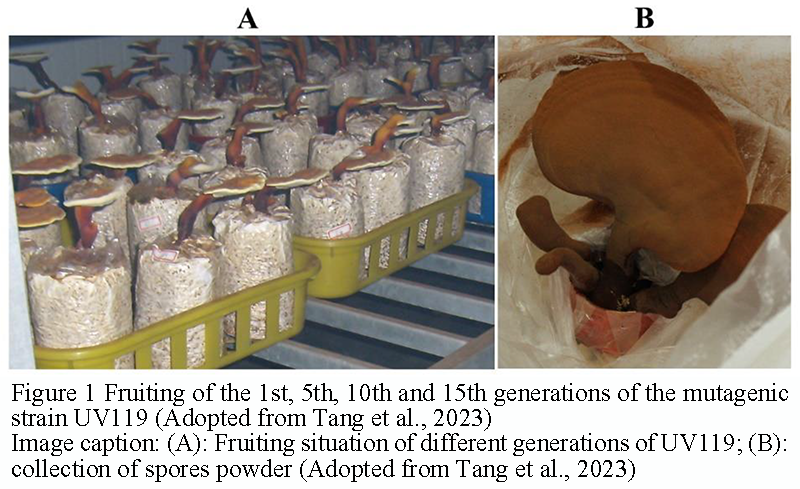 Figure 1 Fruiting of the 1st, 5th, 10th and 15th generations of the mutagenic strain UV119 (Adopted from Tang et al., 2023) Image caption: (A): Fruiting situation of different generations of UV119; (B): collection of spores powder (Adopted from Tang et al., 2023) |
3.3 Optimization of spore powder collection and processing technologies
After sporulation, efficient production depends on standardized collection and processing technologies that preserve bioactive components while improving release from the hard sporoderm. G. lucidum spores are rich in polysaccharides and triterpenoids, but their wall is composed mainly of chitin, cellulose, and lignin, making the contents difficult to digest and absorb unless wall disruption is performed (Qi et al., 2024). Mechanical rolling, room-temperature milling, ultrafine grinding at low temperature, ball milling, and combined chemicophysical methods have all been proposed as effective sporoderm-breaking approaches (Wang et al., 2017). The common technical target is high wall-breaking efficiency with minimal damage to active ingredients; reported methods include low-temperature vibration pulverization under protective gas, which achieved a 98% breaking rate without additives or obvious deterioration, and broken-sporoderm machine or ball-mill processing, both of which exceeded 95% wall breaking. In addition, fermentation with Lactobacillus plantarum achieved a wall-breaking rate of 52.38% after 48 h, suggesting that biological pretreatment can complement physical disruption where mild processing is desired.
Processing optimization should not be judged by wall-breaking rate alone, because different methods produce different nutrient release and bioactivity outcomes. In vitro digestion experiments showed that broken spores released substantially more polysaccharides and triterpenes than unbroken spores, and that bioaccessibility increased with specific surface area; after the intestinal phase, polysaccharide bioaccessibility rose from 29.52% in unbroken powder to 39.73~72.45% after room-temperature milling and 44.53~104.18% after low-temperature ultrafine grinding. Low-temperature ultrafine grinding also outperformed conventional milling in bioaccessibility despite a lower specific surface area, implying that structural preservation during processing can be as important as particle-size reduction (Qi et al., 2024). Studies comparing sporoderm-removal with ordinary sporoderm-broken powder found even larger differences: sporoderm-removal increased total polysaccharides by nearly 12-fold, yielded more abundant triterpenoids, and produced stronger antioxidant activity, while another study reported that broken spores extracted 3~4 times more bioactive compounds than non-broken spores. Therefore, spore powder collection and processing technologies should be built around clean collection, low-temperature drying, protective and efficient wall-breaking, and post-process quality evaluation based on release efficiency and active-component retention, so that the final product achieves both high yield and high functional quality.
4 Quality Control of Ganoderma Spore Powder
4.1 Evaluation of appearance quality and basic physicochemical indicators
The quality control of Ganoderma lucidum spore powder should begin with a combined evaluation of appearance, microscopic traits, and basic physicochemical indicators, because single-index assessment does not adequately capture source differences, processing status, or market adulteration. Early quality studies on wall-broken spore powder used character inspection, microscopy, physicochemical identification, and main-component assays together, and showed that these indices were stable and operable for preliminary quality valuation. Regional comparison further shows that spore powders differ measurably in color and physicochemical properties, confirming that appearance is not only a sensory trait but also a useful external reflection of internal quality variation (Li et al., 2026). Because quality is strongly affected by producing area, cultivation environment, and harvest conditions, the appearance evaluation system should record color uniformity, fineness, agglomeration, odor, and wall-breaking-related morphology together with origin and batch information.
Basic physicochemical testing should then focus on moisture, ash, and related compositional indicators that can reveal processing quality and raw-material purity. Moisture is especially suitable for rapid routine control, and near-infrared models have predicted moisture content in G. lucidum with good accuracy, supporting its use for fast non-destructive screening in production settings (Ni et al., 2023). Ash content also has discriminating value: one study found lower ash in Xiuyan samples than in first-grade Shandong spore powder, while third-grade Shandong samples had higher ash, indicating that mineral residue can reflect grade or impurity burden. Since pulverization changes sample homogeneity and may alter optical behavior, standardized sampling, particle-size control, and wall-breaking-rate evaluation are necessary to make physicochemical indicators comparable across lots. For rapid authenticity and sensory-style discrimination, emerging tools such as electronic nose, NIR, and hyperspectral imaging can complement conventional tests, especially for batch screening before confirmatory analysis (Figure 2) (Shi et al., 2022; Ran et al., 2025).
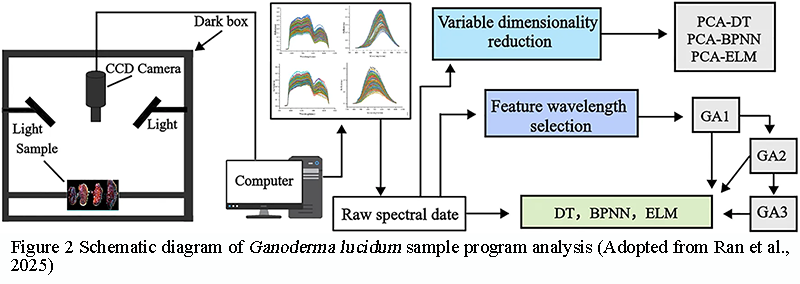 Figure 2 Schematic diagram of Ganoderma lucidum sample program analysis (Adopted from Ran et al., 2025) |
4.2 Detection of active components and quality evaluation methods
Active-component control should center on polysaccharides, triterpenoids, sterols, lipids, proteins, and selected nucleoside-related markers, because these are the principal material basis of spore powder quality and function (Ran et al., 2025). Triterpenoids and polysaccharides are the most widely accepted core quality markers, and they are already used officially for Ganoderma quality assessment (Wu et al., 2017). Yet the evidence also shows marked quantitative variability across commercial products and regions: tested Ganoderma samples ranged from 0.22% to 3.31% polysaccharides and 0.21% to 10.56% total triterpenes, while LC-MS/MS-targeted triterpenes ranged from 0.01% to 0.98%, indicating that a single bulk index is not sufficient for refined quality grading (Liu et al., 2025). Regional spore-powder comparisons likewise found large differences in total sugars, polysaccharides, lipids, proteins, phenolics, total triterpenoids, ergosterol, and nucleosides, with substantial corresponding differences in antioxidant and enzyme-inhibitory activities (Li et al., 2026).
Accordingly, the quality evaluation method should combine targeted quantification with fingerprinting and authenticity tools. HPLC-DAD fingerprinting has been established for Ganoderma products using 13 candidate compounds, with 11 ganoderma acids identified as useful chemical markers and the method validated as accurate and feasible for quality control and identity determination (Yeung et al., 2022). For spores specifically, UPLC-Q-TOF-MS/MS identified nine confirmed triterpenoids and supported an HPLC method for simultaneous determination of five triterpenoids, with good linearity, acceptable recovery, and large habitat-related differences in content (Qiao et al., 2024). Polysaccharide evaluation can be strengthened by saccharide mapping and HPSEC-MALLS-RID, which showed potential for routine quality evaluation of polysaccharides in supplements (Wu et al., 2017). Molecular identification should also be included, because ITS2 barcoding precisely detected 16 adulterants among 84 commercial Ganoderma samples, and authenticity testing by NIR with chemometrics can rapidly identify dyed-starch adulteration and quantify its level with calibration and validation correlations above 0.99 (Shi et al., 2022). At the process-evaluation level, wall-breaking technology must be assessed not only by breaking rate but also by nutrient release, since broken powders showed much higher intestinal bioaccessibility of polysaccharides and triterpenes than unbroken powders, and sporoderm-removed powders contained higher active-constituent levels and stronger antitumor activity than ordinary wall-broken powders (Qi et al., 2024).
4.3 Safety evaluation and quality standard system construction
The safety evaluation system for G. lucidum spore powder should cover authenticity, contaminant limits, and toxicological evidence rather than relying only on active-component content. Market studies show that product consistency is often poor: in a U.S. survey, only 5 of 19 products (26.3%) matched their label ingredients, indicating that identity auditing and adulterant screening are essential parts of quality control (Wu et al., 2017). Heavy metals remain a concrete concern in commercial Lingzhi products, with about one-third of tested samples exceeding allowable limits for arsenic and more than half exceeding limits for cadmium, while organochlorine pesticides were less problematic in the tested subset. These findings support setting mandatory limits for Pb, As, Hg, Cd, pesticide residues, and microbial contamination, together with strengthened GAP and GMP management across cultivation, harvesting, and processing.
The quality standard system should therefore integrate pharmacopoeial indicators, local or industry standards, and safety validation by toxicology. Existing standards already provide a regulatory basis, including the industry standard GH/T 1133-2017 for wall-broken Ganoderma spores and local food safety standards in Guizhou and Zhejiang (Li et al., 2026). Toxicological evidence is reassuring but still needs product-specific confirmation: a 26-week repeated-dose study found no significant systemic toxicity for sporoderm-removed spores in rats and established a NOAEL of 4.0 g/kg, about 20 times the human equivalent dose (Xia et al., 2023). Broader mushroom-powder toxicology also found no acute toxicity, no subchronic oral toxicity up to 2 000 mg/kg bw/day, and no genotoxic potential in tested G. lucidum powder preparations (Chrysostomou et al., 2024). However, safety reviews still note that high doses of spore extract should be used cautiously because some evidence raised concern about increased CA72-4 despite no clear organ toxicity, so the final standard system should include routine toxicology review, batch traceability, and post-market monitoring in addition to compositional release tests (Thuy et al., 2023).
5 Standardization and Industrial Application of Ganoderma lucidum Spore Powder Production
5.1 Whole-process standardized production model of “strain-cultivation-collection-processing”
A whole-process standardized production model for Ganoderma lucidum spore powder should begin with elite strain selection and then connect strain, substrate, cultivation environment, collection, and processing into one closed technical chain. High-spore-yield strains are a core upstream variable, because most existing cultivars were originally bred for fruiting bodies rather than spores, while the mutant strain UV119 achieved 19.27% higher basidiospore yield than its parent and 20.56% higher yield than “Longzhi No.1,” with stronger resistance to undesired microorganisms (Tang et al., 2023). Standardization at the cultivation stage then requires procedural control of culture material preparation, sterilization, inoculation, mycelial growth, land or bag management, and fruiting management, because complete workflow designs for spore production patents already define sequential operations from strain selection through inoculation and field management to spore collection. These workflow designs also show that collection is not an isolated terminal step but part of the cultivation system itself, with sleeve barrels, filter-cloth wrapping, film laying, packaging, drying, sieving, and storage all treated as standardized downstream operations that influence purity, recovery, and marketable quality.
A mature whole-process model therefore needs to align production standards with regulatory standards so that each link has measurable control points. The Chinese Pharmacopoeia already specifies identification, content determination, and microbial limits for Ganoderma spore powder, with minimum limits of 0.90% polysaccharides and 0.50% triterpenes and sterols, while GB/T 29344-2023 provides technical specifications for harvesting and processing and NY/T standards provide methods for wall-breaking rate, ganoderic acid, and total triterpenoid determination. International standardization is also advancing, because ISO 21315:2018 established the first global standard for G. lucidum fruiting bodies and an ISO standard for spore powder is under development, providing a basis for harmonized testing, packaging, storage, and trade. At the enterprise level, whole-process standardization should further emphasize purity and contamination control, since wild-imitating collection systems have reported >99.9% purity, while dedicated collecting techniques reported high yield, lower cost, and heavy metals controlled within national standards.
5.2 Application of digital technologies in production management
The next step is to digitize production management so that environmental regulation, disease prevention, and process traceability shift from experience-based control to real-time data-driven control. Across mushroom production systems, IoT platforms have been used to monitor temperature, humidity, light intensity, and substrate moisture in real time through sensors connected to cloud-based mobile and web applications, with autonomous feedback control of the cultivation chamber (Irwanto et al., 2024). This is directly relevant to G. lucidum spore powder because mushroom growth is highly sensitive to environmental instability, and digital systems are designed precisely to stabilize those parameters that are otherwise difficult to maintain under traditional management. IoT architectures now also support remote visualization, automated actuation of humidifiers, heaters, lighting, and exhaust fans, and cloud dashboards for continuous decision-making, which reduces dependence on manual inspection and improves consistency between batches (Chong et al., 2023).
Evidence from broader mushroom systems suggests that these digital tools can deliver practical production gains, not only monitoring convenience. A low-cost centralized IoT ecosystem increased controlled-room yield by about 49% over ordinary cultivation while also integrating disease detection, agronomist advisory support, and e-commerce functions (Guragain et al., 2024). Another IoT cultivation study found about 28% higher production and better yield consistency than conventional methods, while TinyML-based monitoring enabled on-device processing of temperature, humidity, CO2, light, soil moisture, pH, and soil temperature with low latency and improved environmental stability (Rukhiran et al., 2023; Adebayo et al., 2025). For G. lucidum production specifically, digital management can be extended beyond greenhouse control to process simulation and bioprocess optimization, since industrial-scale modeling showed that reactor scale strongly changes cost, reducing modeled production cost from 6.82 USD/g at 2 m3 to 0.8 USD/g at 20 m3, and specialized bioreactor design improved fungal biomass and exopolysaccharide production under optimized pH, glucose, agitation, and aeration conditions (Supramani et al., 2023).
5.3 Industrial chain extension and product development directions
The industrial application of G. lucidum spore powder is moving beyond raw health supplements toward multi-level product development in foods, nutraceuticals, pharmaceuticals, and functional ingredients. Spore powder has already become a new resource for health products and pharmaceuticals, and the broader G. lucidum industry is expanding internationally as demand grows for dietary supplements, herbal products, and functional foods (Tang et al., 2023). This industrial extension is scientifically plausible because the spores contain genetic material and active components similar to the fruiting body, and wall-breaking and extraction technologies have substantially expanded their research and application value (Xu and Li, 2019; Chen et al., 2025). Product development should therefore target both direct-use spore powder and processed functional fractions, because bioactive triterpenoids from spore powder can be efficiently extracted by optimized dual-mode sonication and show antioxidant, antibacterial, and potential anticancer activity, while proteoglycans prepared from cracked or uncracked spore powder have shown antioxidant, hypoglycemic, antibacterial, and antitumor functions (Zhu et al., 2019).
Industrial-chain extension should also emphasize high-value by-product utilization and diversified consumer products. Spore powder after oil extraction still retains substantial bioactive substances and improved intestinal barrier dysfunction in mice by enriching beneficial microbiota and increasing tight-junction protein expression, indicating that oil-extracted residues are not waste but candidate secondary raw materials for gut-health products (Zhong et al., 2025). In the food sector, broken spore powder functioned as a feasible raw material for Chinese steamed bread, and 0.5%~1% addition gave the most suitable balance of quality and sensory performance, showing a concrete route for mainstream food incorporation (Chen et al., 2025). At the same time, related Ganoderma powder processing technologies already demonstrate routes for fine powder manufacture, puffing, ultramicro-grinding, and digestibility improvement, which support development of standardized food-grade powders and compounded products. Overall, the industrial future of G. lucidum spore powder lies in linking standardized upstream production with digital management and downstream value-added product matrices, so that raw spores, extracted actives, oil-extracted residues, and food-formulation ingredients can all be incorporated into an integrated modern industrial chain (Araque et al., 2020).
6 Current Challenges and Future Development Directions
6.1 Further improvement of breeding technologies for high-yield and high-quality strains
A central challenge in Ganoderma lucidum spore powder production is that breeding for high spore yield, stable quality, and microbial resistance still lags behind breeding for fruiting bodies. Current industrial reliance on a very limited spore-oriented germplasm base remains a bottleneck, because “Longzhi No.1” has been widely used for spore production but shows weak resistance to competing microorganisms, and stable yield and batch quality remain difficult to control (Tang et al., 2023). Recent mutation breeding shows clear promise but also underscores that improvement is still incremental rather than complete: UV mutagenesis produced strain UV119 with 19.27% higher basidiospore yield than its parent and 20.56% higher yield than “Longzhi No.1,” while atmospheric room-temperature plasma mutation identified strains with faster growth, 17.85~26.33% greater biomass, 15.72~32.10% higher triterpenoid production, and stability across five generations (Feng et al., 2024). Even outside established production regions, cultivation studies found large strain-to-strain differences in time to maturity and biological efficiency, but also very low overall productivity where substrates and cultivation conditions were poorly optimized, indicating that breeding gains cannot be separated from production context (Poyeri and Ohimain, 2024).
Future breeding should therefore move from empirical screening toward integrated molecular and physiological breeding systems. Synthetic biology reviews identify robust regulatory networks and low homologous recombination frequency as major obstacles to precise gene targeting in G. lucidum, but they also argue that modern molecular tools can accelerate pathway engineering and marker development (Azi et al., 2024). This direction is already supported by breeding studies showing that mono-mono crossing can create hybrids with both elevated polysaccharides and triterpenes, such as hybrid H-23 with 16.63 mg/g polysaccharides, 10.50 mg/g triterpenes, and satisfactory biological efficiency, and that genetic engineering combined with mating can raise individual ganoderic acids 1.75- to 2.69-fold in new dikaryons (Liu et al., 2017; Zhou et al., 2024). At the same time, future programs should widen the breeding target beyond nuclear genotype alone, because mitochondrial background affected basidiospore yield and polysaccharide and triterpenoid content, and local population studies found meaningful phenotypic diversity even where phylogenetic divergence was limited, supporting region-specific germplasm mining and multi-trait selection (Cortina-Escribano, 2024).
6.2 Enhancement of precision regulation levels in the production process
A second major challenge is that production control is still not precise enough across spawn preparation, environmental regulation, contamination management, and scale-up. Reviews consistently note that successful cultivation depends on meticulous substrate selection, efficient spawn production, and precise management of cultivation parameters, yet contamination remains a major barrier and genetic variability further complicates uniform production (Karunarathna et al., 2025). This is especially important for spore powder because strict growth requirements and unstable batch performance continue to restrict industrial development (Tang et al., 2023). Liquid spawn work shows that apparently minor upstream variables, including plate broth volume, mycelium picking position, and carbon-nitrogen concentration, significantly affect biomass and metabolic activity, while fermentor-prepared liquid spawn had better activity than smaller-scale preparations (Guo et al., 2023). Likewise, semi-industrial submerged culture studies found that controlled pH 5.5 markedly improved exopolysaccharide production, underscoring how strongly product output depends on tightly managed process variables.
The futue direction is to build sensor-based, automated, and model-assisted production systems that reduce reliance on manual regulation. Automated environmental control studies for G. lucidum cultivation show that temperature, humidity, light, and CO2 require continuous monitoring, that manual regulation is inconsistent and error-prone, and that sensor-triggered fogger or sprinkler systems can maintain humidity above 80% in mushroom houses. More broadly, bioprocess studies highlight the scale-up challenge of maintaining consistency, contamination control, and productivity when moving from laboratory to industrial systems, and call attention to cost and sustainability constraints that must be addressed simultaneously (Lim et al., 2024). Precision regulation should therefore evolve toward integrated digital management of environmental sensing, spawn quality, contamination risk, nutrient supply, and scale-up modeling, so that production can be optimized not only for yield but also for reproducibility, economic viability, and low-carbon operation (Karunarathna et al., 2025).
6.3 Improvement of quality evaluation and standardization systems
A third challenge is that the current quality evaluation framework for G. lucidum spore powder is still fragmented across identity, composition, and safety control. Although the Chinese Pharmacopoeia already specifies identification, content determination, and microbial requirements for spore powder, with minimum limits for polysaccharides and triterpenes/sterols, and although GB/T and NY/T standards cover harvesting, processing, wall-breaking rate, ganoderic acid, and total triterpenoid determination, these standards do not fully resolve the large commercial variability seen in real products. Commercial surveys found marked variation in polysaccharides and triterpenes across 84 batches of Ganoderma products, with total polysaccharides ranging from 0.22% to 3.31% and total triterpenes from 0.21% to 10.56%, while targeted LC-MS/MS showed triterpene contents of only 0.01% to 0.98% (Liu et al., 2025). Earlier spore-powder studies also found source-dependent differences in ash and triterpene content, and HPLC fingerprinting showed substantial year-to-year variability in Ganoderma chemical profiles. These findings show that future quality control cannot rely on one or two bulk indicators alone.
Future standardization should therefore integrate molecular authentication, multi-component quantification, structural characterization, and international harmonization. ITS2 barcoding identified 16 adulterants among 84 commercial Ganoderma samples, while U.S. supplement testing found that only 26.3% of products matched their labels, showing that identity auditing needs to become routine rather than exceptional (Wu et al., 2017). More comprehensive quality systems are already emerging: HPLC-DAD fingerprinting supports simultaneous evaluation of multiple ganoderma acids, saccharide mapping and HPSEC-MALLS-RID provide improved polysaccharide assessment, and single-step extraction with fine structural evaluation can cut preparation time to one-sixth and save 50% of raw material while improving analytical efficiency (Yeung et al., 2022; Zheng et al., 2024). At the standard-system level, ISO 21315:2018 established the first international standard for G. lucidum fruiting bodies and an ISO standard for spore powder is under development, so the next step is to link domestic pharmacopoeial methods with internationally harmonized standards that cover authenticity, active components, wall-breaking efficiency, safety limits, packaging, storage, and traceability (Liu et al., 2025).
7 Conclusions
Efficient production technologies are the material foundation for improving the market competitiveness of Ganoderma lucidum spore powder, because the industry still faces strict growth requirements, unstable batch yield, and limited availability of high-spore-yield, contamination-resistant cultivars. Breeding progress shows that process competitiveness can be improved at the source: UV-mutant strain UV119 increased basidiospore yield by 19.27% over its parent and 20.56% over “Longzhi No.1,” while also improving resistance to undesired microorganisms. At the cultivation stage, integrated workflows that link strain selection, substrate preparation, sterilization, inoculation, fruiting management, and dedicated powder collection can produce high-yield, high-purity spores, with one wild-simulating process reporting >99.9% purity and another collection technology reporting >32% higher selling income with heavy metals controlled within national standards. Process competitiveness also depends on rational medium design and cleaner collection schemes, including filter-cloth wrapping and substrate systems intended to reduce resource waste, pesticide residues, heavy metals, and low active-component accumulation. Taken together, the evidence indicates that elite strains+optimized cultivation+controlled collection and processing are the core technical basis for raising yield, lowering risk, and strengthening the industrial competitiveness of G. lucidum spore powder.
Quality control systems are the key guarantee for product value because G. lucidum spore powder shows large variability in composition, authenticity, and source-dependent quality, and these differences directly affect identity, efficacy, and safety evaluation. Existing regulatory frameworks already define important anchors, including Chinese Pharmacopoeia requirements for identification, microbial limits, and minimum contents of 0.90% polysaccharides and 0.50% triterpenes/sterols, as well as USP indicators for appearance, heavy metals, and active ingredients. However, single-index control is not sufficient: HPLC-DAD fingerprinting identified 11 ganoderma acids as useful chemical markers, multidimensional fingerprinting distinguished samples from different sources, and HPLC fingerprints combined with chemometrics successfully grouped Ganoderma by cultivated origin. Authenticity monitoring is equally essential, because commercial spore powder is often adulterated with dyed starch, NIR-chemometric models can quantify that adulteration with calibration and validation correlations >0.99, and combined HS-GC-IMS plus DNA mini-barcode approaches detected that some marketed products may contain non-G. lucidum species. Therefore, future quality control should integrate appearance and physicochemical indices, multi-component fingerprinting, authenticity testing, and contaminant limits into one coordinated value-guarantee system.
Standardization and digitalization are now the main drivers of industrial upgrading in G. lucidum spore powder production, because they convert dispersed empirical experience into traceable, controllable, and continuously optimized process systems. On the standardization side, China has already formed a relatively complete framework spanning the Pharmacopoeia, GB/T 29344-2023, food-safety standards, wall-breaking-rate testing, ganoderic-acid determination, and total triterpenoid determination, while ISO standardization for Ganoderma has also advanced internationally. On the digital side, industrial data-mining strategies for sporoderm-removal spore powder have already been used to identify process-parameter intervals that keep critical quality attributes such as moisture, fineness, crude polysaccharides, and total triterpenes at Ppk ≥1.33, showing that data-driven optimization has direct manufacturing value. More broadly, IoT, fuzzy logic, cloud dashboards, and TinyML systems in mushroom cultivation enable real-time sensing, autonomous control, remote visualization, disease support, and local low-latency decision-making, and related cultivation studies reported ~49% and ~28% yield gains under digital control as well as improved quality consistency and reduced labor dependence. Digital analytics are also extending into downstream process monitoring, as UV-Vis combined with CNN predicted nine ganoderic acids during extraction with R² > 0.88, indicating that digital tools can support not only cultivation management but also processing and release control.
Conflict of Interest Disclosure
The author affirms that this research was conducted without any commercial or financial relationships that could be construed as a potential conflict of interest.
Adebayo S., Aworinde H.O., Olufemi O.O., Osueke C.O., Adeniyi A.E., and Aroba O.J., 2025, Understanding mushroom farm environment using TinyML-based monitoring devices, Environmental Research Communications, 7(4): 045014.
https://doi.org/10.1088/2515-7620/adc5cd
Ahmad M.F., Alsayegh A.A., Ahmad F., Akhtar M.S., Alavudeen S., Bantun F., Wahab S., Ahmed A., Ali M., Elbendary E.Y., Raposo A., Kambal N., and Abdelrahman M.H., 2024, Ganoderma lucidum: Insight into antimicrobial and antioxidant properties with development of secondary metabolites, Heliyon, 10(3): e25607.
https://doi.org/10.1016/j.heliyon.2024.e25607
Akçay Ç., Arslan R., and Ceylan F., 2025, Valorization of various lignocellulosic wastes to Ganoderma lucidum (Curtis) P. Karst (Reishi Mushroom) cultivation and their FT-IR assessments, PLOS ONE, 20(7): e0328732.
https://doi.org/10.1371/journal.pone.0328732
Al-Kaabi A.S.A., and Hussien A.M., 2025, The environmental requirements of three species of Reishi mushroom, Ganoderma spp., IOP Conference Series: Earth and Environmental Science, 1487(1): 012020.
https://doi.org/10.1088/1755-1315/1487/1/012020
Araque J., Niño L., and Gelves G., 2020, Industrial scale bioprocess simulation for Ganoderma lucidum production using SuperPro Designer, Journal of Physics: Conference Series, 1655(1): 012077.
https://doi.org/10.1088/1742-6596/1655/1/012077
Azi F., Wang Z., Chen W., Lin D., and Xu P., 2024, Developing Ganoderma lucidum as a next-generation cell factory for food and nutraceuticals, Trends in Biotechnology, 42(2): 197-211.
https://doi.org/10.1016/j.tibtech.2023.07.008
Cai M., Liang X.W., Liu Y., Hu H., Xie Y., Chen S., Gao X., Li X., Xiao C., Chen D., and Wu Q., 2021, Transcriptional dynamics of genes purportedly involved in the control of meiosis, carbohydrate, and secondary metabolism during sporulation in Ganoderma lucidum, Genes, 12(4): 504.
https://doi.org/10.3390/genes12040504
Chanshorphea S., 2019, Log and bag cultivation of Oyster (Pleurotus ostreatus) and Lingzhi (Ganoderma lucidum) mushrooms in Cambodia, Insight: Cambodia Journal of Basic and Applied Research, 1(2): 33-43.
https://doi.org/10.61945/cjbar.2019.1.2.2
Chen J., Cheng D., Luo S., Hu Y., Liu C., Guo X., Yu X., Zhang L., and Wu J., 2025, Fortification of Chinese steamed bread through broken Ganoderma lucidum spore powder incorporation: effects on physicochemical and quality properties, Foods, 14(8): 1433.
https://doi.org/10.3390/foods14081433
Chong J.W.R., Chew K.W., Peter A.P., Ting H.Y., and Show P.L., 2023, Internet of Things (IoT)-based environmental monitoring and control system for home-based mushroom cultivation, Biosensors, 13(1): 98.
https://doi.org/10.3390/bios13010098
Chrysostomou P.P., Freeman E., Murphy M.M., Chaudhary A., Siddiqui N., and Daoust J., 2024, A toxicological assessment of Ganoderma lucidum and Cordyceps militaris mushroom powders, Frontiers in Toxicology, 6: 1469348.
https://doi.org/10.3389/ftox.2024.1469348
Cortina-Escribano M., 2024, Selective breeding and taxonomy of laccate Ganoderma species originating from Finland, Dissertationes Forestales, 361: 48
https://doi.org/10.14214/df.361
Feng J., Tang C.M., Liu Y.F., Tang C.H., and Zhang J.S., 2024, Enhancing high-efficiency breeding and microbial microdroplet cultivation techniques for Ganoderma lucidum, World Journal of Microbiology and Biotechnology, 40(7): 225.
https://doi.org/10.1007/s11274-024-04011-0
Gao X., Huo H., Bao H., Wang J., and Gao D., 2024, Changes of active substances in Ganoderma lucidum during different growth periods and analysis of their molecular mechanism, Molecules, 29(11): 2591.
https://doi.org/10.3390/molecules29112591
Ghafoor A., Rana A., and Niazi A.R., 2025, Systematic characterisation, mineral analysis, and valorisation of lignocellulosic waste into sustainable indigenous Ganoderma lucidum production from Pakistan, New Zealand Journal of Botany, 63(5): 2589-2605.
https://doi.org/10.1080/0028825X.2024.2353191
Guo J., Liu Y.F., Tang C.H., Zhang J.S., and Feng J., 2023, The key technologies of Ganoderma lucidum liquid spawn preparation and scale expansion, World Journal of Microbiology and Biotechnology, 39(6): 138.
https://doi.org/10.1007/s11274-023-03581-9
Guragain D.P., Shrestha B., and Bajracharya I., 2024, A low-cost centralized IoT ecosystem for enhancing oyster mushroom cultivation, Journal of Agriculture and Food Research, 15: 100952.
https://doi.org/10.1016/j.jafr.2023.100952
Hu G., Zhai M., Niu R., Xu X., Liu Q., and Jia J., 2018, Optimization of culture condition for ganoderic acid production in Ganoderma lucidum liquid static culture and design of a suitable bioreactor, Molecules, 23(10): 2563.
https://doi.org/10.3390/molecules23102563
Irwanto F., Hasan U., Lays E.S., De La Croix N.J., Mukanyiligira D., Sibomana L., and Ahmad T., 2024, IoT and fuzzy logic integration for improved substrate environment management in mushroom cultivation, Smart Agricultural Technology, 7: 100427.
https://doi.org/10.1016/j.atech.2024.100427
Jeewanthi L.A.M.N., Ratnayake K., and Rajapakse P., 2017, Growth and yield of Reishi mushroom [Ganoderma lucidum (Curtis) P. Karst] in different sawdust substrates, Journal of Food and Agriculture, 10(1-2): 8-16.
https://doi.org/10.4038/jfa.v10i1-2.5208
Karunarathna S.C., Patabendige N.M., Wijesundara S., Stephenson S.L., Jun H., and Hapuarachchi K.K., 2025, Cultivation of Ganoderma: methodologies and hurdles, New Zealand Journal of Botany, 63(5): 1823-1870.
https://doi.org/10.1080/0028825X.2025.2488393
Li J., Li R., Zhou H., Qu H., Chen B., and Yang H., 2026, Comparative analysis of physicochemical properties, antioxidant and enzyme inhibitory activities of sporoderm-broken Ganoderma lucidum spore powders from different regions in China, Foods, 15(9): 1579.
https://doi.org/10.3390/foods15091579
Lim T.C., Ilham Z., and Wan-Mohtar W.A.A.Q.I., 2024, Production of Ganodiesel from the biomass of Ganoderma lucidum in air-L-shaped bioreactor (ALSB), Heliyon, 10(15): e35170.
https://doi.org/10.1016/j.heliyon.2024.e35170
Liu D., Sun X., Diao W., Qi X., Bai Y., Yu X., Li L., Fang H., Chen Z., Liu Q., and Liang C., 2022, Comparative transcriptome analysis revealed candidate genes involved in fruiting body development and sporulation in Ganoderma lucidum, Archives of Microbiology, 204(8): 514.
https://doi.org/10.1007/s00203-022-03088-1
Liu L., Wei L., Xu J., Xiong H., Zhou S., Ma S., Sun W., Tian L., Li Z., and Xu Z., 2025, Molecular identification and quality evaluation of commercial Ganoderma, Medicinal Plant Biology, 4: e004.
https://doi.org/10.48130/mpb-0025-0003
Liu S.R., Ke B., Zhang W.R., Liu X., and Wu X., 2017, Breeding of new Ganoderma lucidum strains simultaneously rich in polysaccharides and triterpenes by mating basidiospore-derived monokaryons of two commercial cultivars, Scientia Horticulturae, 216: 58-65.
https://doi.org/10.1016/j.scienta.2016.12.016
Liu Y., Lan W.L., Wang Y., Bai W., Zhou H., and Wan P., 2023, Differential analysis of Korean and Chinese Lingzhi or Reishi medicinal mushroom Ganoderma lucidum (Agaricomycetes) spore powder by infrared spectroscopy with stoichiometry, International Journal of Medicinal Mushrooms, 25(6): 87-98.
https://doi.org/10.1615/IntJMedMushrooms.2023048272
Liu Y., Luo Y., Guo W., Zhang X., Zheng W., and Chen X., 2024, Study on the effects of different light supply modes on the development and extracellular enzyme activity of Ganoderma lucidum, Agriculture, 14(6): 835.
https://doi.org/10.3390/agriculture14060835
Ni H., Fu W., Wei J., Zhang Y., Chen D., Tong J., Chen Y., Liu X., Luo Y., and Xu T., 2023, Non-destructive detection of polysaccharides and moisture in Ganoderma lucidum using near-infrared spectroscopy and machine learning algorithm, LWT, 184: 115001.
https://doi.org/10.1016/j.lwt.2023.115001
Poyeri W.R., and Ohimain E.I., 2024, Cultivation, molecular identification and productivity assessment of a commercial strain and two wild strains of Ganoderma mushroom harvested from tree stumps in a rainforest at Ugbowo, Benin City, Nigeria, Journal of Applied Sciences and Environmental Management, 28(7): 2207-2215.
https://doi.org/10.4314/jasem.v28i7.35
Qi Y., Xiao X., Li Y., Zhang J., Li G., Deng Z., and Li H., 2025, Entrainer-assisted supercritical fluid extraction removing the phthalate plasticizers from Ganoderma lucidum spores oil, Food Chemistry, 477: 143333.
https://doi.org/10.1016/j.foodchem.2025.143333
Qi Y., Zhong S., Pan F., Zhou J., Wang Z., Deng Z., and Li H., 2024, Effects of different wall-breaking methods on the nutrient release of Ganoderma lucidum spore powder in vitro digestion, Journal of the Science of Food and Agriculture, 104(11): 6657-6666.
https://doi.org/10.1002/jsfa.13490
Qiao L.Z., Lu C.N., Liu X.Q., Chen L.M., Feng W.H., Liang Y.H., Li C., and Wang Z.M., 2024, UPLC-Q-TOF-MS/MS qualitative analysis and HPLC determination of triterpenoids in Ganoderma lucidum spores, Zhongguo Zhong Yao Za Zhi (China Journal of Chinese Materia Medica), 49(20): 5487-5496.
https://doi.org/10.19540/j.cnki.cjcmm.20240714.201
Ran J., Xu H., Wang Z., Zhang W., and Bai X., 2025, Non-destructive analysis of Ganoderma lucidum composition using hyperspectral imaging and machine learning, Frontiers in Chemistry, 13: 1534216.
https://doi.org/10.3389/fchem.2025.1534216
Ren S., Liu H., Sang Q., Lu M., Gao Q., and Chen W., 2025, A review of bioactive components and pharmacological effects of Ganoderma lucidum, Food Science and Nutrition, 13(7): e70623.
https://doi.org/10.1002/fsn3.70623
Rukhiran M., Sutanthavibul C., Boonsong S., and Netinant P., 2023, IoT-based mushroom cultivation system with solar renewable energy integration: assessing the sustainable impact of the yield and quality, Sustainability, 15(18): 13968.
https://doi.org/10.3390/su151813968
Sethi B., and Chinara N., 2025, Growth behaviour of Ganoderma lucidum on different substrates, Archives of Current Research International, 25(6): 524-529.
https://doi.org/10.9734/acri/2025/v25i61297
Shen S.F., Zhu L.F., Wu Z., Wang G., Ahmad Z., and Chang M.W., 2020, Extraction of triterpenoid compounds from Ganoderma lucidum spore powder through a dual-mode sonication process, Drug Development and Industrial Pharmacy, 46(6): 963-974.
https://doi.org/10.1080/03639045.2020.1764022
Shi X., Gan X., Wang X., Peng J., Li Z., Wu X., Shao Q., and Zhang A., 2022, Rapid detection of Ganoderma lucidum spore powder adulterated with dyed starch by NIR spectroscopy and chemometrics, LWT, 167: 113829.
https://doi.org/10.1016/j.lwt.2022.113829
Shi Y.J., Zheng H.X., Hong Z.P., Wang H.B., Wang Y., Li M.Y., and Li Z.H., 2021, Antitumor effects of different Ganoderma lucidum spore powder in cell- and zebrafish-based bioassays, Journal of Integrative Medicine, 19(2): 177-184.
https://doi.org/10.1016/j.joim.2021.01.004
Supramani S., Rejab N.A., Ilham Z., Ahmad R., Show P.L., Ibrahim M.F., and Wan-Mohtar W.A.A.Q.I., 2023, Performance of biomass and exopolysaccharide production from the medicinal mushroom Ganoderma lucidum in a new fabricated air-L-shaped bioreactor (ALSB), Processes, 11(3): 670.
https://doi.org/10.3390/pr11030670
Swallah M.S., Bondzie-Quaye P., Wu Y., Acheampong A., Sossah F.L., Elsherbiny S.M., and Huang Q., 2023, Therapeutic potential and nutritional significance of Ganoderma lucidum-a comprehensive review from 2010 to 2022, Food and Function, 14(4): 1812-1838.
https://doi.org/10.1039/D2FO01683D
Tang C.H., Tan Y., Zhang J.S., Zhou S., Honda Y., and Zhang H., 2023, A novel strain breeding of Ganoderma lucidum UV119 (Agaricomycetes) with high spores yield and strong resistant ability to other microbes’ invasions, Foods, 12(3): 465.
https://doi.org/10.3390/foods12030465
Thakur P., Khanal S., Tapwal A., Kumar D., Verma R., Chauhan P., and Sharma N., 2024, Exploring Ganoderma lucidum: morphology, cultivation and market potential, World Journal of Microbiology and Biotechnology, 40(11): 369.
https://doi.org/10.1007/s11274-024-04180-y
Thiribhuvanamala G., and Krishnamoorthy A.S., 2021, Evaluation of different lignocellulosic substrates for cultivation of medicinal mushroom Ganoderma lucidum, Journal of Environmental Biology, 42(5): 1314-1319.
https://doi.org/10.22438/jeb/42/5/MRN-1686
Thuy N.H.L., Tu V.L., Thu L.N.A., Giang T.T., Huyen D.T.K., Loc D.H., Tam D.N.H., Phat N.T., Huynh H.H., Truyen T.T.T.T., Nguyen Q.H., Do U., Nguyen D., Dat T.V., and Minh L.H.N., 2023, Pharmacological activities and safety of Ganoderma lucidum spores: a systematic review, Cureus, 15(9): e44574.
https://doi.org/10.7759/cureus.44574
Tong X., Jiang H., Liang Y., Rao Y., Mei L., and Wang Y., 2020, Waterlogging reduces soil colonization by antagonistic fungi and restores production in Ganoderma lucidum continuous cultivation, Crop Protection, 137: 105314.
https://doi.org/10.1016/j.cropro.2020.105314
Viceconte F.R., Diaz M.L., Soresi D.S., Lencinas I.B., Carrera A., Prat M.I., and Vela Gurovic M.S., 2021, Ganoderma sessile is a fast polysaccharide producer among Ganoderma species, Mycologia, 113(3): 513-524.
https://doi.org/10.1080/00275514.2020.1870255
Wadood S.A., Nie J., Li Z., Li C., Zhang N., Rogers K., Zhang Y., and Yuan Y., 2023, A preliminary elemental and isotopic investigation to develop authentication tools for Chinese Ganoderma lucidum, Food Control, 153: 109888.
https://doi.org/10.1016/j.foodcont.2023.109888
Wang J., Ke R., and Zhang S., 2017, Breaking the sporoderm of Ganoderma lucidum spores by combining chemical reaction with physical actuation, Natural Product Research, 31(20): 2428-2434.
https://doi.org/10.1080/14786419.2017.1312394
Wu D.T., Deng Y., Chen L.X., Zhao J., Bzhelyansky A., and Li S.P., 2017, Evaluation on quality consistency of Ganoderma lucidum dietary supplements collected in the United States, Scientific Reports, 7(1): 7792.
https://doi.org/10.1038/s41598-017-06336-3
Xia L.J., Sun R.M., Zhang L.Y., Li J.R., Zhang C.D., Yang Q., Zhang L.L., Zhang S., Wang H., Lyu H., Lyu W., Li Z., and Zhang L., 2023, A 26-week repeated dose toxicity evaluation of sporoderm-removed Ganoderma lucidum spores in rats, Food and Chemical Toxicology, 182: 114175.
https://doi.org/10.1016/j.fct.2023.114175
Xu J.H., and Li P., 2019, Researches and application of Ganoderma spores powder, Advances in Experimental Medicine and Biology, 1181: 157-186.
https://doi.org/10.1007/978-981-13-9867-4_6
Ye L., He X., Su C., Feng H., Meng G., Chen B., and Wu X., 2022, The effect of mitochondria on Ganoderma lucidum growth and bioactive components based on transcriptomics, Journal of Fungi, 8(11): 1182.
https://doi.org/10.3390/jof8111182
Yeung S., Chen Q., Yu Y., Zhou B., Wu W., Li X., Huang Y., and Wang Z., 2022, Quality evaluation of commercial products of Ganoderma lucidum made from its fruiting body and spore, Acta Chromatographica, 34(1): 100-113.
https://doi.org/10.1556/1326.2020.00825
Zhang J., Cui X., Luo W., Li S., Beng S., Wang W., Peng D., and Peng C., 2024, The qualitative and quantitative analysis of Ganoderma lucidum spore powder chemical compounds as p38 MAPK inhibitors by the generation and verification of pharmacophore modelling, LWT, 194: 115817.
https://doi.org/10.1016/j.lwt.2024.115817
Zhang Y., Jiang K., Chen S., Wang L., Zhang X., Xu W., Yam M.F., Wu C., Xu W., and Lin Y., 2023, Quality control of Ganoderma lucidum by using C, H, O, and N stable isotopes and C and N contents for geographical traceability, Frontiers in Plant Science, 14: 1234729.
https://doi.org/10.3389/fpls.2023.1234729
Zheng S., Zhang L., Yang Y., Liu S., Wei Q., Huang Q., and Zhang W., 2026, Optimization of a natural fermentative medium for submerged mycelial culture of Ganoderma lucidum and the nutritional and bioactive composition of the cultured food-grade mycelia, PLOS ONE, 21(1): e0337539.
https://doi.org/10.1371/journal.pone.0337539
Zheng W., Lan S., Zhang W., Nie B., Zhu K., Ye X., Hou Z., and Chen S., 2024, Polysaccharide structure evaluation of Ganoderma lucidum from different regions in China based on an innovative extraction strategy, Carbohydrate Polymers, 335: 122079.
https://doi.org/10.1016/j.carbpol.2024.122079
Zhong S., Qi Y.Y., Yuan Y., Lian L., Deng Z., Pan F., Zhou J., Wang Z., and Li H., 2025, Ganoderma lucidum spore powder after oil extraction alleviates microbiota dysbiosis to improve the intestinal barrier function in mice, Journal of the Science of Food and Agriculture, 105(1): 540-553.
https://doi.org/10.1002/jsfa.13852
Zhong Y., Fan X.H., and Li Z.H., 2023, Lean strategy for data mining and continuous improvement of Chinese pharmaceutical process: a case study of sporoderm-removal Ganoderma lucidum spore powder, Zhongguo Zhong Yao Za Zhi (China Journal of Chinese Materia Medica), 48(3): 829-834.
https://doi.org/10.19540/j.cnki.cjcmm.20221108.301
Zhou D., Kong X., Huang X.M., Li N., Feng N., and Xu J.W., 2024, Breeding a new Ganoderma lucidum strain with increased contents of individual ganoderic acids by mono-mono crossing of genetically modified monokaryons, Frontiers in Microbiology, 15: 1410368.
https://doi.org/10.3389/fmicb.2024.1410368
Zhou X.W., 2017, Cultivation of Ganoderma lucidum, In: Edible and Medicinal Mushrooms: Technology and Applications, pp. 385-413.
https://doi.org/10.1002/9781119149446.ch18
Zhu L.F., Yao Y., Ahmad Z., and Chang M.W., 2019, Development of Ganoderma lucidum spore powder based proteoglycan and its application in hyperglycemic, antitumor and antioxidant function, Process Biochemistry, 84: 103-111.
https://doi.org/10.1016/j.procbio.2019.05.025
Zhu W.D., 2024, Effects of cultivation substrates on yield and quality of Ganoderma lucidum, Medicinal Plant Research, 14(5): 297-307.
https://doi.org/10.5376/mpr.2024.14.0025


. FPDF(win)
. FPDF(mac)
. HTML
. Online fPDF
Associated material
. Readers' comments
Other articles by authors
. Xianjun Jiang

Related articles
. Ganoderma lucidum spore powder
. Strain breeding
. Cultivation regulation
. Quality evaluation
. Standardized production
Tools
. Post a comment