Feature Review
Effects of Different Cultivation Substrates on the Growth and Quality Formation of Dendrobium officinale 

 Author Correspondence author
Medicinal Plant Research, 2026, Vol. 16, No. 3
Received: 15 Mar., 2026 Accepted: 18 Apr., 2026 Published: 06 May, 2026
Dendrobium officinale Kimura et Migo is an important medicinal and edible traditional Chinese medicinal resource. During artificial cultivation, substrate conditions directly affect plant growth, bioactive compound accumulation, and medicinal quality formation. This review systematically summarizes the types, characteristics, and application effects of different cultivation substrates, including sphagnum moss, bark, coconut coir, peanut shells, rice husks, perlite, ceramsite, and composite substrates. It focuses on their effects on seedling survival, plant vigor, root development, biomass accumulation, and dry matter distribution in D. officinale, and further discusses the regulatory effects of substrates on the formation of quality-related constituents, such as polysaccharides, dendrobine, flavonoids, and phenolic compounds. Studies have shown that suitable cultivation substrates can promote root growth and nutrient uptake by improving rhizosphere moisture, aeration, nutrient supply, and microbial environment, thereby increasing plant biomass and the accumulation of medicinally active compounds. Composite substrates have great application potential in high-quality and efficient cultivation of D. officinale because they integrate water retention, aeration, physical support, and nutrient buffering functions. However, current research still faces problems such as inconsistent substrate evaluation standards, insufficient elucidation of quality formation mechanisms, and weak integration between substrate formulations and industrial applications. Future studies should strengthen the development of environmentally friendly composite substrates, further investigate substrate-microbe-quality formation mechanisms, and integrate smart agricultural technologies to establish standardized, large-scale, and sustainable cultivation systems for D. officinale.
1 Introduction
Dendrobium officinale Kimura et Migo is a perennial epiphytic herb of the genus Dendrobium in the family Orchidaceae. It is also a valuable traditional Chinese medicinal plant and a medicinal-edible resource in China. Its stems have been officially recorded in the Chinese Pharmacopoeia and can be developed and utilized as both Chinese medicinal materials and functional food resources. Traditional medicine holds that D. officinale has the effects of nourishing Yin, clearing heat, benefiting the stomach, promoting fluid production, and strengthening the viscera. Modern studies have further shown that it is rich in various bioactive components, including polysaccharides, alkaloids, flavonoids, bibenzyls, phenanthrenes, and phenolic compounds, and exhibits multiple biological functions such as antioxidant, anti-inflammatory, immunomodulatory, gastrointestinal-protective, hypoglycemic, antitumor, cardiovascular-protective, and neuroprotective effects (Xu et al., 2022; Wang et al., 2025). In recent years, with the rapid development of the health industry, traditional Chinese medicine industry, and functional food market, the demand for D. officinale has continued to increase. It has gradually transformed from a rare wild resource into a large-scale artificially cultivated crop and has become an important medicinal plant industry with high economic value (Hou et al., 2025).
However, due to long-term overharvesting, habitat destruction, and slow natural regeneration, wild resources have declined significantly, and artificial cultivation, facility cultivation, and wild-simulated cultivation have gradually become the main sources of raw materials for D. officinale production (Chen et al., 2021; Liu et al., 2025). Alongside rapid industrial development, differences in cultivation regions, cultivation modes, harvest years, and processing methods have resulted in obvious variations in product quality. Therefore, how to coordinate yield improvement with quality optimization under artificial cultivation conditions has become an important issue in both industrial development and scientific research on D. officinale (Yuan et al., 2020; Zhang et al., 2023).
D. officinale is a typical epiphytic plant. Under natural conditions, it often grows attached to tree trunks, rock crevices, and other special habitats, and its roots have high requirements for the aeration, water retention, drainage, nutrient retention, and microecological environment of the growth medium. Therefore, in artificial cultivation systems, cultivation substrates are not only physical supports for plant attachment and growth, but also important factors regulating rhizosphere moisture, air, nutrients, and microbial environments. The commonly used substrates for D. officinale cultivation include pine bark, fern roots, sphagnum moss, biochar, mushroom residues, vermiculite, perlite, coconut coir, peanut shells, and composite substrates. These materials can, to some extent, simulate natural epiphytic habitats and provide roots with aeration, drainage, moisture retention, and nutrient-buffering conditions (He et al., 2022). Because different substrates vary significantly in pore structure, water-holding capacity, pH, nutrient content, and microbial composition, they exert important effects on root development, plant height, stem diameter, biomass accumulation, photosynthesis, stress resistance, and other growth indicators of D. officinale (Zhang et al., 2024). Previous studies have shown that pine bark-based substrates can improve the survival rate, plant height, stem girth, and dry weight of D. officinale, and show good production potential in some cultivation environments. Mixed substrates composed of pine bark and fern fiber can also support high acclimatization survival rates of tissue-cultured plantlets and favorable ex vitro growth performance (Luan et al., 2021; Wang et al., 2025). Meanwhile, substrates interact with ecological factors such as temperature, humidity, light, and nutrient status, thereby influencing the accumulation of polysaccharides, alkaloids, flavonoids, and other secondary metabolites, and ultimately determining the medicinal quality and commercial value of D. officinale (Yuan et al., 2020).
This review examines the effects of different cultivation substrates on the growth and quality formation of D. officinale. In recent years, related research has gradually expanded from simple comparisons of cultivation effects among different substrates to multiple aspects, including substrate physicochemical properties, rhizosphere microbial communities, ecological factor interactions, and quality formation mechanisms. Existing studies have shown that substrate selection and cultivation mode jointly affect the growth performance, survival rate, stress resistance, and bioactive compound accumulation of D. officinale. However, current research still has certain limitations. Many studies focus on single substrate formulations, specific regions, or individual indicators such as polysaccharide content, lacking systematic integration of multi-component quality evaluation involving polysaccharides, alkaloids, flavonoids, and phenolic compounds. In addition, the relationships among substrate characteristics, ecological factors, metabolite profiles, and molecular regulatory mechanisms have not yet been fully clarified, and substrate evaluation standards and industrial application specifications still require further improvement. Based on a review of relevant domestic and international studies, this paper systematically summarizes the types and characteristics of commonly used cultivation substrates for D. officinale, focuses on analyzing the effects of different substrates and related cultivation modes on plant growth and development, bioactive compound accumulation, and quality formation, and further discusses the possible mechanisms by which substrates regulate growth and quality, current research problems, and future development directions. This review aims to provide theoretical references and practical guidance for the scientific selection of cultivation substrates, optimization of artificial cultivation systems, and standardized, high-quality, and sustainable development of the D. officinale industry.
2 Types of Common Cultivation Substrates for Dendrobium officinale
2.1 Natural organic substrates such as sphagnum moss and bark
Natural organic substrates are widely used in the artificial cultivation of Dendrobium officinale. They are mainly derived from plant residues or natural organic materials and generally have good water retention, aeration, and root-attachment capacity, allowing them to partly simulate the natural epiphytic habitat of D. officinale. Among them, sphagnum moss is commonly used during tissue-cultured plantlet transplantation, seedling hardening, and greenhouse nursery stages because of its loose texture, strong water absorption capacity, favorable pore structure, and suitable pH. Studies have shown that, during the hardening stage of D. officinale, pure sphagnum moss promotes faster root emergence, enhances tillering, produces thicker leaves and stems, and increases plant biomass compared with bark alone, while maintaining a similar root-shoot ratio, indicating its clear role in promoting early adaptation and recovery growth of seedlings. In addition, compared with bark-based substrates, sphagnum moss substrates can also increase chlorophyll, carotenoid, and polysaccharide contents, suggesting that they not only favor vegetative growth but may also promote the accumulation of medicinal components.
Bark-based substrates mainly include pine bark, fir bark, and related materials, and are commonly used in seedbed cultivation, pot cultivation, and wild-simulated cultivation of D. officinale. Pine bark has high porosity and strong drainage capacity, providing a favorable aerated environment for the aerial roots of D. officinale and reducing the risk of root decay caused by prolonged high humidity. Meanwhile, during slow decomposition, pine bark can release certain organic nutrients and support sustained plant growth. Previous studies have shown that pine bark is widely used as an important component of seedbeds and mixed substrates for D. officinale. Under field-like cultivation conditions, it can support high survival rates, rapid growth, and high stem yield. During tissue-cultured plantlet acclimatization, the combined use of pine bark and fern fiber can achieve a 100% survival rate and favorable greenhouse growth performance in D. officinale (Luan et al., 2021).
From the perspective of quality formation, bark-based substrates may also affect the accumulation of secondary metabolites in D. officinale. Zuo et al. (2020) conducted metabolomic analysis of D. officinale stems cultivated in pine bark, coconut coir, and a 1:1 mixture of the two substrates, and found that pine bark alone was more conducive to the accumulation of flavonoids, with “flavonoid biosynthesis” identified as the main regulated pathway. This indicates that natural organic substrates not only affect root attachment and plant growth, but may also participate in quality formation by altering the rhizosphere environment and metabolic status. However, natural organic substrates still have certain limitations. For example, sphagnum moss largely depends on natural harvesting, and long-term use may face pressures related to resource conservation and rising costs. Bark-based substrates also have limited nutrient content, a long decomposition cycle, and considerable batch-to-batch variation. Therefore, improving the utilization efficiency of natural organic substrates and developing alternative, sustainable composite materials have become important directions in substrate research for D. officinale.
2.2 Agricultural waste-based substrates such as coconut coir, peanut shells, and rice husks
With the development of agricultural waste recycling and green cultivation concepts, agricultural by-products such as coconut coir, peanut shells, rice husks, mushroom residues, corncobs, and wood chips have gradually been applied in the cultivation of D. officinale and other Dendrobium species. These substrates are widely available and relatively low in cost. They can reduce environmental pressure caused by agricultural waste accumulation while lowering cultivation costs, and therefore have good ecological value and industrial application potential. Coconut coir and coconut husk are common organic substrates in Dendrobium orchid cultivation. Owing to their strong water-holding capacity, high porosity, and suitable aeration, they can support favorable survival and growth performance (Nuammee et al., 2024; Tt et al., 2024; Olasehinde, 2025).
In D. officinale cultivation, coconut coir can be used alone or mixed with materials such as pine bark. Zuo et al. (2020) found that, compared with pure pine bark, coconut coir alone or a 1:1 mixture of coconut coir and pine bark altered the stem metabolite profile of D. officinale but did not change the types of metabolites, indicating that it mainly affected metabolite contents rather than composition. In ornamental Dendrobium cultivars, pure coconut husk substrates can increase plant height, shoot number, inflorescence length, and floret number, and their overall performance is superior to that of most mixed substrates. This further demonstrates the importance of an appropriate water-air balance for the growth of Dendrobium plants (Tt et al., 2024). Therefore, coconut coir substrates have good substitution potential in green cultivation systems for D. officinale.
Peanut shells, rice husks, and other agricultural residues also have the advantages of light weight, good aeration, and structural improvement. After crushing, fermentation, composting, or disinfection, these materials can be used alone as cultivation substrates or combined with bark, sphagnum moss, perlite, and other materials. Previous studies have used spent mushroom residues, Chinese herbal residues, chestnut shells, peanut shells, mulberry branches, corncobs, wood chips, and soil or clay amendments to construct granular substrates for D. officinale. The results showed that such composite substrates significantly improved disease resistance and root health, increased the survival rate to more than 98%, and enhanced plant height, stem diameter, polysaccharide content, and yield. Rice husks and related materials are also considered effective structural improvement and moisture-regulating components in substrates for Dendrobium and other soilless crops (Figure 1) (Rahman et al., 2021; Hou et al., 2025). However, the application performance of agricultural waste-based substrates is greatly affected by raw material source, processing method, fermentation degree, and salt content. Insufficiently treated materials may carry risks such as pathogen residues, unbalanced nutrient release, or phytotoxicity. Therefore, in production practice, raw material pretreatment, fermentation and composting, sterilization, and scientific formulation should be strengthened to improve substrate stability and safety.
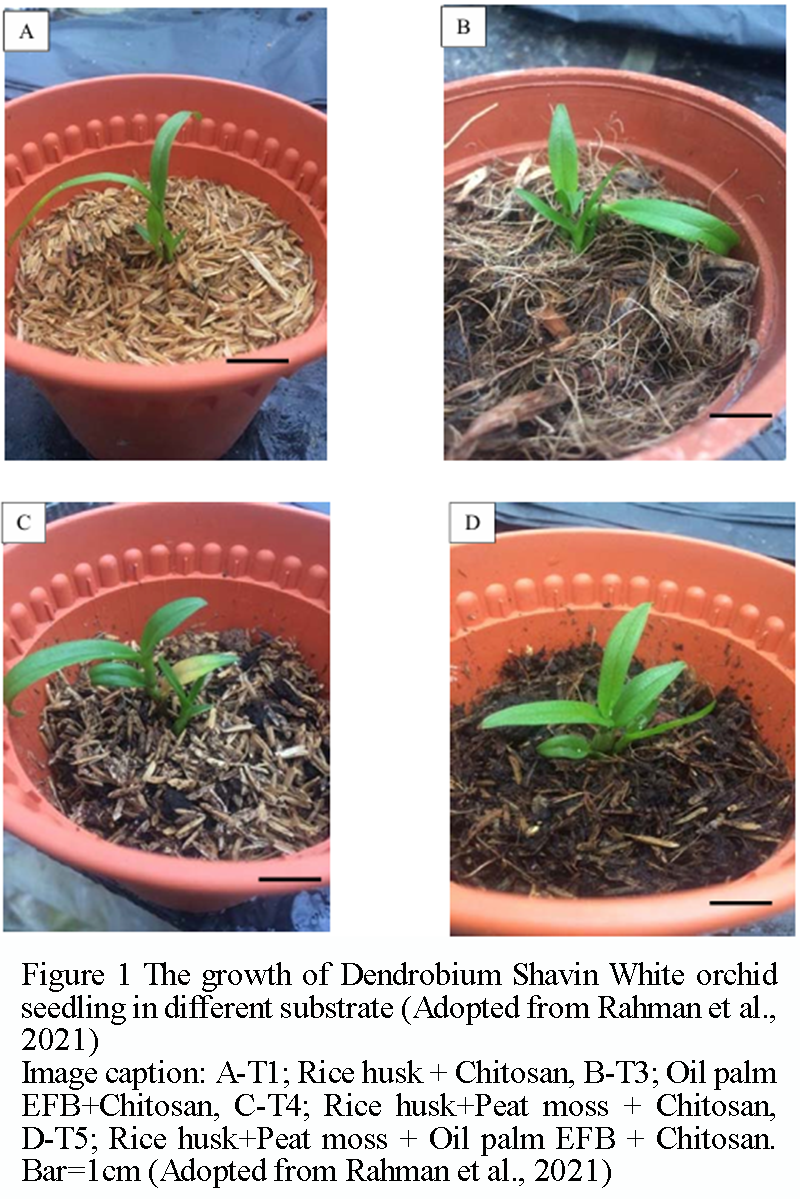 Figure 1 The growth of Dendrobium Shavin White orchid seedling in different substrate (Adopted from Rahman et al., 2021) Image caption: A-T1; Rice husk+Chitosan, B-T3; Oil palm EFB+Chitosan, C-T4; Rice husk+Peat moss+Chitosan, D-T5; Rice husk+Peat moss+Oil palm EFB+Chitosan; Bar=1 cm (Adopted from Rahman et al., 2021) |
2.3 Perlite, ceramsite, and composite cultivation substrates
Inorganic substrates have attracted attention in facility cultivation and composite substrate construction for D. officinale because of their good physical stability, low bulk density, high porosity, and long service life. Perlite is a porous inert material produced by high-temperature expansion. It is lightweight and has strong drainage and good aeration, which can improve substrate structure and reduce the risk of compaction caused by long-term cultivation. Ceramsite, brick and tile fragments, charcoal, expanded minerals, and related materials are also commonly used as structural components to enhance mechanical support and root-zone aeration. Studies have shown that perlite and similar inert mineral materials are common inorganic components in soilless cultivation and orchid substrates, and their low bulk density, high porosity, and strong drainage capacity help improve the root environment (Nuammee et al., 2024; Carrasco et al., 2025).
Because a single inorganic substrate has weak nutrient-retention capacity and cannot fully meet the long-term growth and quality formation requirements of D. officinale, composite cultivation substrates are more commonly used in production practice. Composite substrates usually combine natural organic substrates, agricultural waste-based substrates, and inorganic substrates in specific proportions to balance water retention, aeration, structural stability, and nutrient supply. For example, pine bark combined with coconut coir, ceramsite, or perlite can simultaneously meet the needs of root aeration and moisture retention. Composite formulations containing bark, brick fragments, sphagnum moss, wood chips, and maize straw, after disinfection and fermentation, can stabilize substrate structure and reduce pathogen risk. During orchid acclimatization, mixed substrates containing brick fragments and charcoal together with water-retentive components such as sphagnum moss or fern fiber can improve root aeration and mechanical support, achieving survival rates of approximately 97~100% and supporting long-term growth (Nuammee et al., 2024).
The advantage of composite substrates lies in their capacity for targeted design according to different growth stages, cultivation modes, and regional environments of D. officinale. Compared with single substrates, composite substrates can not only improve seedling survival and plant growth rate, but may also promote bioactive compound accumulation and commercial quality by improving rhizosphere moisture, oxygen, nutrients, and microbial conditions. Studies on Dendrobium production have shown that potting media composed of coconut-derived organic materials mixed with brick fragments, charcoal, and tile fragments can achieve better vegetative growth and flowering traits than coconut coir alone. This indicates that composite substrates have important application value by integrating organic nutrient supply with inorganic structural stability (Ashokkumar et al., 2023; Tt et al., 2024). In the future, under the concepts of resource recycling, precision cultivation, and quality-oriented production, the development of functional, standardized, and sustainable composite substrates will become an important pathway for promoting the high-quality development of the D. officinale industry.
3 Effects of Different Cultivation Substrates on the Growth of Dendrobium officinale
3.1 Effects on seedling survival rate and plant vigor
Seedling survival rate is an important indicator for evaluating the cultivation effect of Dendrobium officinale and a direct basis for assessing substrate suitability. As D. officinale is an epiphytic plant, its seedling roots are relatively fragile and sensitive to changes in moisture, aeration, and environmental stability. Therefore, the water retention, aeration, structural stability, and disease-suppressive capacity of the substrate directly affect post-transplant survival. Existing studies have shown that sphagnum moss, pine bark, and their composite substrates can form a relatively stable moisture and air environment around the roots, reduce transplanting stress, and improve seedling survival. During the hardening stage, sphagnum moss can promote rapid root initiation, enhance tillering, and increase leaf thickness, stem diameter, plant height, leaf width, root length, root number, and biomass compared with bark treatment, making it more suitable for acclimatization and early transplantation of tissue-cultured plantlets.
Different substrates not only affect seedling survival rate but also significantly influence plant vigor. Suitable substrates can improve the rhizosphere environment and enhance water and nutrient use efficiency, thereby promoting plant height growth, stem thickening, and leaf development. Studies have shown that a granular substrate mainly composed of spent mushroom residues, Chinese herbal residues, and agricultural by-products such as chestnut shells, peanut shells, mulberry branches, corncobs, and wood chips can increase the transplant survival rate of D. officinale to more than 98%. After 1.5 years of cultivation, the average plant height reached approximately 78 cm and the stem diameter reached 7.5~8.2 mm, indicating good adaptability and growth vigor under field conditions. A cement-tile bed cultivation system using pine bark as the main substrate can also ensure a transplant survival rate of more than 98%, promote plant growth compared with traditional cultivation methods, advance flowering and stem formation, and increase yield per unit area. In addition, a 50:50 mixture of pine bark and fern fiber achieved a 100% survival rate 12 months after ex vitro transplantation and showed good performance in plant height, root number, fresh weight, and dry weight, suggesting that a rational combination of water retention and aeration is conducive to sustained seedling growth (Luan et al., 2021).
The substrate requirements of D. officinale vary among different growth stages. The seedling stage relies more heavily on strong moisture retention and environmental stability, whereas during the rapid growth stage, the requirements for substrate aeration, drainage, and nutrient supply gradually increase. Wood-based substrate combinations such as bark-sawdust mixtures can also support high survival rates and favorable growth. Among them, an alder bark:fine sawdust ratio of 5:1 showed good performance in plant height, stem diameter, root number, and leaf number, and was considered a suitable cultivation substrate. Therefore, rationally selecting or adjusting substrate types according to different growth stages of D. officinale is an important measure for improving seedling survival, enhancing plant vigor, and achieving stable production.
3.2 Effects on root development and nutrient uptake
Roots are important organs for water and mineral nutrient uptake in D. officinale, and their developmental status directly determines the subsequent growth potential of the plant. Cultivation substrates influence root morphogenesis and physiological activity by regulating rhizosphere moisture, oxygen, and nutrient supply. Substrate porosity, water-holding capacity, drainage, and nutrient status are key factors determining root development in D. officinale. Well-aerated substrates are conducive to root apical meristem activity and new root formation, whereas prolonged waterlogging or poor aeration can easily cause root hypoxia, inhibit root growth, and even induce root rot. During the hardening stage, sphagnum moss significantly increases root length, root number per cluster, and root biomass, indicating that a moist, fine-textured, and well-aerated medium facilitates rapid root proliferation and functional root formation in seedlings.
Bark-based substrates and composite substrates supplemented with structural materials such as fern fiber, perlite, and ceramsite are beneficial for increasing root length, root number, and root activity. A pine bark-based mixed substrate combined with fern fiber promoted rooting under greenhouse conditions over 12 months, enabling plants to develop more roots, longer roots, and higher fresh weight than other tested substrates (Luan et al., 2021). Some nutrient solutions and granular substrate formulations also aim to rapidly promote root emergence from stems and improve transplant survival. Reported results indicate that the cultivation period for complete plant formation can be shortened to approximately 25 days, with a high field survival rate, suggesting that nutrient-rich, well-buffered, and structurally suitable substrates can significantly promote root initiation and growth. For D. officinale, which has well-developed aerial roots, maintaining an appropriate air-water ratio is essential for healthy root development.
Substrates also serve as reservoirs and exchange interfaces for mineral nutrients and carbon sources. Widely targeted metabolomic studies have shown that pine bark, coconut coir, and their mixed substrates differ significantly in physicochemical properties, including water-holding capacity and nitrogen, phosphorus, and potassium contents, leading to marked changes in the stem metabolite profiles of D. officinale. This suggests that nutrient acquisition and metabolic status differ under different substrate conditions (Zuo et al., 2020). Ecophysiological studies have also found that total nitrogen, total phosphorus, pH, and available phosphorus in the soil are closely related to polysaccharide, total alkaloid, and flavonoid contents, and these parameters are all influenced by substrate selection in artificial cultivation systems (Yuan et al., 2020). In addition, mycorrhizal associations formed within or on the surface of substrates can enhance nutrient uptake. The growth-promoting fungus MF23 can increase root dry weight, root length, and seedling height in D. officinale, and upregulate genes related to nitrate, ammonium, amino acid, and peptide transporters, thereby promoting nitrogen uptake and assimilation (Figure 2) (Shan et al., 2021). Other mycorrhizal fungi can also enhance carbon acquisition from substrates, improve photosynthetic efficiency, and increase seedling biomass and polysaccharide content.
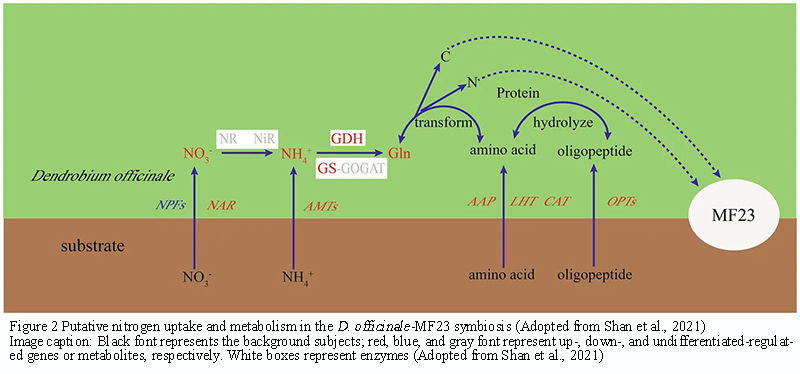 Figure 2 Putative nitrogen uptake and metabolism in the D. officinale-MF23 symbiosis (Adopted from Shan et al., 2021) Image caption: Black font represents the background subjects; red, blue, and gray font represent up-, down-, and undifferentiated-regulated genes or metabolites, respectively. White boxes represent enzymes (Adopted from Shan et al., 2021) |
3.3 Effects on biomass accumulation and dry matter distribution
Biomass accumulation is the result of the combined effects of photosynthesis, nutrient uptake, and material metabolism, and it is also an important indicator for evaluating substrate performance. Suitable substrates can provide stable moisture, oxygen, and nutrient conditions for D. officinale, promote the formation and transport of photosynthetic products, and thereby increase plant fresh weight and dry weight. Studies have shown that granular substrates rich in organic residues can produce an average yield of approximately 580 kg/mu in D. officinale, with a polysaccharide content of 42.5%, indicating that optimized substrates with high nutrient density are conducive to the synchronized accumulation of stem biomass and medicinal components. Pine bark seedbed cultivation can increase growth rate, advance flowering and stem formation by 1~3 years, and produce more than 250 kg/mu, suggesting that coarse, durable bark substrates can sustain high aboveground biomass accumulation over multiple years when combined with appropriate fertilization and management.
Different cultivation substrates also affect the distribution of dry matter among roots, stems, and leaves. The main medicinal part of D. officinale is the fleshy stem; therefore, the extent of dry matter accumulation in the stem is closely related to medicinal material yield and quality. Under suitable substrate conditions, plants can maintain high photosynthetic efficiency and nutrient transport capacity, allowing more assimilates to be transported to and stored in the stems, thereby promoting stem thickening and improving medicinal yield. Container cultivation studies have shown that turf-bark substrates can significantly increase the fresh weight and dry matter content of tissue-cultured plantlets, while sphagnum moss substrates not only promote growth but also increase polysaccharide content. This suggests that different substrates may guide biomass allocation toward structural growth or toward storage and medicinal component accumulation, respectively.
In addition, biomass accumulation is closely related to the formation of bioactive components. Sufficient dry matter accumulation not only provides a material basis for plant growth, but also supplies carbon sources and energy for the synthesis of polysaccharides, alkaloids, and other secondary metabolites. Mycorrhizal cultivation studies have shown that MF23 inoculation significantly increases root and stem dry weight, root length, and seedling height compared with axenic culture, and its promoting effect becomes stronger over time (Shan et al., 2021). Compared with non-mycorrhizal controls, ex vitro seedlings associated with mycorrhizal fungi have greater increases in fresh and dry weight, taller plants, thicker stems, and more new roots and tillers, indicating that mycorrhizal symbiosis can coordinately increase total biomass and promote biomass allocation to the stems, which are harvested as medicinal materials. From a broader ecological perspective, stem, leaf, and total biomass of D. officinale vary significantly among different provenances and environmental conditions, indicating that substrate-related environmental factors and genetic conditions jointly drive patterns of dry matter distribution. Therefore, from the dual goals of yield and quality improvement, selecting suitable substrates and combining them with beneficial microbial regulation is an important approach for promoting biomass accumulation and optimizing dry matter distribution in D. officinale.
4 Effects of Different Cultivation Substrates on Quality Formation in Dendrobium officinale
4.1 Effects on polysaccharide accumulation
Polysaccharides are among the most important bioactive constituents of Dendrobium officinale and serve as a core indicator for evaluating its medicinal quality. In addition to possessing immunomodulatory, antioxidant, and metabolic regulatory activities, polysaccharides directly influence the medicinal value and market competitiveness of D. officinale. Previous studies have demonstrated that polysaccharide content is highly responsive to growth conditions. Cultivation mode, root-zone physicochemical environment, nutrient availability, and water status can all affect polysaccharide accumulation, and these factors are largely regulated by cultivation substrates (Yuan et al., 2020). Comparative studies conducted across different production regions and cultivation systems have shown that variations in light intensity, temperature, water availability, and nutrient conditions can lead to substantial differences in polysaccharide content, indicating that polysaccharide biosynthesis exhibits considerable environmental plasticity (He et al., 2022).
Substrates with favorable water-holding capacity, aeration, and nutrient-buffering ability are generally more conducive to polysaccharide formation and accumulation. Pine bark, sphagnum moss, and their composite substrates provide a relatively stable rhizosphere environment, promoting photosynthate production, carbon accumulation, and carbohydrate metabolism, thereby enhancing polysaccharide content. Reviews have emphasized that appropriate artificial substrates and cultivation systems are among the most important agronomic strategies for increasing polysaccharide yield in modern D. officinale production systems (Chen et al., 2021). At present, epiphytic cultivation and wild-simulated cultivation have become major production approaches. These systems typically employ bark-or tree-based substrates and aim to produce green, organic medicinal materials with high polysaccharide content. Comparisons among cultivation sites and production techniques indicate that plants grown under more favorable microclimatic conditions and substrate-nutrient environments are more likely to meet or exceed the polysaccharide standards specified in the Chinese Pharmacopoeia, whereas lower compliance rates are often observed in environmentally less suitable regions (He et al., 2022).
It should be noted that polysaccharide accumulation does not necessarily increase in parallel with plant growth. Instead, it is jointly influenced by genotype, cultivation age, cultivation mode, and substrate conditions. Multi-year metabolomic analyses have shown that carbohydrates and glycosides are the predominant metabolites in D. officinale, and the third cultivation year may represent the optimal harvest period based on carbohydrate accumulation patterns. In standardized cultivation systems, tetraploid breeding materials have exhibited nearly double the stem polysaccharide content of diploid plants, indicating that polysaccharide accumulation depends not only on substrate optimization but also on genetic improvement and harvest timing management (Pham et al., 2019). Therefore, cultivation practices should balance yield and quality by optimizing substrate structure, nutrient supply, and harvest age to achieve the coordinated enhancement of both polysaccharide content and biomass production.
4.2 Effects on dendrobine, flavonoids, and other bioactive constituents
In addition to polysaccharides, dendrobine, flavonoids, phenolic compounds, bibenzyls, and phenolic glycosides are important functional constituents of D. officinale. Dendrobine and related alkaloids possess potential anti-inflammatory, neuroprotective, and immunomodulatory activities, whereas flavonoids and phenolic compounds are closely associated with antioxidant activity, free-radical scavenging, and stress defense. The accumulation of these bioactive compounds is regulated not only by genetic background but also by cultivation environment and substrate conditions. By altering rhizosphere moisture, oxygen availability, nutrient supply, and the microecological environment, different substrates influence the allocation of resources between primary and secondary metabolism, thereby regulating the biosynthesis and accumulation of dendrobine, flavonoids, and related compounds.
Widely targeted metabolomic analyses comparing D. officinale stems cultivated in pine bark, coconut coir, and a 1:1 mixture of the two substrates revealed that although the overall metabolite categories remained similar among treatments, significant differences occurred in metabolite abundance. Among the 529 detected metabolites, flavonoids exhibited the most pronounced variation, with most flavonoid compounds preferentially accumulating in plants grown on pure pine bark. KEGG enrichment analysis further demonstrated that flavonoid biosynthesis was the only pathway significantly affected by substrate-induced metabolic changes, indicating a direct relationship between substrate selection and flavonoid metabolic regulation (Figure 3) (Zuo et al., 2020). These findings suggest that bark-based substrates not only facilitate root attachment and vegetative growth but may also promote the accumulation of specific bioactive compounds through alterations in metabolic pathway activity.
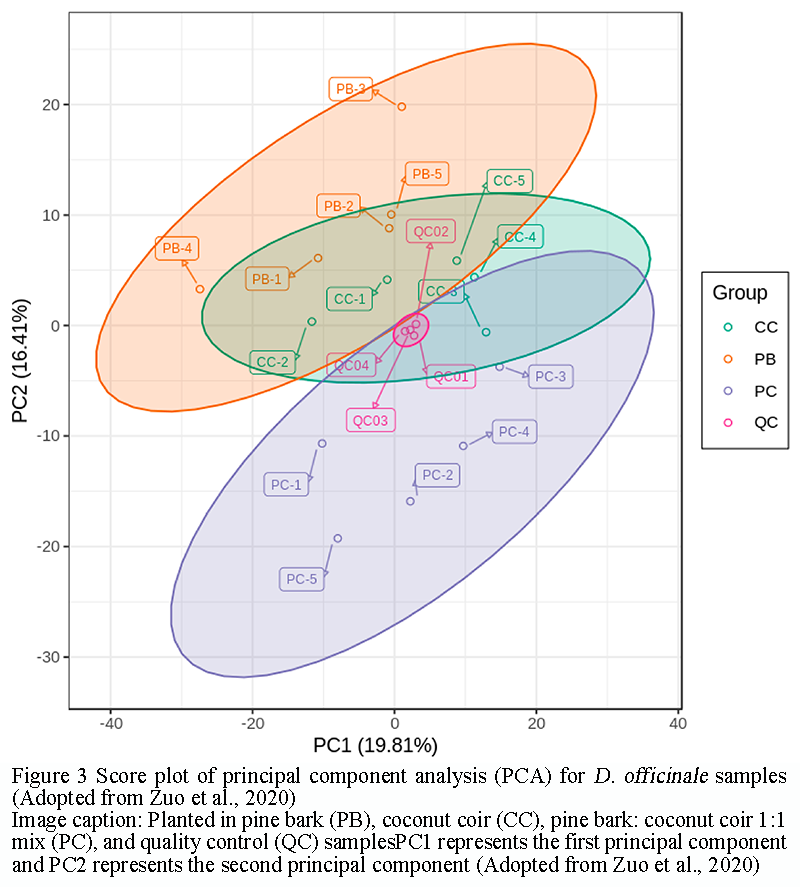 Figure 3 Score plot of principal component analysis (PCA) for D. officinale samples (Adopted from Zuo et al., 2020) Image caption: Planted in pine bark (PB), coconut coir (CC), pine bark: coconut coir 1:1 mix (PC), and quality control (QC) samplesPC1 represents the first principal component and PC2 represents the second principal component (Adopted from Zuo et al., 2020) |
In addition to substrate comparison studies, investigations involving different production regions and cultivation systems have also demonstrated that low-molecular-weight bioactive compounds are highly sensitive to environmental conditions. Metabolomic analyses of wild-simulated cultivation systems and materials from different geographical origins have identified numerous differentially accumulated metabolites, with significant enrichment of flavonoid and flavonol biosynthesis pathways and substantial variation in flavonoid content among habitats (Lan et al., 2022; Luo et al., 2023). Integrated proteomic-metabolomic studies have further shown that phenylpropanoid and flavonoid biosynthesis pathways are key targets affected by environmental variation. Critical enzymes such as phenylalanine ammonia-lyase and chalcone synthase exhibit differential regulation among production regions. Significant regional differences have also been reported for dendrobine and related alkaloids, suggesting that cultivation conditions, including substrate properties and soil nutrient status, can influence alkaloid accumulation (Guan et al., 2025). Therefore, selecting substrates with appropriate physical structure, nutrient characteristics, and moderate ecological stimulation effects may facilitate the accumulation of flavonoids, alkaloids, and other bioactive compounds, thereby enhancing the medicinal quality of D. officinale.
4.3 Effects on comprehensive evaluation of medicinal and commercial quality
Quality evaluation of D. officinale encompasses not only chemical indicators such as polysaccharides, alkaloids, and flavonoids, but also antioxidant capacity, morphological traits, stem quality, tissue texture, and commercial grading characteristics. High-quality D. officinale typically exhibits thick stems, uniform internodes, bright coloration, well-developed tissues, and elevated levels of bioactive constituents. Consequently, the dual effects of cultivation substrates on plant morphology and active constituent accumulation ultimately determine both medicinal and commercial quality. Previous studies have indicated that the medicinal quality of D. officinale is determined by a comprehensive profile of polysaccharides and various low-molecular-weight compounds, and is closely associated with functional activities such as antioxidant capacity (Chen et al., 2021; Xu et al., 2022; Wang et al., 2025; Yang et al., 2026).
In medicinal quality assessment, reliance solely on polysaccharide content has certain limitations. Comparative studies involving materials from different regions and cultivation environments have demonstrated that high polysaccharide levels do not necessarily coincide with elevated concentrations of flavonoids, phenolic glycosides, or other low-molecular-weight compounds. In some cases, regions producing materials with high polysaccharide content have exhibited relatively low levels of certain small-molecule constituents (He et al., 2022). Metabolomic and bioactivity studies have shown that flavonoids and phenolic acids are major contributors to the antioxidant capacity of D. officinale, and strong correlations have been observed between specific flavonoid glycosides and antioxidant indicators (Luo et al., 2023). Therefore, substrates or cultivation environments that promote flavonoid accumulation, such as pine bark-based systems, may enhance certain biological functions even when polysaccharide content remains relatively unchanged (Zuo et al., 2020; Lan et al., 2022).
From the perspectives of commercial quality and industrial application, substrate selection also influences stem thickness, fresh weight, uniformity, and processing suitability, thereby affecting commercial grading and market acceptance. Numerous studies have suggested that quality evaluation systems for D. officinale should incorporate representative low-molecular-weight biomarkers and biological activity indicators in addition to polysaccharides, because cultivation conditions-including substrate characteristics-can alter the balance among different classes of compounds, and such changes may not be directly reflected in appearance or yield (Chen et al., 2021; He et al., 2022). Regional comparisons under artificial shading cultivation have shown that D. officinale produced in southern cultivation regions generally contains higher levels of polysaccharides, flavonoids, and total polyphenols than material produced in newly established northern production areas, indicating that differences in regional environments and rhizosphere conditions may influence overall nutritional and medicinal value even under similar cultivation techniques. Therefore, future quality-oriented cultivation strategies should incorporate rational substrate selection and establish comprehensive evaluation systems that simultaneously consider polysaccharides, dendrobine, flavonoids, phenolic compounds, morphological traits, and commercial grade, thereby meeting the requirements of pharmacopoeial standards, functional food development, and market quality expectations.
5 Mechanisms by Which Cultivation Substrates Influence Growth and Quality of Dendrobium officinale
5.1 Regulatory effects of substrate physicochemical properties on the rhizosphere environment
The physicochemical properties of cultivation substrates are fundamental factors influencing the growth and quality formation of Dendrobium officinale. These properties mainly include porosity, bulk density, water-holding capacity, aeration, pH, cation exchange capacity, and nutrient contents such as nitrogen, phosphorus, and potassium. As a typical epiphytic plant, D. officinale possesses roots that are highly sensitive to oxygen availability and fluctuations in water status. Therefore, substrates with good aeration and appropriate water retention can maintain normal root respiration, nutrient uptake, and metabolic activities, thereby creating a stable rhizosphere environment for plant growth. In contrast, substrates with poor aeration, excessive bulk density, or prolonged waterlogging may lead to root-zone hypoxia, suppress root activity, and even induce root rot, ultimately impairing plant growth and quality formation.
Significant differences exist among substrates in terms of water retention, drainage capacity, and nutrient availability, and these variations further influence metabolic processes within the plant. Zuo et al. (2020) conducted a widely targeted metabolomic analysis of D. officinale stems cultivated in pine bark, coconut coir, and a 1:1 mixture of the two substrates. Their results showed substantial differences among substrates in water-holding capacity and nutrient contents, particularly nitrogen, phosphorus, and potassium, which were closely associated with distinct metabolite profiles in the plants. Although the overall categories of metabolites were similar among substrate treatments, considerable differences were observed in metabolite abundance. Multivariate analyses, including principal component analysis (PCA) and orthogonal partial least squares-discriminant analysis (OPLS-DA), clearly distinguished samples derived from different substrates, indicating that substrate physicochemical properties exert strong regulatory effects on plant metabolism. Furthermore, studies comparing greenhouse cultivation, simulated-natural cultivation, and wild growth conditions demonstrated that soil pH, total nitrogen, total phosphorus, and available phosphorus are important environmental factors affecting polysaccharide, total alkaloid, and flavonoid contents in D. officinale, further highlighting the close relationship between root-zone chemical environments and medicinal quality (Yuan et al., 2020).
The hydraulic characteristics of substrates also influence root-zone water-oxygen distribution and plant performance. Studies on coconut coir- and perlite-based soilless media have shown substantial differences in water retention curves, saturated hydraulic conductivity, pore-size distribution, and bulk density among substrates. These characteristics collectively determine the distribution of water and air within the confined root zone. Substrates possessing high total porosity, appropriate levels of plant-available water, and adequate aeration space generally create a low-stress rhizosphere environment that supports healthy growth in container cultivation systems (Gohardoust et al., 2020). Research on other horticultural crops has similarly demonstrated that combining organic materials such as coconut coir with inorganic components such as perlite and tuff can optimize water retention and aeration, thereby improving nutrient-use efficiency, plant growth, and yield (Tang et al., 2024). Therefore, for D. officinale, substrates capable of maintaining a balance among water retention, drainage, aeration, and nutrient buffering are more conducive to sustaining stable root-zone water-oxygen dynamics and nutrient supply, thereby promoting both growth and quality formation.
5.2 Effects of substrate microorganisms on nutrient uptake and metabolic activities
In addition to physicochemical properties, microbial communities within cultivation substrates are important factors affecting the growth and quality formation of D. officinale. Cultivation substrates serve not only as physical supports for root attachment and growth but also as habitats for diverse microorganisms, including bacteria, fungi, and actinomycetes. These microorganisms participate in organic matter decomposition, nutrient cycling, rhizosphere metabolism, and plant stress regulation, thereby exerting substantial effects on root development, nutrient acquisition, and metabolic activities. In orchids such as D. officinale, rhizosphere and endophytic microorganisms not only enhance the uptake of water and mineral nutrients but may also contribute to the biosynthesis of quality-related metabolites, including polysaccharides, alkaloids, and flavonoids.
Studies of the D. officinale microbiome have provided important evidence for understanding substrate-microbe-plant interactions. Wang et al. (2022) conducted metagenomic analyses of D. officinale growing in nutrient-poor Danxia habitats and identified highly diverse microbial communities in both rhizosphere and endophytic compartments. These communities included plant growth-promoting rhizobacteria such as Massilia, Pseudomonas, Bradyrhizobium, Paenibacillus, and Streptomyces, as well as beneficial fungi including Tulasnella and Serendipita. Functional annotation revealed significant enrichment of pathways related to carbohydrate, amino acid, and energy metabolism, indicating that these microorganisms facilitate nutrient mobilization and transformation, thereby supporting plant survival and growth under low-fertility conditions (Wang et al., 2022). A review of rhizosphere microbiomes in Dendrobium species further suggested that plant growth-promoting bacteria and fungi can enhance nitrogen and phosphorus uptake, produce phytohormones such as indole-3-acetic acid and gibberellins, and suppress pathogens, collectively improving plant growth, stress tolerance, and quality (Sarsaiya et al., 2025).
Different cultivation systems and root-zone conditions may also alter microbial community composition and their influence on metabolite production. Studies on Dendrobium denneanum cultivated under tree-mounted, rock-mounted, and pot cultivation systems showed that soil properties, particularly total phosphorus and pH, simultaneously affected root microbial communities and metabolite profiles. Correlation analyses revealed associations between specific microorganisms, including Occallatibacter and Clonostachys, and the pharmacologically active compound gigantol, suggesting that root-associated microorganisms participate in regulating secondary metabolite biosynthesis (Chen et al., 2023). Broader rhizosphere microbiome studies have likewise demonstrated that the rhizosphere represents a hotspot for nutrient cycling and root nutrition, with enrichment of genes involved in organic compound transformation, nitrogen fixation, and denitrification relative to bulk soil (Ling et al., 2022). In crops such as maize and pea, arbuscular mycorrhizal fungi and rhizobia have been shown to enhance phosphorus and nitrogen uptake, reshape rhizosphere bacterial communities, and improve yield and nutrient-use efficiency (Lu et al., 2023; Calderon and Dangi, 2024). Collectively, these findings suggest that substrate-associated microbiomes may be regarded as extensions of root function in D. officinale, influencing growth and medicinal quality through enhanced nutrient acquisition, improved stress resistance, and regulation of metabolic pathways.
5.3 Relationship between substrate-induced stress and secondary metabolite accumulation
The formation of plant secondary metabolites is regulated not only by genetic factors but also by environmental conditions. Bioactive constituents of D. officinale, including polysaccharides, dendrobine, flavonoids, and phenolic compounds, are closely associated with plant responses to environmental stimuli. By altering water availability, aeration, salinity, nutrient balance, and rhizosphere microecological conditions, different cultivation substrates may impose varying degrees of physiological stress on plants, thereby influencing defense responses and the activation of secondary metabolic pathways. Moderate substrate-induced stress may stimulate defense mechanisms, redirecting carbon, nitrogen, and energy resources toward the biosynthesis of flavonoids, alkaloids, and other protective metabolites. However, excessive stress can inhibit photosynthesis and biomass accumulation, resulting in reduced growth and quality.
Previous studies investigating salt, temperature, and osmotic stresses have provided valuable insights into the relationship between environmental stimuli and the accumulation of quality-related metabolites in D. officinale. Under treatment with 250 mmol/L NaCl, significant transcriptomic and metabolomic reprogramming occurred in leaves, including marked changes in phenylalanine metabolism, flavonoid biosynthesis, and α-linolenic acid metabolism. Genes involved in jasmonic acid biosynthesis were upregulated, accompanied by increased levels of flavonoids, carbohydrates, and alkaloids. These findings suggest that jasmonic acid may act as a signaling molecule promoting flavonoid biosynthesis, enabling plants to adapt to salt stress through enhanced secondary metabolite production. Similarly, diurnal temperature fluctuation treatments increased polysaccharide and total flavonoid contents in protocorm-like bodies and induced numerous differentially expressed genes enriched in secondary metabolite and flavonoid biosynthetic pathways. Stress-related genes, including heat shock proteins (HSPs) and heat shock transcription factors (HSFs), were strongly induced, indicating a close relationship between mild temperature stress and the accumulation of quality-related metabolites (Chen et al., 2024).
Root-zone water status and osmotic conditions, which are strongly influenced by substrate characteristics, also play important roles in regulating secondary metabolism. In vitro studies have shown that osmotic stress simulated by PEG-6000 disrupts water metabolism and antioxidant systems in D. officinale seedlings, increases cell membrane permeability, and induces physiological disorders such as hyperhydricity, indicating that unfavorable osmotic conditions can damage tissues and alter metabolic processes (Gao et al., 2020). Reviews of dynamic changes in functional constituents of D. officinale have further emphasized that environmental factors such as light, temperature, and water availability significantly affect the biosynthesis and accumulation of polysaccharides, alkaloids, flavonoids, and phenolic compounds, with characteristic accumulation peaks occurring at specific developmental stages (Wang et al., 2025). Moreover, metabolomic comparisons among plants cultivated on different substrates revealed that although the overall metabolite profile remains relatively stable, flavonoids are highly sensitive to substrate conditions and preferentially accumulate under pine bark cultivation, where flavonoid biosynthesis was identified as the only significantly enriched KEGG pathway (Zuo et al., 2020). Collectively, these findings indicate that substrate-induced stresses-including salinity, temperature fluctuations, water imbalance, and nutrient stress-can function as regulatory signals that activate hormonal and stress-response networks, thereby enhancing or redirecting secondary metabolite biosynthesis and ultimately altering the medicinal quality of D. officinale.
6 Current Challenges in Research
6.1 Lack of unified standards for substrate evaluation
In recent years, the expansion of large-scale cultivation of Dendrobium officinale has led to a substantial increase in studies investigating different cultivation substrates. However, a unified framework for evaluating substrate performance has yet to be established. Considerable variation exists among studies in terms of evaluation criteria, experimental duration, and management practices, making direct comparisons difficult. Some studies primarily focus on growth-related parameters, such as plant height, stem diameter, root development, and biomass accumulation, whereas others emphasize the contents of bioactive compounds, including polysaccharides, alkaloids, and flavonoids. Consequently, a comprehensive evaluation system that simultaneously incorporates physicochemical properties, plant growth performance, quality attributes, economic costs, and ecological benefits has not yet been developed. Research on substrates for orchids and other epiphytic plants has also indicated that growers often formulate substrate mixtures empirically to balance aeration, water retention, pH, and cost. Since no single material can adequately satisfy all these requirements, substantial variation exists in substrate formulations and evaluation methods.
From a broader perspective, the lack of standardized evaluation criteria has become a major obstacle to the application and dissemination of research findings in soilless cultivation systems. Plant performance in soilless horticulture is often assessed under different experimental designs, management regimes, and evaluation parameters, ranging from visual quality ratings to biomass, yield, and product quality. Such inconsistencies make it difficult to compare results across studies and hinder the development of widely applicable cultivation recommendations (Barrett et al., 2016). Moreover, substrate properties are strongly influenced by raw material sources, processing methods, and composting conditions. This is particularly evident for peat substitutes and organic substrates, whose nutrient contents, biological activities, and physicochemical stability may vary considerably, further complicating the establishment of universal fertilization and management protocols (Atzori et al., 2021; Cacini et al., 2021).
Another limitation in current substrate evaluation research for D. officinale is the emphasis on short-term performance while neglecting long-term stability. Some substrates exhibit promising growth-promoting effects during short-term trials; however, their pore structure, water-holding capacity, salinity levels, and nutrient-release patterns may change over extended cultivation periods, thereby influencing subsequent plant growth and quality formation. In addition, climatic conditions, cultivation systems, and irrigation and fertilization practices differ among regions, meaning that the same substrate may perform differently under various production environments. Therefore, future research should establish unified physical, chemical, and biological evaluation standards while providing detailed descriptions of irrigation, fertilization, and pest management conditions. Such efforts would facilitate the interpretation of substrate performance under commercial production conditions and provide comparable and reliable scientific evidence for substrate selection and practical application in D. officinale cultivation (Barrett et al., 2016).
6.2 Insufficient understanding of quality formation mechanisms
Current studies on the effects of cultivation substrates on the quality of D. officinale primarily focus on changes in the contents of bioactive compounds such as polysaccharides, dendrobine, and flavonoids, whereas the underlying regulatory mechanisms remain insufficiently understood. Existing research generally suggests that substrates promote the accumulation of bioactive constituents by improving the rhizosphere environment, regulating water and nutrient availability, and influencing rhizosphere microbial communities. However, systematic evidence is still lacking regarding how substrate-derived signals affect metabolic pathways, enzyme activities, and gene expression associated with quality formation. With advances in molecular biology and omics technologies, the quality formation of D. officinale has increasingly been recognized as the result of interactions among genetic background, environmental signals, and metabolic regulation. Nevertheless, the specific roles and regulatory pathways of substrate-related factors remain poorly characterized.
Significant progress has been made in elucidating the molecular mechanisms underlying key quality traits in D. officinale. For example, integrated metabolomic and transcriptomic analyses demonstrated that high light intensity induces the expression of DoHY5, which subsequently activates genes involved in flavonoid and polysaccharide biosynthesis, resulting in increased accumulation of anthocyanins and mannose-rich polysaccharides. Other studies have clarified the regulatory role of the MYB-bHLH transcriptional complex in anthocyanin biosynthesis and identified candidate genes associated with the organ-specific accumulation of polysaccharides, alkaloids, and flavonoids (Wang et al., 2021; Zhao et al., 2025). Comparative omics analyses between D. officinale and Dendrobium nobile further revealed that differences in polysaccharide and alkaloid accumulation are closely associated with differential expression of glycosidase-related genes and terpene biosynthesis pathways (Zhang et al., 2024).
Despite these advances, most studies have focused on genetic and signaling regulation under controlled in vitro conditions, light treatments, or elicitor-induced responses, while substrate-driven rhizosphere factors have rarely been integrated into the analysis. Research on soilless cultivation has shown that substrate type, nutrient dynamics, and rhizosphere microbial communities can substantially alter root-zone environments; however, knowledge regarding microbial community structure, functional stability, and their regulatory effects on plant metabolism within organic substrates remains limited (Tuxun et al., 2025). In D. officinale, systematic links among substrate physicochemical properties, root-microbe interactions, carbon-nitrogen metabolic balance, and the activation of specific biosynthetic genes or transcription factors have not yet been established. Therefore, future studies should integrate transcriptomic, metabolomic, proteomic, and microbiome analyses to elucidate how different substrates regulate the biosynthesis of polysaccharides, dendrobine, flavonoids, and other bioactive constituents, thereby providing a theoretical basis for the precise improvement of medicinal quality.
6.3 Insufficient integration of substrate formulations with industrial applications
Although numerous novel and composite substrate formulations have been developed in recent years, many remain at the experimental stage and have not been widely adopted in commercial production. On one hand, some substrate formulations are overly complex, relying on unstable raw material sources, high-cost components, or labor-intensive processing methods, making large-scale implementation difficult. On the other hand, many studies emphasize short-term biological effects while giving insufficient consideration to economic costs, resource-use efficiency, operational convenience, supply-chain stability, and compatibility with certification standards. As a result, a gap remains between research outcomes and industrial demands.
Experiences from soilless cultivation and protected agriculture indicate that substrates intended for commercial application must be compatible with mechanized production systems, integrated fertigation technologies, pest management programs, and standardized production workflows. However, many experimental studies do not adequately simulate such practical conditions and often fail to provide management details necessary for large-scale implementation (Barrett et al., 2016). Research has shown that conventional substrates such as rockwool remain widely used in certain crops largely because of their high uniformity and compatibility with fertigation systems. In contrast, more sustainable materials, including coconut coir, biochar, compost, and wood fiber, although demonstrating promising agronomic performance in experimental trials, still face challenges related to supply stability, salinity control, substrate standardization, and compatibility with automated production systems (Atzori et al., 2021; Fussy and Papenbrock, 2022).
For medicinal orchids such as D. officinale, the insufficient integration of substrate formulations with industrial production is also reflected in the limited translation of research findings into quality standards. Current commercial production still relies primarily on traditional substrates such as sphagnum moss and bark. Although some composite substrates have shown superior effects on growth promotion and quality improvement, standardized formulations, technical production specifications, and long-term validation remain lacking. Agricultural and agro-industrial residues, including coconut fiber, carbonized rice husks, coffee husks, and sugarcane bagasse, offer ecological and economic advantages as orchid cultivation substrates. However, their application is constrained by issues such as pathogen contamination risks, fluctuations in salinity, nutrient immobilization, difficulties in controlling root-zone biological activity, and unstable supply chains (Atzori et al., 2021; Cacini et al., 2021). Therefore, future research should place greater emphasis on aligning substrate development with industrial requirements. While maintaining favorable growth performance and quality enhancement, efforts should focus on establishing standardized substrate production processes, quality control systems, and application protocols. Such measures will facilitate the transformation of research achievements into scalable, certifiable production systems that comply with pharmaceutical and functional food standards, thereby supporting the sustainable development of the D. officinale industry.
7 Future Perspectives and Development Trends
7.1 Development of green and environmentally friendly composite cultivation substrates
With the increasing emphasis on ecological agriculture, green production, and resource recycling, the development of resource-efficient and environmentally friendly composite cultivation substrates has become an important direction for the Dendrobium officinale industry. Future substrate design should focus not only on growth-promoting effects but also on sustainability, cost-effectiveness, raw material availability, and ecological safety. Research on soilless cultivation media indicates that the global trend is shifting from traditional materials such as peat and rockwool toward renewable resources and agricultural waste utilization, following the principles of “reduce-reuse-recycle” while maintaining suitable physical, chemical, and biological properties for root growth (Barrett et al., 2016). For D. officinale, although traditional substrates such as sphagnum moss exhibit excellent moisture retention and root-promoting properties, concerns regarding resource availability, environmental conservation, and long-term costs have increased. Therefore, developing alternative composite substrates based on coconut coir, rice husks, peanut shells, wood fibers, green compost, and biochar is of considerable practical significance (Atzori et al., 2021).
Future research on composite substrates should place greater emphasis on functional optimization and resource integration. Different substrate materials possess distinct advantages in water retention, aeration, nutrient-holding capacity, structural stability, and microecological regulation. Through scientific formulation, complementary properties can be combined to improve overall substrate performance. For example, combining bark-based materials with coconut coir, perlite, expanded clay, or biochar can simultaneously satisfy the requirements for root aeration, drainage, moisture retention, and nutrient buffering, thereby creating a more suitable environment for the epiphytic root system of D. officinale. Studies on soilless cultivation have demonstrated that materials such as biochar, coconut coir, wood fibers, and organic residues can provide appropriate porosity, aeration space, and water-holding capacity after proper blending and stabilization. However, waste-derived materials may still exhibit variability in raw material quality, excessive salinity, phytotoxic compounds, and changes in substrate properties during cultivation. Therefore, standardized production, testing, and characterization procedures are required (Barrett et al., 2016; Gruda, 2019).
In addition, the development of novel functional substrates is expected to become a major research focus in D. officinale cultivation. Recent advances in soilless cultivation systems provide valuable insights for substrate optimization. For instance, hydrochar derived from spent grains and combined with vermiculite and perlite can retain nutrients, reduce nitrogen and phosphorus losses, and provide low bulk density and high porosity, thereby improving crop growth (Miao et al., 2024). Bio-based hydrogel substrates composed of pectin and chitosan networks have been shown to promote seed germination, root vigor, yield, and polysaccharide accumulation in medicinal dandelion while enabling controlled nutrient release (Guo et al., 2026). Chitin and chitosan, owing to their high water-holding capacity, nutrient-binding ability, antimicrobial activity, and potential to stimulate plant hormones and beneficial microorganisms, have been recognized as promising substrate materials for future vertical farming systems (Jia et al., 2024). Applying these concepts to D. officinale cultivation suggests that future efforts should focus on developing peat-free, waste-based, biopolymer-enhanced, and microbe-carrier composite substrates. Such substrates could evolve from simple growth media into integrated platforms capable of water and nutrient buffering, rhizosphere regulation, and quality enhancement.
7.2 Strengthening research on substrate-microbe-quality interactions
In recent years, studies on rhizosphere ecology and plant microbiomes have emerged as important research areas in medicinal plant quality formation. For D. officinale, cultivation substrates not only determine the root growth environment but also influence the structure and function of rhizosphere and endophytic microbial communities, thereby regulating nutrient uptake, stress tolerance, metabolic activities, and the accumulation of bioactive compounds. Previous studies have shown that plant-associated microbial communities can promote plant growth, enhance stress resistance, and regulate the biosynthesis of secondary metabolites that determine medicinal quality (Lv et al., 2024). Reviews focusing on medicinal plants further indicate that rhizosphere and endophytic microorganisms can improve nutrient acquisition, restore degraded soils, induce systemic resistance, and directly stimulate the biosynthesis of alkaloids, phenolics, and other specialized metabolites, thereby enhancing medicinal quality and reducing contaminant accumulation (Kumari et al., 2023).
Future studies should pay particular attention to the roles of beneficial microorganisms, including mycorrhizal fungi, plant growth-promoting bacteria, and endophytic fungi, in the growth and quality formation of D. officinale. In D. officinale and related Dendrobium species, diverse endophytic fungi such as Trichoderma, Epulorhiza, and Phomopsis-related taxa have been associated with yield improvement, resource utilization, and plant protection, indicating their potential as microbial fertilizers and quality-enhancing agents. At the same time, plant secondary metabolites and microbiomes exhibit bidirectional interactions. On one hand, plant exudates and secondary metabolites shape rhizosphere microbial communities; on the other hand, microorganisms can reshape plant metabolomes through hormonal regulation, nutrient provision, induction of stress responses, and direct activation of defense pathways (Pang et al., 2021; Laffon et al., 2024; Lv et al., 2024). Therefore, merely comparing the effects of different substrates on growth and quality is no longer sufficient. Future studies should integrate substrate types, microbial communities, and metabolite profiles into a unified analytical framework.
With the rapid development of high-throughput sequencing, metagenomics, metabolomics, and transcriptomics, multi-omics approaches are expected to become essential tools for elucidating the mechanisms underlying quality formation in D. officinale. Controlled substrate-microbe interaction experiments could be employed to identify key microorganisms and optimal substrate conditions that synergistically enhance the accumulation of polysaccharides, dendrobine, flavonoids, and phenolic compounds. Furthermore, synthetic microbial consortia or endophyte-based inoculants may be developed to improve the production of specialized metabolites (Cheng et al., 2019; Laffon et al., 2024; Liu et al., 2025). On this basis, quality-oriented “substrate-microbe integrated products,” such as biofortified composite substrates, mycorrhiza-assisted seedling substrates, and functional microbial slow-release carriers, could provide innovative technological solutions for high-quality D. officinale cultivation.
7.3 Establishing high-efficiency cultivation systems for large-scale production
The D. officinale industry is gradually transitioning from wild harvesting and small-scale cultivation toward facility-based, large-scale, standardized, and modern production systems. Advances in propagation technologies, substrate improvement, and integrated cultivation practices have enabled the industry to shift from dependence on wild resources to large-scale protected cultivation and environmentally friendly production systems (Liu et al., 2025). Nevertheless, cultivated products still face challenges related to inconsistent quality and efficacy, lack of unified standards, and the need to balance high productivity with resource conservation and environmental sustainability (Cheng et al., 2019). Therefore, the development of high-efficiency cultivation systems suitable for large-scale production should be based on standardized substrate formulations integrated with irrigation and fertilization management, environmental control, pest and disease management, and standardized harvesting and processing protocols.
Future efforts should focus on systematically evaluating the performance of different substrates and identifying standardized formulations suitable for diverse ecological regions, cultivation facilities, and production systems. Simultaneously, substrate production standards, quality inspection protocols, and application guidelines should be established to improve product consistency, reproducibility, and industrial compatibility. Green composite substrates should also be integrated with microbiome-informed management strategies, enabling the transition from empirical substrate selection to precision substrate design. For large-scale commercial production, substrates must not only satisfy the physiological requirements of D. officinale roots and support quality formation but also be compatible with mechanized filling systems, automated irrigation, integrated fertigation, disease monitoring, and product traceability systems, thereby enhancing production efficiency and quality stability.
With the advancement of smart agriculture technologies, D. officinale cultivation is expected to move toward increasingly digitalized and precision-based management. Studies have shown that PLC-SCADA-based greenhouse systems can accurately monitor and control temperature, moisture, humidity, and light intensity, achieving prediction errors below 2.5% and providing reliable decision support for precision cultivation management. Edge-computing and digital-twin platforms developed for D. officinale production can further improve environmental control accuracy, increase yield by more than 20%, and reduce energy consumption by over 40%, thereby providing scalable frameworks for intelligent cultivation systems (Li et al., 2025). In addition, big-data approaches can be applied to identify and manage experimental outliers in digital cultivation datasets, improving the reliability of growth, yield, and quality modeling as well as decision-making processes. In the future, integrating standardized composite substrates, microbiome-based management strategies, intelligent greenhouses, Internet of Things (IoT) monitoring technologies, and digital-twin models is expected to facilitate the establishment of a modern D. officinale production system characterized by high yield, superior quality, low production costs, traceability, and long-term sustainability.
8 Conclusions
Existing studies consistently indicate that, under artificial cultivation conditions, cultivation substrates are fundamental factors determining the growth performance and morphogenesis of Dendrobium officinale. Differences in substrate physicochemical properties, such as porosity, water-holding capacity, aeration, bulk density, pH, and cation exchange capacity, directly affect the root-zone microenvironment, thereby regulating seedling survival, root architecture, and aboveground biomass accumulation. Natural organic materials, such as sphagnum moss and bark, as well as properly treated agricultural wastes, such as coconut coir, rice husks, and peanut shells, generally provide favorable support and buffering effects. In contrast, unsuitable substrates characterized by excessive compaction, poor drainage, or nutrient imbalance may cause root rot, nutrient deficiency, or growth stagnation. Empirical comparisons further show that mixed substrates with complementary properties often perform better than single materials, indicating that rational substrate design and precise management are essential for achieving stable, high-yield, and high-quality production of D. officinale.
In addition to affecting growth, cultivation substrates also significantly influence the accumulation of key bioactive constituents and the overall medicinal quality of D. officinale. Variations in substrate nutrient supply, organic matter composition, and associated microbial communities can regulate primary metabolism and redirect carbon and nitrogen fluxes toward secondary metabolite biosynthesis, thereby altering the contents of polysaccharides, flavonoids, alkaloids, and other functional components. Studies have shown that substrates with moderate nutrient levels, good aeration, and mild ecological stress often promote polysaccharide enrichment and improve pharmacologically relevant indicators, whereas overly fertile or unsuitable substrates may lead to excessive vegetative growth, which is unfavorable for the accumulation of effective constituents. Moreover, substrate-induced changes in stem morphology, tissue density, appearance, and storage properties can also affect commercial grade and market acceptance. Therefore, the scientific selection and formulation of cultivation substrates that coordinate robust growth with enhanced bioactive compound accumulation represent an important approach for improving both the medicinal and economic value of artificially cultivated D. officinale.
Looking ahead, systematic optimization of composite substrates and in-depth clarification of the mechanisms by which substrates regulate growth and quality formation will become important directions in D. officinale research. At the applied level, multiple organic materials, agricultural by-products, and inorganic materials should be integrated to develop green, environmentally friendly, cost-controllable, and easily standardized substrate systems suitable for different cultivation modes and regional conditions, supported by unified evaluation criteria and long-term production validation. At the theoretical level, greater attention should be paid to the interactions among substrate physicochemical properties, rhizosphere microbial communities, plant nutrient uptake, signal transduction, and secondary metabolism. Systematic studies should be conducted using omics technologies, metabolite profiling, and microecological analysis. By combining substrate optimization with mechanistic elucidation and integrating these advances into facility cultivation, precision management, and breeding of substrate-adapted varieties, efficient and sustainable production models can be established to further support the high-quality development of the D. officinale industry.
Conflict of Interest Disclosure
The author affirms that this research was conducted without any commercial or financial relationships that could be construed as a potential conflict of interest.
Ashokkumar G., Jasmine A.J., Sundar S.T.B., Vinila J.E.A., and Balasubramanian P., 2023, Influence of different containers and media on growth and flower yield of Dendrobium orchid cv. ‘Earsakul’, Ecology, Environment and Conservation, 29(Suppl 6): S304-S307.
https://doi.org/10.53550/eec.2023.v29i06s.045
Atzori G., Pane C., Zaccardelli M., Cacini S., and Massa D., 2021, The role of peat-free organic substrates in the sustainable management of soilless cultivations, Agronomy, 11(6): 1236.
https://doi.org/10.3390/agronomy11061236
Barrett G.E., Alexander P.D., Robinson J.S., and Bragg N.C., 2016, Achieving environmentally sustainable growing media for soilless plant cultivation systems: a review, Scientia Horticulturae, 212: 220-234.
https://doi.org/10.1016/j.scienta.2016.09.030
Cacini S., Di Lonardo S., Orsenigo S., and Massa D., 2021, Managing pH of organic matrices and new commercial substrates for ornamental plant production: a methodological approach, Agronomy, 11(5): 851.
https://doi.org/10.3390/agronomy11050851
Calderon R.B., and Dangi S.R., 2024, Arbuscular mycorrhizal fungi and rhizobium improve nutrient uptake and microbial diversity relative to dryland site-specific soil conditions, Microorganisms, 12(4): 667.
https://doi.org/10.3390/microorganisms12040667
Carrasco G., Rebolledo P., Fuentes-Peñailillo F., Gómez R., and Manríquez P., 2025, Substrate effects on yield and nutritional quality of amaranth microgreens in floating-tray hydroponics, Horticulturae, 11(11): 1395.
https://doi.org/10.3390/horticulturae11111395
Chen L., Ding H.Y., Chen X., Wang J.J., Hu Y., Chen H.P., and Liu Y.P., 2023, Cultivation modes impacting root microbiomes and metabolites in medicinal orchid Dendrobium denneanum, Frontiers in Microbiomes, 2: 1287336.
https://doi.org/10.3389/frmbi.2023.1287336
Chen Q.Q., Zhang C.Y., Chen Y.K., Wang C.Q., and Lai Z.X., 2024, Transcriptomic analysis for diurnal temperature differences reveals gene-regulation-network response to accumulation of bioactive ingredients of protocorm-like bodies in Dendrobium officinale, Plants, 13(6): 874.
https://doi.org/10.3390/plants13060874
Chen W.H., Lu J.M., Zhang J.H., Wu J.J., Yu L.L., Qin L.P., and Zhu B., 2021, Traditional uses, phytochemistry, pharmacology, and quality control of Dendrobium officinale Kimura et Migo, Frontiers in Pharmacology, 12: 726528.
https://doi.org/10.3389/fphar.2021.726528
Cheng J., Dang P.P., Zhao Z., Yuan L.C., Zhou Z., Wolf D., and Luo Y.B., 2019, An assessment of the Chinese medicinal Dendrobium industry: supply, demand and sustainability, Journal of Ethnopharmacology, 229: 81-88.
https://doi.org/10.1016/j.jep.2018.09.001
Fussy A., and Papenbrock J., 2022, An overview of soil and soilless cultivation techniques-chances, challenges and the neglected question of sustainability, Plants, 11(9): 1153.
https://doi.org/10.3390/plants11091153
Gao H., Xu D., Zhang H., Cheng X., and Yang Q., 2020, Effects of culture medium composition and PEG on hyperhydricity in Dendrobium officinale, In Vitro Cellular & Developmental Biology-Plant, 56(2): 143-149.
https://doi.org/10.1007/s11627-020-10075-y
Gohardoust M.R., Bar-Tal A., Effati M., and Tuller M., 2020, Characterization of physicochemical and hydraulic properties of organic and mineral soilless culture substrates and mixtures, Agronomy, 10(9): 1403.
https://doi.org/10.3390/agronomy10091403
Gruda N.S., 2019, Increasing sustainability of growing media constituents and stand-alone substrates in soilless culture systems, Agronomy, 9(6): 298.
https://doi.org/10.3390/agronomy9060298
Guan S.H., Jin G.Q., Zhang X.Y., Liu A., Yan Y., Chai S., Chen S., Tang D., Li S., Tian J., Zhan Z., Gu H., and Li Q., 2025, Comparative proteomics and metabolomics unveil regional variations in Dendrobium officinale, Journal of Pharmaceutical and Biomedical Analysis, 266: 117087.
https://doi.org/10.1016/j.jpba.2025.117087
Guo Y., Ma J.X., Zheng Y.H., Zhang H., Yu Y., and Zhang J., 2026, A bio-based composite hydrogel substrate for indoor soilless dandelion cultivation: growth performance and polysaccharide accumulation, Gels, 12(3): 235.
https://doi.org/10.3390/gels12030235
He Q.Q., Lu A.L., Qin L., Zhang Q.N., Lu Y., Yang Z., Tan D., and He Y., 2022, An UPLC-Q-TOF/MS-based analysis of the differential composition of Dendrobium officinale in different regions, Journal of Analytical Methods in Chemistry, 2022: 8026410.
https://doi.org/10.1155/2022/8026410
Hou Y.Y., Du G.Y., Li J., Liu P., and Zhang J.Q., 2025, Multidimensional evaluation of quality differences for Dendrobium officinale stems grown under different cultivation environments based on widely targeted metabolomics, network pharmacology, molecular docking, and cell experiments, Frontiers in Plant Science, 16: 1501545.
https://doi.org/10.3389/fpls.2025.1501545
Jia X.X., Ma P.H., Wei C.I., and Wang Q., 2024, Chitin and chitosan: pioneering sustainable substrates for next-generation soilless vertical farming, Trends in Food Science & Technology, 148: 104599.
https://doi.org/10.1016/j.tifs.2024.104599
Kumari P., Deepa N., Trivedi P.K., Singh B., Srivastava V., and Singh A., 2023, Plants and endophytes interaction: a “secret wedlock” for sustainable biosynthesis of pharmaceutically important secondary metabolites, Microbial Cell Factories, 22(1): 196.
https://doi.org/10.1186/s12934-023-02234-8
Laffon M., Domont J., Hano C., Lanoue A., and Giglioli-Guivarc’h N., 2024, Unlocking specialized metabolism in medicinal plant biotechnology through plant-microbiome interactions, Current Opinion in Plant Biology, 82: 102620.
https://doi.org/10.1016/j.pbi.2024.102620
Lan Q.Q., Liu C.X., Wu Z.H., Ni C., Li J.Y., Huang C., Wang H., and Wei G., 2022, Does the metabolome of wild-like Dendrobium officinale of different origins have regional differences?, Molecules, 27(20): 7024.
https://doi.org/10.3390/molecules27207024
Li Y., He S.C., Wang Q., Liu H., and Zhou X., 2025, Dynamic optimization system for Dendrobium officinale cultivation based on IoT edge computing and hybrid digital twin, Proceedings of the 2025 5th International Conference on Consumer Electronics and Computer Engineering, 346-351.
https://doi.org/10.1109/ICCECE65250.2025.10984862
Ling N., Wang T., and Kuzyakov Y., 2022, Rhizosphere bacteriome structure and functions, Nature Communications, 13(1): 836.
https://doi.org/10.1038/s41467-022-28448-9
Liu J.J., Yu Q.X., Chen D.H., Wu L.S., and Si J., 2025, Research progress in key technologies for the development of Dendrobium officinale: From a rare and endangered species to a 10-billion-RMB-level industry, China Journal of Chinese Materia Medica, 50(13): 3670-3678.
https://doi.org/10.19540/j.cnki.cjcmm.20250508.103
Lu Y.F., Yan Y.X., Qin J., Ou L.Y., Yang X.Y., Liu F., and Xu Y.J., 2023, Arbuscular mycorrhizal fungi enhance phosphate uptake and alter bacterial communities in maize rhizosphere soil, Frontiers in Plant Science, 14: 1206870.
https://doi.org/10.3389/fpls.2023.1206870
Luan V.Q., Tung H.T., Hien V.T., Khai H.D., Cuong D., Huong T., Tu V., and Nhut D., 2021, Effect of factors on growth and development of Dendrobium officinale Kimura et Migo cultured in vitro and ex vitro, Vietnam Journal of Biotechnology, 19(2): 321-335.
https://doi.org/10.15625/1811-4989/14543
Luo Z.F., Liu L., Nie Q., Huang M.J., Luo C.L., Sun Y.D., Ma Y.Y., Yu J.X., and Du F.Q., 2023, HPLC-based metabolomics of Dendrobium officinale revealing its antioxidant ability, Frontiers in Plant Science, 14: 1060242.
https://doi.org/10.3389/fpls.2023.1060242
Lv J.Y., Yang S.Y., Zhou W., Liu Z.W., Tan J., and Wei M., 2024, Microbial regulation of plant secondary metabolites: Impact, mechanisms and prospects, Microbiological Research, 283: 127688.
https://doi.org/10.1016/j.micres.2024.127688
Miao H., Liu J., Liu T., Wang Z., Wu L., Liu J., Jiang K., Wang B., and Gao B., 2024, Sustainable nutrient substrates produced from spent grains-based hydrochar composite for the growth of bok choy seeds, Chemosphere, 369: 143904.
https://doi.org/10.1016/j.chemosphere.2024.143904
Nuammee A., Pingyot T., Foowan S., Pumikong S., Rujichaipimon W., Sornpood S., and Panyadee P., 2024, Effect of substrates of transplantation of the rare epiphytic orchid Dendrobium farmeri for conservation, Biodiversitas Journal of Biological Diversity, 25(2): 708-715.
https://doi.org/10.13057/biodiv/d250230
Olasehinde A.A., 2025, Biodegradable growth media alternatives for sustainable hydroponic farming, Current Journal of Applied Science and Technology, 44(3): 147-152.
https://doi.org/10.9734/cjast/2025/v44i34506
Pang Z., Chen J., Wang T., Gao C., Li Z., Guo L., Xu J., and Cheng Y., 2021, Linking plant secondary metabolites and plant microbiomes: a review, Frontiers in Plant Science, 12: 621276.
https://doi.org/10.3389/fpls.2021.621276
Pham P.L., Li Y., Guo H.R., Zeng R., Xie L., Zhang Z., Chen J., Su Q., and Xia Q., 2019, Changes in morphological characteristics, regeneration ability, and polysaccharide content in tetraploid Dendrobium officinale, HortScience, 54(10): 1758-1763.
https://doi.org/10.21273/hortsci14310-19
Rahman W., Bakar T., Kayat F., Appalasamy S., and Zakaria S., 2021, Effect of selected substrates and chitosan on growth performance of orchid tissue culture seedling under net house, IOP Conference Series: Earth and Environmental Science, 756(1): 012064.
https://doi.org/10.1088/1755-1315/756/1/012064
Sarsaiya S., Jain A., Singh R., Gong Q.H., Wu Q., Chen J., and Shi J., 2025, Unveiling the rhizosphere microbiome of Dendrobium: Mechanisms, microbial interactions, and implications for sustainable agriculture, Frontiers in Microbiology, 16: 1531900.
https://doi.org/10.3389/fmicb.2025.1531900
Shan T.T., Zhou L.S., Li B., Chen X., Guo S., Wang A., Tian L., and Liu J., 2021, The plant growth-promoting fungus MF23 (Mycena sp.) increases production of Dendrobium officinale (Orchidaceae) by affecting nitrogen uptake and NH4+ assimilation, Frontiers in Plant Science, 12: 693561.
https://doi.org/10.3389/fpls.2021.693561
Tang X.F., Li Y.H., Fang M.Y., Li W., Hong Y., and Li Y.C., 2024, Effects of different water storage and fertilizer retention substrates on growth, yield and quality of strawberry, Agronomy, 14(1): 205.
https://doi.org/10.3390/agronomy14010205
Tt N., Br S., Cd P., Vg S., and Rg K., 2024, Impact of potting media on growth and yield parameters of Dendrobium orchid cv. sonia red, International Journal of Advanced Biochemistry Research, 8(10S): 259-263.
https://doi.org/10.33545/26174693.2024.v8.i10i.2590
Tuxun A., Xiang Y., Shao Y., Son J.E., Yamada M., Yamada S., Tagawa K., Baiyin B., and Yang Q., 2025, Soilless cultivation: precise nutrient provision and growth environment regulation under different substrates, Plants, 14(14): 2203.
https://doi.org/10.3390/plants14142203
Wang H., Li J.Y., Liang X.X., Tao S.C., Wu Z.H., and Wei G., 2022, Taxonomic and functional diversity of Dendrobium officinale microbiome in Danxia habitat, Journal of Applied Microbiology, 132(5): 3758-3770.
https://doi.org/10.1111/jam.15488
Wang M., Shao G.G., Song M.Q., Ye Y.T., Zhu J.J., Yang X.A., and Song X.S., 2025, Dynamic changes in functional components of Dendrobium officinale and their applications in food science: a review, Plant Foods for Human Nutrition, 80(1): 59.
https://doi.org/10.1007/s11130-024-01275-7
Wang Z.J., Jiang W.M., Liu Y.Y., Meng X.X., Su X.L., Cao M., Wu L., Yu N., Xing S., and Peng D., 2021, Putative genes in alkaloid biosynthesis identified in Dendrobium officinale by correlating the contents of major bioactive metabolites with genes expression between protocorm-like bodies and leaves, BMC Genomics, 22(1): 579.
https://doi.org/10.1186/s12864-021-07887-6
Xu X.Y., Zhang C., Wang N., Xu Y., Tang G.Y., Xu L., and Feng Y.B., 2022, Bioactivities and mechanism of actions of Dendrobium officinale: a comprehensive review, Oxidative Medicine and Cellular Longevity, 2022(1): 6293355.
https://doi.org/10.1155/2022/6293355
Yang Y., Guan Y.X., Li S.S., and Xu Y.C., 2025, Bioactive ingredient profiling of Dendrobium officinale: plant-part-specific distribution of key metabolites and their multi-disease therapeutic potential, Metabolites, 16(1): 10.
https://doi.org/10.3390/metabo16010010
Yuan Y.D., Tang X.G., Jia Z.H., Li C., Huang J.Y., and Zhang J.C., 2020, The effects of ecological factors on the main medicinal components of Dendrobium officinale under different cultivation modes, Forests, 11(1): 94.
https://doi.org/10.3390/f11010094
Zhang Y.W., Shi Y.C., Huang W., and Zhang S.B, 2024, Insights into the differences in polysaccharide and alkaloid biosynthesis in the medicinal orchids Dendrobium nobile and Dendrobium officinale, Physiologia Plantarum, 176(5): e14575.
https://doi.org/10.1111/ppl.14575
Zhang P., Zhang X.Y., Zhu X.Y., and Hua Y.F., 2023, Chemical constituents, bioactivities, and pharmacological mechanisms of Dendrobium officinale: a review of the past decade, Journal of Agricultural and Food Chemistry, 71(41): 14870-14889.
https://doi.org/10.1021/acs.jafc.3c04154
Zhao C.N., Ren J.Q., Zhang Y., Xu Q., Lv A.M., Wei L., Shao Q.S., and Lu C.F., 2025, Regulatory mechanism of anthocyanin biosynthesis in Dendrobium officinale: integrating metabolome and transcriptome to reveal the potential application for quality improvement, Industrial Crops and Products, 236: 121987.
https://doi.org/10.1016/j.indcrop.2025.121987
Zuo S.M., Yu H.D., Zhang W.M., Zhong Q.P., Chen W.X., Chen W., Yun Y., and Chen H., 2020, Comparative metabolomic analysis of Dendrobium officinale under different cultivation substrates, Metabolites, 10(8): 325.
https://doi.org/10.3390/metabo10080325


. FPDF(win)
. FPDF(mac)
. HTML
. Online fPDF
Associated material
. Readers' comments
Other articles by authors
. Xinchao Cao

Related articles
. Dendrobium officinale
. Cultivation substrate
. Growth and development
. Quality formation
. Bioactive compounds
. Composite substrate
Tools
. Post a comment