Review and Progress
Nitrogen Management Regulates Storage Root Development and Starch Accumulation in Sweet Potato 
 ,
Weichang Wu2

2 Biotechnology Research Center, Cuixi Academy of Biotechnology, Zhuji, 311800, China
Author Correspondence author
International Journal of Horticulture, 2026, Vol. 16, No. 5 doi: 10.5376/ijh.2026.16.0029
Received: 12 Aug., 2026 Accepted: 23 Sep., 2026 Published: 20 Oct., 2026
Li Z.G., and Wu W.C., 2026, Nitrogen management regulates storage root development and starch accumulation in sweet potato, International Journal of Horticulture, 16(5): 338-352 (doi: 10.5376/ijh.2026.16.0029)
Sweet potato storage root yield and starch accumulation directly determine its food, processing, and economic value. This study examines the effects of nitrogen management on storage root development and starch accumulation in sweet potato, with particular emphasis on source-sink relationships, carbon-nitrogen coordination, hormonal changes, nitrogen transport, and the regulation of related genes. The findings indicate that sweet potato responses to nitrogen vary markedly across developmental stages and among cultivars. During the early stage of storage root formation, an appropriate nitrogen supply favors cambial activity and the establishment of effective storage roots, whereas excessive nitrogen tends to promote vine growth, reduce the harvest index, and restrict carbon translocation to storage roots. After storage roots have been established, moderate nitrogen supplementation helps maintain photosynthetic activity and supports storage root bulking. Split application under reduced nitrogen rates can also improve nitrogen use efficiency and promote starch accumulation by regulating pathways associated with AGPase, GBSS, SBE, and related enzymes. These findings suggest that nitrogen management in sweet potato should shift from the use of a fixed application rate toward precise regulation based on developmental stage, cultivar-specific responses, and integrated soil-plant diagnosis. Such strategies can help achieve coordinated improvements in yield, starch productivity, and nitrogen use efficiency, providing a basis for green and efficient cultivation as well as the breeding of nitrogen-efficient sweet potato cultivars.
1 Introduction
Sweet potato (Ipomoea batatas L.) is not only an important food crop but also a major raw material for starch processing, food manufacturing, and feed production. In practical production, storage roots are the main organs that determine economic yield. Therefore, the performance of a cultivar or a cultivation practice cannot be evaluated solely on the basis of vigorous aboveground growth. Luxuriant vine growth does not necessarily result in a high storage-root yield. For starch-type sweet potato, storage-root dry matter and starch accumulation also need to be considered. Fan et al. (2025) showed that sweet potato genotypes differ substantially in their capacity for starch production. Such differences arise not only from variation in fresh storage-root yield, but also from starch content and source-sink transport efficiency. Starch quality itself is associated with amylose proportion, amylopectin structure, granule size, and gelatinization properties, all of which directly affect its suitability for different processing purposes.
This relationship becomes clearer when actual yield data are considered. Jiang et al. (2024) investigated the high-starch-yielding genotype H283 and reported a fresh storage-root yield of 43.20 t/ha and a storage-root starch content of 23.56%, corresponding to a starch yield of approximately 10.18 t/ha. In comparison, the control cultivar Shangshu 19 produced 28.455 t/ha of fresh storage roots with a starch content of 23.42%, giving a starch yield of only about 6.66 t/ha. Although the difference in starch percentage between the two genotypes was small, their starch yield differed by approximately 3.51 t/ha. This comparison shows that storage-root yield remains a major determinant of high starch productivity. How much carbon is fixed by source leaves and how efficiently that carbon is transported to the storage roots often determine the final starch yield.
Nitrogen management is closely linked to this process. When nitrogen supply is insufficient, leaf area development, chlorophyll formation, and photosynthetic capacity can be restricted. Plants may show weak early growth, and less assimilate is consequently available for storage-root development. However, increasing nitrogen supply does not always improve productivity. Sweet potato is harvested for its underground storage organs, and excessive nitrogen can readily shift biomass allocation toward shoots. Vines continue to elongate and leaves maintain relatively high nitrogen levels, whereas storage-root differentiation and carbon translocation to belowground organs may be restricted. Experiments with nitrate nitrogen have also shown that the nitrogen-sensitive cultivar Jishu 26 allocated more nitrogen to leaves and growing points under high nitrate supply, resulting in stronger shoot growth and a greater tendency toward excessive vegetative growth. In contrast, the nitrogen-tolerant cultivar Xushu 32 showed a much more moderate response (Duan et al., 2024).
The key issue in nitrogen management for sweet potato is therefore to achieve an appropriate balance. Nitrogen deficiency should be avoided during storage-root initiation, but the root system should not remain under excessively high nitrogen conditions for an extended period. After storage roots have been established and enter the bulking stage, maintaining sufficient leaf area and sustained photosynthetic activity still requires an adequate nitrogen supply. Dong et al. (2022), for example, found that 100 mg/L nitrogen was more favorable for storage-root initiation, whereas 200 mg/L nitrogen promoted greater biomass accumulation and nitrogen uptake during the subsequent growth stage after storage roots had already formed. Thus, the optimal nitrogen level is not necessarily the same at different developmental stages.
This study mainly examines the effects of nitrogen on storage-root initiation, bulking, biomass allocation, and starch accumulation in sweet potato. It further reviews nitrogen uptake, carbon-nitrogen coordination, hormonal changes, and the regulation of related genes. Particular attention is given to why the same nitrogen level may produce very different responses across growth stages, cultivars, and soil conditions. On this basis, several management approaches with practical relevance are also discussed, including split nitrogen application, combined nitrogen and potassium management, coordination between nitrogen fertilization and irrigation, and plant-based diagnosis of nitrogen status.
2 Physiological Basis of Storage Root Initiation and Development in Sweet Potato
2.1 Formation and differentiation of storage roots
Sweet potato storage roots are not formed simply by the thickening of ordinary fine roots. Among the adventitious roots emerging from the nodes of vine cuttings, only a portion eventually develop into storage roots. The differences are not always obvious during the early stages, but internal tissue differentiation has already begun. Adventitious roots with the potential to form storage roots generally show enhanced cambial activity, followed by the development of active secondary meristematic tissues, an increase in parenchyma cells, and accelerated radial growth. In contrast, some adventitious roots undergo progressively greater lignification, accompanied by pronounced development of vascular bundles and fibrous tissues. These roots are more likely to develop into fibrous roots or pencil roots rather than functional storage roots. In a root-segment comparison experiment, Singh et al. (2021) found that the proximal and distal portions of the same adventitious root had already begun to show different developmental fates within 1-2 weeks after planting. The proximal region exhibited stronger xylem development and lignin deposition, whereas the distal region showed greater starch accumulation at an earlier stage. By the fifth week, these differences had become even more pronounced.
Cambial activity is a key feature of this developmental transition. Transcriptomic analyses of root tissues at different developmental stages have shown that storage-root formation is not controlled by the sudden activation of a single gene. Instead, coordinated changes occur in multiple biological processes, including cell division, cell-wall remodeling, lignin metabolism, and carbohydrate metabolism. An early study covering seven stages of storage-root development detected 5,368 significantly altered genes, including 435 transcription factors. A subsequent transcriptomic study of storage-root bulking identified another 1,312 differentially expressed genes, with genes such as SBEI, ARF6, NF-YB3, and NF-YB10 showing increasing expression during the bulking process (Wang et al., 2015).
2.2 Source-sink relationships during storage root formation
Whether a storage root continues to enlarge also depends on whether a strong sink has actually been established. Leaves serve as the main carbon source. Carbon fixed through photosynthesis is first converted into transportable compounds such as sucrose and is then translocated through the phloem to belowground organs. Fan et al. (2021) noted that once storage roots develop a strong capacity for assimilate unloading and starch synthesis, they can continuously attract and utilize these assimilates. In other words, high photosynthetic activity in the leaves is only the first step. If carbon remains in the stems and leaves rather than being transferred belowground, storage-root growth will still be limited.
Using isotope tracing to compare high- and low-yielding genotypes, Jiang et al. (2024) found that the high-starch-yielding genotype H283 fixed approximately 8.19%-26.07% more 13C, whereas the amount of 13C transported into the storage roots was approximately 282.73%-1,017.01% greater. The difference in carbon allocation to storage roots was therefore much larger than the difference in carbon fixation itself. This result is particularly informative because it suggests that yield differences are not caused simply by leaves producing more assimilates, but also by how efficiently those assimilates are transported into the storage roots. Regulatory factors such as IbPMA1 and IbbHLH49 are thought to participate in this coordination between source activity and sink strength.
2.3 Hormonal regulation of storage root development
Hormonal regulation cannot be described simply in terms of “promotion” or “inhibition.” An appropriate auxin level supports root primordium development and cambial activity, but excessive auxin is not necessarily beneficial. In plants overexpressing IbNF-YA1, storage-root yield decreased by 29.15%-40.22%. When its target gene IbYUCCA4 was further overexpressed, indole-3-acetic acid (IAA) content increased by 71.77%-98.31%, while storage-root yield decreased by as much as 77.91%-80.52% (Xue et al., 2024). These results indicate that auxin needs to be maintained within an appropriate range for normal storage-root development.
Cytokinins, abscisic acid, and gibberellins are also involved in this process. Exogenous application of GA3 enhances lignification of root vascular tissues and reduces the capacity for storage-root formation. Singh et al. (2019) reported that exogenous GA3 markedly altered the developmental fate of sweet potato adventitious roots. Following GA3 treatment, the number of storage roots decreased by approximately 3.3-fold, mean storage-root diameter decreased by about 2.1-fold, and fresh storage-root weight declined by approximately 2.1-fold. At the same time, xylem development and lignin deposition in the roots increased, whereas starch accumulation decreased. At the molecular level, GA3 upregulated genes associated with vascular differentiation and lignin biosynthesis, including IbVND7, IbSND2, IbPAL, IbC4H, Ib4CL, IbCCoAOMT, and IbCAD, while downregulating the starch-synthesis-related genes IbAGPase and IbGBSS. These findings suggest that high GA levels tend to direct potential storage roots toward the development of lignified conducting roots rather than starch-rich storage organs.
On the other hand, experiments in which low nitrogen supply promoted storage-root formation showed increased levels of zeatin riboside (ZR) and abscisic acid (ABA), together with reduced lignin biosynthesis and enhanced expression of starch-synthesis-related genes. The effects of nitrogen are therefore often intertwined with changes in hormonal signaling and cannot be explained simply by the amount of nitrogen present in the soil.
3 Effects of Nitrogen Management on Sweet Potato Storage Root Development
3.1 Nitrogen supply and storage root initiation
Storage-root initiation is highly sensitive to nitrogen supply, and this sensitivity appears very early in development. In a sand-culture experiment using the cultivar Orleans, four nitrogen levels of 0, 50, 100, and 200 mg/L were evaluated. The 100 mg/L treatment promoted the development of primary and secondary cambia and maintained a relatively high storage-root formation rate from 21 to 56 days after transplanting. Although the 200 mg/L treatment showed faster growth and greater nitrogen uptake after 35 days, its storage-root formation rate and number of storage roots per plant remained lower than those under 100 mg/L nitrogen when adventitious-root differentiation was largely complete (Dong et al., 2022). This suggests that once the early opportunity for storage-root initiation is missed, additional nitrogen supplied later cannot fully compensate for the loss.
The form of nitrogen supplied can also influence root differentiation. A field experiment comparing different nitrogen sources at 60 kg/ha showed that ammonium nitrogen altered the expression of IbEXP1, Ibkn1, and Ibkn2, accompanied by changes in GA3 and zeatin riboside (ZR) levels and in the activities of enzymes associated with lignin biosynthesis. Importantly, these effects shifted with developmental stage. A certain degree of vascular tissue development during the early stage may help establish an effective transport system, whereas persistently high levels of lignification at later stages can restrict the expansion of parenchymatous tissues (Meng et al., 2022). Therefore, it is not accurate to interpret storage-root development simply as requiring the suppression of all lignin formation. Timing remains a key factor.
3.2 Effects of nitrogen on storage root bulking
The situation changes once storage roots have already been initiated. At this stage, new cells must continue to form, existing cells must expand, and large amounts of carbohydrates must be imported into the developing storage roots. An appropriate nitrogen supply helps maintain both leaf and root activity. The main problem arises when nitrogen is excessive. Under high nitrogen conditions, newly accumulated dry matter is more likely to remain in stems and leaves, while the number of storage roots and individual root weight may initially increase and then decline. In a field experiment examining nitrogen-potassium interactions, Shu et al. (2024) also observed that vine length continued to increase with increasing nitrogen application, whereas the number of storage roots per plant, fresh storage-root weight, and dry storage-root weight generally showed an initial increase followed by a decline.
Data from split nitrogen application further illustrate that the timing of nitrogen supply can be as important as the total amount applied. Compared with the conventional practice of applying 100 kg N/ha entirely as basal fertilizer, reducing total nitrogen input by 20% and applying 40% as basal fertilizer and another 40% at 35 days after transplanting increased the two-year average number of storage roots by 12.3%, individual storage-root weight by 10.2%, and final yield by 22.1% (Du et al., 2020). In this case, yield improvement was not achieved by increasing the total nitrogen rate. On the contrary, less nitrogen was applied. The higher yield was mainly associated with better synchronization between nitrogen supply and crop demand.
3.3 Regulation of biomass allocation by nitrogen
One of the most typical responses to excessive nitrogen is not that the plant fails to grow, but that biomass is allocated to the wrong organs. In a two-season field experiment in Brazil with nitrogen rates ranging from 0 to 300 kg N/ha, the harvest index gradually declined from 0.81, 0.80, and 0.78 to 0.75 and 0.72 as nitrogen application increased (Higashikawa et al., 2025). In other words, additional nitrogen may increase total plant biomass, while reducing the proportion ultimately allocated to marketable storage roots. At the same time, agronomic nitrogen-use efficiency decreased sharply from 51.22 kg/kg at 50 kg N/ha to only 1.69 kg/kg at 300 kg N/ha, while nitrogen recovery efficiency declined from 69.78% to 28.30%.
For this reason, the performance of nitrogen management should be evaluated using storage-root yield, aboveground biomass, harvest index, and nitrogen-use efficiency together. Comparing vine fresh weight alone can easily lead to the mistaken conclusion that a high nitrogen rate is more effective (Du et al., 2019). In sweet potato, moderate restriction of excessive shoot expansion during the early growth stage may sometimes be more favorable for the establishment of a strong storage-root sink (Figure 1).
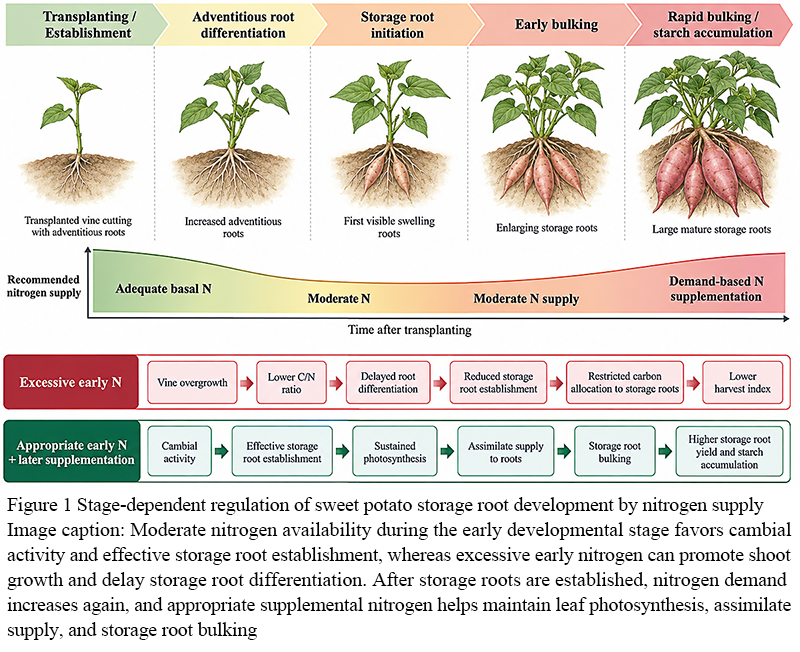 Figure 1 Stage-dependent regulation of sweet potato storage root development by nitrogen supply Image caption: Moderate nitrogen availability during the early developmental stage favors cambial activity and effective storage root establishment, whereas excessive early nitrogen can promote shoot growth and delay storage root differentiation. After storage roots are established, nitrogen demand increases again, and appropriate supplemental nitrogen helps maintain leaf photosynthesis, assimilate supply, and storage root bulking |
4 Nitrogen Regulation of Starch Accumulation in Sweet Potato
4.1 Carbon assimilation and sucrose transport
Nitrogen is an essential nutrient for chlorophyll synthesis and the normal functioning of photosynthetic enzymes, and it therefore directly affects the photosynthetic capacity of sweet potato leaves (Dong et al., 2025). Yao et al. (2025) reported that an appropriate ammonium supply (1 mM) during the storage-root bulking stage increased chlorophyll content, net photosynthetic rate, and stomatal conductance in the sweet potato cultivar Sushu 16. RNA-Seq analysis further identified 34 differentially expressed genes in storage roots under the optimal ammonium treatment. These genes were mainly involved in photosynthesis, starch biosynthesis, and hormone signaling pathways. Under low-nitrogen conditions, the contents of soluble sugars, sucrose, and starch increased in vegetative organs, while biomass allocation shifted toward roots rather than shoots, reflecting enhanced carbon utilization by sink organs (Amoah et al., 2025). In contrast, excessive nitrogen application tends to promote excessive vine growth at the expense of storage-root development, thereby reducing carbon allocation to sink tissues (Duan et al., 2019; Pan et al., 2026).
Efficient transport of sucrose from source leaves to storage roots through the phloem is an important prerequisite for starch accumulation in sink organs. Fan et al. (2021) found that sucrose transporters (SUTs) participate in sucrose loading into phloem sieve elements, and their overexpression can improve carbohydrate allocation to sink organs. Overexpression of the H+-pyrophosphatase gene IbVP1 increased SUT1 expression, enhanced phloem loading and long-distance sucrose transport, and increased sucrose content in storage roots by 28%-67%. Similar results were reported by Jiang et al. (2024), who showed that the plasma membrane H+-ATPase gene IbPMA1, regulated by the transcription factor IbbHLH49, plays an important role in sugar transport and starch biosynthesis in both source and sink tissues. Under relatively high nitrogen supply, nitrogen-tolerant cultivars such as Xushu 32 can reduce carbon flux into secondary metabolic pathways by downregulating genes involved in lignin and flavonoid biosynthesis, thereby redirecting more carbon toward starch metabolism and maintaining a relatively high sugar supply to sink organs (Duan et al., 2021). Source-sink coordination is therefore critical in this process. Even in high-starch genotypes, starch accumulation in storage roots can still be strongly constrained when the production or transport of photosynthates from leaves is limited.
4.2 Starch biosynthesis in storage roots
Starch biosynthesis in sweet potato storage roots is coordinated by a series of enzymes (Figure 2). ADP-glucose pyrophosphorylase (AGPase) catalyzes a rate-limiting step in starch synthesis by producing ADP-glucose, which serves as the precursor substrate for the formation of amylose and amylopectin. Granule-bound starch synthase (GBSS) mainly controls amylose synthesis, whereas soluble starch synthase (SSS) and starch branching enzyme (SBE) are primarily involved in the elongation and branching of amylopectin chains (Sheng et al., 2023). Sucrose synthase (SuSy) and UDP-glucose pyrophosphorylase (UGPase) participate in the upstream conversion of sucrose toward starch and play important roles in starch accumulation in storage-root dry matter (Zhang et al., 2017). As storage roots develop, the expression of AGPase, GBSS, and SBE generally increases. Duan et al. (2023) reported that AGPase expression increased in enlarging storage roots, while GBSSI expression rose markedly during the rapid bulking stage.
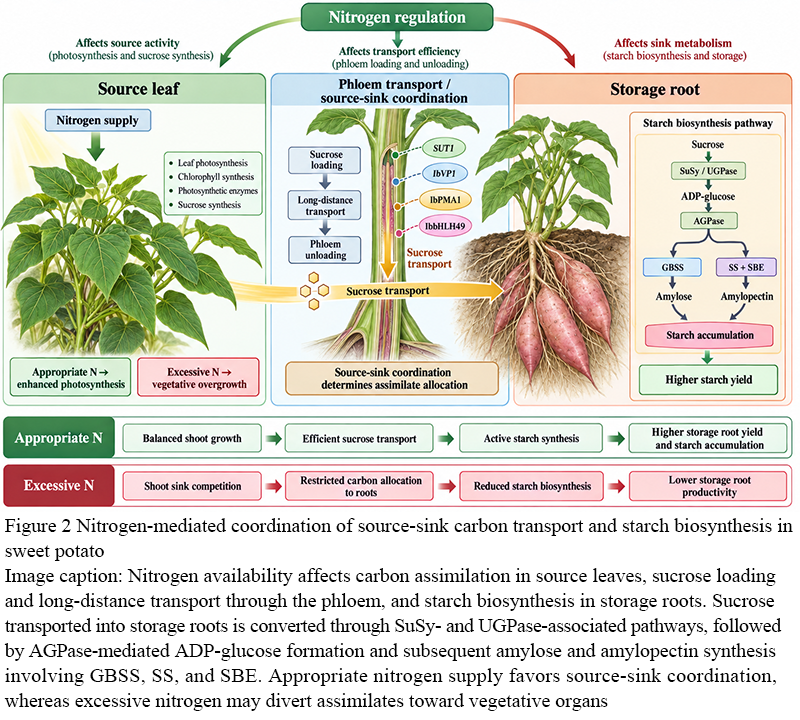 Figure 2 Nitrogen-mediated coordination of source-sink carbon transport and starch biosynthesis in sweet potato Image caption: Nitrogen availability affects carbon assimilation in source leaves, sucrose loading and long-distance transport through the phloem, and starch biosynthesis in storage roots. Sucrose transported into storage roots is converted through SuSy- and UGPase-associated pathways, followed by AGPase-mediated ADP-glucose formation and subsequent amylose and amylopectin synthesis involving GBSS, SS, and SBE. Appropriate nitrogen supply favors source-sink coordination, whereas excessive nitrogen may divert assimilates toward vegetative organs |
Nitrogen management can regulate both the activity of starch-synthesis enzymes and the expression of their related genes. Du et al. (2020) found that reducing nitrogen application to 80% of the conventional rate and applying it in split doses increased starch accumulation by 11.12% through enhanced AGPase and starch synthase activities and upregulation of the corresponding genes. Moderate nitrogen reduction combined with higher planting density increased the expression of IbSUS2, IbSUS5, IbAGPS1, IbAGPS2, and IbAGPL2 from 15 to 45 days after planting, while also enhancing SUS and AGPase activities (Pan et al., 2026). In contrast, excessive nitrogen can restrict starch synthesis by suppressing the expression of AGPa and AGPb in sweet potato roots. In the nitrogen-sensitive cultivar Jishu 26, high nitrogen under normal water conditions reduced the expression of AGPa, AGPb, GBSSI, and SBEI, whereas the nitrogen-tolerant cultivar Xushu 32 was affected to a lesser extent (Duan et al., 2023).
Different nitrogen forms can also produce different responses. Si et al. (2018) reported that amide nitrogen treatment (XN) increased SuSy and AGPase activities as well as starch concentration in potential storage roots, whereas ammonium nitrogen treatment (AN) was more favorable for increasing invertase activity and root number, but had a weaker effect on starch accumulation. Similar patterns have also been observed in potato. In a high-starch potato cultivar, an appropriate nitrogen rate of 150 kg/ha resulted in the highest accumulation of amylose, amylopectin, and total starch. During the early and middle growth stages, the expression of genes such as AGPP-L, GBSSI, SBEI, and SSIII generally followed the order N150 > N300 > N0 (Li et al., 2018).
4.3 Starch composition and physicochemical properties
Nitrogen supply can alter the proportion of amylose and amylopectin in sweet potato storage roots, but the response differs markedly among genotypes. In Jishu 25, for example, the highest amylose content was observed under 150 kg N/ha (N2), whereas the lowest value occurred under the zero-nitrogen treatment (Duan et al., 2019). Guo et al. (2020) evaluated nine sweet potato cultivars with different flesh colors and found that increasing nitrogen application reduced amylose content in the yellow-fleshed cultivar Sushu 16. In contrast, amylose content increased in the white-fleshed cultivar Sushu 29 and in the purple-fleshed cultivars Ningzishu 1 and Ningzishu 4, while no significant changes were observed in the other cultivars. Overexpression of IbVP1 increased total starch content by 20%-32% and amylose content by 27%-32% through the upregulation of AGPase and GBSSI (Fan et al., 2021). In addition, SnRK1 can increase total starch content through coordinated upregulation of genes involved in the starch biosynthetic pathway, while reducing the proportion of amylose and increasing starch granule size (Ren et al., 2019).
Nitrogen treatment can also influence starch granule size, pasting viscosity, and thermal properties, although the responses are not consistent among cultivars. In Jishu 25, nitrogen application had no significant effect on the starch granule size distribution parameters D[v, 0.9], D[4,3], and D[3,2] (Duan et al., 2019). By contrast, starch granule size decreased with increasing nitrogen application in Ningzishu 1, Sushu 28, and Sushu 29 (Guo et al., 2020). In Jishu 25, the 75 kg N/ha treatment produced a relatively high setback viscosity, whereas the 150 kg N/ha treatment increased peak viscosity, final viscosity, and setback viscosity. However, starch gelatinization temperature and pasting properties remain strongly dependent on cultivar and genetic background and cannot be attributed simply to nitrogen application rate. Likewise, starch crystalline structure and gelatinization enthalpy did not change substantially in different cultivars in response to nitrogen treatment. Overexpression of IbVP1 can further affect starch structure, composition, and physicochemical properties by altering carbon metabolic flux and the expression of genes involved in related pathways (Fan et al., 2021).
5 Molecular and Metabolic Mechanisms Underlying Nitrogen Regulation of Storage Root Development and Starch Formation
5.1 Nitrogen sensing and signal transduction pathways
Roots must first recognize and absorb inorganic nitrogen. Twelve members of the IbAMT family have been identified in sweet potato. In a two-year experiment with nitrogen application rates of 0, 60, 120, and 180 kg N/ha, Meng et al. (2023) found that the 120 kg N/ha treatment generally resulted in relatively high expression levels of IbAMT1.3 and IbAMT1.5, together with greater storage-root nitrogen content, nitrogen uptake efficiency, number of storage roots per plant, storage-root weight, and yield. The expression levels of these two genes were also significantly and positively correlated with nitrogen content in the storage roots. These results suggest that ammonium transport is not simply an uptake process, but is also closely associated with nitrogen utilization and storage-root formation.
Similar evidence has been obtained for nitrate nutrition. Duan et al. (2024) found that Jishu 26 and Xushu 32 responded differently to 0, 4, 8, and 16 mmol/L NO3-. High nitrate supply increased the expression of genes such as NRT1.1, NR2, and NiR2. However, the nitrogen-sensitive cultivar Jishu 26 simultaneously allocated more nitrogen to leaves and growing points and showed stronger negative responses of root length and root surface area to high nitrogen. These results illustrate that greater nitrogen uptake does not necessarily lead to better growth or storage-root production.
Within nutrient-signaling networks, relatively direct functional evidence is available for SnRK1 in sweet potato. Alteration of IbSnRK1 activity affects sugar metabolism, the starch-synthesizing enzyme system, and ultimately starch-related traits. The role of TOR, however, should be interpreted more cautiously. Based on current studies of nitrogen regulation and storage-root development in sweet potato, direct functional evidence linking TOR to specific nitrogen application levels, storage-root formation, and starch yield remains limited (Ren et al., 2024). TOR is therefore better regarded as a nutrient-signaling node that requires further experimental validation rather than as an established component of nitrogen regulation in sweet potato.
5.2 Regulation of genes associated with storage root development
Storage-root differentiation in sweet potato is governed by a relatively complex transcriptional regulatory network. He et al. (2021) applied dynamic network biomarker (DNB) analysis to continuous transcriptomic data from developing sweet potato roots and found that more than 9% of sweet potato genes displayed clear stage-specific expression patterns. The DNB signal reached a critical state when root diameter was approximately 3.5 mm, and this stage was therefore defined as a “critical transition point” from fibrous-root growth to storage-root swelling. Network analysis further identified the NAC transcription factor IbNAC083 as a central regulatory node. Suppression of IbNAC083 inhibited root swelling and simultaneously disrupted lignin, flavonoid/flavonol, and starch biosynthesis. These results indicate that storage-root formation is not triggered by the activation of a single “starch gene,” but instead involves broad reprogramming of the metabolic network.
Genes associated with lignification deserve particular attention. Transcriptomic analyses of two cultivars differing in their rates of storage-root swelling generated 52,137 transcripts, from which 21,148 unigenes and 9,577 differentially expressed genes were identified. swbp1, swpa7, IbERF061, and IbERF109 were selected as important candidate factors associated with lignin metabolism and storage-root expansion (Meng et al., 2023). Nitrogen supply can also alter the expression of genes such as IbEXP1, Ibkn1, and Ibkn2. Nitrogen management therefore ultimately intersects with the intrinsic developmental programs operating within the root.
5.3 Coordination between nitrogen and carbon metabolism
From a metabolic perspective, storage-root formation is essentially a process of carbon and nitrogen redistribution (Figure 3). During the early stage, a certain amount of nitrogen is required to support cell division and enzyme and protein synthesis. However, excessively high nitrogen concentrations in the roots often correspond to a low carbon-to-nitrogen ratio and continued dominance of vegetative growth.
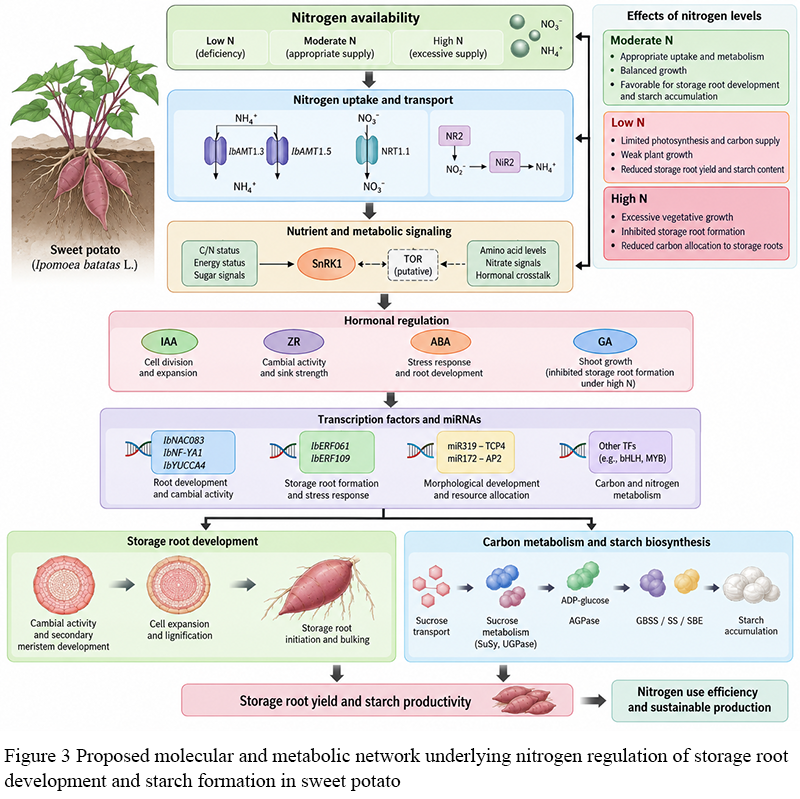 Figure 3 Proposed molecular and metabolic network underlying nitrogen regulation of storage root development and starch formation in sweet potato |
Under split and reduced nitrogen application, storage-root nitrogen content decreased at 35 days after transplanting (DAT), while carbon content and the C/N ratio increased. These changes were accompanied by altered hormonal status, including changes in IAA and ZR, and were subsequently associated with the formation of more storage roots. After approximately 80 DAT, however, a more adequate nitrogen supply was again required to maintain leaf function and support storage-root filling (Du et al., 2020). This stage-dependent pattern is more consistent with experimental evidence than the generalized statement that “low nitrogen promotes storage-root formation.”
Multi-omics studies also support this stage-specific regulation. Lin et al. (2025) conducted integrated transcriptomic and metabolomic analyses of storage roots from three sweet potato cultivars, SJN, SCZ, and Y25, sampled at 70, 100, and 130 days. A total of 27 RNA-seq samples generated 232.38 Gb of clean data, with at least 7.14 Gb obtained per sample. Q30 values ranged from 93.60% to 95.06%, and 91.02%-95.37% of reads were mapped to the reference genome. In total, 16,303 differentially expressed genes and 1,566 metabolites were identified. Starch and sucrose metabolism were significantly enriched, and starch-related genes generally showed their highest expression at 70 days. Weighted gene co-expression network analysis (WGCNA) ultimately identified 14 candidate genes, among which IbUGP2 and IbglgA were closely associated with D-glucose-6-phosphate and eight starch-related metabolites, suggesting that they may serve as important regulatory nodes during early starch accumulation.
Another integrated study combining miRNA profiling, transcriptomics, and degradome sequencing identified 29,633 differentially expressed genes and 510 differentially expressed miRNAs, and further screened several regulatory modules, including miR319-TCP4 and miR172-AP2 (Wu et al., 2025). Storage-root development therefore cannot be explained by a single “nitrogen-signaling pathway.” Rather, it involves coordinated changes in sugar metabolism, hormonal regulation, secondary metabolism, and transcriptional control.
6 Nitrogen Application Strategies for Improving Sweet Potato Yield and Starch Content
6.1 Optimization of nitrogen application rate
One of the most common misconceptions in nitrogen management for sweet potato is to search directly for a fixed “optimal rate.” In fact, the optimal nitrogen rates reported in different experiments vary considerably. In a two-year experiment conducted on a Humic Cambisol in Brazil, the maximum technical yield of marketable storage roots was 47.07 t/ha, corresponding to a model-estimated nitrogen rate of approximately 165.5 kg N/ha. However, when fertilizer cost was taken into account, the economically optimal rate was only 74 kg N/ha, at which the marketable storage-root yield was 43.73 t/ha (Higashikawa et al., 2025). In other words, an additional application of approximately 91.5 kg N/ha resulted in only about 3.34 t/ha of additional modeled yield, while nitrogen-use efficiency declined markedly at high nitrogen rates.
Other experiments have reported either lower or higher suitable nitrogen levels. Meng et al. (2023) found that Pushu 32 generally performed best at 120 kg N/ha among treatments of 0, 60, 120, and 180 kg N/ha, whereas in a sand-culture experiment with Orleans, a nutrient-solution nitrogen concentration of 100 mg/L was optimal during the storage-root initiation stage. These values cannot be directly converted or compared as equivalent nitrogen rates. One represents a field-based fertilizer application rate per unit area, whereas the other represents nitrogen concentration in the root-zone nutrient solution. Soil conditions, cultivars, and developmental stages also differed between the experiments. When these data are considered together, the most reliable conclusion is not that “sweet potato should receive 120 kg N/ha,” but rather that yield commonly shows a pronounced nonlinear response to increasing nitrogen supply.
6.2 Timing and method of nitrogen application
Research suggests that adjusting the timing of nitrogen application may sometimes be more important than increasing the total amount supplied. Du et al. (2019) replaced the conventional single basal application of 100 kg N/ha with a reduced total rate of 80 kg N/ha, split between transplanting and 35 days after transplanting (DAT). Storage-root yield increased by 16.6%-19.0% over two years, accompanied by greater nitrogen uptake during the middle and late growth stages and an increased nitrogen harvest index. In contrast, simply reducing the rate from 100 to 80 kg N/ha while maintaining a single basal application decreased yield. The issue, therefore, is not simply to “reduce nitrogen,” but to ensure that, after reducing the total amount, nitrogen is supplied at the stages when the crop actually requires it.
From the perspective of storage-root initiation, however, nitrogen cannot be completely withheld during the early growth stage. Studies of carbohydrate dynamics have shown that an appropriate nitrogen supply reaching the root zone before or at planting is more favorable for the subsequent translocation of sugars and starch-related assimilates toward the roots. When nitrogen is supplied too late, a greater proportion of nonstructural carbohydrates may already have accumulated in the vines (Dong et al., 2025). A more reasonable strategy is therefore to use basal nitrogen to support seedling establishment and early root differentiation, while avoiding excessive early application. After storage roots have formed, additional nitrogen can then be supplied according to plant growth, soil nitrogen availability, and leaf nitrogen status rather than applying a large amount at one time during the early stage.
6.3 Coordination with other nutrients and water management
Nitrogen management should not be considered independently of potassium and phosphorus nutrition. Nitrogen-potassium interaction studies have shown that an appropriate potassium supply can improve leaf nitrogen metabolism and photosynthesis and can also promote storage-root formation. In a two-year field experiment, Shu et al. (2024) found that application of 240 kg K2O/ha increased the average number of storage roots by 19.12%, individual storage-root weight by 16.54%, and total yield by 16.92% compared with the zero-potassium treatment. The coefficients of variation for storage-root length and diameter were also relatively low. This indicates that potassium may not only increase yield but also improve the uniformity and marketability of storage roots.
Phosphorus and water availability are equally important. A field experiment conducted on saline calcareous soil during 2022-2023 showed clear interactions between nitrogen sources and phosphorus fertilizer forms, making it difficult to explain final yield responses on the basis of nitrogen alone. In a late-season irrigation study, irrigation at approximately 75% of crop evapotranspiration favored the allocation of photosynthates to storage roots and resulted in relatively high yield and water-use performance (Kamel et al., 2025). Therefore, practical nitrogen recommendations for sweet potato should be developed in conjunction with soil phosphorus and potassium status as well as irrigation conditions.
7 Integrated Nitrogen Management for High-Yield and High-Starch Sweet Potato Production
7.1 Balancing vegetative growth and storage root formation
Excessive N supply promotes vine overgrowth at the expense of storage root development, reducing yield and harvest index. In high-starch cultivar Jishu 25, raising N from 75 to 150 kg/ha significantly decreased storage root yield despite no change in starch content (Duan et al., 2019). High N increases leaf area index, prolongs the cultivation cycle, and favors vegetative organs over root bulking (Ribeiro et al., 2021; Higashikawa et al., 2025). Conventional basal N management in China (90-200 kg/ha) far exceeds recommended rates and tends to hinder storage root formation (Du et al., 2019; 2020). Split application under reduced N rates mitigates this by lowering early soil-available N, promoting root initiation rather than vine expansion. Nitrogen form also influences vegetative balance: ammonium N (AN) increased adventitious root number and storage root yield, while amide N (XN) promoted starch concentration in potential storage roots (Si et al., 2018). Potassium (K) application counteracts excessive N absorption by reducing the leaf N/K ratio and increasing N transport to roots, improving yield by 15%-39% (Wang et al., 2020). Paclobutrazol (PBZ) application temporarily reduced branch length and increased fresh storage root yield under high N in the rainy season.
Optimizing root-shoot partitioning requires managing the carbon-to-nitrogen (C/N) ratio and endogenous hormones during storage root formation. Du et al. (2020) found that split N application under reduced N increased storage root yield by 22.1% by elevating IAA and zeatin while reducing ABA during root formation, then increasing ABA during bulking to promote C allocation into roots. Moderate N with medium planting density (MDMN) increased yield by 15%-25% by accelerating cambial ring formation and shifting gene expression from nitrogen-intensive defense to carbon storage (Zhao et al., 2026). Early N application at or before planting promoted non-structural carbohydrate translocation from vines to roots, increasing storage root number and fresh yield (Dong et al., 2025). Delayed N supply impaired this translocation, accumulating carbohydrates in vines instead of roots. K supply improved N transport rate from 9.8% to 20.1% and root N distribution from 50.3% to 59.3%, enhancing root dry matter allocation (Wang et al., 2020). A rate of 50 kg N/ha produced a better harvest index and higher nitrogen use efficiency (NUE) than elevated rates (Higashikawa et al., 2025).
7.2 Genotype-specific responses to nitrogen
Sweet potato cultivars differ markedly in N tolerance and use efficiency. The N-tolerant cultivar Xushu 32 (X32) absorbed less N and distributed more N to developing storage roots than the N-susceptible Jishu 26 (J26) under increasing N rates. X32 storage root development was sensitive only to the highest N rate (400 mg/kg), while J26 was sensitive to both 200 and 400 mg/kg. Under high N and normal moisture, J26 exhibited root lignification, reduced starch accumulation, and limited assimilate transport, whereas X32 was largely unaffected (Duan et al., 2023). Among five cultivars evaluated under varying N concentrations, Yao et al. (2020) pointed out that SS19 and GS87 showed greater tolerance to low N and produced higher storage root yield at 30 days. Split N application increased yield by 16.6-19.0% across two cultivars (Xushu 22 and Shangshu 19), though optimal split ratios may depend on cultivar and rainfall regime (Du et al., 2019). N-tolerant cultivars are recommended for fertile plain areas because they form storage roots earlier under high N conditions (Duan et al., 2021).
Cultivar identity strongly influences starch and root trait responses to N. In Jishu 25, 75 kg N/ha produced the highest storage root yield, starch yield, and dry matter accumulation exceeding one ton per mu, while 150 kg N/ha reduced starch yield through lower root yield despite increased amylose content (Duan et al., 2019). For cultivars Xushu 22 and Xushu 28, N rates of 60-120 kg/ha did not greatly decrease starch content, but 180 kg N/ha significantly reduced storage root yield. In contrast, starch levels in cultivar Rainha Branca decreased with increasing urea, with the lowest starch percentage at 460 kg/ha.
Under high N, X32 downregulated lignin and flavonoid synthesis genes, redirecting carbon flux toward starch metabolism and reducing lignification. J26, however, showed downregulated AGPa, AGPb, GBSSI, and SBEI expression under high N and normal moisture, inhibiting starch synthesis (Duan et al., 2023). Purple-fleshed sweet potato at northern latitudes showed the highest tuber-to-root mass ratio and leaf C/N ratio at N0, suggesting that N fertilization can constrain productivity in short-season environments (Zekker et al., 2025).
7.3 Precision nitrogen management
Portable chlorophyll meter readings provide a practical tool for in-season N diagnosis. A nitrogen sufficiency index (NSI) threshold of 90% reduced N application rates by 44-66% without negatively impacting storage root yield across three sites in Brazil (Rodrigues et al., 2024). An NSI threshold of 95% increased N application rates without yield benefit, making 90% the recommended diagnostic threshold. Soil nutrient diagnosis underpins rate selection: for Jishu 25, N application of 60-90 kg/ha was based on soil nutrient content, with 75 kg/ha identified as optimal (Duan et al., 2019). Combined NPK fertilization significantly increased storage root yield by 34.8%-53.1% compared with single-nutrient deficiency treatments, and random forest regression identified P accumulation in storage roots as the most important yield predictor (Zhao et al., 2025). Urease and nitrification inhibitors improved NUE and marketable yield, with double-inhibitor treatment producing the highest yield (30,923 kg/ha) and a significant positive correlation between marketable yield and NUE (Kakabouki et al., 2020).
Stage-specific N management models synchronize N supply with developmental transitions from storage root initiation to bulking. Moderate N (100 mg/L) promoted early starch accumulation during the first 35 days, while higher N (200 mg/L) enhanced total non-structural carbohydrate accumulation at 49 days, indicating shifting N requirements across growth stages (Dong et al., 2025). Split application at basal and 35 days after transplanting prolonged the fast N uptake phase and increased N partitioning to storage roots during middle and late growth stages (Du et al., 2019). The economic optimum N rate (74 kg/ha) was substantially lower than the maximum technical efficiency rate (165.5 kg/ha), providing a basis for site-specific rate calibration (Higashikawa et al., 2025). MDMN treatment accelerated cambial ring formation at 15-30 days after planting and upregulated starch/sucrose metabolism genes, establishing a sink-optimized strategy under high-density, low-input systems (Zhao et al., 2026). Optimal split proportions should be determined according to primary soil fertility, cultivar identity, and rainfall regime, integrating soil diagnosis, plant monitoring, and growth-stage-specific N delivery to achieve high-yield and high-starch production.
8 Concluding Remarks
Current evidence shows that the response of sweet potato to nitrogen is not simply positive or linear. Nitrogen deficiency restricts leaf growth, photosynthetic capacity, and the establishment of the whole-plant carbon source, whereas excessive nitrogen tends to strengthen aboveground growth and causes more nitrogen and dry matter to remain in leaves, vines, and growing points. The storage-root initiation stage is particularly sensitive. Moderate nitrogen supply is generally more favorable for cambial activity and the establishment of effective storage roots, while higher nitrogen levels may delay or reduce early storage-root formation. Once storage roots have been established, however, plant nitrogen demand increases again. Therefore, a moderate nitrogen supply during the early stage followed by demand-based supplementation later is more reasonable than maintaining a high nitrogen level throughout the entire growth period.
For starch production, it is also necessary to distinguish between starch concentration and starch yield. Nitrogen determines not only how much assimilate can be produced by the leaves, but also how efficiently sucrose is transported to storage roots and how metabolic processes involving AGPase, SS, GBSS, SBE, and related enzymes are regulated. Under nitrogen deficiency, starch concentration in storage-root dry matter is not necessarily low, but total starch accumulation at the whole-plant level may still be constrained by limited biomass production. Moderate nitrogen supply is often more favorable for early starch formation and the establishment of storage-root sink strength. Ultimately, starch yield per unit area is jointly determined by fresh storage-root yield, dry matter content, starch proportion, and carbon translocation efficiency.
Several major limitations remain in the current evidence. First, many nitrogen experiments focus only on final yield and do not simultaneously measure cambial activity, lignification, sugar transport, hormonal status, or starch-related enzyme activities. As a result, it is often difficult to determine at which physiological step yield loss actually occurs. Second, nitrogen indices from sand culture, pot experiments, nutrient-solution systems, and field trials cannot be directly converted into one another. For example, a nutrient-solution nitrogen concentration of 100 mg/L cannot be mechanically converted into a field application rate of 100 kg/ha. Genotypic differences are also substantial. Nitrogen-sensitive and nitrogen-tolerant cultivars already show different patterns in NRT expression, root morphology, and nitrogen allocation, meaning that the same fertilization regime may not perform equally well across multiple cultivars.
Similar limitations exist in molecular studies. IbAMT, IbNAC083, IbNF-YA1, IbNAC22, IbSnRK1, and several other genes have obtained relatively strong candidate or functional evidence, but most studies still focus on individual genes or specific genetic backgrounds. A regulatory network that can fully explain how nitrogen signaling simultaneously alters cambial activity, hormonal regulation, lignification, source-sink transport, and starch granule formation under field fertilization conditions has not yet been established. In particular, nutrient-sensing nodes such as TOR still lack sufficient direct validation in sweet potato storage roots.
Future research should more closely integrate field nitrogen gradients with multi-omics approaches. Rather than simply comparing “high nitrogen” and “low nitrogen”, continuous sampling should be conducted before storage-root initiation, during initiation, during rapid bulking, and during the period of rapid starch accumulation. At each stage, root NO3-, NH4+, sugars, organic acids, amino acids, hormones, and starch structure should be measured together with transcriptomic, metabolomic, proteomic, and isotope-tracing analyses. Existing studies have already shown that integrated omics can identify candidate regulatory nodes such as IbUGP2, IbglgA, miR319-TCP4, and miR172-AP2. The next step is to connect these candidate nodes directly with realistic nitrogen fertilizer treatments.
Breeding objectives should also shift from selecting only for “high yield” toward the simultaneous improvement of high yield, high starch productivity, and high nitrogen-use efficiency. Genome-wide association studies (GWAS), expression quantitative trait locus (eQTL) analysis, and natural allelic variation can be used to identify germplasm that maintains strong storage-root sink activity and starch-forming capacity under relatively low nitrogen supply. On the crop-management side, topdressing timing and rate could be adjusted dynamically by combining critical nitrogen concentration, plant nitrogen nutrition index, soil available nitrogen, and weather conditions. Ultimately, the most useful goal in practice is not simply to reduce nitrogen fertilizer input, but to maintain storage-root yield, starch yield, and marketable quality after nitrogen reduction. This is a more practical objective than pursuing a single maximum-yield value.
Acknowledgments
The authors would like to express their sincere gratitude to Ms. Wang for her assistance in organizing the literature materials. The authors also extend special thanks to the two anonymous peer reviewers for their comprehensive evaluation of the manuscript.
Conflict of Interest Disclosure
The authors affirm that this research was conducted without any commercial or financial relationships that could be construed as a potential conflict of interest.
Amoah J.N., Keitel C., and Kaiser B.N., 2025, Nitrogen deficiency identifies carbon metabolism pathways and root adaptation in maize, Physiology and Molecular Biology of Plants, 31(7): 1089-1103.
https://doi.org/10.1007/s12298-025-01631-0
Dong H.T., Li Y., Brown P., Akbar D., and Xu C.Y., 2025, Effects of nitrogen application on soluble sugar and starch accumulation during sweet potato storage root formation, Horticulturae, 11(7): 837.
https://doi.org/10.3390/horticulturae11070837
Dong H.T., Li Y., Henderson C., Brown P., and Xu C.Y., 2022, Optimum nitrogen application promotes sweetpotato storage root initiation, Horticulturae, 8(8): 710.
https://doi.org/10.3390/horticulturae8080710
Du X., Xi M., and Kong L., 2019, Split application of reduced nitrogen rate improves nitrogen uptake and use efficiency in sweetpotato, Scientific Reports, 9(1): 14058.
https://doi.org/10.1038/s41598-019-50532-2
Du X., Zhang X., Kong L., and Xi M., 2020, Split application under reduced nitrogen rate favors high yield by altering endogenous hormones and C/N ratio in sweet potato, Agronomy, 10(9): 1243.
https://doi.org/10.3390/agronomy10091243
Duan W., Wang S., Zhang H., Xie B., and Zhang L., 2024, Plant growth and nitrate absorption and assimilation of two sweet potato cultivars with different N tolerances in response to nitrate supply, Scientific Reports, 14(1): 21286.
https://doi.org/10.1038/s41598-024-72422-y
Duan W., Zhang H., Wang Q., Xie B., and Zhang L., 2023, Regulation of root development in nitrogen-susceptible and nitrogen-tolerant sweet potato cultivars under different nitrogen and soil moisture conditions, BMC Plant Biology, 23(1): 454.
https://doi.org/10.1186/s12870-023-04461-y
Duan W., Zhang H., Xie B., Wang B., and Zhang L., 2019, Impacts of nitrogen fertilization rate on the root yield, starch yield and starch physicochemical properties of the sweet potato cultivar Jishu 25, PLoS One, 14(8): e0221351.
https://doi.org/10.1371/journal.pone.0221351
Duan W., Zhang H., Xie B., Wang B., Hou F., Li A.-X., Dong S., Qin Z., Wang Q., and Zhang L., 2021, Nitrogen utilization characteristics and early storage root development in nitrogen-tolerant and nitrogen-susceptible sweet potato, Physiologia Plantarum, 173(3): 1090-1104.
https://doi.org/10.1111/ppl.13504
Fan W.J., Zhang Y.D., Wu Y.L., Zhou W.Z., Yang J., Yuan L., Zhang P., and Wang H.X., 2021, The H+-pyrophosphatase IbVP1 regulates carbon flux to influence the starch metabolism and yield of sweet potato, Horticulture Research, 8.
https://doi.org/10.1038/s41438-020-00454-2
Fan Y., Xue L., Shang M., Gao S., Zhao N., Zhai H., He S.Z., Zhang H., and Liu Q.C., 2025, Natural allelic variation of NAC transcription factor 22 regulates starch biosynthesis and properties in sweetpotato, Journal of Integrative Plant Biology, 67(7): 1879-1894.
https://doi.org/10.1111/jipb.13916
Guo K., Bian X., Jia Z., Zhang L., and Wei C., 2020, Effects of nitrogen level on structural and functional properties of starches from different colored-fleshed root tubers of sweet potato, International Journal of Biological Macromolecules, 164: 3235-3242.
https://doi.org/10.1016/j.ijbiomac.2020.08.199
He S.T., Wang H.X., Hao X.M., Wu Y.L., Bian X.F., Yin M.H., Zhang Y.D., Fan W.J., Dai H., Yuan L., Zhang P., and Chen L.N., 2021, Dynamic network biomarker analysis discovers IbNAC083 in the initiation and regulation of sweet potato root tuberization, The Plant Journal, 108(3): 793-813.
https://doi.org/10.1111/tpj.15478
Higashikawa F.S., Jindo K., Kurtz C., Alves D.P., Wamser G.H., and Manfio C.E., 2025, Yield, nutrition, and nitrogen use efficiency of sweet potato in response to nitrogen rates, Discover Agriculture, 3(1): 45.
https://doi.org/10.1007/s44279-025-00196-6
Jiang Z.C., Wei Z.H., Zhang J., Zheng C.X., Zhu H., Zhai H., He S.Z., Gao S.P., Zhao N., Zhang H., and Liu Q.C., 2024, Source-sink synergy is the key unlocking sweet potato starch yield potential, Nature Communications, 15(1): 7260.
https://doi.org/10.1038/s41467-024-51727-6
Kakabouki I., Togias T., Folina A.E., Karydogianni S., Zisi C., and Bilalis D., 2020, Evaluation of yield and nitrogen utilisation with urease and nitrification inhibitors in sweet potato crop (Ipomoea batatas L.), Folia Horticulturae, 32(2): 147-157.
https://doi.org/10.2478/fhort-2020-0014
Kamel A.S.A., El-Kherbawy M.I., Awad A.A., and Sweed A.A., 2025, The co-application of nitrogen and phosphorus improved nutrient uptake and productivity of Ipomoea batatas plants grown in saline-calcareous soils, Scientific Reports, 15(1): 18356.
https://doi.org/10.1038/s41598-025-03375-z
Li Y., Lu W., Lyu D., Su F., Liu S., Li H., Wang X., Liu Z., and Hu L., 2018, Effects of different nitrogen application rates on starch accumulation, starch synthase gene expression and enzyme activity in two distinctive potato cultivars, Potato Research, 61(4): 309-326.
https://doi.org/10.1007/s11540-018-9379-y
Lin Y., Li Y., Zhu H., Tang L., and Xu J., 2025, Comparative transcriptome and metabolome analysis of sweet potato (Ipomoea batatas (L.) Lam.) tuber development, Frontiers in Plant Science, 15: 1511602.
https://doi.org/10.3389/fpls.2024.1511602
Meng Y.Y., Wang N., and Si C.C., 2022, The application of nitrogen source in regulating lignin biosynthesis, storage root development and yield of sweet potato, Agronomy, 12(10): 2317.
https://doi.org/10.3390/agronomy12102317
Meng Y.Y., Wang N., Zhang H.Y., Xu R., and Si C.C., 2023, Genome-wide analysis of sweet potato ammonium transporter (AMT): Influence on nitrogen utilization, storage root development and yield, International Journal of Molecular Sciences, 24(24): 17424.
https://doi.org/10.3390/ijms242417424
Pan H., Hai X., Guo X., Zhou X., Ahmad R., Xing H., Lin Y., and Si C., 2026, Reducing nitrogen with dense planting increase sweetpotato storage roots quantity via favoring starch synthesis over lignification, iScience, 29(3).
https://doi.org/10.1016/j.isci.2026.114969
Ren Z., He S., Zhao N., Zhai H., and Liu Q., 2019, A sucrose non-fermenting-1-related protein kinase-1 gene, IbSnRK1, improves starch content, composition, granule size, degree of crystallinity and gelatinization in transgenic sweet potato, Plant Biotechnology Journal, 17(1): 21-32.
https://doi.org/10.1111/pbi.12944
Ribeiro N.P., Fernandes A.M., Silva R.M.D., Pelvine R.A., and Assunção N.S., 2021, Growth and yield of sweet potato in response to the application of nitrogen rates and paclobutrazol, Bragantia, 80: e3821.
https://doi.org/10.1590/1678-4499.20200447
Rodrigues F.E., Fernandes A.M., Oliveira A.V., Vargas P., Souza E.F.C., Guedes P.T.P., Figueiredo R.T., and Guimarâes Í.T., 2024, Application of a portable chlorophyll meter to assess the nitrogen sufficiency index and nitrogen requirements in sweet potatoes, Agriculture, 14(12): 2167.
https://doi.org/10.3390/agriculture14122167
Sheng M., Xia H., Ding H., Pan D., He J., Li Z., and Liu J., 2023, Long-term soil drought limits starch accumulation by altering sucrose transport and starch synthesis in sweet potato tuberous root, International Journal of Molecular Sciences, 24(3): 3053.
https://doi.org/10.3390/ijms24033053
Shu X., Jin M., Wang S., Xu X., Deng L., Zhang Z., Zhao X., Yu J., Zhu Y., Lu G., and Lv Z., 2024, The effect of nitrogen and potassium interaction on the leaf physiological characteristics, yield, and quality of sweet potato, Agronomy, 14(10): 2319.
https://doi.org/10.3390/agronomy14102319
Si C., Shi C., Liu H., Zhan X., and Liu Y., 2018, Effects of nitrogen forms on carbohydrate metabolism and storage-root formation of sweet potato, Journal of Plant Nutrition and Soil Science, 181(3): 419-428.
https://doi.org/10.1002/jpln.201700297
Singh V., Sergeeva L., Ligterink W., Aloni R., Zemach H., Doron-Faigenboim A., Yang J., Zhang P., Shabtai S., and Firon N., 2019, Gibberellin promotes sweetpotato root vascular lignification and reduces storage-root formation, Frontiers in Plant Science, 10: 1320.
https://doi.org/10.3389/fpls.2019.01320
Singh V., Zemach H., Shabtai S., Aloni R., Yang J., Zhang P., Sergeeva L., Ligterink W., and Firon N., 2021, Proximal and distal parts of sweetpotato adventitious roots display differences in root architecture, lignin, and starch metabolism and their developmental fates, Frontiers in Plant Science, 11: 609923.
https://doi.org/10.3389/fpls.2020.609923
Wang Z.Y., Fang B.P., Chen X.L., Liao M.H., Chen J.Y., Zhang X.J., Huang L.F., Luo Z.X., Yao Z.F., and Li Y.J., 2015, Temporal patterns of gene expression associated with tuberous root formation and development in sweetpotato (Ipomoea batatas), BMC Plant Biology, 15(1): 180.
https://doi.org/10.1186/s12870-015-0567-5
Wang S.Y., Li H., Liu Q., Hu S., and Shi Y., 2020, Nitrogen uptake, growth and yield response of orange-fleshed sweet potato (Ipomoea batatas L.) to potassium supply, Communications in Soil Science and Plant Analysis, 51(2): 175-185.
https://doi.org/10.1080/00103624.2019.1695821
Wu Q., Chen Y., Bi W., Tong B., Wang A.-Q., Zhan J., He L., and Xiao D., 2025, Comprehensive analysis of small RNA, transcriptome, and degradome sequencing: Mapping the miRNA-gene regulatory network for the development of sweet potato tuber roots, Plant Physiology and Biochemistry, 220: 109510.
https://doi.org/10.1016/j.plaphy.2025.109510
Xue L.Y., Wang Y.X., Fan Y., Jiang Z.C., Wei Z.H., Zhai H., He S.Z., Zhang H., Yang Y.F., Zhao N., Gao S.P., and Liu Q.C., 2024, IbNF-YA1 is a key factor in the storage root development of sweet potato, The Plant Journal, 118(6): 1991-2002.
https://doi.org/10.1111/tpj.16723
Yao W., Zhou R., Tan Q., Zhuang C., Shao W., Chen C., and Li C., 2025, Effects of ammonium on assimilate translocation and storage root growth in Sushu16 in root-swelling stage, Agronomy, 15(6): 1272.
https://doi.org/10.3390/agronomy15061272
Yao Z., Wang Z., Fang B., Chen J., Zhang X., Luo Z., Huang L., Zou H., and Yang Y., 2020, Involvement of nitrogen in storage root growth and related gene expression in sweet potato (Ipomoea batatas), Plant Biology, 22(3): 376-385.
https://doi.org/10.1111/plb.13088
Zekker I., Kännaste A., Eremeev V., Kask K., Meinson P., Nassar H., Mäeorg E., Runno-Paurson E., and Niinemets Ü., 2025, Impacts of nitrogen fertilization and planting date on the physiology and yield of purple sweet potato at the extreme Northern edge of cultivation, PLoS One, 20(3): e0318531.
https://doi.org/10.1371/journal.pone.0318531
Zhang K., Wu Z.-D., Tang D., Luo K., Lu H., Liu Y., Dong J., Wang X., Lv C., Wang J.C., and Lu K., 2017, Comparative transcriptome analysis reveals critical function of sucrose metabolism related-enzymes in starch accumulation in the storage root of sweet potato, Frontiers in Plant Science, 8: 914.
https://doi.org/10.3389/fpls.2017.00914
Zhao J., Shahid M., Li Y., Khan L., and Si C., 2026, Moderate nitrogen with medium planting density enhances sweet potato storage root growth via hormone signaling and carbon metabolism: A multi-omics perspective, Industrial Crops and Products, 246: 123401.
https://doi.org/10.1016/j.indcrop.2026.123401
Zhao Z., Bai B., Qie Z., He Z., Zhang S., Zhang X., Li Y.J., and Hou W., 2025, Effects of nitrogen, phosphorus, and potassium fertilizers on storage root yield, nutrient use efficiency, and soil nutrient balance of sweetpotato, BMC Plant Biology, 25(1): 1441.
https://doi.org/10.1186/s12870-025-07503-9



. PDF(773KB)
. FPDF(win)
. FPDF(mac)
. HTML
. Online fPDF
Associated material
. Readers' comments
Other articles by authors
. Zhonggang Li

. Weichang Wu
Related articles
. Sweet potato ( Ipomoea batatas L.)
. Nitrogen management
. Storage root development
. Starch accumulation
. Source-sink relationship
. Nitrogen use efficiency
Tools
. Email to a friend
. Post a comment