Feature Review
Effects of Irrigation Strategies on Growth, Yield, and Fruit Quality of Greenhouse Tomato 
 ,
Hongpeng Wang2

2 Biotechnology Research Center, Cuixi Academy of Biotechnology, Zhuji, 311800, China
Author Correspondence author
International Journal of Horticulture, 2026, Vol. 16, No. 5 doi: 10.5376/ijh.2026.16.0027
Received: 09 Aug., 2026 Accepted: 10 Sep., 2026 Published: 17 Oct., 2026
Huang D.D., and Wang H.P., 2026, Effects of irrigation strategies on growth, yield, and fruit quality of greenhouse tomato, International Journal of Horticulture, 16(5): 313-330 (doi: 10.5376/ijh.2026.16.0027)
Greenhouse tomato production relies heavily on effective water management, and irrigation strategies and water supply levels directly influence plant growth, yield formation, and fruit quality. This study reviewed the effects of different irrigation strategies on physiological responses, root development, yield components, and quality formation in greenhouse tomatoes, and further discussed the development trends of precision irrigation technologies and sustainable management practices. The results indicate that appropriate water supply promotes root growth, photosynthesis, and dry matter accumulation, thereby improving plant growth and yield performance. Excessive irrigation enhances vegetative growth but reduces water-use efficiency and may negatively affect fruit quality. Moderate deficit irrigation improves resource-use efficiency while maintaining relatively high yield by regulating root–shoot balance and promoting the accumulation of quality-related compounds, including sugars, vitamin C, and lycopene. Tomato water requirements vary among growth stages, and precise regulation based on evapotranspiration (ET), growth stage, and root-zone moisture status is more effective for balancing yield and quality. Future greenhouse tomato production should strengthen the integration of irrigation, fertilization, environmental regulation, and smart monitoring technologies to establish efficient, water-saving, and sustainable production systems.
1 Introduction
Tomato (Solanum lycopersicum L.) is one of the most important economic vegetable crops worldwide, with high nutritional value and extensive applications in fresh consumption and food processing (Sagar and Singh, 2023). Tomato fruits are rich in various functional compounds, including vitamin C, lycopene, phenolics, organic acids, and carbohydrates, which collectively determine fruit quality and market value (Lu et al., 2021; Zhang et al., 2025). With increasing consumer demand, tomato production has continued to expand, and protected cultivation has become an important production system for improving yield stability and supply capacity. According to He et al. (2024), global tomato production reached 2.54 × 10¹² kg in 2022, with China contributing 1.37 × 10¹² kg, accounting for 53.72% of the global production. Greenhouse and other protected cultivation systems can improve land-use efficiency, support year-round production, and reduce the impacts of climatic fluctuations on yield and quality (Amankwaa-Yeboah et al., 2023). However, protected production relies heavily on water and nutrient management, and resource-use efficiency remains a key factor limiting its sustainable development.
Greenhouse environments receive limited natural rainfall, making irrigation the primary source of water supply. Improper irrigation management can result in resource waste and reduced production efficiency. Previous studies have shown that excessive irrigation decreases water and nitrogen use efficiency and may negatively affect fruit quality and economic returns, whereas insufficient water supply restricts cell expansion, plant growth, and yield formation (Wu et al., 2022; Zhang et al., 2025). In arid and semi-arid regions, water scarcity further increases the uncertainty of greenhouse tomato production (Amankwaa-Yeboah et al., 2023; Liu et al., 2024). Therefore, precise irrigation management based on crop growth stages and environmental conditions is essential for improving resource-use efficiency.
Irrigation strategies directly regulate tomato growth, photosynthetic performance, and yield formation. Appropriate water supply promotes root development, nutrient uptake, photosynthesis, and dry matter accumulation, thereby improving plant growth and productivity (Lyu et al., 2025; Song et al., 2025). Studies under protected cultivation have demonstrated that suitable increases in irrigation amount can enhance plant height, stem diameter, leaf area, chlorophyll content, and fruit yield, while promoting nitrogen uptake and coordinated water-nitrogen utilization (Singh et al., 2024). However, excessive irrigation may reduce water productivity, whereas regulated deficit irrigation can maintain yield while reducing water inputs, making it an important management strategy in water-limited regions.
Water status also plays a critical role in tomato fruit development and quality formation. Severe water stress reduces fruit size, fresh weight, and water content, with particularly strong effects during cell division and fruit expansion stages (Medyouni et al., 2021). Moderate water regulation can promote the accumulation of quality-related compounds, such as soluble solids, sugars, and lycopene, thereby improving fruit flavor and nutritional quality (Lu et al., 2021; Bai et al., 2022). However, the effects of irrigation on fruit quality are jointly influenced by multiple factors, including genotype, growth stage, irrigation level, and cultivation conditions. Understanding how different irrigation strategies affect greenhouse tomato growth, yield, and quality is important for optimizing water management practices. An effective irrigation strategy should consider multiple objectives, including yield formation, quality improvement, water-use efficiency, and economic benefits.
This study analyzed the effects of different irrigation strategies on greenhouse tomato growth, photosynthetic characteristics, yield formation, and fruit quality, with the aim of exploring how water supply levels regulate plant physiological responses and production performance. The changes in growth, yield, and quality indicators under different irrigation regimes were compared to determine suitable water management ranges. The results are expected to provide theoretical support and practical guidance for water-saving, efficient, and high-quality tomato production, as well as contribute to irrigation optimization under water-limited conditions.
2 Water Requirement Characteristics and Physiological Basis of Greenhouse Tomato
2.1 Water demand patterns during tomato growth stages
Research has shown that tomato water requirements vary considerably among different growth stages (Figure 1). Chen et al. (2025) reported that sufficient water supply during the seedling and early vegetative growth stages is essential for maintaining plant height, stem diameter, chlorophyll accumulation, biomass production, and nutrient uptake, whereas insufficient water availability during the seedling and early flowering stages may restrict subsequent yield formation. Measurements of water consumption under greenhouse conditions showed that tomato plants have relatively low water demand during the seedling stage, followed by increased demand during flowering and fruit setting, with the highest water consumption occurring during fruit expansion (Lyu et al., 2025). Long-term water stress studies by Yuan et al. (2016) further demonstrated that tomato responses to drought depend not only on the severity of water deficit but also on the developmental stage at which stress occurs. Although mild water limitation during the vegetative stage can often be tolerated, water deficiency during the reproductive stage is more likely to reduce fruit set and final marketable yield (Cui et al., 2019; Ghannem et al., 2021).
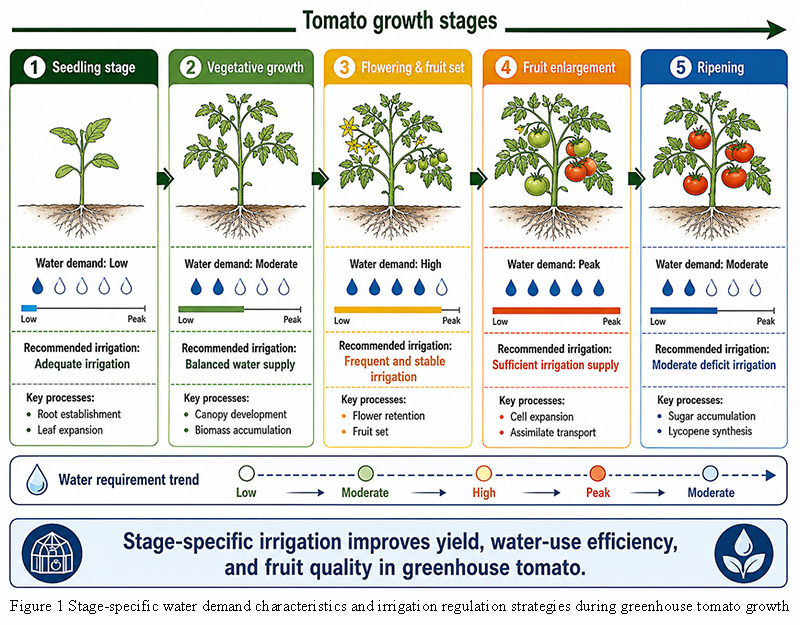 Figure 1 Stage-specific water demand characteristics and irrigation regulation strategies during greenhouse tomato growth |
Water regulation is particularly important during fruit expansion and ripening because these stages determine the balance between fruit size and quality. Zhang et al. (2025) showed that leaf net photosynthetic rate, transpiration rate, and stomatal conductance generally increase from flowering to fruit expansion, reaching their maximum levels during fruit enlargement, and then gradually decline during ripening. These changes indicate a high demand for water supply and assimilate transport during this period. Deficit irrigation applied during fruit development or ripening can improve fruit firmness, coloration, soluble solids, sugars, organic acids, and vitamin C contents, whereas severe water stress still restricts fruit growth and reduces yield (He et al., 2024).
Moderate deficit irrigation may provide a suitable balance between yield maintenance and quality improvement. A greenhouse study by Ghannem et al. (2021) found that reducing irrigation water by 20% during the second growth stage resulted in only a 3% yield reduction, while maintaining the highest yield among different deficit treatments. Another study based on stage-specific irrigation optimization demonstrated that maintaining soil water content at 70%-90% of field capacity during flowering and fruit development, and 40%-60% during ripening, achieved the highest water-use efficiency (Li et al., 2023).
2.2 Effects of water status on tomato root development
Tomato root development is highly sensitive to water availability because root systems directly determine plant capacity for water uptake and nutrient acquisition. Feng et al. (2024) reported that appropriate irrigation combined with sufficient nitrogen supply increased tomato root length, root surface area, and root volume, and these root traits were positively associated with fruit yield and water-use efficiency.
Irrigation level is an important factor affecting root distribution across soil layers. Under greenhouse drip irrigation systems, tomato water uptake mainly occurs within the 0-30 cm soil layer. However, moderate deficit irrigation can increase the relative contribution of deeper roots (30-60 cm) to water absorption across the soil profile while reducing surface evaporation losses (Li et al., 2023). Excessive reduction in irrigation amount, however, inhibits increases in root length density and weakens overall plant growth capacity (Li et al., 2023; Lyu et al., 2025). In contrast, moderate water limitation can increase the root-to-shoot ratio and improve water-use efficiency, reflecting an adaptive strategy in which plants enhance root acquisition capacity under limited water availability.
The rhizosphere water environment also regulates root activity by affecting soil aeration, hydraulic conductivity, enzyme activity, and interactions with microorganisms. Excessive irrigation may cause oxygen deficiency in the root zone, promote reactive oxygen species accumulation, and reduce root absorption capacity, thereby indirectly restricting photosynthesis in aboveground tissues (Ahmad and Li, 2021). Water-saving irrigation systems can modify root architecture around drip lines and influence rhizosphere enzyme activity, microbial nitrogen cycling genes, and mycorrhizal colonization, indicating that irrigation strategies regulate both the physical environment and biological processes in the rhizosphere (Li et al., 2021). Giovanna et al. (2024) found that under water deficit conditions, rhizosphere microorganisms could partially alleviate plant water stress by improving soil water-holding capacity and increasing root surface area. Other microbial-based approaches can also enhance soil nutrient availability, urease and protease activities, and plant stress tolerance, thereby supporting tomato root function under greenhouse conditions (Zhao et al., 2026).
2.3 Physiological responses to water availability
Water availability directly regulates tomato photosynthetic performance and stomatal behavior. Across different growth stages, water stress generally decreases stomatal conductance, net photosynthetic rate, transpiration rate, chlorophyll content, PSII photochemical efficiency, and electron transport capacity, while increasing non-photochemical quenching and dark respiration (Yuan et al., 2016). A greenhouse irrigation experiment conducted by Zhang et al. (2025) further showed that both insufficient and excessive irrigation reduced gas exchange capacity, whereas appropriate irrigation levels and shorter irrigation intervals improved stomatal conductance and photosynthetic activity. Stomatal closure is a rapid adaptive response to declining plant water status, mainly regulated by reduced leaf turgor and enhanced root-derived abscisic acid (ABA) signaling. This response reduces water loss but simultaneously restricts carbon dioxide uptake and carbon assimilation (Ahmad and Li, 2021; Xue et al., 2021). Under water deficit conditions, changes in stomatal morphology and stomatal conductance are often coordinated with variations in leaf water potential, ABA concentration, and chlorophyll status (Chen et al., 2021).
Tomato plants also respond to water limitation through osmotic adjustment and antioxidant defense systems. Under drought conditions, plants redistribute assimilates toward roots, reduce aboveground growth, and accumulate osmolytes and stress-related metabolites to maintain cellular water balance (He et al., 2024). Potassium plays an important role in this process by regulating stomatal movement, osmotic balance, and the activity of various enzymes involved in stress responses (Sahoo et al., 2025).
At the biochemical level, drought stress increases the activities of antioxidant enzymes, including superoxide dismutase (SOD), peroxidase (POD), and catalase (CAT). However, severe stress can also enhance lipid peroxidation and cause membrane damage (Yuan et al., 2016). Seed priming, salicylic acid application, biostimulants, and beneficial microorganisms can further strengthen these protective mechanisms by improving PSII stability, reducing water loss, enhancing antioxidant enzyme activity, and alleviating drought-induced damage, thereby increasing plant stress tolerance (Fregonezi et al., 2024; Sahoo et al., 2025; Zhao et al., 2026).
3 Effects of Irrigation Strategies on Greenhouse Tomato Growth
3.1 Effects of conventional irrigation on vegetative growth
Under conventional or full irrigation conditions, tomato plant height, stem diameter, and leaf area generally increase with increasing irrigation amount. A greenhouse experiment conducted by Lyu et al. (2025) showed that increasing irrigation levels enhanced plant height, stem diameter, leaf area, SPAD value, and yield, with overall growth performance following the order of I1 > I2 > I3. Similar results were observed under drip fertigation conditions, where Zhang et al. (2025) reported that moderate increases in irrigation promoted plant height, stem diameter, leaf area index, root development, and aboveground biomass accumulation. In a pot-based greenhouse tomato experiment, maintaining soil water content at 100% field capacity resulted in the highest plant height and stem diameter, reaching 186.0 cm and 23.40 mm, respectively (Chand et al., 2020). Alshami et al. (2023) further confirmed a significant positive relationship between irrigation amount and leaf area under saline irrigation conditions. When the irrigation level was reduced to 40% of full irrigation, tomato plant length, stem diameter, stem dry weight, and stem fresh weight decreased by 33.06%, 29.7%, 28%, and 43.1%, respectively, compared with fully irrigated plants. Comparative studies of irrigation methods also showed that drip irrigation combined with suitable soil moisture conditions was more beneficial for tomato growth than furrow irrigation. Under a soil water potential of -10 kPa, drip-irrigated tomatoes reached a plant height of 99.2 cm and a leaf area of 16,569 cm², whereas furrow-irrigated plants reached only 73.1 cm and 11,763 cm2, respectively (Mukherjee et al., 2023).
Biomass accumulation and dry matter allocation exhibited similar patterns. In greenhouse-grown tomatoes, dry matter accumulation increased with increasing irrigation levels, reaching 90.79, 73.42, and 60.27 g/plant under I1, I2, and I3 treatments, respectively (Lyu et al., 2025). Higher water availability increased leaf dry matter, fruit dry matter, and total water consumption, while dry matter accumulation showed a significant positive correlation with yield. Wei et al. (2021) reported that, compared with non-aerated irrigation, aerated irrigation increased plant height, stem diameter, biomass accumulation, and leaf area index by 10.2%, 7.3%, 12.5%, and 6.2%, respectively. These results indicate that sufficient water supply combined with improved root-zone aeration can further promote vegetative growth. Dynamic growth analysis under aerated drip irrigation also demonstrated higher maximum growth rates of plant height and leaf area index, together with an extended effective vegetative growth period, thereby promoting later reproductive growth and yield formation (Xiao et al., 2022).
3.2 Regulation of plant growth under water-saving irrigation
Water-saving irrigation regulates tomato growth mainly by moderately reducing excessive vegetative growth while maintaining basic physiological activity. Under mild water deficit conditions, plants can maintain relatively stable growth through adaptive regulation. Compared with full irrigation, deficit irrigation generally reduces tomato plant height, stem diameter, leaf area, root length, and aboveground biomass. Turan et al. (2023) reported that under 50% field capacity conditions, the shoot fresh weight, root fresh weight, shoot dry weight, root dry weight, plant height, stem diameter, and leaf area of tomato seedlings decreased by 43%, 19%, 39%, 29%, 20%, 18%, and 50%, respectively. A combined salinity and water stress experiment under greenhouse conditions also showed that 40% irrigation significantly reduced leaf area and stem growth, further confirming that severe water limitation suppresses tomato vegetative development (Alshami et al., 2023).
However, mild water deficit generally causes only limited growth reductions while improving resource-use efficiency. In a soilless cultivation system, compared with full irrigation, the W80N100 treatment showed no substantial reductions in photosynthesis or stomatal conductance, and yield decreased by only 2.90%-8.75%, while irrigation water-use efficiency increased by 21.40% and 14.06%, respectively (Ullah et al., 2021). Similarly, Chand et al. (2020) found that maintaining soil water content at 80% field capacity improved irrigation water-use efficiency with only minor yield losses.
Tomato plants exhibit distinct adaptive responses under water stress. Mild deficit irrigation can increase the root-to-shoot ratio and improve water-use efficiency, indicating a shift toward more conservative water-use strategies (Lyu et al., 2025). When water limitation occurs during the reproductive stage, plants tend to allocate more resources to belowground growth. A study on cherry tomato showed that lower irrigation frequency promoted root development and increased the root-to-shoot ratio (Poomkokrak et al., 2024). Water stress also induces a series of biochemical defense responses. Under drought conditions, tomato plants alleviate stress by increasing proline accumulation, enhancing antioxidant enzyme activity, and improving osmotic adjustment capacity. In addition, salicylic acid and potassium can further regulate stress-responsive gene expression, antioxidant defense, stomatal regulation, and osmotic balance (Patané et al., 2022; Sahoo et al., 2025). These adaptive mechanisms explain why moderate deficit irrigation can maintain relatively stable plant growth and improve water productivity in some cases, whereas prolonged or severe water deficiency ultimately reduces biomass accumulation and marketable production performance.
3.3 Effects of irrigation methods on root-shoot coordination
Different irrigation methods alter water and oxygen distribution in the root zone, thereby affecting coordination between tomato roots and aboveground growth (Figure 2). Drip irrigation generally promotes better plant growth than furrow irrigation because it provides more precise water delivery and reduces deep percolation losses. Mukherjee et al. (2023) reported that under -10 kPa conditions, drip irrigation reduced total irrigation water input by approximately 20%-23% compared with furrow irrigation while increasing yield by 22%-28%. In drip fertigation systems, shorter irrigation intervals can enhance root growth, nitrogen uptake, stem diameter development, and leaf area index, indicating that both irrigation frequency and irrigation amount regulate the balance between belowground water acquisition and canopy expansion (Zhang et al., 2025).
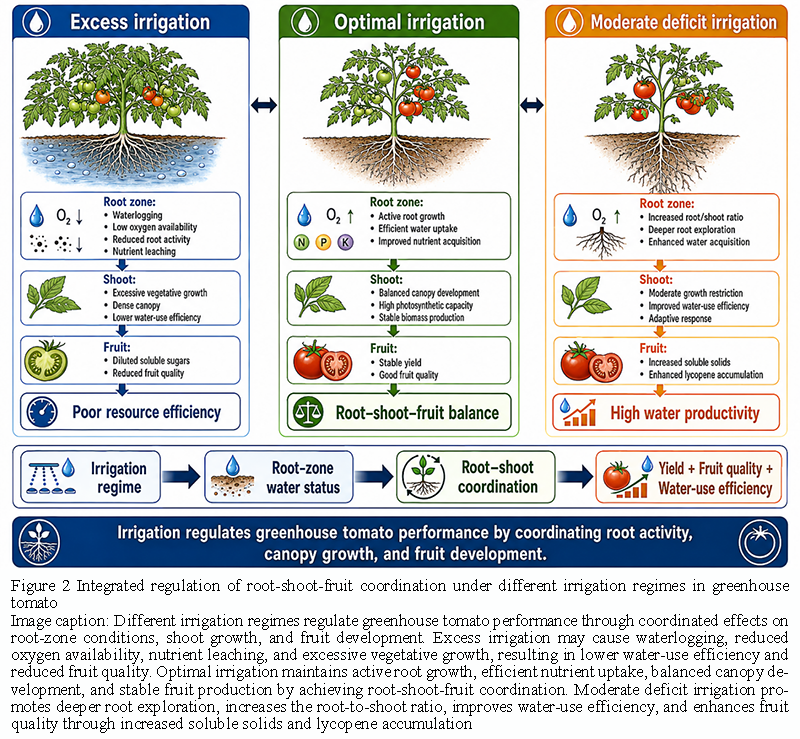 Figure 2 Integrated regulation of root-shoot-fruit coordination under different irrigation regimes in greenhouse tomato Image caption: Different irrigation regimes regulate greenhouse tomato performance through coordinated effects on root-zone conditions, shoot growth, and fruit development. Excess irrigation may cause waterlogging, reduced oxygen availability, nutrient leaching, and excessive vegetative growth, resulting in lower water-use efficiency and reduced fruit quality. Optimal irrigation maintains active root growth, efficient nutrient uptake, balanced canopy development, and stable fruit production by achieving root-shoot-fruit coordination. Moderate deficit irrigation promotes deeper root exploration, increases the root-to-shoot ratio, improves water-use efficiency, and enhances fruit quality through increased soluble solids and lycopene accumulation |
Mulched drip irrigation modifies soil moisture and temperature distribution and influences spatial root development. Under mulching conditions, tomato roots are mainly concentrated in the 0-20 cm soil layer, while low-water mulched treatments exhibit a wider distribution range of root length density compared with high-water mulched treatments (Ge et al., 2025). Model simulations by Sun et al. (2023) showed that 83%-90% of total roots under mulched drip irrigation were distributed within the 0-20 cm soil layer. However, as surface soil water deficit increased, the contribution of deeper roots to water uptake gradually increased.
Studies on substrate cultivation and localized irrigation systems further demonstrate that root-shoot balance depends strongly on water supply patterns. Ullah et al. (2021) found that mild water deficit under soilless cultivation increased average root diameter, total root length, and root surface area, suggesting that moderate water limitation can stimulate root development while maintaining canopy function. In potted cherry tomato production, increasing the number of emitters improved root length, root dry weight, leaf area index, photosynthetic rate, and biomass accumulation. The study recommended using two emitters per plant under deficit irrigation conditions to alleviate root-zone drought stress while simultaneously improving root architecture and canopy growth (Shabbir et al., 2020). Optimization of root-shoot coordination in greenhouse tomatoes depends on irrigation strategies that maintain suitable root-zone moisture and aeration conditions, promoting root expansion while preventing excessive aboveground vegetative growth. Therefore, moderate deficit irrigation strategies based on drip irrigation or substrate cultivation can generally achieve a better balance between vegetative growth and water-use efficiency.
4 Effects of Irrigation Strategies on Tomato Yield Formation
4.1 Effects of water supply on flowering and fruit set
Water supply is particularly important during flowering and fruit set, which are among the most drought-sensitive stages during tomato yield formation (Zhang et al., 2022; Alomari-Mheidat et al., 2024). Studies across different growth stages have shown that flowering and fruit development are more sensitive to water stress than vegetative growth. Water deficit imposed from the flowering stage can affect both yield formation and subsequent fruit quality (Poomkokrak et al., 2024). During this period, appropriate water management supports reproductive growth by maintaining photosynthesis, promoting nutrient uptake, and ensuring sufficient dry matter supply to flowers and developing fruits. In substrate cultivation systems, Song et al. (2025) found that nutrient supply during the flowering and fruit-setting stages had a particularly strong influence on yield and water-use efficiency (WUE), which was consistent with the high resource demands associated with reproductive organ development.
Water stress during flowering and fruit set affects reproductive success by reducing flower number, fruit set rate, and the survival of young fruits. In a cultivar screening study under 50% reduced irrigation, Grozeva and Ganeva (2024) observed that flower number, fruit number, fruit set rate, and single fruit weight declined as the inflorescence developed from the second to the fifth truss, with large-fruited indeterminate tomato cultivars showing the greatest sensitivity. Other greenhouse studies have also identified flowering and fruit-setting stages as critical periods when tomato plants are highly vulnerable to water stress. However, when plant water status is precisely regulated, moderate stress does not necessarily reduce fruit number. For example, Alomari-Mheidat et al. (2024) reported that irrigation management based on plant water status under moderate water stress conditions generally had limited effects on inflorescence development and fruit number but influenced fruit size. These findings suggest that prolonged or severe water stress is more likely to induce reproductive organ abortion, whereas mild and well-monitored deficit irrigation has relatively limited effects. When severe water stress occurs during fruit truss development, particularly under environments with high evaporative demand, it may delay truss formation, accelerate leaf senescence, and reduce fruit number by approximately 50%. Even after subsequent rewatering, plants can only partially recover from these effects.
4.2 Effects of irrigation levels on fruit enlargement and yield components
In greenhouse tomato production systems using drip irrigation, moderate increases in irrigation amount generally improve fruit weight and fruit size, whereas water stress commonly reduces fruit fresh weight and fruit dimensions. Dirlik et al. (2025) reported that maintaining stable and suitable soil moisture conditions through sensor-based irrigation management increased single fruit weight from 56 g to 85 g, fruit number per plant from 45 to 56, and final yield by 47%. Genotypic differences also influence tomato responses to irrigation levels, with different greenhouse cultivars showing considerable variation in the reduction of single fruit weight under reduced irrigation conditions. Some genotypes exhibited greater sensitivity to water stress than others.
Marketable yield depends not only on total yield but also on the proportion of marketable fruits. Wu et al. (2021) conducted a four-season greenhouse experiment and found that 75% ETc irrigation reduced the proportion of non-marketable fruits and produced larger fruits compared with full irrigation. In contrast, full irrigation during the late growth stage tended to promote the formation of more small fruits, thereby reducing commercial value. Studies on moderate water stress have also shown that fruit size is often the most sensitive yield component, whereas fruit number can remain relatively stable under moderate deficit conditions (Alomari-Mheidat et al., 2023). Under hydroponic conditions, different deficit irrigation strategies significantly affected single fruit weight, fruit number, and water-use efficiency during the fruiting stage, with the PRD85 treatment achieving the highest single fruit weight and water-use efficiency (Hooshmand et al., 2019).
Tomato yield formation under different irrigation regimes generally follows a consistent pattern: full irrigation usually achieves the highest total yield, moderate deficit irrigation can maintain or even improve marketable yield, while severe water deficit reduces both fruit size and fruit number (Lyu et al., 2025; Song et al., 2025). This pattern has been observed under conventional drip irrigation, subsurface irrigation, and salinity stress conditions, where moderate irrigation levels generally outperform both insufficient and excessive water supply treatments (Zhang et al., 2022; Alshami et al., 2023).
4.3 Water use efficiency and yield optimization
The relationship between irrigation amount and tomato yield generally follows an asymptotic response pattern. In a three-year drip irrigation experiment, both tomato yield and water-use efficiency increased gradually with increasing irrigation amount. Yield approached a stable level at approximately 90% pan evaporation replacement, whereas water-use efficiency reached a plateau near 70% irrigation level (Liu et al., 2019). Wu et al. (2021) found that tomato yield increased with increasing irrigation amount in greenhouse production; however, the 100% ETc treatment resulted in the highest total water consumption and the lowest water-use efficiency for both total yield and marketable yield. Similarly, in drip fertigation tomato production, increased irrigation levels enhanced evapotranspiration but reduced water and nitrogen use efficiencies (Zhang et al., 2025). Excessive irrigation may further reduce yield performance by decreasing soil aeration, increasing nitrogen losses, and promoting excessive vegetative growth.
Achieving high yield under water-saving conditions generally depends on moderate deficit irrigation, precise water regulation, and coordinated optimization of irrigation with fertilization or root-zone management practices. Multiple studies have indicated that moderate irrigation targets are more suitable for balancing productivity and resource efficiency. In greenhouse drip irrigation systems, 75% ETc maintained both marketable yield and water-use efficiency at favorable levels (Wu et al., 2021). In greenhouse cherry tomato production, 80% ET0 combined with appropriate nitrogen supply achieved the highest average fruit yield and economic returns, while maintaining soil moisture at 72%-80% of field capacity improved water-use efficiency and root-to-shoot ratio without substantial yield reduction (Lyu et al., 2025). Irrigation interval also affects yield formation. Liu et al. (2019) reported that, under the same seasonal irrigation amount, increasing irrigation frequency improved yield and water-use efficiency, with the W2D1 treatment increasing yield by 8.0%-26.1% compared with treatments with longer irrigation intervals.
5 Effects of Irrigation Strategies on Tomato Fruit Quality
5.1 Regulation of sugar and organic acid characteristics
Water deficit generally increases soluble solids and soluble sugar contents in tomato fruits, and this response has been widely reported in greenhouse tomatoes, processing tomatoes, and cherry tomato production systems (Wang et al., 2015; Li et al., 2021; He et al., 2024). In greenhouse tomatoes under drip fertigation, Zhang et al. (2025) found that decreasing irrigation levels increased soluble solids, soluble sugars, organic acids, vitamin C content, and sugar-acid ratio, while shorter irrigation intervals further improved most quality parameters. A three-year greenhouse experiment showed that irrigation at 70% pan evaporation, compared with 90% pan evaporation, improved water productivity, vitamin C, soluble solids, soluble sugars, and organic acid contents, while causing only minor yield reductions. Moderate water deficit during fruit ripening can also promote glucose and fructose accumulation, increasing total soluble sugar content by 48.69% and sugar-acid ratio by 43.09% (He et al., 2024). Similar results were observed in processing tomato production under regulated deficit irrigation, where glucose content increased by 17.78%, soluble solids increased by 10.17%, and the soluble solids-to-titratable acidity ratio increased by 15.47% (Burato et al., 2024). Although the magnitude of sugar accumulation varies among studies, water deficit generally enhances sweetness perception by increasing soluble solids, as also demonstrated in low-frequency irrigation treatments of cherry tomato (Poomkokrak et al., 2024).
The physiological basis of water deficit-induced sugar accumulation mainly involves concentration effects and metabolic regulation. Reduced water supply decreases water dilution within fruits while maintaining or enhancing solute accumulation processes (Zhang et al., 2025). Water stress can activate galactose and sucrose metabolic pathways and increase the activities of sucrose synthase and sucrose phosphate synthase, thereby promoting the conversion of starch into soluble sugars. Organic acid responses generally show similar patterns. He et al. (2024) reported that deficit irrigation increased organic acid accumulation in greenhouse tomato fruits. Moderate water deficit promoted the accumulation of tartaric acid, malic acid, shikimic acid, α-ketoglutaric acid, and succinic acid, while reducing oxalic acid and citric acid contents. The decrease in fruit pH under limited irrigation conditions also indicates enhanced fruit acidity, which may contribute to improved flavor characteristics (Habibi et al., 2025).
However, the response of sugar and organic acid metabolism to water regulation is not always consistent and is influenced by growth stage, harvest maturity, genotype, and irrigation method. For example, Poomkokrak et al. (2024) found that glucose content in cherry tomato fruits did not differ significantly among different irrigation regimes. Therefore, although moderate water deficit generally favors the accumulation of sugars and flavor-related compounds, its effects should be evaluated according to specific production conditions.
5.2 Effects of irrigation on nutritional quality
Vitamin C is one of the most consistent nutritional quality indicators responding to moderate water deficit in tomato fruits. Compared with full irrigation, regulated deficit irrigation generally increases vitamin C content. In a limited irrigation study, Habibi et al. (2025) reported that vitamin C concentration increased from 49 to 64 mg/100 g fresh weight, while electrolyte leakage decreased, indicating that water regulation not only enhanced antioxidant capacity but also improved cell membrane integrity. In greenhouse drip fertigation systems, Zhang et al. (2025) found that both reduced irrigation amount and shorter irrigation intervals increased vitamin C content, which may be associated with improved fruit light exposure due to a smaller canopy structure and enhanced ascorbic acid synthesis.
In addition to vitamin C, deficit irrigation can enhance the overall antioxidant system of tomato fruits, including soluble proteins, proline, total phenolics, total flavonoids, and comprehensive antioxidant activity (Jin et al., 2022). In processing tomatoes, regulated deficit irrigation increased total phenolic content by 20.58% (Burato et al., 2024). Other greenhouse studies have also shown that deficit irrigation improves antioxidant capacity and increases flavonoid and phenolic compound contents, although the magnitude of these responses varies among product types and cultivars (Bogale et al., 2016; Liava et al., 2023).
Lycopene and related carotenoids generally increase under moderate water stress, although their responses show stronger genotype dependence compared with vitamin C. He et al. (2024) reported that moderate deficit irrigation during fruit ripening increased lycopene, lutein, α-carotene, and β-carotene contents by 11.85%, 12.28%, 20.87%, and 63.89%, respectively. In black cherry tomatoes, deficit irrigation increased carotenoid levels while maintaining fruit size and weight (Coyago-Cruz et al., 2022). Salinity-related water stress has also been shown to enhance lycopene, β-carotene, total phenolics, soluble solids, firmness, and vitamin C contents at harvest or during storage. However, tomato cultivars do not always exhibit consistent responses to water regulation. Bogale et al. (2016) found that deficit irrigation increased lycopene and vitamin C contents in the ‘Matina’ cultivar but reduced these quality parameters in ‘Cochoro’. Early-stage water management may also have long-lasting effects on subsequent fruit nutritional quality. Tömösközi-Farkas et al. (2024) demonstrated that plants cultivated under 50% irrigation combined with water-retaining agents produced fruits with the highest lycopene, vitamin C, antioxidant capacity, and total phenolic content during later production stages.
5.3 Effects of water management on fruit appearance quality
Water management has substantial effects on tomato fruit size, firmness, and cracking incidence, although different quality traits do not always respond to water changes in the same manner. Studies have shown that deficit irrigation reduces fruit size and weight, whereas restricted irrigation improves fruit firmness but is often accompanied by smaller fruits (Habibi et al., 2025). However, moderate water regulation can maintain or optimize fruit size. Poomkokrak et al. (2024) reported that in cherry tomato production, irrigation once every three days resulted in the optimal fruit diameter, fruit length, fruit volume, and fresh weight, while both higher and lower irrigation frequencies reduced fruit size. In black cherry tomatoes, regulated deficit irrigation maintained fruit size and weight while increasing carotenoid content (Coyago-Cruz et al., 2022).
Generally, water deficit or saline irrigation can increase fruit firmness and improve resistance to postharvest handling. However, fruit cracking shows a nonlinear response to irrigation regimes. Both excessively frequent irrigation and severe low-frequency irrigation can significantly increase cracking incidence, with the highest rate reaching 69.53%. In contrast, moderate low-water treatments reduced cracking incidence to 8.75% (Habibi et al., 2025). These changes in fruit physical properties directly affect marketability and storage performance. Restricted irrigation can reduce electrolyte leakage, increase fruit firmness and density, and suppress ethylene production and respiration rates, thereby extending shelf life and improving transport tolerance and postharvest stability.
In processing tomatoes, regulated deficit irrigation increases dry matter content, which reduces the risk of decay during transportation and improves processing efficiency (Burato et al., 2024). Irrigation water quality also influences postharvest performance. Although saline irrigation reduces yield, it can improve fruit sweetness, acidity, overall flavor, and storage-related quality traits under simulated transportation conditions. Under hydroponic conditions, salinity stress may increase the risk of blossom-end rot by reducing calcium uptake; however, this physiological disorder does not necessarily reduce fruit marketability under certain conditions.
6 Precision Irrigation Technologies and Optimization Strategies for Greenhouse Tomato Production
6.1 Irrigation management based on crop water requirements
Irrigation scheduling based on evapotranspiration (ET) remains one of the core approaches for estimating water requirements in greenhouse tomato production. Many optimization studies use crop evapotranspiration (ETc) or a proportion of pan evaporation as irrigation criteria to balance yield, fruit quality, and water-use efficiency. Colimba-Limaico et al. (2022) reported that maintaining 100% ETc with one irrigation event per day achieved a favorable balance among yield, fruit quality, and water-use efficiency, representing a practical irrigation strategy for greenhouse tomato production. ET-based irrigation optimization can be further adjusted by incorporating crop coefficients. A four-season TOPSIS-based comprehensive evaluation study showed that, when yield, quality, and water-fertilizer productivity were considered simultaneously, the optimal pan evaporation coefficient for greenhouse tomato production ranged from 0.74 to 0.78. Under practical production conditions, suitable ranges could be extended to 0.68-0.83 in spring and 0.68-0.82 in autumn (Yu et al., 2023). In substrate cultivation systems, irrigation management based on substrate moisture variation also reflects a crop water demand-oriented approach. Liu et al. (2024) found that initiating nutrient solution supply when coconut coir moisture decreased to 70% improved fruit quality and water-fertilizer use efficiency, while causing only minor yield losses compared with the 80% moisture treatment.
Tomato plants exhibit different sensitivities to water availability during different growth stages; therefore, stage-specific irrigation management is generally more effective than applying a uniform irrigation strategy throughout the entire growth period. Li et al. (2022) demonstrated that maintaining soil moisture at 70%-90% of field capacity during the first stage and 40%-60% during the second stage achieved the highest irrigation water-use efficiency and leaf water-use efficiency, while maintaining stable yield and improving fruit quality. Another greenhouse irrigation experiment based on pan evaporation showed that full irrigation during weeks 1-2 and 21-24, combined with reduced irrigation during intermediate stages, decreased seasonal water consumption and improved water-use efficiency compared with full irrigation throughout the growth period, although full irrigation still produced the highest yield (Singh et al., 2023). A growth-stage-based coupling experiment using yellow sand substrate further indicated that irrigation amount was the primary factor affecting yield and water-use efficiency, whereas fertilizer supply during the flowering and fruit-setting stages was an important secondary factor influencing production performance (Song et al., 2025).
6.2 Application of smart irrigation technologies
Automated irrigation systems based on soil moisture sensors can monitor and regulate root-zone water status in real time, providing a more stable moisture environment compared with fixed-schedule irrigation (Figure 3). Dirlik et al. (2025) developed an Arduino-based smart irrigation system for greenhouse tomatoes and found that maintaining soil moisture within a stable range of 70%-85%, compared with a fluctuating range of 55%-85%, increased fresh weight, dry weight, plant height, and fruit yield of mature plants by 52%, 78%, 121%, and 47%, respectively. Intelligent fertigation control systems also exhibit high operational accuracy. Li et al. (2024) reported that such systems achieved average decision-making and irrigation errors of only 1.1% and 0.8%, respectively, while increasing tomato yield by 7%-12% and reducing water and fertilizer inputs compared with conventional management practices.
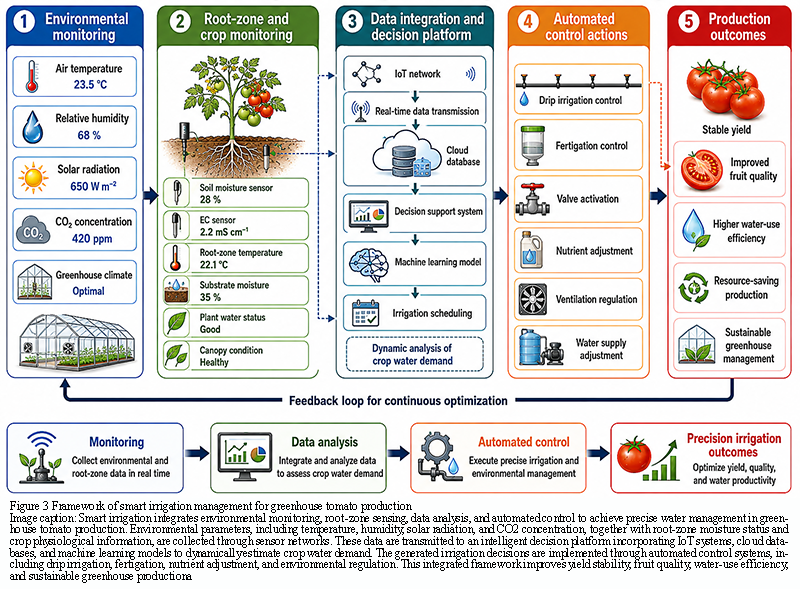 Figure 3 Framework of smart irrigation management for greenhouse tomato production Image caption: Smart irrigation integrates environmental monitoring, root-zone sensing, data analysis, and automated control to achieve precise water management in greenhouse tomato production. Environmental parameters, including temperature, humidity, solar radiation, and CO2 concentration, together with root-zone moisture status and crop physiological information, are collected through sensor networks. These data are transmitted to an intelligent decision platform incorporating IoT systems, cloud databases, and machine learning models to dynamically estimate crop water demand. The generated irrigation decisions are implemented through automated control systems, including drip irrigation, fertigation, nutrient adjustment, and environmental regulation. This integrated framework improves yield stability, fruit quality, water-use efficiency, and sustainable greenhouse production |
Internet of Things (IoT)-based systems further extend beyond single-sensor control by integrating soil moisture, temperature, humidity, actuator devices, and data analysis modules to establish data-driven intelligent decision platforms. Ariss et al. (2024) indicated that smart greenhouse systems based on zonal management can use real-time monitoring data to adjust irrigation strategies according to crop growth stages and microenvironmental conditions. Experimental results showed that this approach improved tomato quality, yield, and resource-use efficiency. IoT-driven automated irrigation and fertilization systems can also enhance economic returns. In tomato production, threshold-based irrigation combined with 75%-100% of recommended fertilizer application increased yield by 4.8%-13.5%, reduced water consumption by 29%-39%, and achieved higher benefit-cost ratios than conventional management practices.
Machine learning-assisted decision-making systems further improve smart irrigation by integrating sensor data with predictive models to dynamically optimize irrigation strategies. In tomato production, machine learning-guided irrigation systems achieved water productivity comparable to full irrigation under regulated deficit irrigation or moderate deficit conditions, saved approximately 33% of water during high-temperature seasons, and improved fruit quality (Martelli et al., 2025). However, the sensitivity of these models to high-temperature environments and crop stress conditions still requires further improvement.
6.3 Integration of irrigation and fertilization management
Water and nutrient management require coordinated regulation because tomato growth, yield, and quality are jointly determined by water and nutrient availability rather than irrigation level alone. Drip fertigation improves the synchronization of water and nutrient supply in the root zone, reduces nutrient leaching associated with conventional irrigation methods, and is particularly important for indeterminate greenhouse tomatoes, where vegetative and reproductive growth stages overlap for an extended period (Singh et al., 2023). A greenhouse experiment by Lyu et al. (2025) showed that combining suitable or mild deficit irrigation with integrated fertilization management improved yield, water-use efficiency, nitrogen uptake capacity, and root-shoot coordination. For example, maintaining soil moisture at 72%-80% of field capacity combined with soluble organic fertilizer and chemical fertilizer application achieved high yield while improving water-use efficiency and nitrogen uptake compared with higher or lower irrigation treatments. A stage-specific coupling study under substrate cultivation also demonstrated that irrigation amount was the primary factor affecting yield and water-use efficiency, whereas fertilizer supply during flowering and fruit-setting stages played an important role in final production efficiency, highlighting the need to match water and nutrient supply with tomato growth requirements (Song et al., 2025).
Strategies for improving water and fertilizer use efficiency are gradually shifting from fixed management regimes toward integrated optimization models. For example, a decision-making model based on dynamic plant morphological feedback adjusted irrigation and fertilization schemes according to changes in plant height and stem diameter. Compared with fixed management practices, this approach increased fruit yield by 6.9%-14.7% and improved water-use efficiency by 6.93%-43.17%, demonstrating the potential of real-time regulation based on crop growth information (Zuo et al., 2025). The integration of water, fertilizer, and oxygen management provides further opportunities for optimization. Lei et al. (2023) reported that oxygen-enriched subsurface drip irrigation increased yield by 4.25% compared with fixed water management and by 26.13% compared with non-aerated irrigation. The optimized combination included an irrigation amount of 420 mm, dissolved oxygen concentration of approximately 24.55 mg/L, and nitrogen input of 281.43 kg N/ha.
7 Comprehensive Effects and Production Applications of Irrigation Regulation
7.1 Balance between yield and quality under different irrigation regimes
Higher irrigation levels generally promote vegetative growth and increase total tomato yield, but they may also dilute quality-related components, including soluble solids, sugars, vitamin C, and organic acids, thereby reducing fruit quality (Wu et al., 2021). Full irrigation can achieve higher absolute yield; however, it is often accompanied by greater water consumption and lower water-use efficiency. In contrast, severe water deficit generally improves nutritional composition and flavor-related traits but restricts plant growth, reduces fruit size, and may decrease fruit number (Alshami et al., 2023).
Studies have shown that moderate deficit irrigation can achieve a more favorable balance between yield and quality. A four-season greenhouse experiment demonstrated that 75% ETc irrigation reduced the proportion of non-marketable fruits, improved fruit size distribution, and increased marketable yield water-use efficiency, providing better overall benefits than full irrigation. Lyu et al. (2025) also found that mild deficit irrigation maintained relatively high yield while improving root-to-shoot ratio, nitrogen uptake capacity, and water-use efficiency, with stronger effects when combined with appropriate fertilization. Similar results were observed in growth stage-based deficit irrigation studies, where fruit quality showed greater sensitivity to water supply variation than to nitrogen supply. Moderate deficit irrigation applied during both early and late fruit ripening stages resulted in improved overall performance (Wang et al., 2015).
However, yield and quality responses do not always change simultaneously. Under reduced irrigation conditions, some treatments primarily affect fruit development timing or fruit number distribution rather than total yield across the entire production cycle. This indicates a partial decoupling between quality improvement and production capacity under water regulation (Tringovska et al., 2026). In practical production, irrigation management should be adjusted according to market requirements and production objectives, with a comprehensive balance among yield stability, fruit quality, and resource-use efficiency rather than focusing on a single target.
7.2 Environmental factors affecting irrigation performance
The effectiveness of irrigation is influenced by greenhouse environmental conditions, including temperature, humidity, light intensity, and ventilation. Light intensity and fruit temperature are considered important environmental factors affecting tomato quality formation and shelf life, whereas relative humidity and irrigation regimes mainly regulate fruit firmness, water loss, and the occurrence of physiological disorders (Fanourakis et al., 2025). Ge et al. (2022) reported that greenhouse tomato evapotranspiration is closely associated with microclimatic conditions. Net solar radiation, average temperature, and maximum temperature increase evapotranspiration, while higher relative humidity reduces evapotranspiration. Therefore, irrigation strategies should be dynamically adjusted according to greenhouse environmental changes and actual atmospheric evaporative demand.
Ventilation generally has a stronger regulatory effect on greenhouse temperature and humidity conditions than irrigation management alone, particularly during flowering, fruit development, and harvesting stages. Xue et al. (2023) found that ventilation treatments had limited effects on yield but significantly influenced vitamin C content and sugar-acid ratio. Among different management combinations, the T2W2 treatment provided a favorable balance between yield and fruit quality. During high-temperature periods, irrigation strategies require further optimization. The combination of micro-sprinkler irrigation and drip irrigation can reduce air and leaf temperatures, increase relative humidity, improve photosynthesis and stomatal conductance, and increase tomato yield by 40.4%. This improvement was mainly attributed to reduced flower damage and increased fruit number.
Irrigation methods should also be coordinated with greenhouse production systems. Under mulching conditions, micro-sprinkler irrigation increased tomato yield compared with drip irrigation or non-mulched treatments. However, the response of yield to irrigation amount followed a quadratic relationship, with 1.0 Epan providing a more suitable irrigation target than the highest irrigation level (Zhang et al., 2022). These results indicate that irrigation optimization depends not only on water supply amount but also requires integrated consideration of greenhouse structure, mulching practices, and environmental regulation measures.
7.3 Application prospects in sustainable greenhouse tomato production
An important future direction for sustainable greenhouse tomato production is the development of efficient water-saving systems integrating moderate deficit irrigation, drip irrigation, fertigation, and real-time monitoring and control technologies. Sensor-based smart irrigation can maintain stable root-zone moisture conditions and significantly improve plant growth and yield performance compared with management strategies involving prolonged water fluctuations (Dirlik et al., 2025). Meanwhile, advances in modeling approaches and machine learning technologies further enhance precision irrigation capacity by predicting greenhouse evapotranspiration and crop yield responses, enabling dynamic irrigation scheduling under complex climatic conditions (Ge et al., 2022; Locatelli et al., 2024).
Sustainable protected agriculture requires not only optimization of field-scale irrigation management but also improved water recycling and resource utilization. For example, a recycled water and nutrient system in rooftop greenhouses maintained tomato yield while reducing water consumption per unit tomato mass from 75.2 L to 48.7 L and significantly lowering eutrophication risks through reduced nutrient leaching (Parada et al., 2021). Water-retaining materials, such as superabsorbent hydrogels, can enhance water and nutrient retention in the root zone and improve plant resilience under drought conditions (Idrissi et al., 2023).
Integrated water-nitrogen management is another important strategy for sustainable production. Ma et al. (2024) reported that excessive irrigation and fertilization not only increase resource losses but also elevate environmental risks, whereas optimized water-nitrogen combinations can simultaneously improve yield, water-use efficiency, fruit quality, and nitrogen-use efficiency while reducing greenhouse gas emission intensity. Therefore, future greenhouse tomato production will benefit from climate-smart management systems that dynamically adjust irrigation strategies according to crop growth stages, greenhouse microclimate, and nutrient status. Such approaches can support high yield and stable quality while improving resource-use efficiency and promoting long-term sustainable production.
8 Concluding Remarks
Irrigation management is a key factor regulating growth, yield formation, and fruit quality in greenhouse tomato production. Its effects are achieved through coordinated regulation of root activity, nutrient uptake, photosynthetic capacity, dry matter accumulation, and fruit development. Existing studies have shown that full irrigation promotes vegetative growth, increasing plant height, stem diameter, leaf area, and biomass accumulation, and contributes to higher yield production. However, excessive water supply over long periods can reduce water-use efficiency, increase the risk of nutrient leaching, and potentially impair fruit quality due to excessive vegetative growth. Therefore, irrigation management in greenhouse tomato production should focus on balancing water input and production benefits according to crop requirements and production objectives.
Moderate deficit irrigation provides an effective approach for balancing yield, water-use efficiency, and fruit quality improvement. Studies have demonstrated that mild water limitation can induce adaptive responses, including increased root-to-shoot ratio, enhanced water acquisition capacity, and promoted accumulation of quality-related compounds, thereby improving water productivity while maintaining relatively high yield levels. Particularly during fruit ripening, moderate reductions in irrigation commonly promote the accumulation of soluble sugars, soluble solids, vitamin C, lycopene, and phenolic compounds, improving fruit flavor and nutritional value. However, responses to water regulation are strongly dependent on growth stage and genotype, and excessive water deficit can restrict cell expansion, reduce fruit size, and decrease marketable yield.
Current irrigation optimization strategies in greenhouse tomato production are gradually shifting from conventional experience-based management toward precision and intelligent approaches. Irrigation systems based on evapotranspiration models, soil moisture monitoring, sensor control, the Internet of Things, and machine learning can provide real-time regulation according to crop status and greenhouse environmental changes, thereby improving water-use efficiency and production stability. Meanwhile, irrigation management should be integrated with fertilization, root-zone regulation, and greenhouse microclimate control to further enhance production efficiency through coordinated water-nutrient management and environmental regulation.
The core objective of greenhouse tomato irrigation strategies is to achieve a dynamic balance among yield, quality, resource-use efficiency, and economic benefits under different production conditions. Future research should further clarify irrigation response patterns across different cultivars, growth stages, and environmental conditions, and develop more precise decision-making systems by integrating multi-source sensor data with intelligent models. In addition, greater attention should be given to water recycling, water-nitrogen coordination, and long-term ecological benefits to promote greenhouse tomato production toward higher efficiency, greater stability, and long-term sustainability.
Acknowledgments
The authors would like to express their sincere gratitude to Mr. Li for his assistance in organizing the literature materials. The authors also extend special thanks to the two anonymous peer reviewers for their comprehensive evaluation of the manuscript.
Conflict of Interest Disclosure
The authors affirm that this research was conducted without any commercial or financial relationships that could be construed as a potential conflict of interest.
Ahmad H., and Li J., 2021, Impact of water deficit on the development and senescence of tomato roots grown under various soil textures of Shaanxi, China, BMC Plant Biology, 21(1): 241.
https://doi.org/10.1186/s12870-021-03018-1
Alomari-Mheidat M., Corell M., Castro-Valdecantos P., Andreu L., Moriana A., and Martín-Palomo M.J., 2023, Effect of water stress and rehydration on the cluster and fruit quality of greenhouse tomatoes, Agronomy, 13(2): 563.
https://doi.org/10.3390/agronomy13020563
Alomari-Mheidat M., Corell M., Martín-Palomo M.J., Castro-Valdecantos P., Medina-Zurita N., de Sosa L.L., and Moriana A., 2024, Moderate water stress impact on yield components of greenhouse tomatoes in relation to plant water status, Plants, 13(1): 128.
https://doi.org/10.3390/plants13010128
Alshami A.K., El-Shafei A., Al-Omran A.M., Alghamdi A.G., Louki I., and Alkhasha A., 2023, Responses of tomato crop and water productivity to deficit irrigation strategies and salinity stress in greenhouse, Agronomy, 13(12): 3016.
https://doi.org/10.3390/agronomy13123016
Amankwaa-Yeboah P., Aruna Akoriko F., Amponsah W., Yeboah S., Brempong M.B., and Keteku A.K., 2023, Combining deficit irrigation and nutrient amendment enhances the water productivity of tomato (Solanum lycopersicum L.) in the tropics, Frontiers in Sustainable Food Systems, 7: 1199386.
https://doi.org/10.3389/fsufs.2023.1199386
Ariss A., Ennejjai I., Lamjid A., Mabrouki J., Kharmoum N., and Ziti S., 2024, IoT-enabled smart greenhouse for robotic enhancement of tomato production: Leveraging 5G and edge computing for advanced data-driven automation, precision irrigation, and scalable zoning principles, International Journal of Interactive Mobile Technologies, 18(21): 88-116.
https://doi.org/10.3991/ijim.v18i21.50829
Bai C., Zuo J., Watkins C., Wang Q., Liang H., Zheng Y., Liu M.-C., and Ji Y., 2022, Sugar accumulation and fruit quality of tomatoes under water deficit irrigation, Postharvest Biology and Technology, 195: 112112.
https://doi.org/10.1016/j.postharvbio.2022.112112
Bogale A., Nagle M., Latif S., Aguila M., and Müller J., 2016, Regulated deficit irrigation and partial root-zone drying irrigation impact bioactive compounds and antioxidant activity in two select tomato cultivars, Scientia Horticulturae, 213: 115-124.
https://doi.org/10.1016/j.scienta.2016.10.029
Burato A., Fusco G.M., Pentangelo A., Nicastro R., Modugno A.F., Di Covella F.S., Ronga D., Carillo P., Campi P., and Parisi M., 2024, Regulated deficit irrigation to boost processing tomato sustainability and fruit quality, Sustainability, 16(9): 3798.
https://doi.org/10.3390/su16093798
Chand J., Hewa G., Hassanli A., and Myers B., 2020, Evaluation of deficit irrigation and water quality on production and water productivity of tomato in greenhouse, Agriculture, 10(7): 297.
https://doi.org/10.3390/agriculture10070297
Chen D., Li H., Wang X., Li S., Jiang X., Dai A., Yu H., Zhang Y., and Liu Y., 2025, Effects of water and nitrogen coupling on the plant growth and quality of greenhouse tomatoes at the first flowering and fruiting stages, International Journal of Agricultural and Biological Engineering, 18(1): 181-190.
https://doi.org/10.25165/j.ijabe.20241706.8781
Chen M., Zhu X., Liu X., Wu C., Yu C., Hu G., Chen L., Chen R., Bouzayen M., Zouine M., and Hao Y., 2021, Knockout of auxin response factor SlARF4 improves tomato resistance to water deficit, International Journal of Molecular Sciences, 22(7): 3347.
https://doi.org/10.3390/ijms22073347
Colimba-Limaico J.E., Zubelzu-Minguez S., and Rodríguez-Sinobas L., 2022, Optimal irrigation scheduling for greenhouse tomato crop (Solanum lycopersicum L.) in Ecuador, Agronomy, 12(5): 1020.
https://doi.org/10.3390/agronomy12051020
Coyago-Cruz E., Corell M., Moriana A., Hernanz D., Stinco C.M., Mapelli-Brahm P., and Meléndez-Martínez A.J., 2022, Effect of regulated deficit irrigation on commercial quality parameters, carotenoids, phenolics and sugars of the black cherry tomato (Solanum lycopersicum L.) ‘Sunchocola’, Journal of Food Composition and Analysis, 105: 104220.
https://doi.org/10.1016/j.jfca.2021.104220
Cui J., Shao G., Lu J., Keabetswe L., and Hoogenboom G., 2019, Yield, quality and drought sensitivity of tomato to water deficit during different growth stages, Scientia Agricola, 77: e20180390.
https://doi.org/10.1590/1678-992x-2018-0390
Dirlik I., Uğurlar F., and Kaya C., 2025, Sensor-guided smart irrigation for tomato production: Comparing low and optimum soil moisture in greenhouse environments, Food and Energy Security, 14(2): e70082.
https://doi.org/10.1002/fes3.70082
Fanourakis D., Makraki T., Spyrou G.P., Karavidas I., Tsaniklidis G., and Ntatsi G., 2025, Environmental drivers of fruit quality and shelf life in greenhouse vegetables: Species-specific insights, Agronomy, 16(1): 48.
Feng H., Dou Z., Jiang W., Mahmood H., Liao Z., Li Z., and Fan J., 2024, Optimal water and nitrogen regimes increased fruit yield and water use efficiency by improving root characteristics of drip-fertigated greenhouse tomato (Solanum lycopersicum L.), Agronomy, 14(10): 2439.
https://doi.org/10.3390/agronomy14102439
Fregonezi B.F., Pereira A.E., Ferreira J.M., Fraceto L.F., Gomes D.G., and Oliveira H.C., 2024, Seed priming with nanoencapsulated gibberellic acid triggers beneficial morphophysiological and biochemical responses of tomato plants under different water conditions, Agronomy, 14(3): 588.
https://doi.org/10.3390/agronomy14030588
Ge J., Zhao L., Yu Z., Liu H., Zhang L., Gong X., and Sun H., 2022, Prediction of greenhouse tomato crop evapotranspiration using XGBoost machine learning model, Plants, 11(15): 1923.
https://doi.org/10.3390/plants11151923
Ge J., Zhu Y., Gong X., Yao C., Wu X., Zhang J., and Li Y., 2025, The effect of mulching on the root growth of greenhouse tomatoes under different drip irrigation volumes and its distribution model, Horticulturae, 11(1): 99.
https://doi.org/10.3390/horticulturae11010099
Ghannem A., Ben Aissa I., and Majdoub R., 2021, Effects of regulated deficit irrigation applied at different growth stages of greenhouse grown tomato on substrate moisture, yield, fruit quality, and physiological traits, Environmental Science and Pollution Research, 28(34): 46553-46564.
https://doi.org/10.1007/s11356-020-10407-w
Giovanna D., Soumiya C., Francesca M., Valentina R., Redouane C.A., Oqbit W.A., and Sara B., 2024, Inoculating plant growth-promoting bacteria-effects on soil hydraulic properties and tomato root development under water stress conditions, Agriculture and Food Sciences Research, 11(1): 15-29.
https://doi.org/10.20448/aesr.v11i1.5359
Grozeva S., and Ganeva D., 2024, Effects of the drought induced stress on the flowering and the fruit set stages in tomato collection, Agricultural Sciences/Agrarni Nauki, 16(41).
https://doi.org/10.22620/agrisci.2024.41.003
Habibi N., Terada N., Sanada A., Kamata A., and Koshio K., 2025, Impact of limited irrigation on fruit quality and ethylene biosynthesis in tomato: A comprehensive analysis of physical, biochemical, and metabolomic traits, Plants, 14(3): 406.
https://doi.org/10.3390/plants14030406
He Y., Wang J., Yang J., Bai P., Feng J., Wu Y., Yu J., Hu L., and Liao W., 2024, Enhancement of tomato fruit quality through moderate water deficit, Foods, 13(22): 3540.
https://doi.org/10.3390/foods13223540
Hooshmand M., Albaji M., and Zadeh Ansari N.A., 2019, The effect of deficit irrigation on yield and yield components of greenhouse tomato (Solanum lycopersicum) in hydroponic culture in Ahvaz region, Iran, Scientia Horticulturae, 254: 84-90.
https://doi.org/10.1016/j.scienta.2019.04.084
Idrissi E.A., Dardari O., Metomo F.N.N.N., Essamlali Y., Akil A., Amadine O., Aboulhrouz S., and Zahouily M., 2023, Effect of sodium alginate-based superabsorbent hydrogel on tomato growth under different water deficit conditions, International Journal of Biological Macromolecules, 253: 127229.
https://doi.org/10.1016/j.ijbiomac.2023.127229
Jin N., Jin L., Wang S., Meng X., He X., Zhang G., Luo S., Lyu J., and Yu J., 2022, A comprehensive evaluation of effects on water-level deficits on tomato polyphenol composition, nutritional quality and antioxidant capacity, Antioxidants, 11(8): 1585.
https://doi.org/10.3390/antiox11081585
Lei H., Lian Y., Du J., Pan H., Li X., Li D., Jin C., Xiao Z., and Hou Y., 2023, Dynamic optimization of greenhouse tomato irrigation schedule based on water, fertilizer and air coupled production function, Agronomy, 13(3): 776.
https://doi.org/10.3390/agronomy13030776
Li H., Liu H., Gong X., Li S., Pang J., Chen Z., and Sun J., 2021, Optimizing irrigation and nitrogen management strategy to trade off yield, crop water productivity, nitrogen use efficiency and fruit quality of greenhouse grown tomato, Agricultural Water Management, 245: 106570.
https://doi.org/10.1016/j.agwat.2020.106570
Li X., Ma J., Sun X., Zheng L., Chen R., and An J., 2023, Estimating the effects of deficit irrigation on water absorption and utilization of tomatoes grown in greenhouse with Hydrus-1D model, Sustainability, 15(4): 3216.
https://doi.org/10.3390/su15043216
Li X., Ma J., Zheng L., Chen J., Sun X., and Guo X., 2022, Optimization of the regulated deficit irrigation strategy for greenhouse tomato based on the fuzzy Borda model, Agriculture, 12(3): 324.
https://doi.org/10.3390/agriculture12030324
Li Y., Hu Y., Li Z., Wu W., Ma M., and Guo A., 2024, Intelligent decision-making for fertigation treatment of tomatoes cultivated in greenhouse: An experimental study, Irrigation and Drainage, 73(4): 1246-1261.
https://doi.org/10.1002/ird.2957
Liava V., Chaski C., Añibarro-Ortega M., Pereira A., Pinela J., Barros L., and Petropoulos S.A., 2023, The effect of biostimulants on fruit quality of processing tomato grown under deficit irrigation, Horticulturae, 9(11): 1184.
https://doi.org/10.3390/horticulturae9111184
Liu H., Li H., Ning H., Zhang X., Li S., Pang J., Wang G., and Sun J., 2019, Optimizing irrigation frequency and amount to balance yield, fruit quality and water use efficiency of greenhouse tomato, Agricultural Water Management, 226: 105787.
https://doi.org/10.1016/j.agwat.2019.105787
Liu S., Qiang X., Liu H., Han Q., Yi P., Ning H., Li H., Wang C., and Zhang X., 2024, Effects of nutrient solution application rates on yield, quality, and water-fertilizer use efficiency on greenhouse tomatoes grown in coir, Plants, 13(6): 893.
https://doi.org/10.3390/plants13060893
Locatelli S., Barrera Jr W., Verdi L., Nicoletto C., Dalla Marta A., and Maucieri C., 2024, Modelling the response of tomato on deficit irrigation under greenhouse conditions, Scientia Horticulturae, 326: 112770.
https://doi.org/10.1016/j.scienta.2023.112770
Lu J., Shao G., Gao Y., Zhang K., Wei Q., and Cheng J., 2021, Effects of water deficit combined with soil texture, soil bulk density and tomato variety on tomato fruit quality: A meta-analysis, Agricultural Water Management, 243: 106427.
https://doi.org/10.1016/j.agwat.2020.106427
Lyu X., Hassan H.M., Zan Y., and Tan J., 2025, Interactive effects of irrigation and fertilization on the growth and physiological characteristics of greenhouse tomatoes, Solanum lycopersicum L., Scientific Reports, 15(1): 6007.
https://doi.org/10.1038/s41598-025-89380-8
Ma X.C., Yang Y.C., Tan Z.M., Cheng Y.X., Wang T.T., Yang L.Y., He T., and Liang S., 2024, Climate-smart drip irrigation with fertilizer coupling strategies to improve tomato yield, quality, resources use efficiency and mitigate greenhouse gases emissions, Land, 13(11): 1872.
https://doi.org/10.3390/land13111872
Martelli A., Rapinesi D., Verdi L., Donati I.I.M., Dalla Marta A., and Altobelli F., 2025, Smart irrigation for management of processing tomato: A machine learning approach, Irrigation Science, 43(6): 1407-1424.
https://doi.org/10.1007/s00271-024-00993-9
Medyouni I., Zouaoui R., Rubio E., Serino S., Ahmed H.B., and Bertin N., 2021, Effects of water deficit on leaves and fruit quality during the development period in tomato plant, Food Science & Nutrition, 9(4): 1949-1960.
https://doi.org/10.1002/fsn3.2160
Mukherjee S., Dash P., Das D., and Das S., 2023, Growth, yield and water productivity of tomato as influenced by deficit irrigation water management, Environmental Processes, 10(1): 1-21.
https://doi.org/10.1007/s40710-023-00624-z
Parada F., Gabarrell X., Rufí-Salís M., Arcas-Pilz V., Muñoz P., and Villalba G., 2021, Optimizing irrigation in urban agriculture for tomato crops in rooftop greenhouses, Science of the Total Environment, 794: 148689.
https://doi.org/10.1016/j.scitotenv.2021.148689
Patanè C., Cosentino S.L., Romano D., and Toscano S., 2022, Relative water content, proline, and antioxidant enzymes in leaves of long shelf-life tomatoes under drought stress and rewatering, Plants, 11(22): 3045.
https://doi.org/10.3390/plants11223045
Poomkokrak J., Sanevas N., and Rungwattana K., 2024, Fruit quality and plant productivity of a cherry tomato (Solanum lycopersicum var. cerasiforme) grown under different irrigation regimes during the reproductive phase, Trends in Sciences, 21(6): 7589.
https://doi.org/10.48048/tis.2024.7589
Sagar A., and Singh P.K., 2023, Economic feasibility of tomato (Solanum lycopersicum) production under protected and unprotected environment, Indian Journal of Agricultural Sciences, 93: 523-528.
https://doi.org/10.56093/ijas.v93i5.102449
Sahoo D., Sahoo D., Tripathy P., Das S., Mohanty S.K., Sahoo S.K., and Bhol R., 2025, Drought mitigating impact of foliar application of salicylic acid and KNO3 on growth, yield and yield attributing characters of tomato (Solanum lycopersicum L.) under water stress conditions, Agricultural Science Digest, 45.
Shabbir A., Mao H., Ullah I., Buttar N.A., Ajmal M., and Lakhiar I.A., 2020, Effects of drip irrigation emitter density with various irrigation levels on physiological parameters, root, yield, and quality of cherry tomato, Agronomy, 10(11): 1685.
https://doi.org/10.3390/agronomy10111685
Singh J., Sandal S.K., Yousuf A., and Bhat M.A., 2024, Optimizing tomato (Solanum lycopersicum L.) cultivation in a naturally ventilated polyhouse: Impacts of drip irrigation and fertigation on root growth, nutrient uptake, and productivity, International Journal of Environment and Climate Change, 14(2): 923-932.
https://doi.org/10.9734/ijecc/2024/v14i24006
Singh J., Sandal S.K., Yousuf A., and Sandhu P.S., 2023, Effect of drip irrigation and fertigation on soil water dynamics and productivity of greenhouse tomatoes, Water, 15(11): 2086.
https://doi.org/10.3390/w15112086
Song Y., Xu J., Zhang S., Xing J., Wang L., Wang X., Hu C., Li W., Tan Z., and Cheng Y., 2025, Optimizing water-fertilizer coupling across different growth stages of tomato in yellow sand substrate: Toward enhanced yield, quality, and resource use efficiency, Plants, 14(6): 936.
https://doi.org/10.3390/plants14060936
Sun L., Li B., Yao M., Mao L.-C., Zhao M., Niu H., Xu Z., Wang T., and Wang J., 2023, Simulation of soil water movement and root uptake under mulched drip irrigation of greenhouse tomatoes, Water, 15(7): 1282.
https://doi.org/10.3390/w15071282
Tringovska I., Marovska G., Velichkov G., Stoeva V., Atanasova V., Dobrev D., Ganeva D., and Grozeva S., 2026, Yield-quality relationships under deficit irrigation in greenhouse tomato: Modulation by seaweed biostimulants, Frontiers in Plant Science, 17: 1859338.
Turan M., Ekinci M., Argin S., Brinza M., and Yildirim E., 2023, Drought stress amelioration in tomato (Solanum lycopersicum L.) seedlings by biostimulant as regenerative agent, Frontiers in Plant Science, 14: 1211210.
https://doi.org/10.3389/fpls.2023.1211210
Tömösközi-Farkas R.A., Molnár-Mondovics Á., and Schmidtné Szantner B.I., 2024, Effect of Water Retainer® during seedling period on bioactive components of tomato (Solanum lycopersicum), Agronomy, 14(12): 2799.
https://doi.org/10.3390/agronomy14122799
Ullah I., Mao H., Rasool G., Gao H., Javed Q., Sarwar A., and Khan M.I., 2021, Effect of deficit irrigation and reduced N fertilization on plant growth, root morphology and water use efficiency of tomato grown in soilless culture, Agronomy, 11(2): 228.
https://doi.org/10.3390/agronomy11020228
Wang C., Gu F., Chen J., Yang H., Jiang J., Du T., and Zhang J., 2015, Assessing the response of yield and comprehensive fruit quality of tomato grown in greenhouse to deficit irrigation and nitrogen application strategies, Agricultural Water Management, 161: 9-19.
https://doi.org/10.1016/j.agwat.2015.07.010
Wei C., Zhu Y., Zhang J., and Wang Z., 2021, Evaluation of suitable mixture of water and air for processing tomato in drip irrigation in Xinjiang Oasis, Sustainability, 13(14): 7845.
https://doi.org/10.3390/su13147845
Wu Y., Yan S., Fan J., Zhang F., Xiang Y., Zheng J., and Guo J., 2021, Responses of growth, fruit yield, quality and water productivity of greenhouse tomato to deficit drip irrigation, Scientia Horticulturae, 275: 109710.
https://doi.org/10.1016/j.scienta.2020.109710
Wu Y., Yan S., Fan J., Zhang F., Zhao W., Zheng J., Guo J., Xiang Y., and Wu L., 2022, Combined effects of irrigation level and fertilization practice on yield, economic benefit and water-nitrogen use efficiency of drip-irrigated greenhouse tomato, Agricultural Water Management, 262: 107401.
https://doi.org/10.1016/j.agwat.2021.107401
Xiao Z., Lei H., Jin C., Pan H., and Lian Y., 2023, Relationship between the dynamic characteristics of tomato plant height and leaf area index with yield, under aerated drip irrigation and nitrogen application in greenhouses, Agronomy, 13(1): 116.
https://doi.org/10.3390/agronomy13010116
Xue F., Liu W., Cao H., Song L., Ji S., Tong L., and Ding R., 2021, Stomatal conductance of tomato leaves is regulated by both abscisic acid and leaf water potential under combined water and salt stress, Physiologia Plantarum, 172(4): 2070-2078.
https://doi.org/10.1111/ppl.13441
Xue R., Zhang C., Yan H., Li J., Ren J., Akhlaq M., Hameed M.U., and Disasa K.N., 2023, Physiological response of tomato and cucumber plants to micro-spray in high-temperature environment: A scientific and effective means of alleviating crop heat stress, Agronomy, 13(11): 2798.
https://doi.org/10.3390/agronomy13112798
Yu X., Zhang J., Zhang Y., Ma L., Jiao X., Zhao M., and Li J., 2023, Identification of optimal irrigation and fertilizer rates to balance yield, water and fertilizer productivity, and fruit quality in greenhouse tomatoes using TOPSIS, Scientia Horticulturae, 311: 111829.
https://doi.org/10.1016/j.scienta.2023.111829
Yuan X.K., Yang Z.Q., Li Y.X., Liu Q., and Han W., 2016, Effects of different levels of water stress on leaf photosynthetic characteristics and antioxidant enzyme activities of greenhouse tomato, Photosynthetica, 54(1): 28-39.
https://doi.org/10.1007/s11099-015-0122-5
Zhang H., Cao H., Zhao Z., Dou Z., Liao Z., Bai Z., Li S., Zhang F., and Fan J., 2025, Effects of irrigation interval and irrigation level on growth, photosynthesis, fruit yield, quality, and water-nitrogen use efficiency of drip-fertigated greenhouse tomatoes (Solanum lycopersicum L.), Agronomy, 15(5): 1068.
https://doi.org/10.3390/agronomy15051068
Zhang M., Li Y., Liu J., Wang J., Zhang Z., and Xiao N., 2022, Changes of soil water and heat transport and yield of tomato (Solanum lycopersicum) in greenhouses with micro-sprinkler irrigation under plastic film, Agronomy, 12(3): 664.
https://doi.org/10.3390/agronomy12030664
Zhao J., Wu L., Yu Z., Liu S., W., Cui Y., Hou W., Wang L., Tian X., Sun Y., and Cai J., 2026, Mechanisms of Chlorella sorokiniana and Bacillus combination enhanced tomato (Solanum lycopersicum) growth and soil quality, Frontiers in Plant Science, 17: 1766843.
https://doi.org/10.3389/fpls.2026.1766843
Zuo Z., Lü T., Sun J., Peng H., Yang D., Song J., G., and Mao H., 2025, Dynamic water and fertilizer management strategy for greenhouse tomato based on morphological characteristics, Agriculture, 15(3): 304.
https://doi.org/10.3390/agriculture15030304



. PDF(1150KB)
. FPDF(win)
. FPDF(mac)
. HTML
. Online fPDF
Associated material
. Readers' comments
Other articles by authors
. Dandan Huang

. Hongpeng Wang
Related articles
. Greenhouse tomato
. Irrigation strategy
. Water-use efficiency
. Deficit irrigation
. Fruit quality
. Precision irrigation
Tools
. Email to a friend
. Post a comment