Research Article
Effect of Herbicides on Weed Control, Growth and Yield of Direct Seeded Rice in Chitwan, Nepal 

 Author Correspondence author
International Journal of Horticulture, 2026, Vol. 16, No. 5 doi: 10.5376/ijh.2026.16.0031
Received: 30 Jul., 2026 Accepted: 28 Sep., 2026 Published: 27 Oct., 2026
Pokhrel A., 2026, Effect of herbicides on weed control, growth and yield of direct seeded rice in Chitwan, Nepal, International Journal of Horticulture, 16(5): 366-375 (doi: 10.5376/ijh.2026.16.0031)
A field experiment was conducted during the 2024 growing season in Chitwan, Nepal, to evaluate the effects of different herbicides and herbicide combinations on growth and yield of direct-seeded rice (DSR). The experiment was laid out in a randomized complete block design (RCBD) with nine treatments and three replications using the rice variety Hardinath-5. Treatments included pre-emergence herbicides, post-emergence herbicides, combinations with 2,4-D, a weedy check, and a weed-free treatment. Weed management treatments significantly affected plant height, dry matter production, crop growth rate (CGR), yield attributes, grain yield, straw yield, harvest index, and weed index. Bispyribac sodium alone and bispyribac sodium + 2,4-D produced the greatest values for effective tillers, panicle length, filled grains per panicle, and grain yield, but their grain yields were not significantly different. Grain yield was 6.1 t/ha with bispyribac sodium, 6.0 t/ha with bispyribac sodium + 2,4-D, and 5.9 t/ha with the weed-free treatment, whereas the weedy check produced 2.1 t/ha. The results indicate that both bispyribac sodium treatments were effective under the conditions of this single-location, single-season study. Multi-location, multi-season, and economic studies are needed before making a broader recommendation for DSR production in Nepal.
1 Introduction
Rice is the principal staple cereal crop in Nepal. It occupies about 1.42 million hectares, with average productivity of 4.19 t/ha and annual production of approximately 5.955 million tons in 2024/25 (MoALD, 2026). Improving productivity on existing farmland is increasingly important because further expansion of cultivated area is constrained by conversion of agricultural land to non-agricultural uses and by increasing pressure on farm labor and production resources.
Conventional puddled transplanted rice has long been the dominant production system in Nepal. Rural-to-urban migration and associated labor shortages, particularly during transplanting, have encouraged interest in direct-seeded rice (DSR). Compared with transplanted rice, DSR can reduce labor demand and water use, promote earlier crop establishment and harvesting, and facilitate timely planting of succeeding crops. These advantages have increased interest in DSR as a resource-efficient production system in Nepal and other parts of Asia (Chauhan, 2012; Adhikari, 2021; Sharma et al., 2021).
Weed infestation is one of the most serious biological constraints in DSR because weeds and rice emerge together and compete for nutrients, water, light, and space. The absence of standing water during early crop establishment further favors weed emergence and growth (Hossain et al., 2016; Raj and Syriac, 2017). Yield losses can be severe when weed control is delayed or incomplete (Chauhan and Johnson, 2011). Chitwan, in the Inner Terai, provides a relevant rice-growing environment for evaluating DSR weed-management options, but herbicide performance cannot be assumed to be identical across locations because weed communities, soil conditions, weather, and field-management histories vary.
Herbicides are widely used in DSR because they can provide timely and economical weed control. However, reliance on a single application may not provide season-long suppression, and treatment response may vary with application timing and weed spectrum. Pre-emergence herbicides such as pendimethalin, pretilachlor, and oxadiargyl and post-emergence bispyribac sodium have therefore been evaluated in different DSR systems (Mahajan et al., 2014; Selvaraj and Hussainy, 2020; Shekhawat et al., 2020; Dangol et al., 2020 ). Integrated weed management remains important because combining preventive, cultural, mechanical, and chemical practices can reduce weed shifts and delay herbicide resistance (Kaur and Singh, 2017; Gyawaly et al., 2021).
Previous studies in Nepal and elsewhere have reported treatment-specific effects of herbicides on weed management and rice productivity, but results from other locations or varieties do not directly establish the best option for Hardinath-5 under Chitwan conditions. Studies in Nepal have also demonstrated that weed-management practices can substantially influence weed dynamics and grain productivity in dry direct-seeded rice (Marasini et al., 2020).
A field comparison of pre-emergence and post-emergence treatments within the same RCBD was therefore needed. The objectives of this study were to: (i) compare the effects of selected herbicides and herbicide combinations on plant height, dry matter production, and CGR; (ii) evaluate their effects on effective tillers, panicle length, grain filling, sterility, test weight, grain yield, straw yield, and harvest index; and (iii) compare treatment performance with weedy-check and weed-free conditions using weed index. The study was intended to provide location-specific evidence for selecting herbicide treatments for DSR, while recognizing that broader recommendations require validation across seasons, locations, and production costs.
2 Materials and Methods
2.1 Experiment sites and conditions
The field experiment was conducted during the 2024 rice-growing season at Rampur, Chitwan District, Nepal, located in the Inner Terai region. The experimental site was situated at 27° 39′ 15″ N and 84° 21′ 17″ E at an elevation of 210 m above sea level. The soil at the experimental site was classified as sandy loam, with a pH of 6.4, organic matter content of 5.43% and total N, available P and K contents of 0.27%, 26.5 kg/ha and 30.5 g/ha respectively. The experimental field had been under a rice-fallow-wheat cropping sequence during the preceding two years (2022 and 2023). The field was relatively uniform in fertility and suitable for field experimentation.Weather conditions during the experimental period, including mean temperature and total rainfall, were 27 °C and 1,500 mm.
2.2 Experiment design and treatments
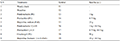
The experiment was conducted using a single-factor Randomized Complete Block Design (RCBD) with nine treatments and three replications (Table 1).
|
Table 1 Different treatments used in experiment |
2.3 Crop establishment and field management
Nitrogen, phosphorus, and potassium were applied at 100:30:30 kg N:P2O5:K2O per hectare. Half of the nitrogen and the full doses of phosphorus and potassium were incorporated as basal fertilizer during final land preparation; the remaining nitrogen was top-dressed at panicle initiation. Seeds of Hardinath-5 were sown manually in shallow furrows at 40 kg/ha on 25 June 2024, using 20 cm × 10 cm spacing and a sowing depth of 4-5 cm. Pre-emergence treatments (pendimethalin, pretilachlor and oxadiargyl) were applied within 24 h after sowing, and post-emergence treatments (bispyribac sodium) were applied at 25 days after sowing (DAS). In the combination treatments, 2,4-D was applied as a post-emergence spray at 25 DAS. For pendimethalin + 2,4-D and pretilachlor + 2,4-D, the pre-emergence herbicide was applied within 24 h after sowing and 2,4-D was applied as a follow-up spray at 25 DAS to control broad leaf weeds and sedges that escaped the pre-emergence treatment. For bispyribac sodium + 2,4-D, the two herbicides were tank-mixed and applied together as a single post-emergence spray at 25 DAS. All herbicide sprays were applied with a knapsack sprayer fitted with a flat-fan nozzle. No weed-control measure was used in the weedy-check plots. Weed-free plots were maintained by manual weeding at frequent intervals. One pre-sowing irrigation and six subsequent irrigations were applied as required during the crop season.
2.4 Harvesting and yield determination
The crop was harvested manually with serrated sickles and sun-dried in the field for three days. Grain and straw yields were determined from the net plot. Grain yield was adjusted to a standard moisture content of 14% and expressed in kg/ha using the following equation:

Where, Wi is the initial grain weight (kg), Mi is the initial grain moisture content (%), and A is the net plot area (m2).
Straw yield was calculated as total biomass yield minus grain yield. To estimate dry straw yield, a 500-g fresh-straw sample was collected from each plot, sun-dried for more than 10 days, weighed, and used to adjust the total straw yield to t/ha. Biological yield was calculated as the sum of grain yield and straw yield using the following equation:

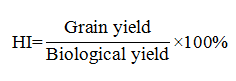
Harvest index (%) was calculated as follows:
2.5 Observations recorded
2.5.1 Growth and yield measurements
Ten hills were randomly selected and tagged in each plot. Plant height was measured at 15-day intervals from 30 DAS to physiological maturity. Before heading, height was measured from the soil surface to the tip of the highest leaf; after heading, it was measured to the tip of the panicle. The mean of the ten plants represented the plot value.
Two hills were sampled destructively from the designated sampling rows of each plot at 15-day intervals from 30 DAS until harvest. Above-ground biomass, excluding roots, was collected and dried at 70 °C for 72 h in a hot-air oven. Dry matter production was expressed as gm2. Crop growth rate (CGR) was calculated for each sampling interval following Brown (1984):
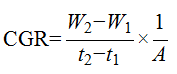
Where, W1 and W2 are total dry weights at t1 and t2 DAS, respectively, and A is the sampled ground area in m2.
2.5.2 Yield and yield attributing parameters
The number of effective tillers was recorded at crop maturity by counting all panicle-bearing tillers within a randomly selected 1 m² area of each net plot. The number was expressed as effective tillers per square meter. The average length of ten panicles from the base of rachis to the tip of panicle was measured and expressed as length of panicle in cm.
The number of grains per panicle was counted manually from the ten panicles in each plot and the average number of filled grain from ten panicles was taken as the number of filled grain per panicle. At the same time, the number of unfilled grains per panicle was also counted to find out the sterility percentage of each treatment. Thousand grains were counted from randomly selected grain yield of net plot and weighted.
The sterility percentage was taken from the total filled grains and unfilled grains of each panicle and the calculation is done by using the formula as follows:

2.6 Weed index
It was calculated by using the formula:
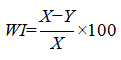
Where, X = Yield from minimum weed competition plot; Y = Yield from the treatment for which WI is to be worked out.
2.7 Statistical analysis
Data for each sampling date or interval were analyzed separately using a randomized complete block design (RCBD) model, as follows:
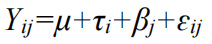
Where, Yij represents the observed value for treatment i in block j, μ is the overall mean, τi is the effect of treatment i, βj is the effect of block j, and ɛij is the random experimental error.
Treatment was considered a fixed effect and block was included as a blocking factor. The plot was the experimental unit and there were three blocks (n = 3). Plant height and dry matter were analyzed separately at each sampling date, and CGR was analyzed separately for each sampling interval; no Treatment x Time model was fitted. Analyses were performed in R version 4.3.1 using agricolae package. When the treatment effect was significant at p ≤ 0.05 , means were separated using Duncan’s multiple range test (DMRT) at the 5% level.
3 Results and Analysis
3.1 Plant height (cm)
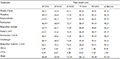
Plant height increased from 30 DAS to harvest in all treatments. Treatment differences were significant at each measurement date. Bispyribac sodium + 2,4-D had the numerically greatest height from 30 to 90 DAS, while the weed-free and oxadiargyl treatments were in the same statistical group at most of these dates (Table 2). At harvest, the weed-free and bispyribac sodium + 2,4-D treatments had the greatest values (93.4 cm), and both were statistically grouped with pretilachlor, bispyribac sodium, oxadiargyl, and pretilachlor + 2,4-D. The weedy check had the lowest harvest height (87.4 cm).
|
Table 2 Effect of herbicides on plant height at different time interval on direct seeded rice cultivation at Chitwan during 2024 Note: Treatment means followed by the same letter (s) within the column are non-significantly different among each other at 5% level of significance. DAS= Days after sowing, SEm = Standard error of mean and CV= Coefficient of variation |
3.2 Dry matter production (g/m2)
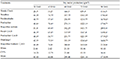
Dry matter production increased progressively from 30 to 90 DAS in all treatments. The weedy check had the lowest dry matter at every sampling date. Bispyribac sodium was numerically greatest at 30 DAS and 75 DAS, whereas bispyribac sodium + 2,4-D was numerically greatest at 45, 60, and 90 DAS. At 90 DAS, bispyribac sodium and bispyribac sodium + 2,4-D were in the same statistical group and had dry matter values of 2093.4 g/m2 and 2120.8 g/m2, respectively. The treatment differences and grouping letters are provided in Table 3.
|
Table 3 Effect of herbicides on dry matter production at different time interval on direct seeded rice cultivation at Chitwan during 2024 Note: Treatment means followed by the same letter (s) within the column are non-significantly different among each other at 5% level of significance. DAS= Days after sowing, SEm = Standard error of mean and CV= Coefficient of variation |
3.3 Crop growth rate (CGR)
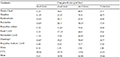
Crop growth rate followed a common temporal pattern across treatments: it was lower during 30-45 DAS, increased during 45-60 DAS, reached its maximum during 60-75 DAS, and declined during 75-90 DAS (Table 4). Bispyribac sodium + 2,4-D had the greatest CGR during the first three intervals, although it was statistically grouped with several treatments during 30-45 and 60-75 DAS. Bispyribac sodium and bispyribac sodium + 2,4-D had the greatest CGR during 75-90 DAS and were in the same statistical group. The weedy check had the lowest CGR during 45-60, 60-75, and 75-90 DAS.
|
Table 4 Effect of herbicides on CGR at different time interval on direct seeded rice cultivation at Chitwan during 2024 Note: Treatment means followed by the same letter (s) within the column are non-significantly different among each other at 5% level of significance. DAS= Days after sowing, SEm = Standard error of mean and CV= Coefficient of variation |
3.4 Yield attributes
Treatment effects were significant for effective tillers, panicle length, filled grains, unfilled grains, and sterility percentage. Bispyribac sodium + 2,4-D and bispyribac sodium had the greatest effective-tiller values, with 287 and 284 tillers per square meter, respectively, and were statistically grouped together (Table 5). The weedy check had the lowest value, with 151 tillers per square meter. Panicle length was greatest with bispyribac sodium (25.8 cm) and bispyribac sodium + 2,4-D (25.7 cm), both in the same statistical group and both greater than the weedy check (22.9 cm).
|
Table 5 Effect of herbicides on effective tiller, panicle length, number of grain and sterility percent on direct seeded rice cultivation at Chitwan during 2024 Note: Treatment means followed by the same letter (s) within the column are non-significantly different among each other at 5% level of significance. SEm = Standard error of mean and CV= Coefficient of variation |
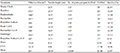
Bispyribac sodium + 2,4-D had the greatest number of filled grains (161 grains per panicle), followed by bispyribac sodium (158 grains per panicle); these treatments were statistically grouped together. The weedy check had the lowest filled-grain value (132 grains per panicle). The weedy check had the highest unfilled-grain count (39 grains per panicle) and sterility (22.81%), while all weed-management treatments were in the same statistical group for these two variables.
3.5 Test weight (1000-grain weight)
1000-grain weight differed significantly among treatments. The weed-free treatment had the numerically greatest value (24.8 g) and was statistically grouped with bispyribac sodium + 2,4-D (24.2 g), bispyribac sodium (24.0 g), and oxadiargyl (24.0 g). The weedy check had the lowest value (21.1 g).
3.6 Grain yield, straw yield and harvest index
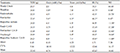
Grain yield was lowest under the weedy check (2.1 t/ha). Bispyribac sodium (6.1 t/ha) and bispyribac sodium + 2,4-D (6.0 t/ha) had the greatest numerical yields and were statistically grouped together. The weed-free treatment (5.9 t/ha) was also in the same statistical group as these treatments. Pretilachlor produced 5.4 t/ha and was statistically grouped with the weed-free treatment, whereas pendimethalin + 2,4-D produced 3.7 t/ha.
Straw yield was lowest under the weedy check (4.6 t/ha). Bispyribac sodium + 2,4-D produced the greatest numerical straw yield (7.1 t/ha), followed by the weed-free treatment (7.0 t/ha) and bispyribac sodium (6.9 t/ha); these three treatments were statistically grouped together.
Harvest index was lowest under the weedy check (31.3%). Bispyribac sodium had the greatest numerical harvest index (46.9%) and was statistically grouped with pretilachlor, weed-free, and bispyribac sodium + 2,4-D. The remaining treatment means are presented in Table 6.
|
Table 6 Effect of herbicides on TGW, grain yield, straw yield, HI and weed index on direct seeded rice cultivation at Chitwan during 2024 Note: Treatment means followed by the same letter (s) within the column are non-significantly different among each other at 5% level of significance. SEm = Standard error of mean and CV= Coefficient of variation |
3.7 Weed index (WI)
The weed index clearly reflected the effectiveness of different weed management practices in reducing yield losses. The highest weed index (64.41%) was recorded in the weedy check, indicating severe yield reduction due to weeds. Negative weed index values observed under bispyribac sodium (−3.39%) and bispyribac sodium + 2,4-D (−1.69%) indicate slightly higher yields than the weed-free treatment, possibly due to reduced crop disturbance and better resource use efficiency under chemical control. Higher weed index values in pendimethalin + 2,4-D and pendimethalin alone treatments suggest comparatively lower weed control efficiency, especially against later-emerging weeds.
4 Discussion
4.1 Vegetative growth and biomass
Plant height, dry matter production, and CGR were greater under the more effective weed-management treatments than under the weedy check, especially during the later growth stages. The temporal pattern of CGR, with an increase toward 60-75 DAS followed by a decline during 75-90 DAS, is consistent with the changing balance between vegetative biomass accumulation and reproductive development. The present experiment did not measure weed density, weed biomass, nutrient uptake, or photosynthetic traits. Therefore, the greater growth observed under bispyribac sodium treatments may be associated with reduced crop-weed interference, but the mechanism was not directly demonstrated. Previous DSR research has similarly linked timely weed suppression with improved crop growth, although responses depend on weed spectrum, environment, and application timing (Chauhan and Johnson, 2011; Mahajan et al., 2014; Shekhawat et al., 2020).
4.2 Yield components
Bispyribac sodium and bispyribac sodium + 2,4-D produced the greatest effective-tiller and filled-grain means, and both treatments were statistically grouped together. Their lower sterility values were also numerically favorable, although all weed-management treatments were statistically grouped for sterility and unfilled grains. This pattern suggests that maintaining crop growth during tillering and reproductive development may partly reflect improved yield-component formation, but the study did not directly measure the physiological processes responsible. The response is directionally similar to reports from DSR systems in Nepal and South Asia, where timely weed-management treatments improved tiller formation and grain filling (Dangol et al., 2020; Poudel et al., 2020; Sharma et al., 2021). Direct comparison of response magnitude should nevertheless be made cautiously because the cited studies differed in location, variety, weed flora, and treatment schedule.
4.3 Grain yield and biomass partitioning
The most important result was that bispyribac sodium alone and bispyribac sodium + 2,4-D produced statistically similar grain yields, 6.1 and 6.0 t/ha, respectively. The weed-free treatment also belonged to the same statistical group at 5.9 t/ha. Thus, the data do not support the claim that adding 2,4-D increased grain yield over bispyribac sodium alone. The single-herbicide treatment may be operationally simpler and uses fewer active ingredients, whereas the combination could be considered only where the weed spectrum, label requirements, compatibility, and resistance-management strategy justify it. Because treatment costs and returns were not measured, no economic advantage can be assigned to either option. The greater straw yield and harvest index under effective treatments indicate improved total biomass production and partitioning, but these interpretations are based on yield measurements rather than direct measurements of assimilate allocation.
4.4 Weed-management implications
Under the conditions of this experiment, bispyribac sodium alone and bispyribac sodium + 2,4-D were the most promising treatments for grain yield and several yield attributes. However, a weed index based on grain yield does not replace direct measurements of weed density, species composition, or weed biomass. The negative weed-index values for the two bispyribac sodium treatments indicate that their numerical yields exceeded the weed-free treatment, but they do not by themselves demonstrate broader weed-spectrum control or long-term sustainability. Herbicide selection should therefore be integrated with cultural and mechanical practices and should account for application safety, crop tolerance, resistance risk, and local label recommendations (Kaur and Singh, 2017; Gyawaly et al., 2021; Shekhawat et al., 2020).
4.5 Limitations and future research
This study has three important limitations. First, weed density, species composition, and weed biomass were not measured, so treatment effects on the weed community cannot be quantified directly. Second, the experiment was conducted at one location in one season with one rice variety and three replications, which limits generalization to other environments. Third, no economic analysis was conducted, so the relative profitability of the single and combination herbicide treatments is unknown. Multi-location and multi-season trials should include direct weed measurements, treatment-by-environment assessment, crop-safety observations, herbicide-resistance considerations, and partial-budget or full economic analysis.
5 Conclusion
The present study demonstrated that weed-management treatment affected the growth, yield attributes, and productivity of direct-seeded rice under the conditions of Chitwan in 2024. Bispyribac sodium alone and bispyribac sodium + 2,4-D produced the greatest numerical grain yields, 6.1 and 6.0 t/ha, respectively, and both were statistically comparable with the weed-free treatment. Because the two bispyribac sodium treatments did not differ significantly in grain yield, the present data do not justify recommending the combination as superior to the single herbicide. Bispyribac sodium alone may be considered an effective option, while the choice between treatments should consider weed spectrum, label compliance, resistance management, crop safety and cost.
Adhikari B.B., 2021, Review on scope and challenges of direct seeded rice in Nepal, Agronomy Journal of Nepal, 5: 88-96.
https://doi.org/10.3126/ajn.v5i01.44786
Chauhan B.S., 2012, Weed ecology and weed management strategies for dry-seeded rice in Asia, Weed Technology, 26(1): 1-13.
https://doi.org/10.1614/WT-D-11-00105.1
Chauhan B.S., and Johnson D.E., 2011, Growth response of direct-seeded rice to weed competition in the tropics, Crop Protection, 30(6): 803-809.
https://doi.org/10.1016/j.cropro.2011.03.002
Dangol R., Pandey S.R., Shrestha B., Thapa Magar D.B., and Bhattarai N., 2020, Effects of different weed management practices on growth and yield of direct-seeded spring rice in Jhapa, Nepal, Cogent Food & Agriculture, 6(1): 1825040.
https://doi.org/10.1080/23311932.2020.1825040
Gyawaly P., Sah S.K., Bhattarai R.K., Chaulagain B., and Pantha P., 2021, Managing weeds in dry direct seeded rice: A profound challenge, Agronomy Journal of Nepal, 5: 124-135.
https://doi.org/10.3126/ajn.v5i01.44826
Hossain M., Begum M., Rahman M., and Akanda M., 2016, Weed management in direct-seeded rice system: A review, Progressive Agriculture, 27(1): 1-8.
https://doi.org/10.3329/pa.v27i1.27526
Kaur S., and Singh S., 2017, Integrated weed management in direct seeded rice: A review, Agricultural Reviews, 38(1): 1-12.
https://doi.org/10.18805/ag.v38i01.8987
Mahajan G., Chauhan B.S., and Gill M.S., 2014, Dry-seeded rice culture in Punjab state of India: Lessons learned from farmers’ experiences, Field Crops Research, 161: 11-21.
https://doi.org/10.1016/j.fcr.2014.03.002
Marasini D., Sah S.K., Marahatta S., and Dhakal S., 2020, Weed dynamics and productivity of dry direct-seeded rice in relation to tillage and weed management practices, Journal of Agriculture and Forestry University, 4: 101-108.
https://doi.org/10.3126/jafu.v4i1.47054
Ministry of Agriculture and Livestock Development (MoALD), 2026, Statistical information on Nepalese agriculture 2024/25, Government of Nepal, Ministry of Agriculture and Livestock Development.
Poudel R., Marahatta S., Kandel S., and Puri P., 2020, Evaluation of different weed management practices in dry direct-seeded spring rice at Baniyani, Jhapa, Nepal, Archives of Agriculture and Environmental Science, 5(4): 535-542.
https://doi.org/10.26832/24566632.2020.0504016
Raj S.K.S., and Syriac E.K., 2017, Weed management in direct seeded rice: A review, Agricultural Reviews, 38(1): 41-50.
https://doi.org/10.18805/ag.v0iOF.7307
Selvaraj A., and Hussainy S.A.H., 2020, Evaluating weed management practices for direct sown drum seeded rice (Oryza sativa): A review, Crop Research, 55(3-4): 139-151.
https://doi.org/10.31830/2454-1761.2020.023
Sharma A., Sharma S., Yadav P.K., and Sodari B., 2021, Direct seeded rice and its prospects in Nepal: A review, Turkish Journal of Agriculture - Food Science and Technology, 9(12): 2355-2364.
https://doi.org/10.24925/turjaf.v9i12.2355-2364.4383
Shekhawat K., Rathore S.S., and Chauhan B.S., 2020, Weed management in dry direct-seeded rice: A review on challenges and opportunities for sustainable rice production, Agronomy, 10(9): 1264.
https://doi.org/10.3390/agronomy10091264


. PDF(254KB)
. FPDF(win)
. FPDF(mac)
. HTML
. Online fPDF
Associated material
. Readers' comments
Other articles by authors
. Abhishek Pokhrel

Related articles
. Direct-seeded rice
. Weed management
. Bispyribac sodium
. 2,4-D
. Grain yield
. Weed index
Tools
. Email to a friend
. Post a comment