Research Article
Impact of Various Seed Priming on Germination of Okra (Abelmoschus esculentus) in Laboratory Condition 
 ,
Norgin Blon
 ,
Aarati Kafle ,
Abishek Shrestha Author Correspondence author
International Journal of Horticulture, 2025, Vol. 15, No. 6 doi: 10.5376/ijh.2025.15.0031
Received: 25 Jul., 2025 Accepted: 05 Nov., 2025 Published: 26 Dec., 2025
Khadka D., Blon N., Kafle A., and Shrestha A., 2025, Impact of various seed priming on germination of okra (Abelmoschus Esculentus) in laboratory condition, International Journal of Horticulture, 15(6): 312-322 (doi: 10.5376/ijh.2025.15.0031)
Seed priming is a pre-sowing technique involving controlled hydration to initiate pre-germinative metabolic activities in seeds, promoting growth and vitality in young plants without actual sprouting. The experiment was executed in Completely Randomized Design (CRD) with eight priming sources (T1: hydropriming i.e. pre-soaked about 12 hours, T2: halopriming i.e. 1%NaCl, T3: osmo-priming i.e. 1%KNO3, T4: hormonal priming i.e.2.5 ppm GA3, T5: nutri-priming i.e. 1.5ppm SOP, T6: botanical priming i.e. 1ppm neem extract, T7: biological priming i.e. 0.1%cow urine, T8: hydro unsoaked priming) and replicated thrice. Apart from T8, every treatment was saturated for 12 hours and then air dehydrated for 2 hours prior to sowing, while seeds in T8 were only watered along with all the treatments till the end of research. In comparison to hydro (unsoaked) priming, all treatments had a significant meaningful effect on all the germination parameters. The highest shoot length (10.12cm) was observed at T4 whereas enhancement of root length (4.16cm) occurred with the priming with T3. The study found that botanical priming and hydro(presoaked)priming enhanced germination plus seed vigor in okra. With this, T8 takes the longest (2.76 days) and T6 takes the shortest (1.34 days) on average. Based on their ability to germinate quickly and uniformly under controlled conditions, T1 showed the high seed vigor index (553) while the T2 showed the lowest seed vigor index (332.3) that assessed the overall quality and potential performance of okra seeds. The priming with T6 (botanical priming) was found to be best in terms of maximum seed germination (90.00%), speed of germination (4.05seeds per day), germination rate index (7.72seeds per day) and germination energy (0.9). Thus, botanical priming was found to be effective among different priming techniques under lab conditions which need to be further investigated under large, open field conditions with different varieties.
1 Introduction
Okra (Abelmoschus esculentus (L.) Moench), a member of the Malvaceae family, is a native crop of tropical Africa (Lamichhane et al., 2021). Okra is a popular summer seasonal crop widely cultivated across the Terai, mid-hill region due to its short growth period and high market demand. Okra is good source of vitamins A, B and C (Hussein, 2015). Proteins, unsaturated fatty acids, vitamin B6, folic acid, fiber, and comparatively small amounts of copper, iron, manganese, and zinc can all be found in okra seeds (Rahman, 2016). Okra has been known to be beneficial to people suffering from leucorrhea and general weakness. Due to its high iodine content, its fruits are considered useful to control goiter and have medicinal value in curing ulcers and relieve from haemorrhoids (Sarker et al., 2005). For its robust nature, dietary fibers and distinct seed protein balanced in both lysine and tryptophan amino acids; it is also called “a perfect villager’s vegetable” (Kumar et al., 2010). Okra is generally grown for its delicate pods and eaten raw, steamed, boiled, or fried, among other ways (Farinde, 2007). Okra is a powerhouse of valuable nutrient, nearly half of which is soluble fiber in the form of gum and pectin’s which help to lower serum cholesterol, reducing the risk of heart disease. The other half is insoluble fiber which help to keep the intestinal tract healthy and also has a significant nutritional value that contains a high percentage of water, averaging 85% (Hardeep Kaur, 2015).
The primary issue with okra seed is its uneven and delayed emergence, which leads to inefficient use of fertilizers, uneven harvesting, and ultimately low yield (Rahman, 2016). Even if the seeds of okra are viable, okra seeds germinate irregularly and very slowly. Seed hardness is a major issue in okra cultivation because it causes issues with early germination and consistent field stand, which results in reduced, delayed, and unpredictable emergence (Purquerio et al., 2010). Below 20 ºC, it does not germinate (Naheed et al., 2013). Poor seed germination at suboptimal temperatures is a typical occurrence and a major source of concern for growers. The stiff seed coat obstructs seed germination by preventing water absorption and uniform embryonic growth and development (Mereddy et al., 2000). According to MoALD (2022), okra occupies about 9,584 hectares, producing 110,565 metric tonnes annually with an average yield of 11.5 tonha. However, low seed germination and poor seedling vigor often limit productivity.
Seed priming is a solution for okra's hard seed coat (Lamichhane et al., 2021). Seed priming is a pre-sowing seed treatment in which seed is permitted to imbibe enough water to start pre germinative metabolic processes but insufficient for radicle protrusion because with radicle protrusion seed loses its desiccation tolerance (Rahman, 2016). A seed priming is the technique of carefully hydrating seeds in order to potentially encourage quicker and more consistent seed germination and plant growth (Sharma et al., 2014). Seed priming improves seed germination performance by starting early processes of germination but not cell division (Yuan et al., 2010). Priming enables some of the metabolic processes to occur necessarily for germination before actual germination to get start (Bradford, 1990; Yari et al., 2010). Priming stimulates the production or activation of some enzymes that catalyze the mobilization of storage reserves in seed, while endosperm weakens by hydrolase activities (Shah et al., 2011). Additionally, priming boosts the synthesis of antioxidants such as superoxide dismutase, catalase, and peroxidase, which aid in shielding the cell from lipid peroxidation-induced membrane damage. Similarly, in primed seed, the generation of adenosine triphosphate (ATP) increases (Gallardo et al., 2001). Seed priming improves seed performance through quick, uniform germination, normal, and vigorous seedlings. This has significant agronomic ramifications, particularly under unfavorable germination circumstances (Cantliffe, 2003). Seed priming caused early flowering, enhanced growth rate, and increased plant height. It also promoted synchronized germination, increased seed vigor, and growth of seedlings under adverse condition (Basra et al., 2003; Bajehbaj, 2010).
Several kinds of seed priming techniques have been employed to improve the germination and vigor of okra (Lamichhane et al., 2021). These include hydro-priming, where seeds undergo soaking in pure water and subsequent re-drying to their original moisture content before planting. Osmo-priming involves soaking seeds in an osmotic solution like KNO3 while hormonal priming requires seeds to be soaked in plant growth regulators like GA3 and NAA. Halo-priming employs salt solutions for soaking seeds. Nutri-priming encompasses the soaking of seeds in nutrient solutions, providing essential elements for enhanced germination and early seedling development. On the other hand, biological priming involves soaking seeds in biological substances such as cow urine, leveraging the beneficial properties of these compounds to promote seed vigor and overall plant growth. Botanical priming refers to a seed treatment method where seeds are subjected to extracts or compounds derived from plants (Lutts et al., 2016). The problem of low germination due to the hard seed coat in okra can be overcome by seed priming. The experiment sought to investigate how different priming treatments could influence the germination of okra seeds.
2 Materials and Methods
2.1 Research site and duration of research
An experiment was carried out in the Agronomy lab (latitude: 26°54'6.84" to 27°08'46.90" and longitude: 85°47'42.67" to 85°56'42.97") at College of Natural Resources Management, Bardibas from 6 to 12 October 2023. It is located 90 m above sea level.
2.2 Weather condition
The annual high and low temperatures were 32.52 °C & 22.32 °C respectively with average annual precipitation 139.49 mm (Department of Hydrology and Meteorology, 2023). It’s exhibiting four distinct seasons: a mild Spring (March-May), a Rainy season (June-August), Autumn (September-November), and a cool Winter (December-February). Since the research was conducted in lab during the month of October, an average temperature of about 29 °C and 6 hours of daily light was maintained via: sodium light.
2.3 Experimental details
The experiment comprised of 8 treatments laid out in Completely Randomized Design (CRD) each replicated 3 times.
2.4 Operational activities
2.4.1 Seed treatment and planting
Okra seeds of variety Arka Anamika were obtained from Phuyal Agrovet Centre, Bardibas. Procured seeds were truthfully labelled having initial germination percentage of minimum 70% with physical purity of 97%. The treatment solutions were prepared (Table 1), and seeds were primed with respective treatments for 12 hours followed by shade drying for 2 hours. From each treatment ten seeds were sown in individual petri dish and then were watered. All the replicate-trays were watered at 2 pm daily until the experiment was completed. The data were collected from the first day after germination till the final day of experiment.
 Table 1 Treatments and their concentration used in this research Note: NaCl- sodium chloride; KNO3- potassium nitrate; GA3- gibberellic acid; SOP- sulphate of potash; ppm- parts per million |
2.4.2 Data collection
Number of germinated seeds: From the start till the end of the experiment, the number of seeds germinated were recorded. Time taken for germination: Number of days required by seeds for germination was also recorded. Root length: The root lengths of the seedlings were measured at the final day of the experiment by randomly selecting 5 seedlings from each petri dish. Shoot length: The shoot lengths of the seedlings were measured at the final day of the experiment by randomly selecting 5 seedlings from each petri dish. Seed germination percentage, Germination rate, Mean germination time, Seedling vigor index, and Allometric coefficient were calculated (Table 2).
 Table 2 Formulas related to the variables related to seed germination used in this research Note: N (The number of germinated seeds), Nt (Number of seeds used), D (The number of days after germination), RL (Root length), SL (Shoot length), G (Ultimate germination), n (nth day), SGP (Seed germination percentage), SGE (Seed germination energy), GRI (Germination rate index), MGT (Mean germination time), SVI (Seedling vigor index), SoG (Speed of germination) and AC (Allometric coefficient) |
2.5 Statistical analysis
The obtained data were then analyzed by using MS-Excel and GenStat (15th edition). The data recorded as percentage were transformed to the respective angular (arcsine) values before subjecting them to statistical analyses and mean comparisons were done by Duncan Multiple Range Tests (DMRT) at 0.05 level of significance.
3 Results and Analysis
3.1 Effect on the root and shoot length of seedlings
The application of various priming treatments showed the significant variation in the root length and shoot length of seedlings as given on Table 3. The maximum roots length was observed in osmo priming (4.16 cm) followed by hydropriming (unsoaked) (4 cm), botanical priming (3.5 cm), hormonal priming (3 cm), hydropriming (12 hours soaked) (2.85 cm), nutritional priming (2.81 cm), biological priming (2.34 cm) and halo priming (1.80 cm) respectively. Similarly, the maximum shoots length was recorded in hormonal priming (10.12 cm) followed by hydropriming (12 hours soaked) (10 cm), botanical priming (9.11 cm), biological priming (8.99 cm), nutritional priming (7.89 cm), osmo priming (6.97 cm), halo priming (6.49) and hydro (unsoaked) (5.65 cm) respectively as shown in Figure 1.
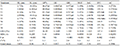 Table 3 Effect of different seeds priming on germination and its parameters Note: LSD = Least significant difference; CV% = Coefficient of variation; SEM (±) = Standard error of mean; NS = Non significant; values superscripted with different letters in same column are significantly different at p≤0.05 (DMRT) |
(1).png) Figure 1 Effect of different priming treatments on root and shoot lengths of okra seedlings Note: AV RL- Average root length; AV SL- Average shoot length; NaCl- Sodium chloride; KNO3- Potassium nitrate; GA3- Gibberellic acid; SOP- Sulphate of potash; ppm- Parts per million |
3.2 Effect on seed germination percentage (SGP)
The statistical examination revealed notable variances among treatments at a significance level of p≤0.05 (Figure 2). The results showed that all seed priming treatments were found effective in enhancing the germination percentage as compared to hydro (unsoaked) priming. However, among them, the T6 i.e. priming with 1ppm neem extract showed a maximum seed germination percentage of 90% (Table 3). T1, T3, T5, T2, T4, T7 increased germination percentage but were non-significant among themselves (LSD=16.49).
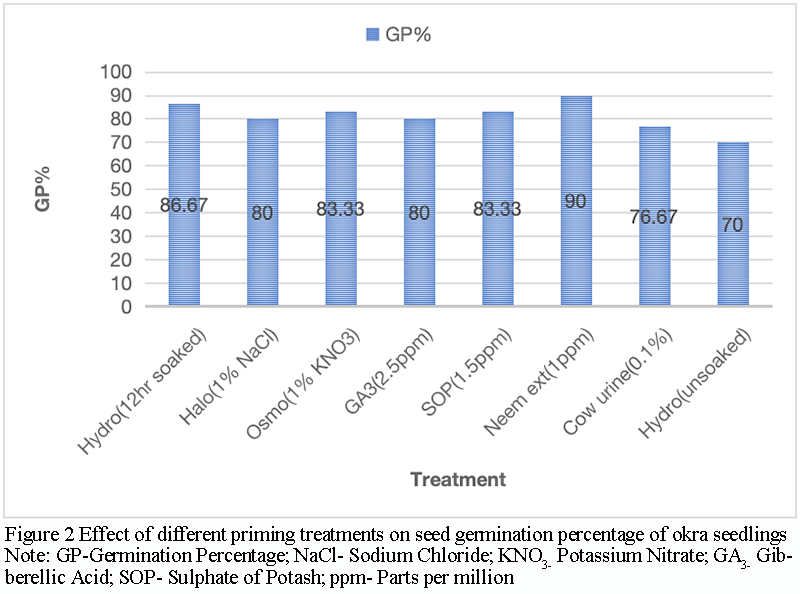 Figure 2 Effect of different priming treatments on seed germination percentage of okra seedlings Note: GP-Germination Percentage; NaCl- Sodium Chloride; KNO3- Potassium Nitrate; GA3- Gibberellic Acid; SOP- Sulphate of Potash; ppm- Parts per million |
3.3 Effect on seed vigor index (SVI)
Notable variations were observed due to various seed priming treatments on seed vigor index (Figure 3). T1 i.e. hydropriming (12 hours soaked) showed a greater influence on seed vigor as compared to other priming techniques. The maximum (533) and the minimum (337.7) seed vigor index was recorded in the treatment T1 i.e. hydropriming (pre-soaked) and T2 i.e. halopriming respectively. Following treatment T1, subsequent treatments that presented greater seed vigor index was T6 (520), T4 (505), T3 (460), T5 (435), T7 (421), T8 (339.9) respectively.
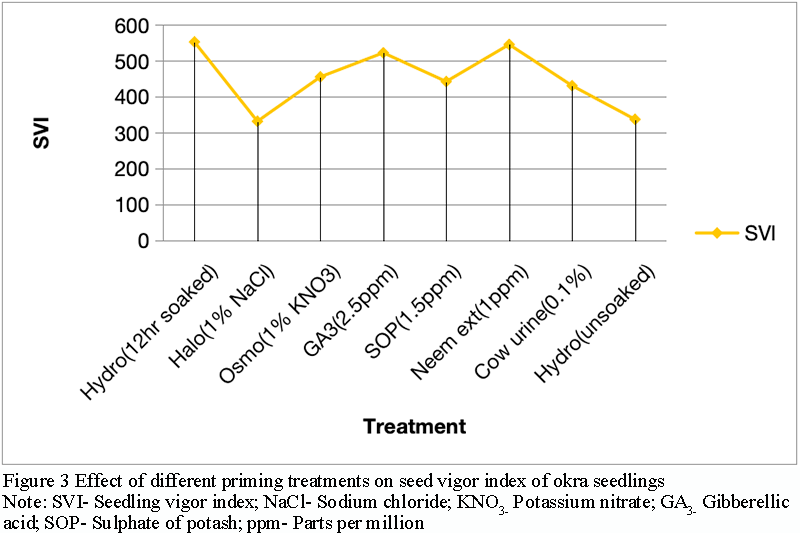 Figure 3 Effect of different priming treatments on seed vigor index of okra seedlings Note: SVI- Seedling vigor index; NaCl- Sodium chloride; KNO3- Potassium nitrate; GA3- Gibberellic acid; SOP- Sulphate of potash; ppm- Parts per million |
3.4 Effect on germination rate index (GRI) and mean germination time (MGT)
The germination rate and mean germination time varied with different treatments significantly (p<0.005). The maximum germination rate was observed in T6 (botanical priming -Neem extract) 7.72 seeds/day and the minimum rate was observed in T8 (hydro-unsoaked) 2.75 seeds/day. While mean germination time was found highest for the T8 i.e. 2.76 days and lowest for the T6 i.e. 1.34 days. A highly significant (p≤0.01) negative correlation (r = -0.90) was found between GRI and MGT representing a trend of increase in Mean Germination Time (MGT) with a decrease in Germination Rate (GRI) (Figure 4).
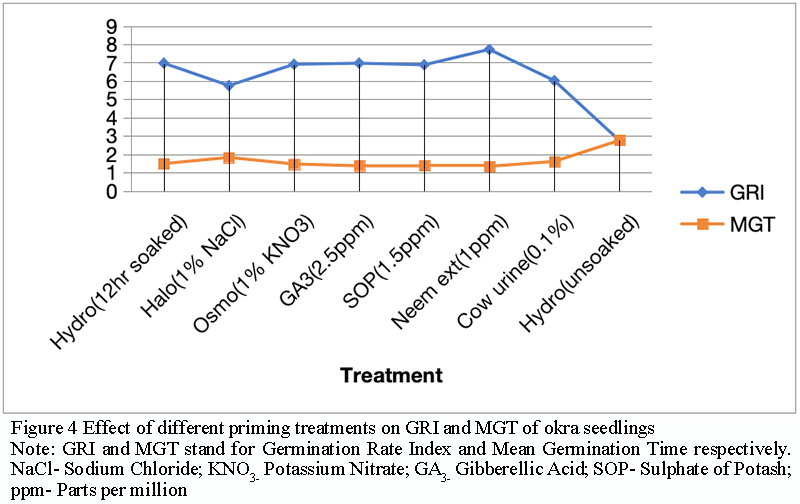 Figure 4 Effect of different priming treatments on GRI and MGT of okra seedlings Note: GRI and MGT stand for Germination Rate Index and Mean Germination Time respectively. NaCl- Sodium Chloride; KNO3- Potassium Nitrate; GA3- Gibberellic Acid; SOP- Sulphate of Potash; ppm- Parts per million |
3.5 Effect on germination energy and speed of germination
The statistical analysis of Figure 5 showed non-significant differences in treatments at p ≤ 0.05 levels but however results showed that seed priming treatments with neem extract were found effective in enhancing the germination energy compared to hydropriming (unsoaked). Correlation between GE and SoG was found positive (r=0.55) which is significant at (p ≤ 0.01). The seeds primed with neem extract showed high germination energy (0.9) and speed of germination (4.056 seeds/day). Similarly, the lowest germination energy (0.7) and speed of germination (1.750 seeds/days) were recorded in hydro (unsoaked priming) (Figure 5; Figure 6).
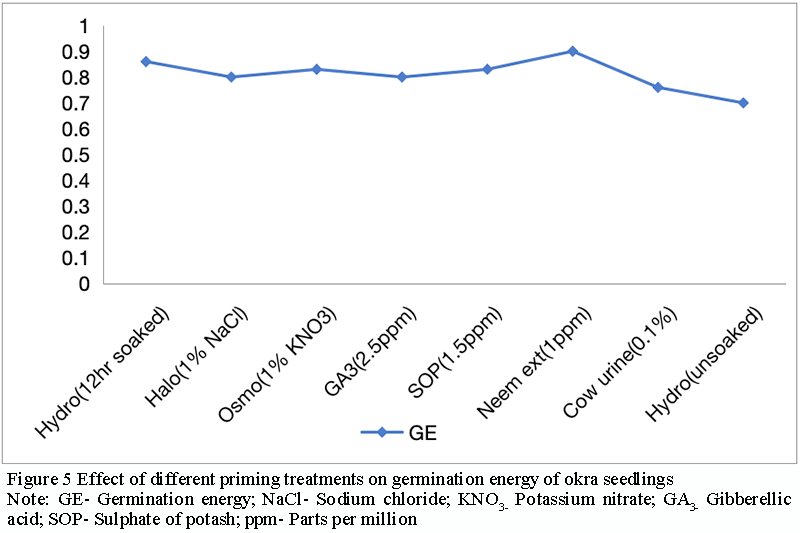 Figure 5 Effect of different priming treatments on germination energy of okra seedlings Note: GE- Germination energy; NaCl- Sodium chloride; KNO3- Potassium nitrate; GA3- Gibberellic acid; SOP- Sulphate of potash; ppm- Parts per million |
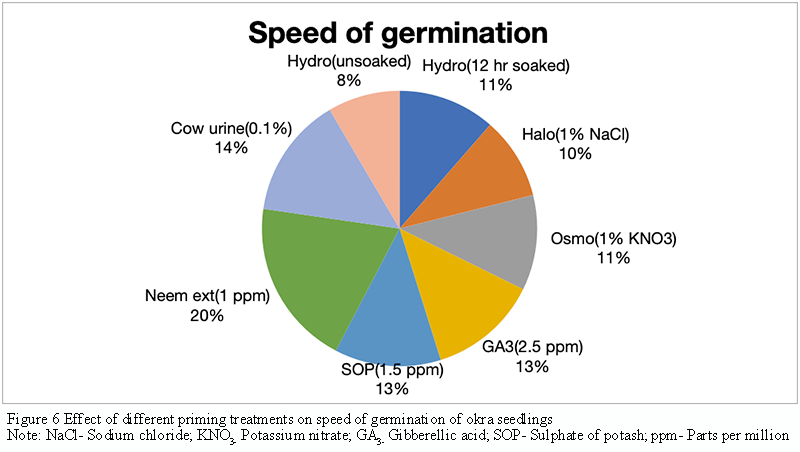 Figure 6 Effect of different priming treatments on speed of germination of okra seedlings Note: NaCl- Sodium chloride; KNO3- Potassium nitrate; GA3- Gibberellic acid; SOP- Sulphate of potash; ppm- Parts per million |
3.6 Effect on allometric coefficient (AC)
Our research indicates that the seed priming treatments had a significant effect on the AC value at a 5% level of significance. The maximum AC value 0.710,9 was observed in hydro (unsoaked) treatment (T8) and the minimum AC value 0.273,5 was observed in the treatment (T1) Hydro (soaked) as shown in Figure 7.
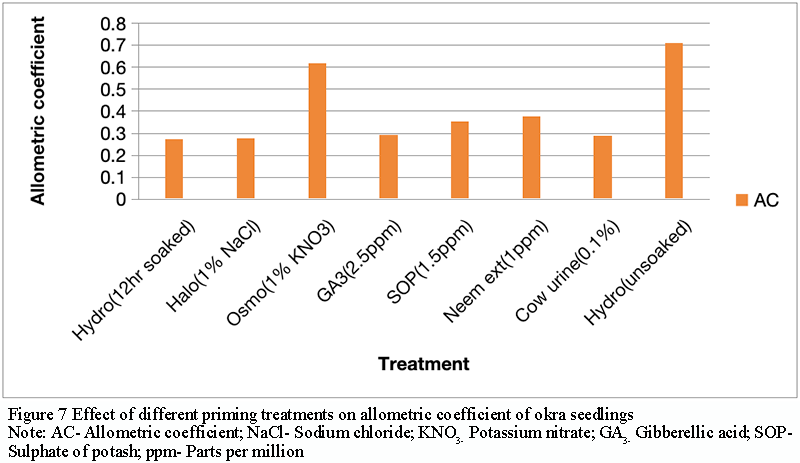 Figure 7 Effect of different priming treatments on allometric coefficient of okra seedlings Note: AC- Allometric coefficient; NaCl- Sodium chloride; KNO3- Potassium nitrate; GA3- Gibberellic acid; SOP- Sulphate of potash; ppm- Parts per million |
4 Discussion
The priming of seeds with various treatments significantly resulted in increased various parameters relating to the germination and growth of okra seedlings. The parameters like root and shoot lengths of seedlings, germination percentage, seed vigor index, germination rate index, mean germination time, germination energy, speed of germination and allometric coefficient were recorded superior from seeds that were primed with various treatments than control i.e. unprimed seeds.
The statistical analysis of this research presented that better root length and shoot length were attained from osmo priming (KNO3) and hormonal priming (GA3) respectively. This research with furthermore supported by Singh (2019) where maximum root length was due to increase in cytochrome activity by KNO3. Also, the results from the research by Chiranjeevi et al. (2017) suggested that seed treatment with KNO3 were found significantly superior to all other treatments in relation to the length of roots of okra. This is due to the fact potassium nitrate has been reported to raise the ambient oxygen level by making less oxygen available for the citric acid cycle. Regarding shoot length, Singh (2019) also recommended that plant growth regulators are often used to enhance the root and shoot growth of several horticultural crops. GA3 contains gibberellic acid which induces production of amylase and protease enzymes participating in the breakdown of the stored starch to simple sugars and its translocation thus, results early growth longest shoot length in seedling (Dhankhar et al., 1996). Similarly, reduced root and shoot length observed in halo priming might be possibly due toxicity of salt which further altered the ultrastructure of root cells and significantly reduced root growth during early seedling growth also relative to shoot growth (Tarchoun et al., 2022). The allometric coefficient was achieved high in hydro (unsoaked) while low in hydro (soaked for 12 hours).
Germination percentage, germination rate index, germination energy and speed of germination were achieved more and faster in botanical priming as compared to other treatments. This result can be supported by Sharma and Kaur (2017) as they recommended that neem extract contains a diverse microbial community that can enhance seed germination by producing phytohormones Seeds primed with neem extract potentially results higher germination due to large number of microbes present in plant extracts which potentially lead to production of plant growth promoters (auxins, abscisic acid, gibberellic acid, cytokines, and ethylene). Such plant growth promotes enhance seed germination and increases the speed of germination (Indurugalla et al., 2023). However, the results from Palepad et al. (2017) contradicts with our result where seeds treated with GA3 emerged significantly earlier which might possibly be due to gibberellic acid. Gibberellic acid plays a key role in stimulating enzyme activity during germination. In terms of germination rate index, botanical priming reported to be excellent treatment for priming which is further supported by a study on rice which recommended that neem-primed seeds had reduced imbibition stress as the neem extract had lower water potential than pure water thus, limiting water uptake and reducing ROS formation (Indurugalla et al., 2023) . Also, according to Zeeshan (2010) neem extract contains rich compounds that function as natural plant growth regulator impacting the physiological processes within seeds, facilitating quicker and more consistent germination and resulting high germination rate index. Seeds primed with neem extract showed greater germination energy with high speed of germination. Furthermore, research conducted on rice by Galappaththi et al. (2022) mentioned that it is neem known for its antimicrobial/antifungal effect which reduces fungal or bacterial attack during germination, thereby improving germination percentage and energy (early fast germination). Also results from study on rice conducted by Garg et al. (2023) show that seeds primed with neem leaf extract under salt stress had increased germination energy, germination percentage representing high germination energy.
However, high seed vigor index was reported in the seeds primed in water soaked for 12 hours. This result matches the results from Pandey and Umesha (2017) where primed seeds exhibited enhanced seed vigor due to decrease in membrane damage also coupled with high enzyme activities (dehydrogenase and amylase). Thus, contributing to the structural integrity of the seed membrane and mitigating potential injury. In milk thistle, hydropriming significantly increased seed vigor index and seedling dry wright, and improved field emergence compared with unprimed seeds (Golezani et al., 2016). Furthermore, the result from Krishnakumary et al. (2025) suggested that hydro-priming of cowpea seeds for 2 hours in double water volume gave Vigor index among treatments.
The study of seed treatments helps identify the best methods for achieving quick and improved germination. Such research findings show which treatment boosts the highest germination rate and seedling health also saves time and resources, guiding the farmers and fellow research. Insights regarding germination parameters like: Germination energy quantifies the percentage of seeds that germinate within a specific time frame. Likewise, speed of germination describes the rate at which a seed initiates growth once placed in favorable conditions which involves triggering metabolic activities within the seed. Also, understanding relationship between root and shoot is crucial for studying plant development, resource allocation and adaptation to different environments.
5 Conclusion
Priming seeds of okra with various treatments stand out as an effective solution to counter the challenges of diminished and delayed germination observed in fresh or stored seeds as it is covered with a hard seed coat. Seed priming serves as an effective method to enhance the percentage and speed of germination, promote seedling development and reduce mean germination time. Priming seeds before planting significantly supports the growth, development and eventual yield of the plant. The results of priming okra seeds with various treatments on germination and seedling vigor showed that botanical priming outperformed all the other treatments. However, hydro priming (pre-soaked in water) demonstrated promising results and could serve as a viable alternative to botanical priming. More investigation is required to fully understand how seed priming affects the physical characteristics and crop yield of okra.
Acknowledgement
The authors would like to express their sincere gratitude to the Department of Agronomy, College of Natural Resource Management, Bardibas (AFU) for providing the resources and for all assistance and guidance during the research. Also, we are deeply thankful to our advisor Assistant Professor Abishek Shrestha (Department of Agronomy) and Assistant Professor Bishal Shrestha (Department of Horticulture) for his invaluable guidance, insightful feedback, and unwavering support throughout the entire research process.
Authors’ contributions
DK conceived the research framework, conducted the data analysis, performed the statistical interpretation and contributed to drafting the manuscript. NB contributed to the literature review, manuscript drafting, data collection, interpretation of results and treatment preparation. AK assisted in data collection, initial data entry and treatment preparation. AS assisted in data visualization and manuscript editing. All authors read and approved the final manuscript.
Conflict of Interest Disclosure
The authors affirm that this research was conducted without any commercial or financial relationships that could be construed as a potential conflict of interest.
Bajehbaj A.A., 2010, The effects of NaCl priming on salt tolerance in sunflower germination and seedling grown under salinity conditions, African Journal of Biotechnology, 9(12): 12.
https://doi.org/10.4314/ajb.v9i12
Basra S., Ullah E., Waraich E., Cheema M., and Afzal I., 2003, Effect of storage on growth and yield of primed canola (Brassica napus) seeds, International Journal of Agriculture and Biology, 5.
Cantliffe D.J., 2003, Seed enhancements, Acta Horticulturae, 607: 53-59.
https://doi.org/10.17660/ActaHortic.2003.607.5
Chiranjeevi M.R., Manjunatha B.M., Shivakumar M.K., Van S., and Hagal G., 2017, Effect of growth regulators and biofertilizers on germination and seedling growth of Aonla (Emblica officinalis Gaertn), International Journal of Current Microbiology and Applied Sciences, 6: 1320-1326.
https://doi.org/10.20546/ijcmas.2017.612.149
Dhankhar D.S. and Singh M., 1996, Seed germination and seedling growth in Aonla (Phyllanthus emblica Linn.) as influenced by gibberellic acid and thiourea, Crop Research (Hisar), 12(3): 3.
Dubey S.C., Suresh M., and Singh B., 2007, Evaluation of Trichoderma species against Fusarium oxysporum f. sp. Ciceris for integrated management of chickpea wilt, Biological Control, 40(1): 118-127.
https://doi.org/10.1016/j.biocontrol.2006.06.006
Farinde A.J., 2007, An overview of production, processing, marketing and utilisation of okra in Egbedore Local Government Area of Osun State, Nigeria, Cornell University eCommons Repository.
Gairola K.C., Nautiyal A.R., and Dwivedi A.K., 2011, Effect of temperatures and germination media on seed germination of Jatropha curcas Linn., Advances in Bioresearch, 2(2): 66-71.
Galappaththi M.O., Jayasuriya K.M.G.G., and Arachchige N.S.G., 2022, Effect of priming with neem seed extract on seeds of four traditional rice varieties of Sri Lanka: Kaluheenati, Kurulurthuda, Madathawalu and Maa-wee, Journal of the National Science Foundation of Sri Lanka, 49(4): 10336.
https://doi.org/10.4038/jnsfsr.v49i4.10336
Gallardo K., Job C., Groot S.P.C., Puype M., Demol H., Vandekerckhove J., and Job D., 2001, Proteomic analysis of Arabidopsis seed germination and priming, Plant Physiology, 126(2): 835-848.
https://doi.org/10.1104/pp.126.2.835
Garg R., Chauhan R., and Sharma P., 2023, Efficacy of seed priming technique on seed germination and plant growth under salt stress in Oryza sativa, Current World Environment, 18(2): 674-682.
https://dx.doi.org/10.12944/CWE.18.2.20
Golezani K.G., Yaghoubian I., and Raei Y., 2016, The impact of hydro-priming duration on seed invigoration and field emergence of milk thistle, Journal of Biodiversity & Environmental Sciences, 9(1): 177-184.
Hussein H.J., 2015, Effect of seed priming treatment with salicylic acid on viability of okra (Abelmoschus esculentus L.) seeds, Euphrates Journal of Agriculture Science, 7(2): 1-9.
Indurugalla Y., Manimekala D., and Galahitigama G.A.H., 2023, Biostimulatory impacts of seed priming through botanical extracts on crop production: A critical review, Asian Journal of Agricultural and Horticultural Research, 10(4): 559-579.
https://doi.org/10.9734/ajahr/2023/v10i4294
Kaur H., Chawla N., and Pathak M., 2015, Effect of different seed priming treatments and priming duration on biochemical parameters and agronomic characters of okra, International Journal of Plant Physiology and Biochemistry, 7(1): 1-11.
Krishnakumary K., Venkatasubramaniam P., and Mini C., 2025, Optimization of hydropriming techniques for cowpea seed invigoration, Science Reporter, 36(1): 165030.
https://doi.org/10.56093/sr.v36i1.165030
Kumar S., Dagnoko S., Haougui A., Ratnadass A., Pasternak D., and Kouame C., 2010, Okra (Abelmoschus spp.) in West and Central Africa: Potential and progress on its improvement, African Journal of Agricultural Research, 5(25): 3590-3598.
Lamichhane A., K.C. M., Shrestha M., and Baral B., 2021, Effect of seed priming on germination of okra (Abelmoschus esculentus var. Arka Anamika), Malaysian Journal of Sustainable Agriculture, 5(2): 111-114.
https://doi.org/10.26480/mjsa.02.2021.111.114
Lutts S., Benincasa P., Wojtyla L., Kubala S., Pace R., Lechowska K., Quinet M., and Garnczarska M., 2016, Seed priming: New comprehensive approaches for an old empirical technique, in New Challenges in Seed Biology—Basic and Translational Research Driving Seed Technology, IntechOpen.
Naheed Z., Ayyaz A., Rehman A., Khan N., Ahmad S., Hamid F., Waheed A., Asghar S., and Khan M., 2013, Agronomic traits of okra cultivars under agro-climatic conditions of Baffa (KPK), Pakistan, Journal of Materials & Environmental Sciences, 4(5): 655-662.
Naheed Z., Ayyaz A., Rehman A., Khan N., Ahmad S., Hamid F., Waheed A., Asghar S., and Khan M., 2013, Agronomic traits of okra cultivars under agro-climatic conditions of Baffa (KPK), Pakistan, pp. 655-662.
Pandey P. and Umesha K., 2017, Effect of seed priming on biochemical changes in fresh and aged seeds of cucumber, Journal of Agricultural Studies, 5(3): 62-72.
https://doi.org/10.5296/jas.v5i3.11637
Purquerio L.F.V., Lago A.A. do, and Passos F.A., 2010, Germination and hardseedness of seeds in okra elite lines, Horticultura Brasileira, 28(2): 232-235.
https://doi.org/10.1590/S0102-05362010000200017
Rahman I., 2016, Effect of seed priming on growth parameters of okra (Abelmoschus esculentus L.), Pure and Applied Biology, 5(1): 165-171.
https://doi.org/10.19045/bspab.2016.50021
Ranal M.A. and De Santana D.G., 2006, How and why to measure the germination process?, Revista Brasileira de Botânica, 29(1): 1-11.
https://doi.org/10.1590/S0100-84042006000100002
Rezaei F. and Yarnia M., 2009, Allelopathic effects of Chenopodium album, Amaranthus retroflexus and Cynodon dactylon on germination and growth of safflower, Journal of Food, Agriculture and Environment, 7(3-4): 516-520.
Salam M.A. and Kato-Noguchi H., 2010, Evaluation of allelopathic potential of neem (Azadirachta indica A. Juss) against seed germination and seedling growth of different test plant species, International Journal of Sustainable Agriculture, 2(2): 20-25.
Sarker A., Erskine W., and Singh M., 2005, Variation in shoot and root characteristics and their association with drought tolerance in lentil landraces, Genetic Resources and Crop Evolution, 52(1): 89-97.
https://doi.org/10.1007/s10722-005-0289-x
Shah A.R., Ara N., and Shafi G., 2011, Seed priming with phosphorus increased germination and yield of okra, African Journal of Agricultural Research, 6(16): 3859-3876.
Sharma A.D., Rathore S.V.S., Srinivasan K., and Tyagi R.K., 2014, Comparison of various seed priming methods for seed germination, seedling vigour and fruit yield in okra (Abelmoschus esculentus L. Moench), Scientia Horticulturae, 165: 75-81.
https://doi.org/10.1016/j.scienta.2013.10.044
Sharma R. and Kaur J., 2017, Plant hormones synthesized by microorganisms and their role in biofertilizer: A review article, International Journal of Advanced Research, 5(2): 1569-1579.
https://doi.org/10.21474/ijar01/6144
Singh P., 2019, Effect of potassium nitrate (KNO₃) and gibberellic acid (GA₃) on root and shoot growth of aonla (Emblica officinalis L.), Journal of Pharmacognosy and Phytochemistry, 9(1): 584-586.
Tarchoun N., Saadaoui W., Mezghani N., Pavli O.I., Falleh H., and Petropoulos S.A., 2022, The effects of salt stress on germination, seedling growth and biochemical responses of Tunisian squash (Cucurbita maxima Duchesne) germplasm, Plants, 11(6): 800.
https://doi.org/10.3390/plants11060800
Tompsett P.B. and Pritchard H.W., 1998, The effect of chilling and moisture status on the germination, desiccation tolerance and longevity of Aesculus hippocastanum L. seed, Annals of Botany, 82(2): 249-261.
https://doi.org/10.1006/anbo.1998.0676
Vashisth A. and Nagarajan S., 2010, Effect on germination and early growth characteristics in sunflower (Helianthus annuus) seeds exposed to static magnetic field, Journal of Plant Physiology, 167(2): 149-156.
https://doi.org/10.1016/j.jplph.2009.08.011
Zeeshan M., 2010, Evaluation of allelopathic potential of neem (Azadirachta indica A. Juss), American-Eurasian Journal of Sustainable Agriculture, 2(2): 4.


. PDF(1516KB)
. HTML
Associated material
. Readers' comments
Other articles by authors
. Diwash Khadka

. Norgin Blon
. Aarati Kafle
. Abishek Shrestha
Related articles
. Sprouting
. Seedling
. Establishment
. Vigor
. Vitality
Tools
. Email to a friend
. Post a comment